






































































































































































































































































































































































































































































































































































































































































She Answered a Call in Italian Near the Billionaire CEO—Moments Later He Said: “Don’t Let Her Leave”

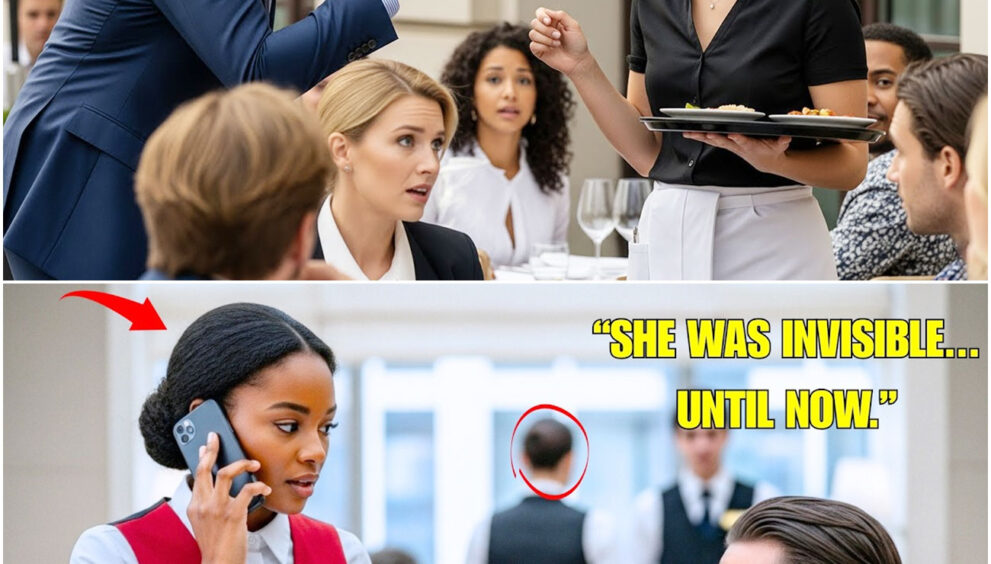
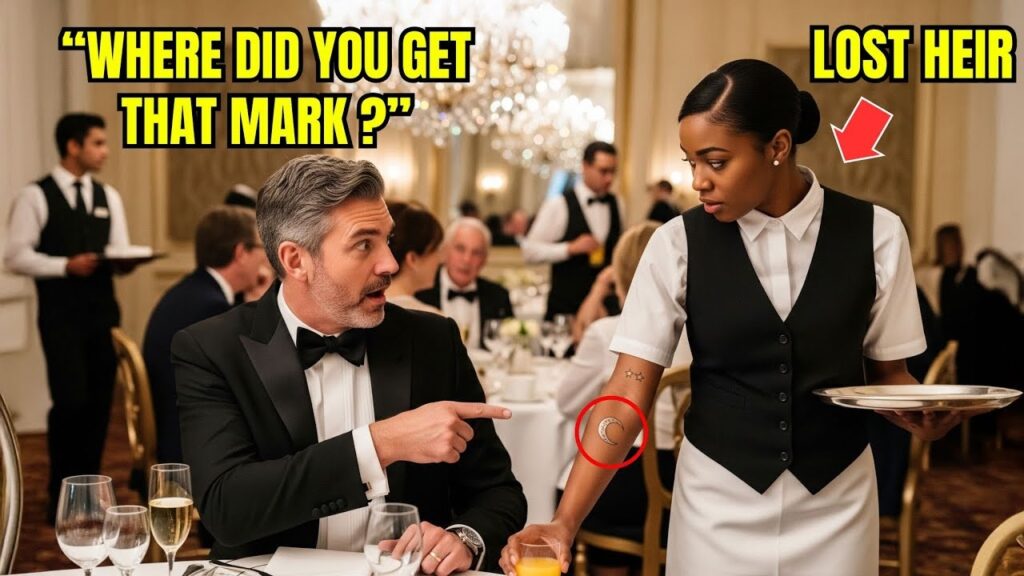
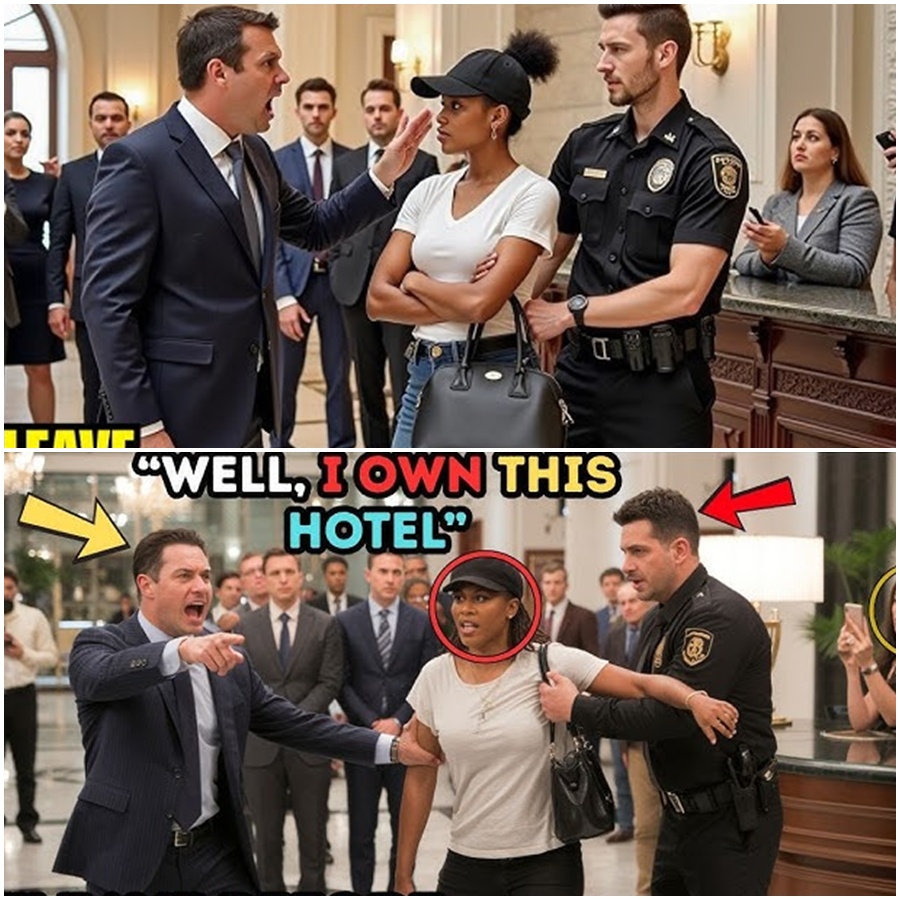
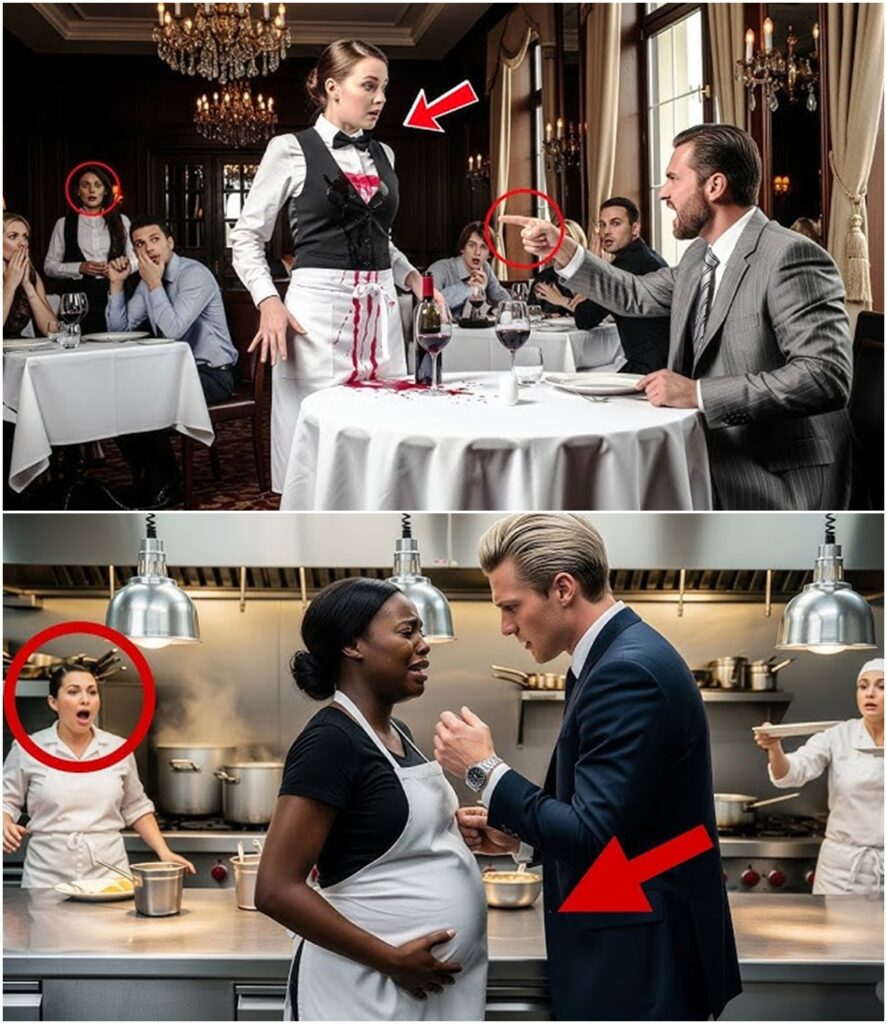
Don’t let her leave. That’s what the billionaire said in a voice so calm it silenced the entire room. It happened inside the glass ballroom of the Harbor View Tower, Boston’s most expensive venue. The kind of place where billionaires toast to themselves and the staff fade into the background.
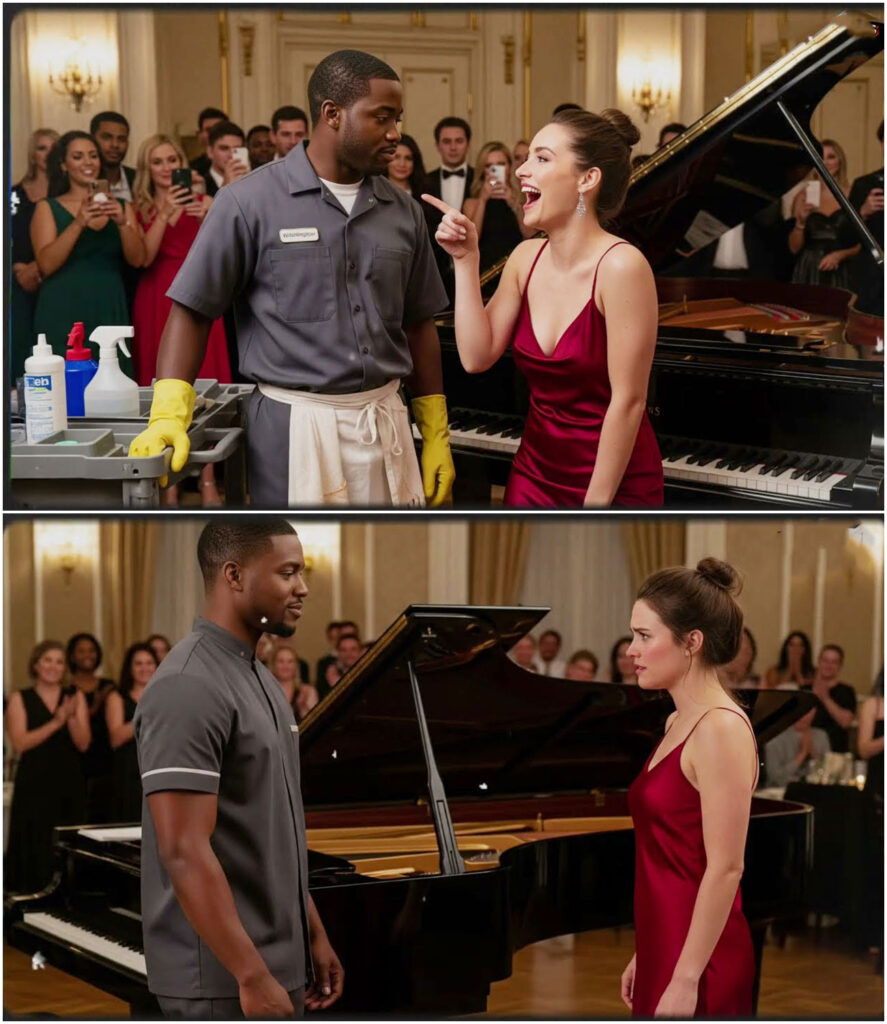
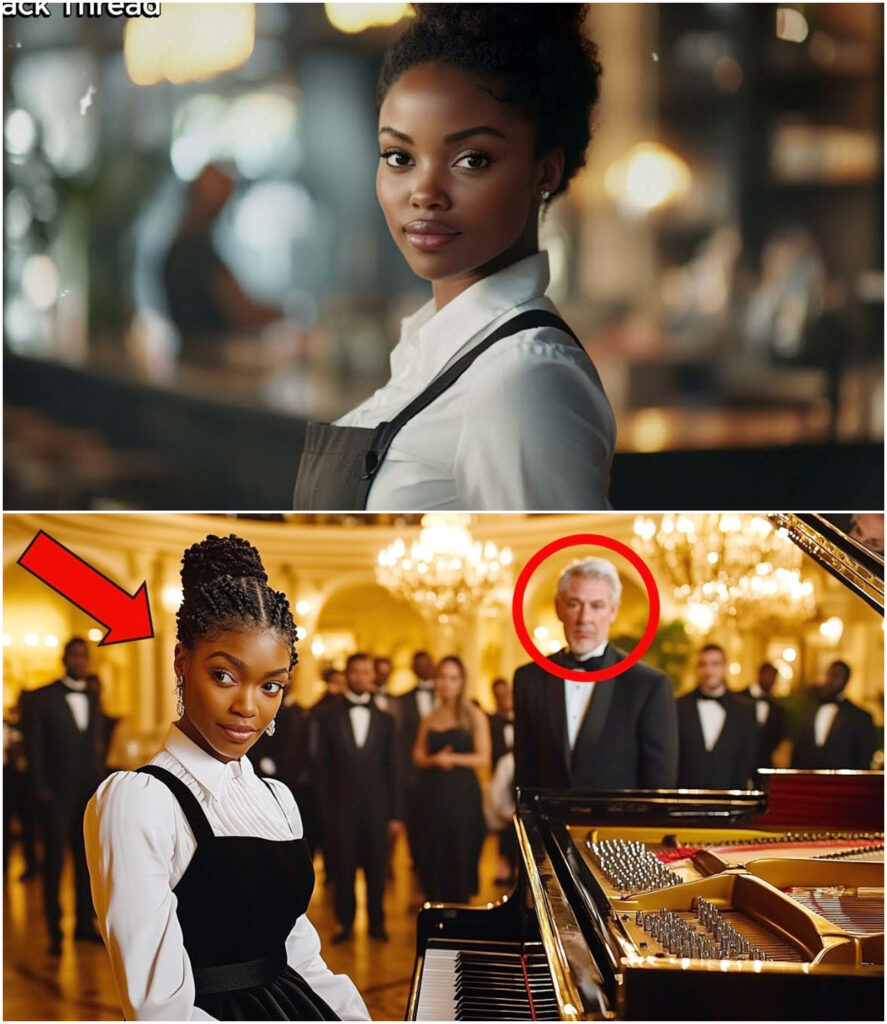
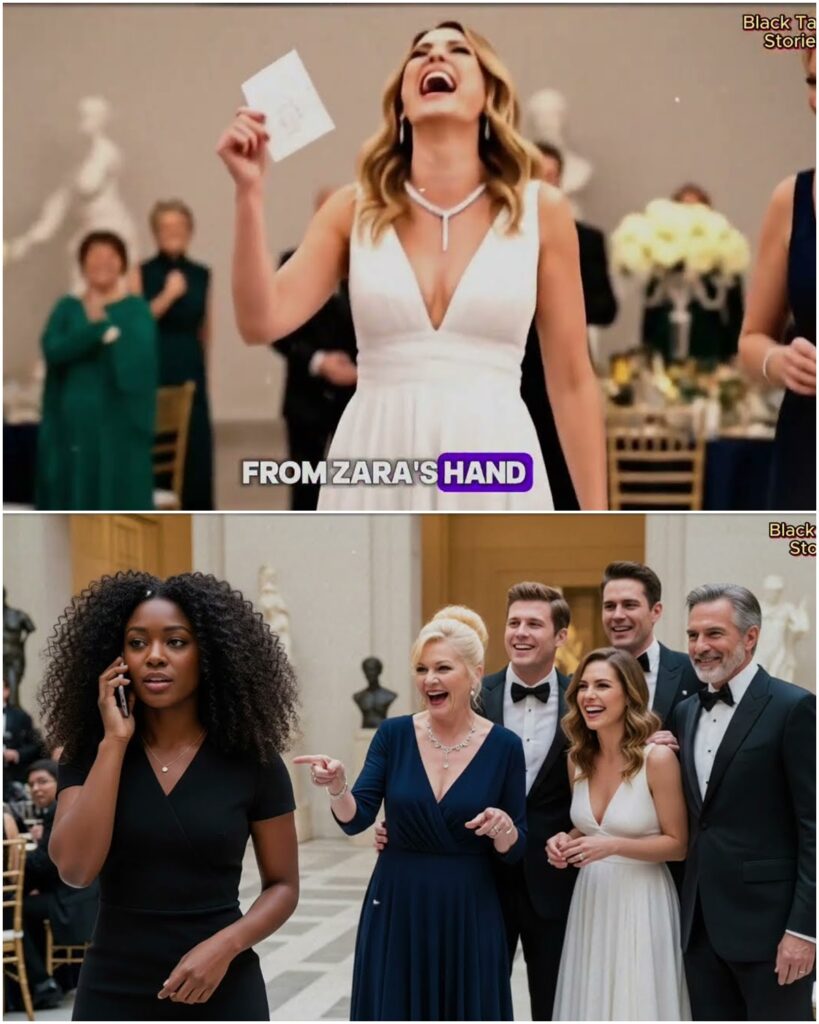
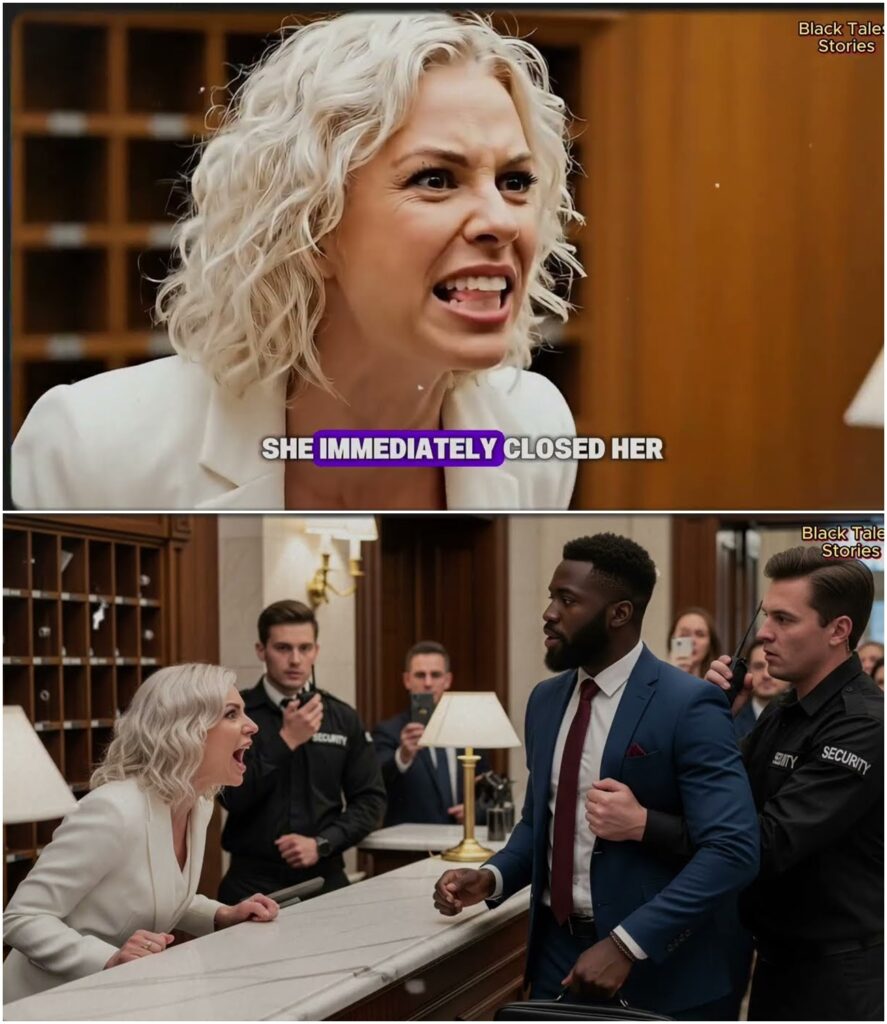
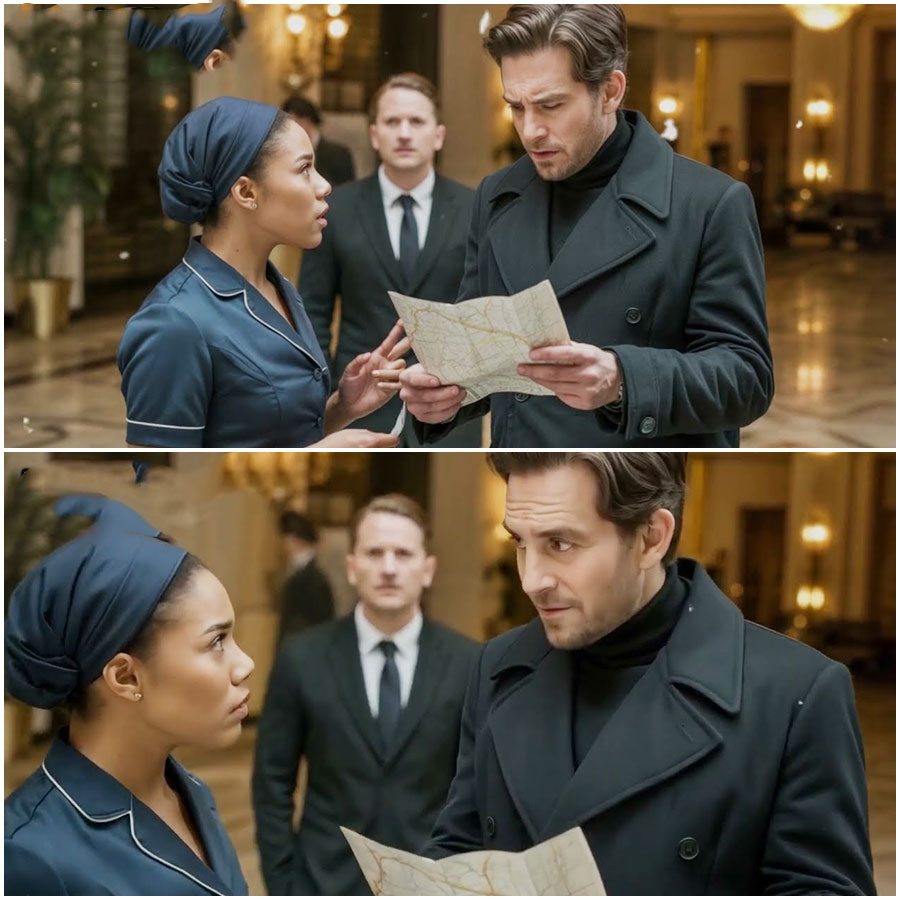
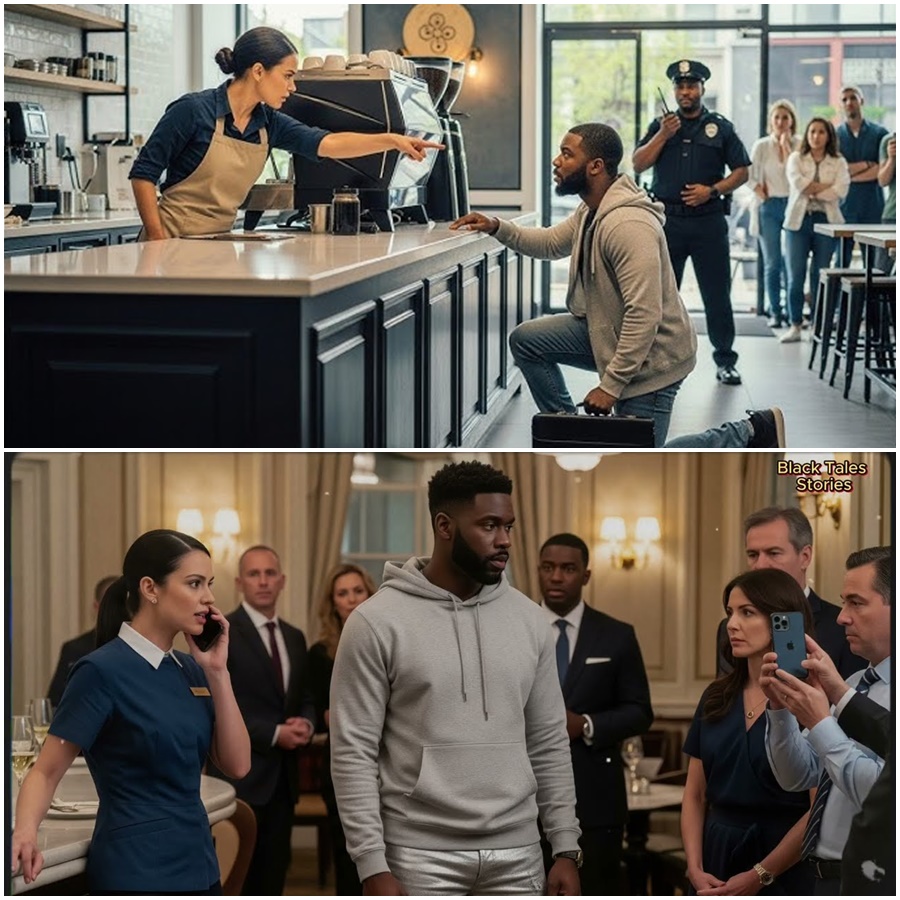
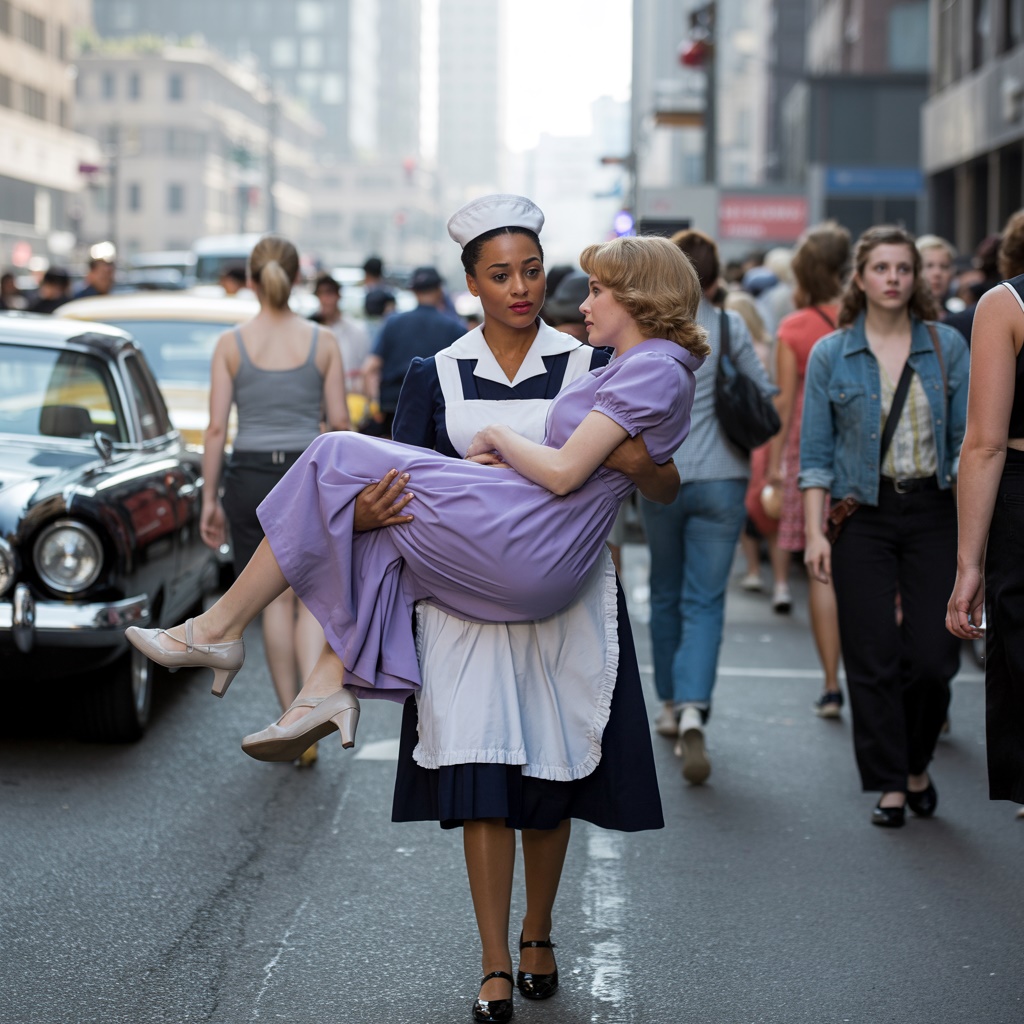
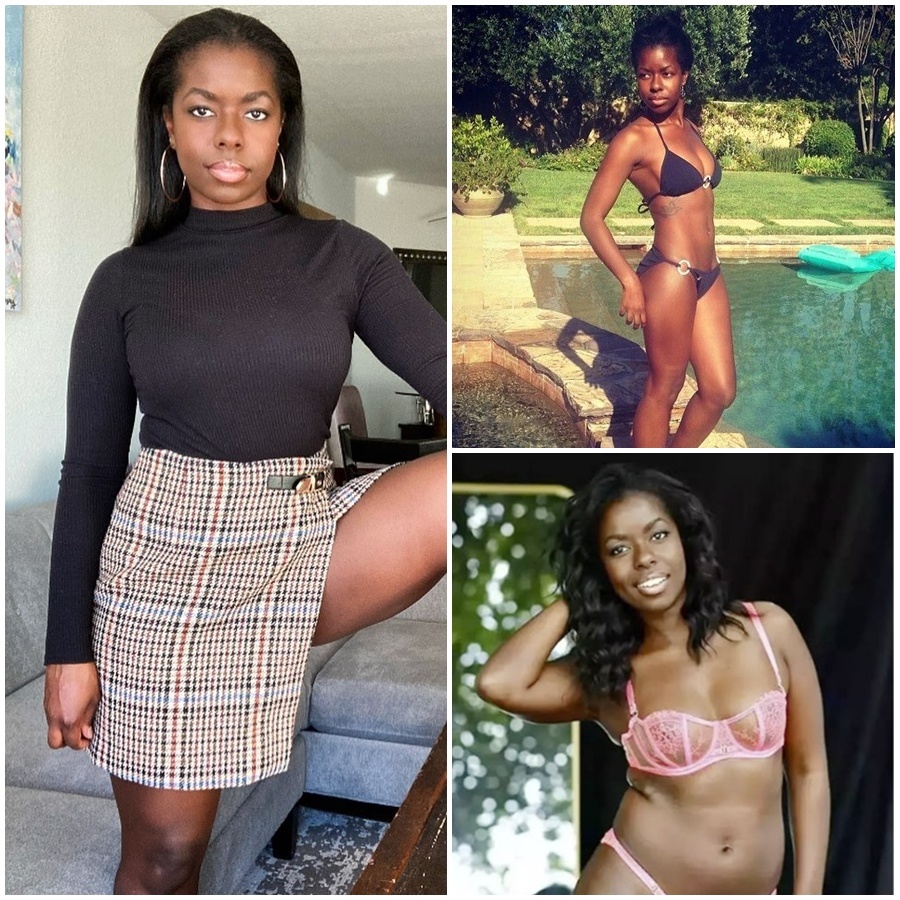
But that night, one young black waitress, Amara Ellison, broke the unspoken rule. She got noticed. It started with a phone call. Her phone buzzed softly while she was refilling a guest’s champagne. She whispered a few words in Italian. The words slid through the air like silk, sharp and elegant. Conversations froze. Forks stopped midair.
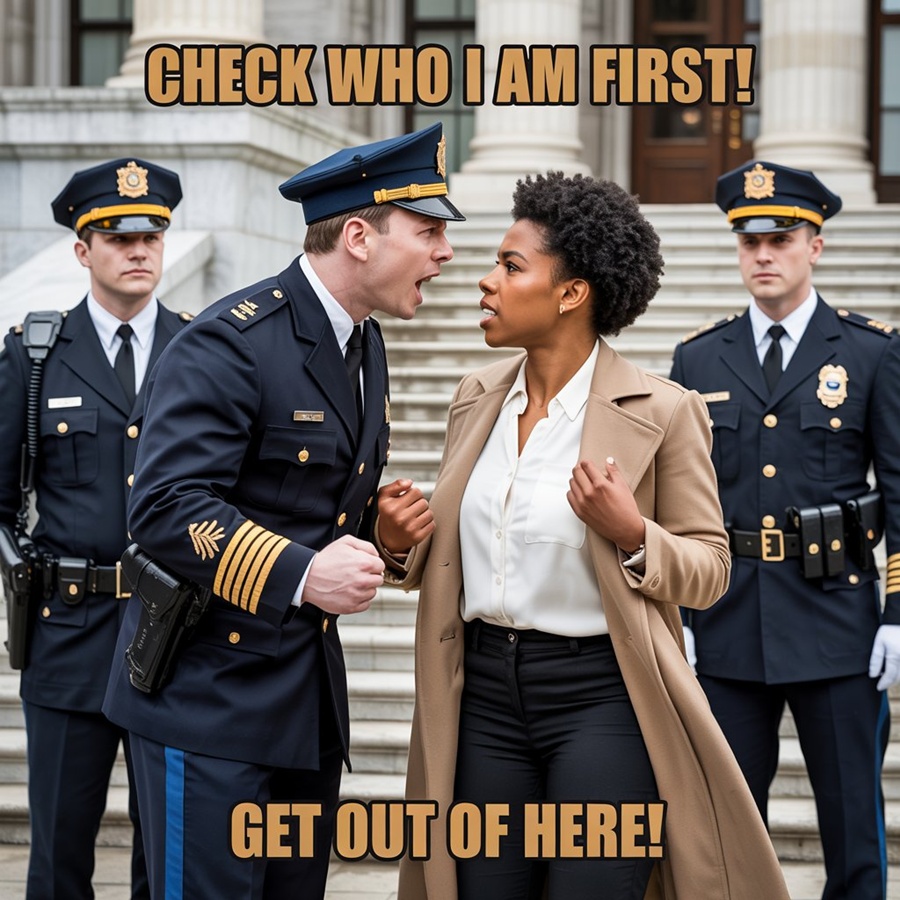
And then from across the room, a man turned. Mason called her billionaire CEO. Cold, untouchable, the kind of man who could fire half the city before lunch. He looked at her, really looked, then leaned toward his assistant and said, “Don’t let her leave.” Every eye in the room landed on her, some curious, others disgusted. Someone whispered. “Did she just speak Italian?” “A black girl.
” Another chuckled. “Maybe she picked it up cleaning tables in Rome.” Amara felt her throat tighten. Years of hiding, of working twice as hard to be half as seen, it all came rushing back. She didn’t mean to draw attention. She only wanted to survive another shift.

But in that moment, she became the center of a story no one expected, not even her. Because what Mason Calder saw wasn’t just a waitress. He saw a mystery worth uncovering. He saw a mind sharper than the men sitting beside him. He saw what the world refused to hidden worth. And this is her story. A black story that began with one mistake answering the wrong call at the wrong time and turned into something no one could control. So before you scroll away, before you assume you know where this is going, trust me, you don’t.
Stay with me because the next 3 minutes will make you rethink what worth really. Amara Ellison was born in Montgomery, Alabama. Her birth certificate listed no father. Her mother, a hair stylist with a smile that could sell sunshine, raised her in a one-bedroom apartment above a corner store.
They didn’t have much, just a secondhand couch, a tiny TV with missing buttons, and a shelf of library books her mother rescued from yard sales. But what they lacked in money, they made up for in voice. Her mother used to say, “The world will try to silence you, baby girl, so make sure your words are worth the breath.
” Amara listened and she learned quietly, carefully, with the kind of focus only kids who know what hunger feels like can muster. By age nine, she was reading at a college level. By 13, she had memorized most of Maya Angelou’s work. But no matter how smart she was, no one seemed to see her. Not the guidance counselor who said she wasn’t Harvard material.
Not the store clerk who always asked for her bag. Not even the college admissions officer who praised her essay but added, “It doesn’t quite fit our demographic.” After being weightlisted by three schools and ghosted by a scholarship program, she was promised had her back.
Amara packed what little she owned, two suitcases, a well-used laptop, and her mother’s last birthday card, and bought a one-way bus ticket to Boston. She had no plan, no connections, just a belief that somewhere her light might be seen for what it was, not where it came from. Boston hit her like a cold slap. People moved fast, talked fast, and barely made eye contact.
She crashed on a distant cousin’s couch, got a job busing tables at a hotel restaurant, and walked 2 miles each way just to save on train fair. The job was simple. Keep quiet, move fast, smile on Q. But Amara couldn’t turn her mind off.
At night, she watched old Italian crime films on YouTube, not for the drama, but for the language. She taught herself Italian like someone learning to fight in secret. It became her armor, her escape. She never thought it would matter. Never thought anyone would hear it until that night in that ballroom when she whispered into her phone and a billionaire decided her voice meant everything.
This isn’t just a rags to rich’s story. It’s about what happens when the world tries to bury someone and they bloom anyway. Stay with me because the soil might be rough, but the roots, they’re deep. Mason Calder didn’t smile often. When he did, it felt like a negotiation, like he was calculating how much warmth the moment deserved.
In every photo ever taken of him, his hands were in his pockets, his eyes unreadable. People called him the ghost CEO, not because he avoided cameras, but because no one could figure out what he wanted. Born in Zurich, raised between Geneva and New York, Mason had the kind of upbringing that made other billionaires feel underprivileged.
His mother was a polyglot and former ambassador. His father a private banker with clients so secretive they didn’t even use names. Mason attended schools with royal family members, learned four languages before he turned 10, and finished his undergraduate degree at Stanford by 19. He was 36 now and worth close to $12 billion.
His investment firm controlled biotech labs, quantum AI startups, and green energy patents across three continents. He could move markets with a single phone call. And yet, he didn’t chase the spotlight. No Twitter, no Instagram, just a single public statement he gave 3 years ago. I invest in potential. That’s all that matters.
So, when a man like that stoic, calculated, terrifyingly focused, paused a party because a waitress answered a call in Italian, people noticed. He’d been standing near the panoramic window, sipping sparkling water with a thin slice of lime when he first heard her voice. It wasn’t the language that caught him. It was the rhythm. Her Italian wasn’t textbook. It was lived in, confident, effortless.
He turned, spotted her across the room. She didn’t look like someone trying to be noticed, which is exactly why she stood out. He watched the way she tucked her phone away, then adjusted her tray like she expected to be yelled at. She moved with the kind of tension you only learn from being watched too often for the wrong reasons.
That’s when he leaned over to his assistant and said it. Don’t let her leave. He wasn’t trying to impress anyone. He didn’t need to. That one sentence was a decision, a command. The kind of words that changed lives not because of what they said, but because of who said them. And yet, he wasn’t thinking about power. He was thinking about something he hadn’t felt in years.
intrigue, not lust, not curiosity, but the sharp sudden pull of recognizing brilliance in an unexpected place. He didn’t know her name. But he knew this. She wasn’t invisible. Not to him. Not anymore. And in the world of Mason called her, that meant everything was about to change. The tray in Amara’s hands felt 10 times heavier.
As she approached the back hallway, she kept her head down, trying to blend into the shadows like she’d been trained to do. The ballroom behind her buzzed with champagne laughter and clinking forks, but her ears only heard one thing. His voice. Don’t let her leave. Those words hadn’t been shouted.
They weren’t said with urgency, but they carried weight like they’d been carved in stone. A man in a suit with an earpiece stepped in her path. Mr. Calder would like a moment of your time. Her stomach dropped. Not fear, not yet, but something close to it.
She followed the man through a velvet curtained hallway into a quieter lounge, dimly lit and soaked in amber tones. A leather couch, a decanter of whiskey, art that probably cost more than her annual salary. Waiting at the far end, hands clasped behind his back, stood Mason Calder. He turned slowly like he wasn’t in a rush for anything or anyone.
You speak Italian, he said simply. Amara nodded. A little. Not a little, he corrected, his tone still calm. Your accent was Milan. Northern precise. She blinked. I watch old movies. His mouth twitched almost a smile. Which ones? Dika. Fellini. Mostly for the dialogue. I like the rhythm.
He took a few steps closer, but stayed at a respectful distance. Most people in that room only speak one language. Some struggle with that. Yet here you are serving drinks, quoting Italian cinema. Amara shifted. Is this a problem? His gaze didn’t waver. It’s a question. She folded her arms, instinct taking over. Let me guess. You think it’s strange that someone like me knows something you didn’t expect? He didn’t flinch.
On the contrary, I think it’s rare, which is why I want to know more. Behind her, the velvet curtain fluttered slightly. The party was still going on, but in here everything had slowed, compressed. “I don’t mean to interrupt your evening,” she said. “You didn’t. You added to it.” That line sat in the air between them like perfume.
She wasn’t used to being complimented without strings or being noticed without being judged. Mason tilted his head. “Tell me your name, Amara.” He repeated it once, like he was testing the weight of it. Well, Amara, the rest of the world might want you to shrink, he said. But I don’t. No demand, no flirtation, just a statement, smooth as velvet and twice as heavy. And for the first time in years, she didn’t want to run.
The invitation came 2 days later. Not through email, not a formal request through HR, just a note, handwritten, left on her locker at the staff exit. Simple black ink on cream paper. Charles River, 6 p.m. Walk with me. M. Amara held the note for hours before deciding. Part of her wanted to tear it up.
Another part whispered, “What if this isn’t what you think it is?” So, she went. The evening was crisp. The sun had started to dip behind the Boston skyline, leaving gold streaks across the Charles. Amara wore jeans, clean sneakers, and a thrifted wool coat. Nothing fancy, just her. She spotted him leaning against the rail, looking out over the water like he was searching for something deeper than reflections.
“No suit tonight, just a navy sweater, dark jeans, and a softness she hadn’t seen before. “Thank you for coming,” he said without turning. I wasn’t sure if I should, she replied, standing beside him. Neither was I, he admitted, but curiosity has its own gravity. They started walking slowly, the river keeping pace beside them. He asked how long she’d lived in Boston. She said 2 years. He asked why she learned Italian.
She said, “For herself, not for anyone else.” Most people learn things to impress. He said, “You learn to escape.” Omra glanced sideways. You say that like you’ve done it, too. He smiled faintly. I used to read Latin translations of Homer when I was eight.
Not because I loved the stories, but because the characters were braver than I felt. That surprised her. A man with billions raised in privilege. Admitting to fear. It didn’t match the headlines. She stopped walking. Why me, Mason? He met her eyes. because you don’t ask for attention and still you pull it. She looked away. That’s not always a good thing. It is when you deserve it.
Silence fell again, but not the awkward kind. The kind where two people realize the world feels quieter when they stop pretending. You know what they see when they look at me? Amara asked. A waitress. A black girl. A temporary detail in the background. He nodded. They see that because it’s easier than facing the truth. What truth? That you challenge them.
A soft breeze brushed past, stirring the edge of her coat. You’re not like the others, she said. I’m not trying to be. She turned toward him. And what is this? He didn’t answer. He just looked at her like she was the first honest thing he’d seen in years. Not a meeting, not a date, just a moment. But it changed everything.
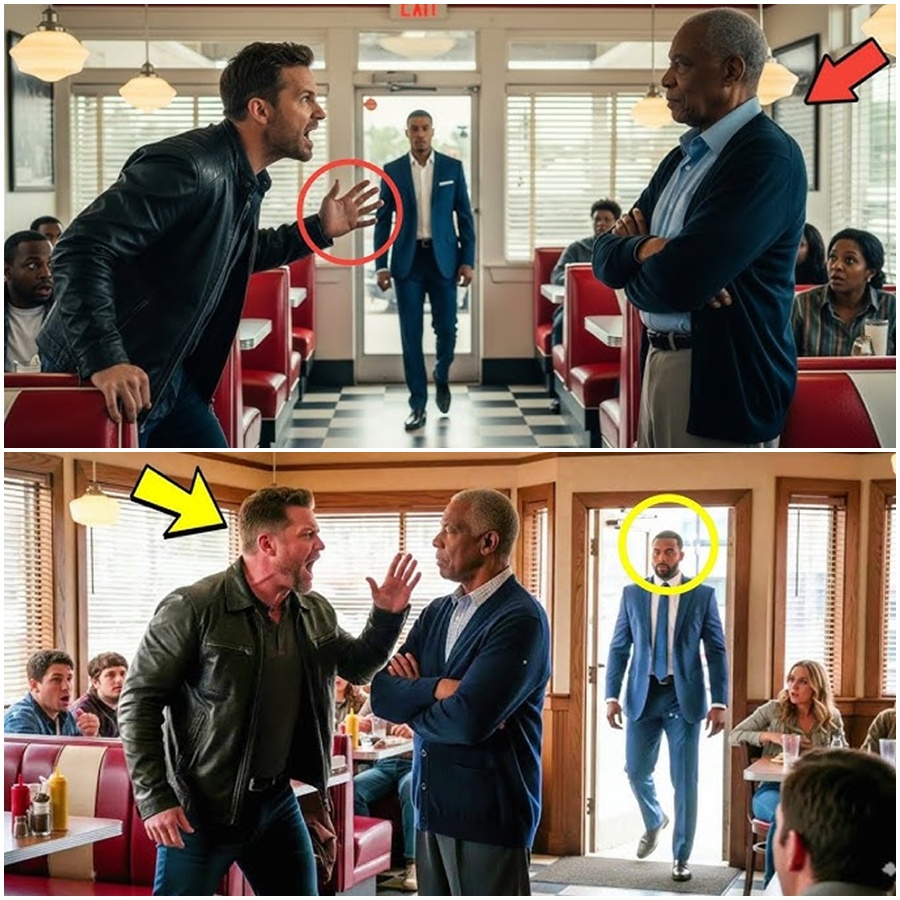
The next time Amara saw Mason, it wasn’t by the river or in some velvet lounge. It was in an elevator. She had been called to deliver a presentation binder to the 47th floor. An unexpected request routed through someone from the executive suite. The elevator was sleek, all brushed metal in silence. As she stepped in, two other men joined her.
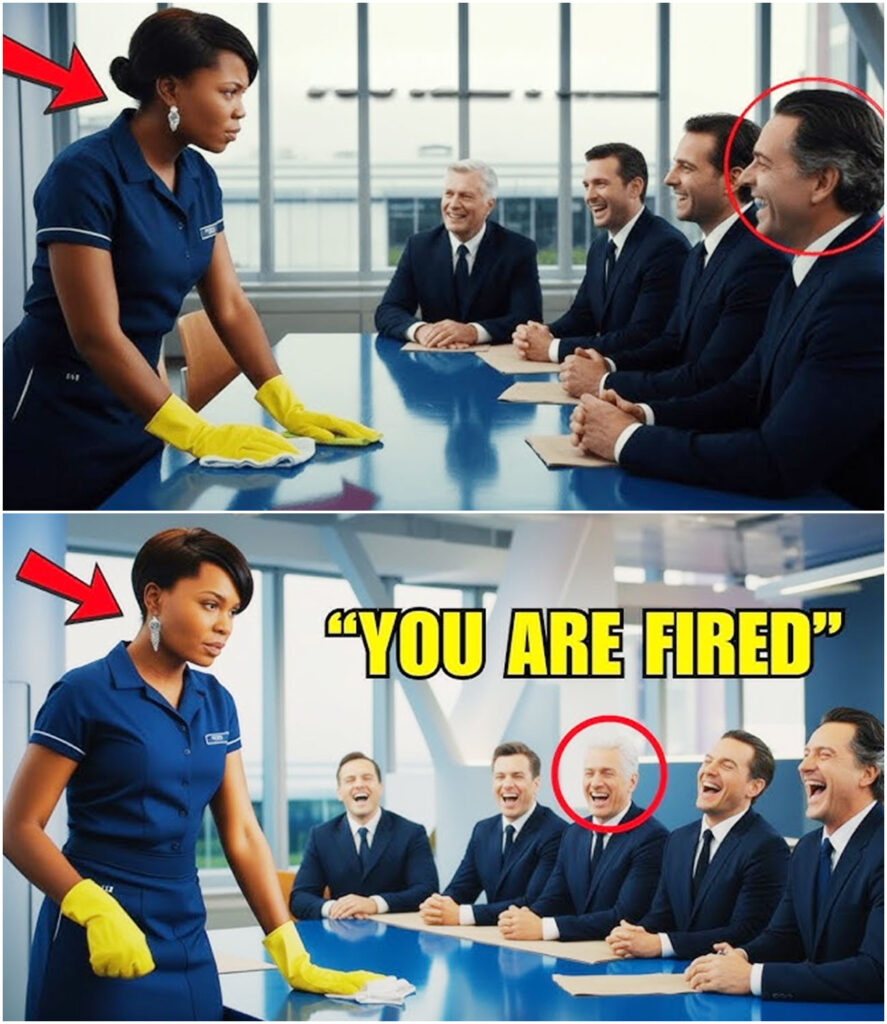
White, older suits that looked custom, shoes that cost more than her rent. She nodded politely. They didn’t return it. The doors closed. The ride began. Seconds later, one of them muttered under his breath, not quite whispering. They’re letting just about anyone in this building now. The other chuckled. She must be with cleaning or HR’s new diversity initiative. Amara stared straight ahead. Her hands clenched the binder tighter.
She told herself not to react. Not here. Not with them. Not where it would be used against her. Then the elevator dinged. Mason stepped in. Everything changed. The two men stiffened. Their laughter died mids smirk. Mason gave a nod to Amara, then turned toward the men. “Going up?” he asked like it was casual. They both nodded, eyes forward now, “Silent.
” The ride continued, but the air felt different. Charged like a thunderstorm right before it breaks. At floor 47, the doors opened. Amara moved to step out, but Mason gently touched her elbow. “Wait,” he said. She paused. The doors slid closed again. He turned to the men. “I overheard your comments,” he said, his voice calm.
“They were outdated, disrespectful, and unfortunately revealing.” The taller man stammered. “Mr. Calder, I think you misheard.” “No,” Mason interrupted. I didn’t. And I don’t miss hear things spoken in elevators. Silence. Then like a verdict. Your contracts are under review. The next floor opened. The men got out, eyes down, faces flushed. Amara stood frozen.
He looked at her. You okay? She nodded barely. That was subtle racism, he said. The kind that wears a suit and smiles at the boardroom table. The kind most people excuse. She took a breath. I’m used to it. I’m not. That was the first time she saw anger in him. Not loud, not dramatic, but cold, controlled.
The kind that builds empires and burns bridges without blinking. As the elevator descended, Amara realized something. He hadn’t just defended her. He’d made it clear. She wasn’t a guest in his world. She was someone he would protect publicly, privately, unapologetically, and in a place where silence usually wins. He had chosen to speak.
The next time Amara saw Mason, it wasn’t by the river or in some velvet lounge. It was in an elevator. She had been called to deliver a presentation binder to the 47th floor, an unexpected request routed through someone from the executive suite. The elevator was sleek, all brushed metal, and silence. As she stepped in, two other men joined her.
White, older suits that looked custom, shoes that cost more than her rent. She nodded politely. They didn’t return it. The doors closed. The ride began. Seconds later, one of them muttered under his breath, not quite whispering. They’re letting just about anyone in this building now. The other chuckled.
She must be with cleaning or HR’s new diversity initiative. Amara stared straight ahead. Her hands clenched the binder tighter. She told herself not to react. Not here. Not with them. Not where it would be used against her. Then the elevator dinged. Mason stepped in. Everything changed. The two men stiffened. Their laughter died mids smirk.
Mason gave a nod to Amara, then turned toward the men. Going up? He asked like it was casual. They both nodded, eyes forward now, silent. The ride continued, but the air felt different. Charged like a thunderstorm right before it breaks. At floor 47, the doors opened. Amara moved to step out, but Mason gently touched her elbow. Wait, he said. She paused. The doors slid closed again. He turned to the men.
I overheard your comments, he said, his voice calm. They were outdated. disrespectful and unfortunately revealing. The taller man stammered, “Mr. Calder, I think you misheard.” “No,” Mason interrupted. “I didn’t. And I don’t miss hear things spoken in elevators.” Silence. Then, like a verdict. Your contracts are under review. The next floor opened. The men got out, eyes down, faces flushed. Amara stood frozen.
He looked at her. “You okay?” She nodded barely. “That was subtle racism,” he said. “The kind that wears a suit and smiles at the boardroom table. The kind most people excuse.” She took a breath. “I’m used to it. I’m not.” That was the first time she saw anger in him.
Not loud, not dramatic, but cold, controlled, the kind that builds empires and burns bridges without blinking. As the elevator descended, Amara realized something. He hadn’t just defended her. He’d made it clear. She wasn’t a guest in his world. She was someone he would protect publicly, privately, unapologetically. And in a place where silence usually wins, he had chosen to speak.
It wasn’t supposed to be her meeting. Amara had only been asked to sit in and take notes. She wasn’t even told the full details, just that two international partners were flying in to discuss a new biotech partnership with Mason’s firm. The kind of deal that came with press releases, NDAs, and contracts thick enough to crush a laptop.
She took her seat quietly in the back corner of the conference room, binder on her lap, pen in hand. The meeting began in English. Polite introductions, power smiles, the usual opening dance. But 10 minutes in, things shifted. One of the foreign executives, Italian, sharp suit, sharper tongue, leaned over to his colleague and whispered something in Italian.
Fast, too fast for anyone to catch except Amara. She froze. The words weren’t casual. They weren’t harmless. They were planning to pull out. Not publicly, of course. They were going to let Mason’s firm sign first, then leverage a hidden clause to transfer ownership to a competitor. It was technical, strategic, ruthless, and no one else in the room had a clue except her.
She looked at Mason. He was flipping a page in the contract, unaware. Her hands began to shake. She could say nothing. Play it safe. Pretend she didn’t hear. That’s what the world had trained her to do. Stay small. Stay quiet. Stay out of the way. But not today. She leaned forward, voice steady, but low.
Sir, you may want to ask about clause 9.3 on page 22. Mason blinked. Excuse me. Amara stood. The clause regarding post signature intellectual property transfers. I believe it contradicts the original terms you discussed. The room fell silent. The Italian partners looked stunned. One of them spoke this time in English. She she understood that. Mason closed the binder slowly.
Then he turned to them. his voice ice cold. Let’s pause here. The meeting ended early. Hours later, Mason found her in the breakroom pouring stale coffee into a paper cup. He didn’t say thank you. He didn’t need to. You could have stayed quiet, he said. I almost did, she admitted. He nodded once. That clause would have cost us $75 million.
Amara looked him in the eye. You said you invest in potential. that includes listening to it. He didn’t smile, but he did something more powerful. He stepped aside and let her walk out first. In that moment, she wasn’t just a witness. She was a player. And in a world full of noise, her voice clear, measured, loyal, had just changed the game.
By the end of that week, Amara’s name was being whispered in rooms she had never stepped into. People started asking, “Who is she?” Not with curiosity, but with suspicion. Some assumed she was Mason’s new assistant. Others guessed she was a diversity hire he was grooming for PR. One executive even joked at a lunch meeting. She must have something we’re all missing.
Or maybe he just likes the view. It didn’t take long for the headlines to follow. Not official ones, no front page exposees or press releases, just shadowy little blog posts and private group chats among the wealthy and powerful.
titles like the mystery girl in Calder’s circle or waitress turned adviser, how fast is too fast. One called her the upgrade. Amara read that one twice. Then she closed her laptop and went for a walk in the rain. It wasn’t that she hadn’t expected it. Being a black woman in a white space meant always expecting to be questioned.
What she didn’t expect was how quickly her accomplishments would be erased, rewritten as rumors, or reduced to stereotypes. No one mentioned the contract she saved. No one talked about the languages she spoke. They didn’t ask how many nights she stayed up teaching herself international policy from PDFs and library books. They just saw her skin and filled in the rest.
The worst came during a boardroom review. She was presenting research on a potential partnership with an energy startup when one senior adviser interrupted. You’re what, 23? What exactly makes you qualified to be in this room? Amara looked at him calm but direct. The same thing that makes you nervous. I’m here. He didn’t respond. He didn’t have to. The silence said enough.
After the meeting, Mason approached her. You don’t have to keep doing this, he said. I can shield you from it. She shook her head. No. If I stop, they win. And I didn’t come this far to be fragile. Mason studied her. You’re not fragile, Amara. I know, she said. But sometimes they act like glass can’t cut. That line stayed with him.
Because what Amara was doing wasn’t just impressive, it was dangerous. She was breaking through a ceiling designed to reflect her, not let her through. And every crack she made was sharp enough to draw blood. Still, she didn’t stop. Because glass may shine, but it shatters, too.
And when it does, the ones who break through often become the mirrors others finally see themselves in. It started with a photo, a grainy shot taken through the tinted window of a black SUV. Mason called her opening the door for Amara. She was laughing mid-sentence, wearing a dark trench coat and her hair in a low bun. Nothing scandalous, no handholding, no late night mystery. But the internet didn’t need facts.
By the end of the day, the photo had gone viral on financial gossip blogs. The billionaire and the black girl nobody knew from trade to boardroom. What’s she really serving? Most of the headlines didn’t even use her name. They didn’t have to. Her skin was the headline, her presence, the controversy. Investors began to whisper. Board members asked for clarity on her role.
stock ticked down by 3% not because of performance but because of perception and still neither of them said a word. No public statement, no denial, no carefully crafted PR post to calm the waves. Amara kept showing up head high, notes ready, presentations sharp. Mason stayed the course. Meetings, deals, strategy, but something had shifted behind his eyes.
Less tolerance, more fire. It boiled over at a quarterly investor call. A shareholder asked off script, “Is it wise to let your personal interests influence the executive team dynamic?” There was a pause. Then Mason leaned into the mic. “My personal interest,” he said calmly, “is ensuring this company remains intelligent, relevant, and fearless.
“If that threatens anyone here, I suggest they look in the mirror.” No one spoke for the next 10 seconds. He didn’t name Amara. He didn’t have to because everyone knew exactly who he was defending and why. The fallout was immediate. Some praised him for standing up. Others accused him of favoritism, of being distracted. One outlet even ran a headline when CEOs fall for the help.
But behind closed doors, people started watching Amara differently. Not with pity, with calculation. Because now the question wasn’t whether she belonged. it was. How far could she go? Amara read the articles, heard the whispers, walked past the stairs, and still she stayed grounded. Because storms don’t scare people who’ve already lived through hurricanes.
She wasn’t the scandal. She was the shift. And together, whether they meant to or not, she and Mason had started a conversation the boardrooms were not ready for. A black woman in power wasn’t just rare. It was revolutionary and revolutions never come quietly. The invitation came in an email that almost went to spam.
Subject line, women of color in tech, keynote opportunity. Amara stared at it for 10 minutes. She had never given a keynote, never stood behind a podium with her name in bold letters. She wasn’t a founder or a CEO. She didn’t have a personal brand or a TED talk reel. She wasn’t the kind of story these conferences usually looked for.
But she was the kind they needed. It took her 3 days to say yes. The event was held in a high-rise auditorium in downtown Boston. Wide windows overlooked the skyline. Rows of chairs filled with professionals, students, executives, most of them women, most of them watching her with a quiet mix of hope and expectation. Amara took the stage in a navy suit.
Clean lines, no flash, just presence. She looked out into the crowd, then down at her note cards. And didn’t use them. My name is Amara Ellison, she began. And I wasn’t supposed to be here. The room leaned in. I was supposed to keep my head down, work hard, be grateful for crumbs. I was supposed to serve the drinks, not speak at the table. A few heads nodded.
Some eyes began to glisten. I was taught that being smart wasn’t enough, that I had to be smart and soft, qualified but not intimidating, that I had to know my place and stay in it. She paused, let the silence land. But the thing is, I never believed in that place. Not really, because deep down I knew I carried more than just potential.
I carried legacy. I carried fire. The audience was silent, but not still. I once answered a phone call in Italian, she continued. And it changed everything. Not because of what I said, but because someone finally listened. She didn’t name Mason. She didn’t need to. I’m not here because I was rescued. I’m here because someone made space and I was ready to fill it. There was no applause yet.
Just the kind of quiet that means people are thinking, processing, maybe even healing. And to every woman sitting here wondering if her voice matters, if her name belongs on the door, in the article, on the stage, she looked up, eyes clear. It does. Then the room exploded, not in noise, but in emotion, standing ovation, tears, smiles that looked like freedom.
In that moment, Amara’s voice didn’t just echo across the room. It echoed into every girl who had ever been told to shrink. And for the first time, the world listened. The promotion wasn’t announced with fireworks. No press release, no staged photo shoot, no buzzwords like breaking barriers or diversity milestone. It came in the form of a sealed envelope slid across a polished oak desk during a Monday morning meeting.
Inside was a single sentence printed on official company letter head. Amara Ellison is hereby appointed director of global strategy and cultural affairs. effective immediately. Her hands didn’t shake. She didn’t cry, but for a moment, she couldn’t breathe. Mason said nothing at first, just watched her Reddit, his expression unreadable as always. Then, quietly, it’s not a favor. It’s overdue.
He didn’t walk her to her new office. Didn’t stand behind her like some symbolic protector. That wasn’t who he was, and she didn’t need it. She opened that door on her own. It was a corner space on the 38th floor. Floor to ceiling windows, a desk that still smelled like fresh varnish, a single gold plaque on the door with her name.
Not assistant, not temporary, just Amara Ellison. She didn’t move her things in right away. Instead, she spent the first few days listening, meeting with departments across three continents via Zoom, reviewing policies that hadn’t been updated in years, and creating a plan.
Not just for growth, but for inclusion that actually meant something. And the company responded, not with applause, but with change. Recruitment shifted. Internships expanded. Vendors were re-evaluated for ethical practices. Internal reviews started including a section called blind spots, something she personally insisted on. Amara didn’t just rise, she lifted.
One month into her new role, Mason called her into a private meeting. No agenda, no assistant taking notes. He slid a small velvet box across the table. She opened it. Inside was a pen solid gold custom engraved with the words. She rewrote the narrative. She looked at him. You didn’t have to do this. He nodded. But I wanted to. You earned it.
No speeches, no champagne, just mutual respect. Outside the glass office, whispers continued. Some said she was still just lucky. Others insisted she was too new for such a title. But none of it mattered because every morning she walked past those whispers with her head high and her purpose louder than their doubts.
She wasn’t a trend. She wasn’t a phase. She was building something bigger than a position. She was building legacy. Not for headlines, not for likes, but for every person who had ever been overlooked. And from that corner office, her voice only got louder. Amara never asked to be a symbol.
She didn’t wake up hoping to inspire. She wasn’t chasing viral posts or headlines. All she ever wanted was a fair shot, a chance to be seen for more than her skin, more than her background, more than the boxes the world tried to trap her in. But somewhere between the elevator insults, the whispered contracts, and the thunderstorm of online judgment, she found her power. Not by yelling, not by proving, just by standing.
Because sometimes the most radical thing a black woman can do in a room built to exclude her is stay. And that’s the heart of it. This wasn’t just a story about rising through ranks or impressing a billionaire. It was about reclaiming space, about rewriting what professionalism looks like, about showing up even when the world makes you question if you belong. So what’s the lesson? It’s this.
Your worth isn’t determined by who notices you. It’s confirmed by how you carry yourself when they don’t. You don’t have to explain your presence. You don’t have to shrink to fit their comfort. And you definitely don’t need permission to be powerful.
Amara’s story reminds us that brilliance doesn’t always wear the right suit or come from the right zip code. Sometimes it walks in through the service entrance, whispers in Italian, and changes everything. So, if you’re watching this and you’ve ever felt underestimated, if you’ve ever been told to be quiet, to wait your turn, to know your place, let this be your reminder. You are the place.
And the moment you stop dimming your light to make others comfortable, that’s when the story changes. This has been another black story brought to you by Hidden Worth. If this moved you even a little, share it with someone who needs it. Because the more we tell these stories, the harder it becomes for the world to ignore them. And if you’ve got a voice like Amara’s, don’t wait for permission. Speak, stand, and stay.
News
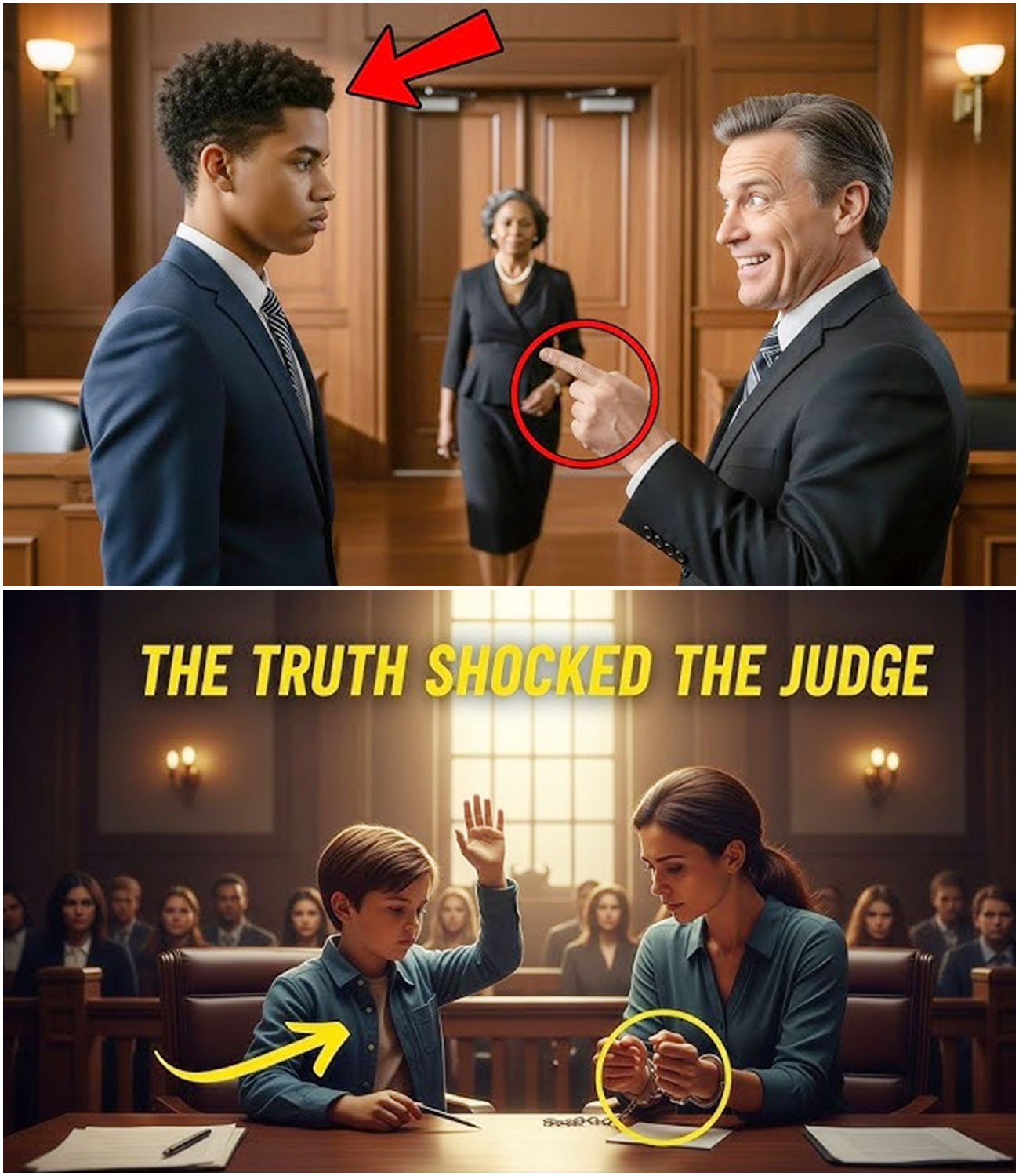
“My Mom Is Not Guilty,” Said the Small Boy — What the Judge Found Out Left Him Speechless
The courtroom was silent until a trembling voice cut through the tension. Your honor, my mom didn’t steal anything. Gasps rippled across the room. A 9-year-old black boy stood alone before the judge, clutching a folder bigger than his chest. Behind him, his pale, tearful mother watched, handcuffed and accused of a crime she didn’t […]
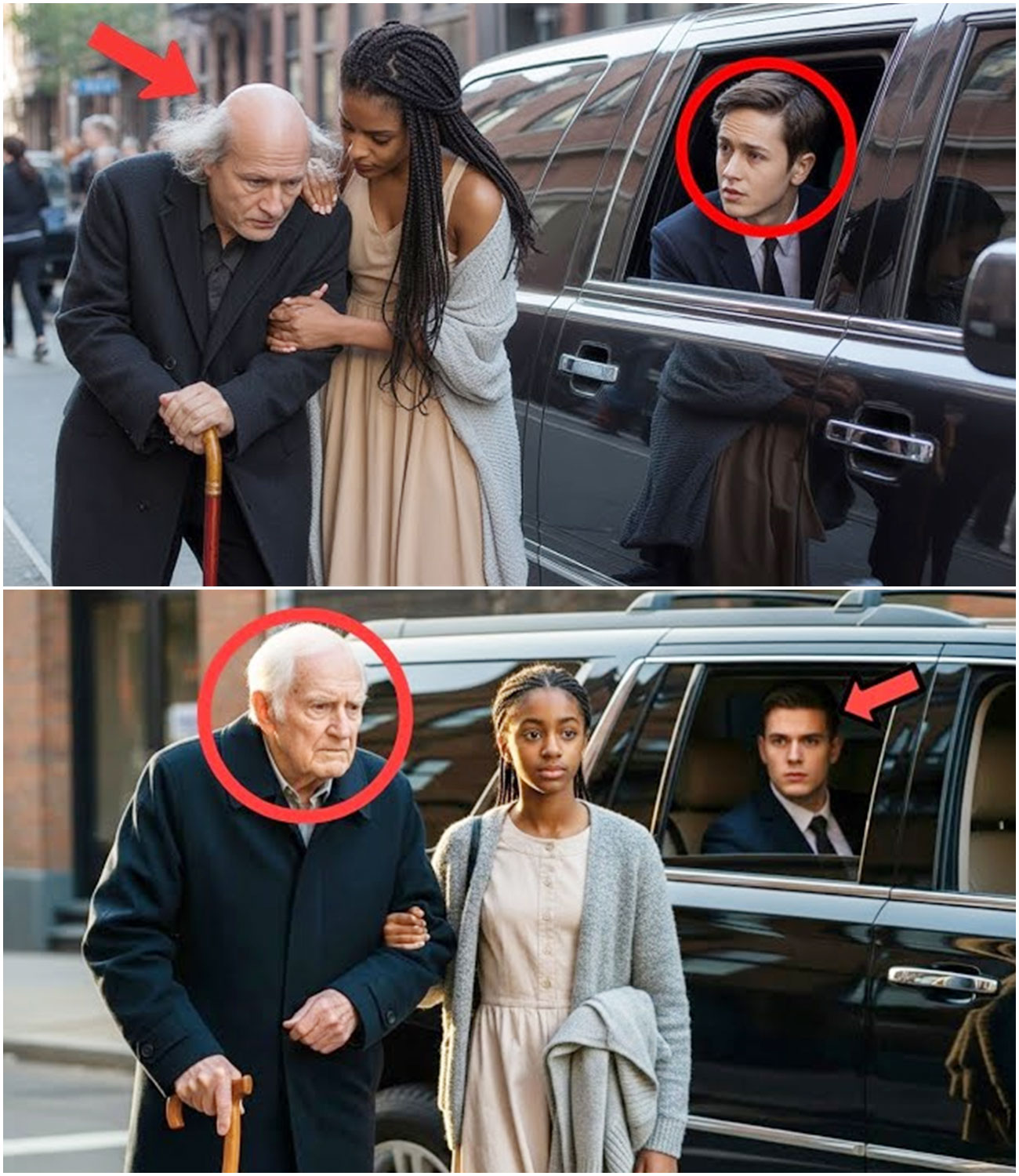
Poor Black Girl Helped an Old Man Cross the Street — Unaware He Was the Town’s Richest Farmer…
At the busiest corner of town, traffic thundered and no one cared except Amir with patched shoes and a bag stitched together. She noticed an old man frozen at the curb, his cane trembling as cars sped past. Everyone else ignored him. Some even laughed at her for stepping forward. But Meera didn’t flinch. She […]
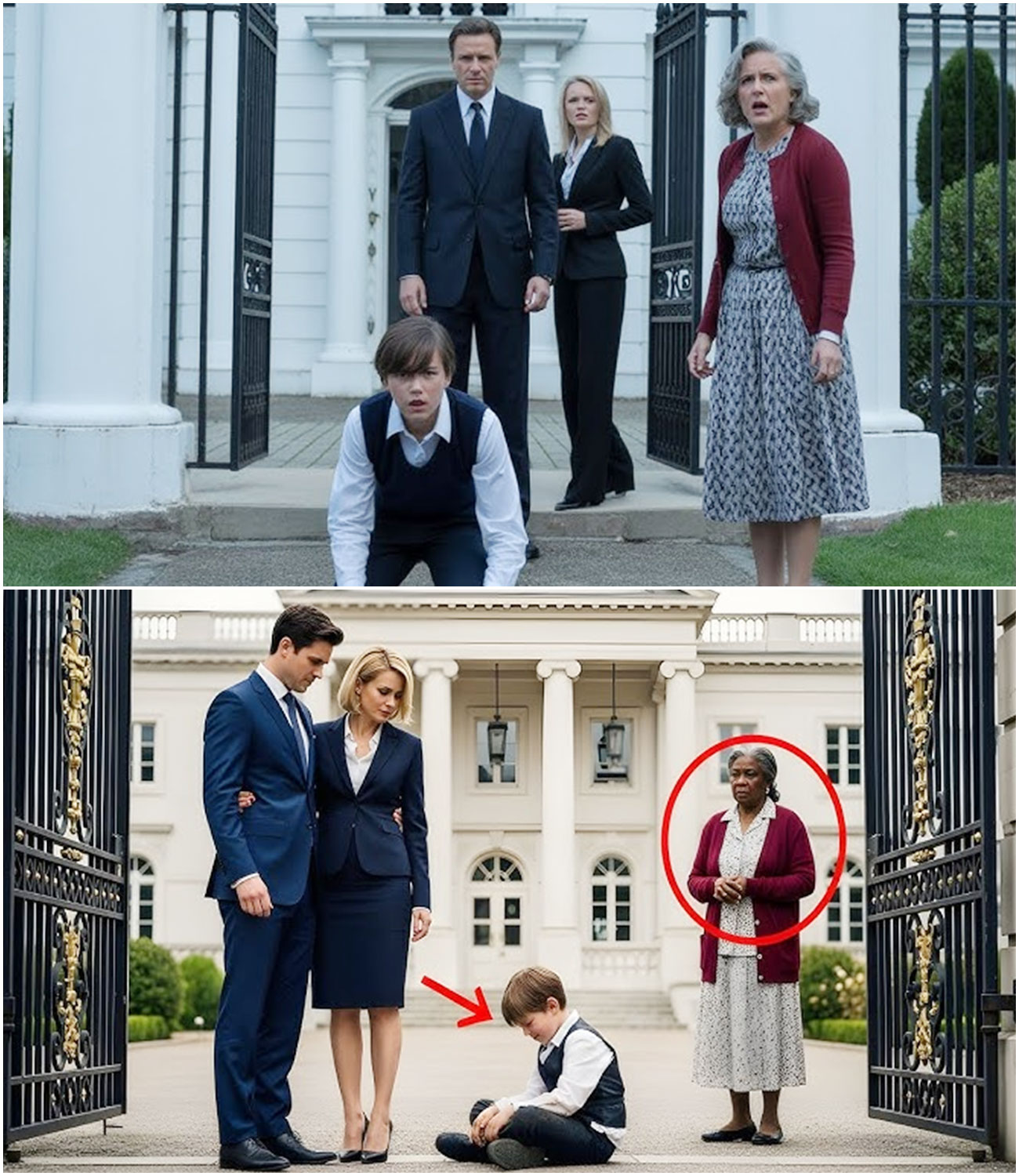
Boy Kicked Out by His Parents Returns 12 Years Later with his Nanny and Does Something Shocking.”
Thrown out for being dumb, young Daniel was left kneeling on the cold pavement while his wealthy parents shut the gates behind him. The only one who refused to walk away was Miss Ruth, the family’s old nanny, who quit her job and took him in with nothing but faith and sacrifice. Years later, Daniel […]
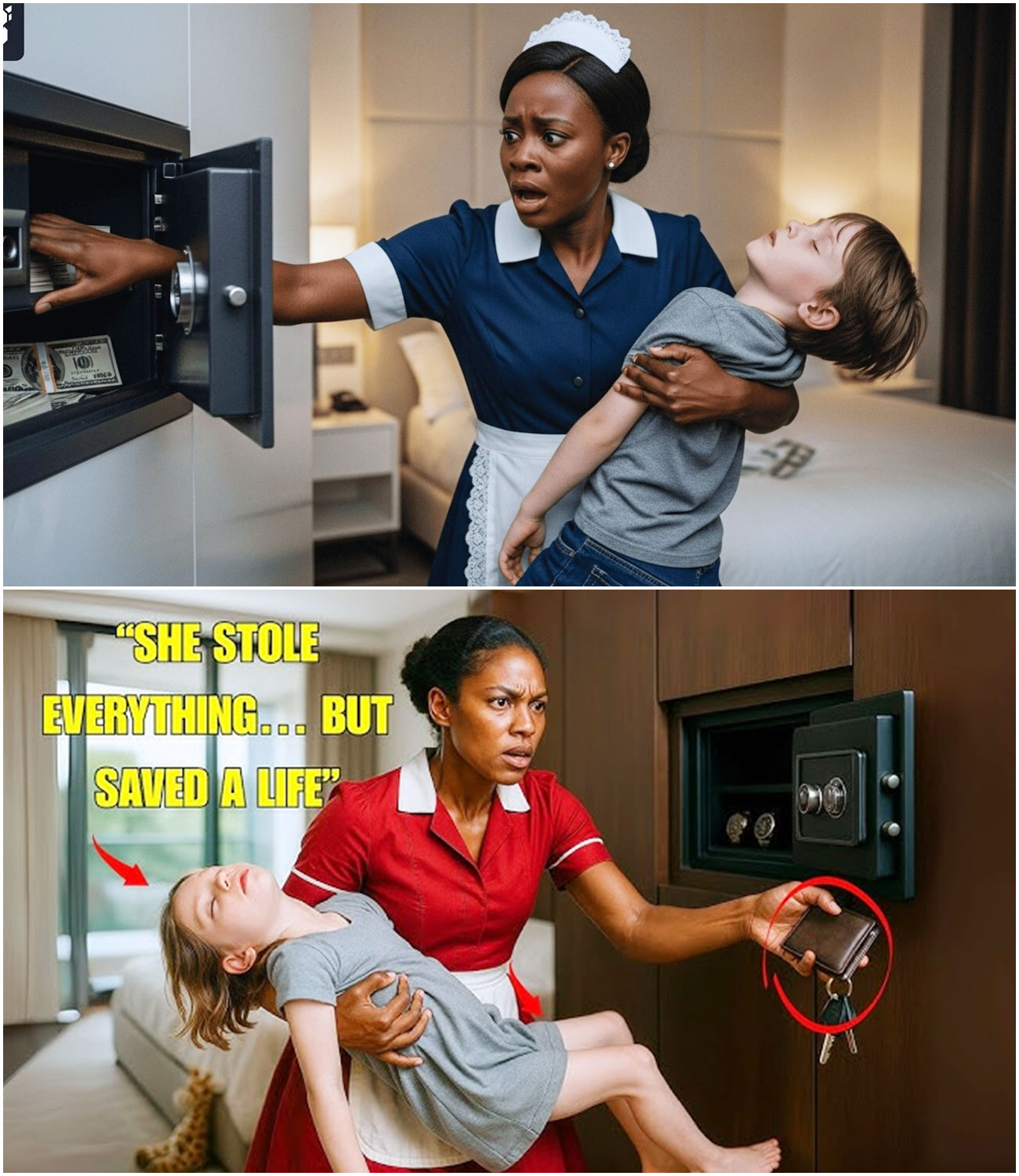
Black maid Stole the Billionaire’s Money to save his dying daughter, —what he did shocked everyone
Tasha was just a new maid, barely noticed, barely trusted. But when she found the billionaire’s daughter barely breathing, with no staff around and the mansion silent, she panicked. No calls were going through. No help was coming. So she did the unthinkable, broke into his locked office, grabbed the car keys and a bundle […]

Millionaire Comes Home and Finds His Pregnant Wife Crying—What He Discovered Shocked Him.
Millionaire comes home and finds his pregnant wife crying. David Whitman thought he had built the perfect life, but nothing prepared him for the day. He walked in early and found his young wife, Aisha, sobbing, her body covered in fresh bruises. Through her tears, she asked, “Am I ugly? Am I a monkey? Don’t […]
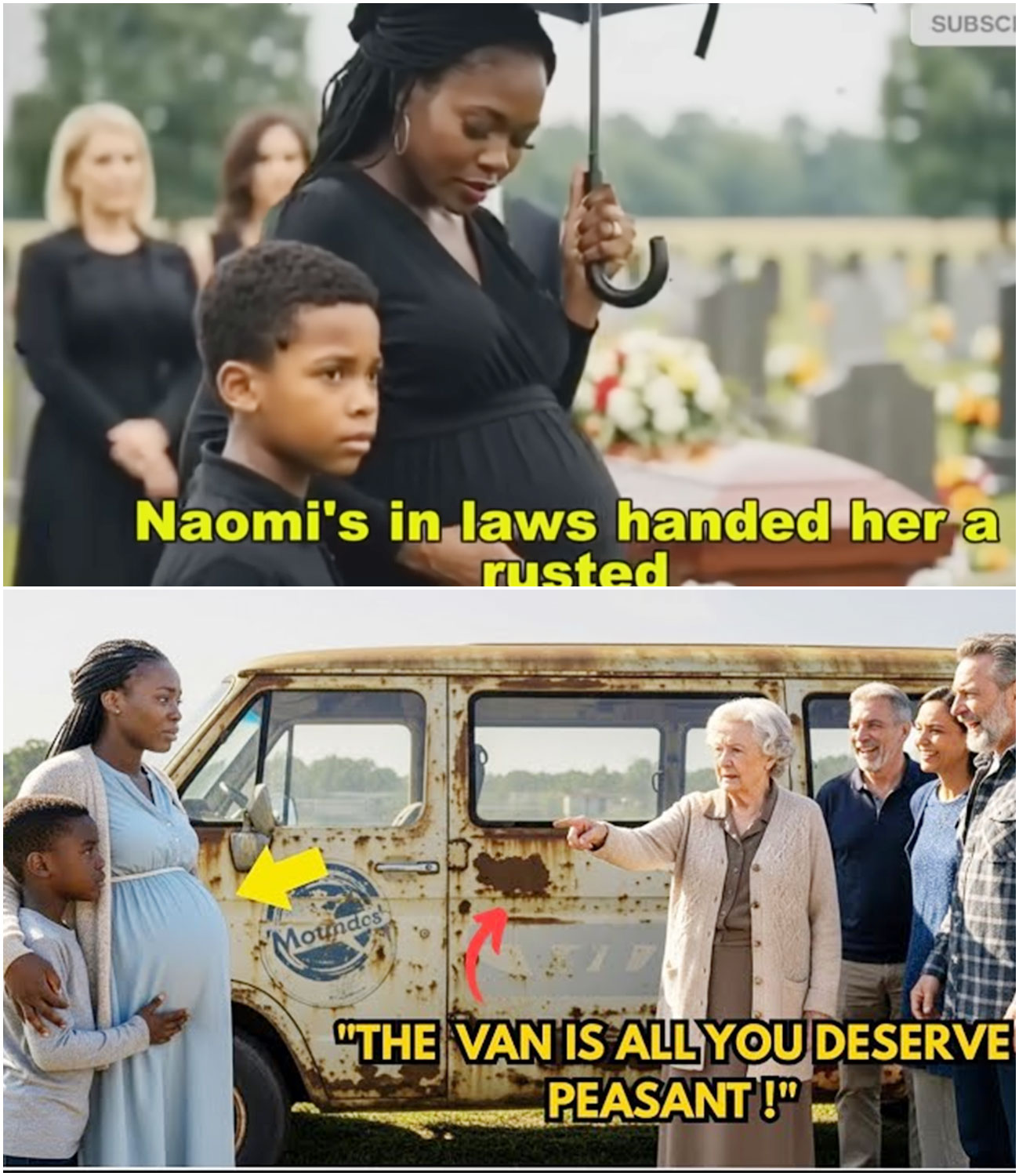
InLaws laugh as they gave her the Rusted van as her inheritance, — Unware the van was made of gold
At her husband’s funeral, Naomi’s in-laws handed her a rusted broken down van as her inheritance, laughing as they threw her out of the house and stole the businesses she’d built with him. 7 months pregnant, with her 10-year-old son beside her, she had no choice but to live in the van they claimed was […]
End of content
No more pages to load