


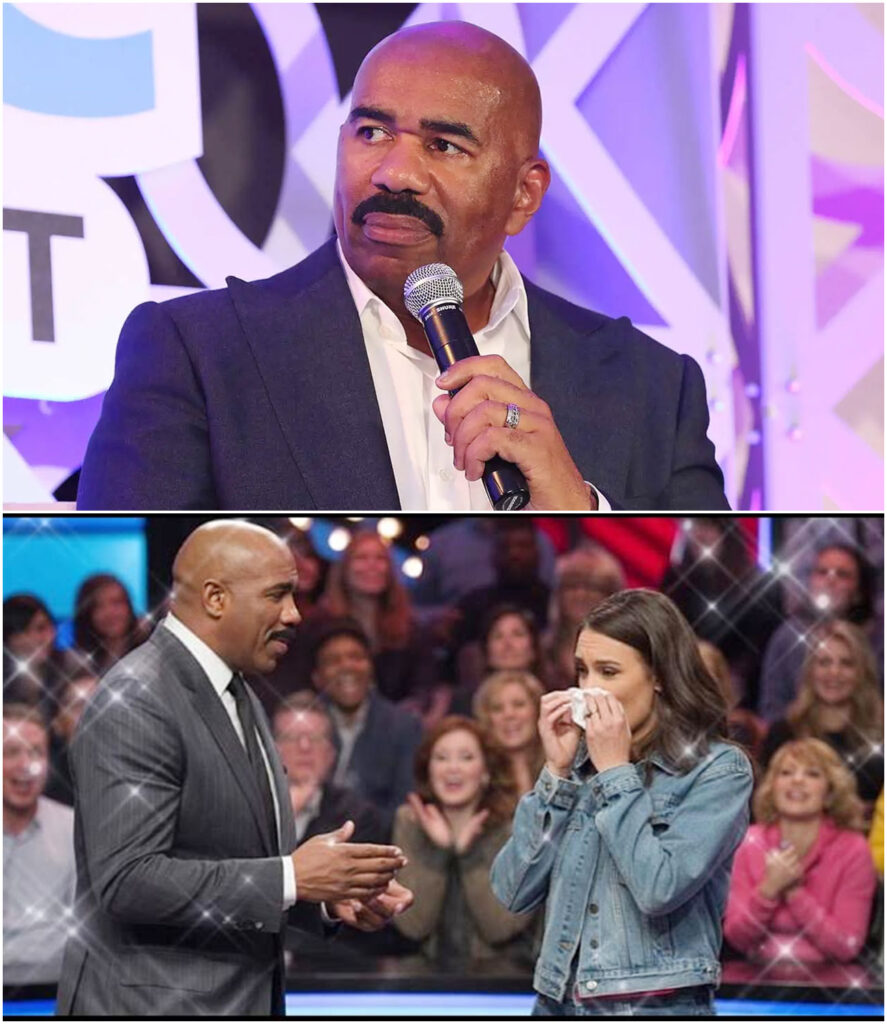



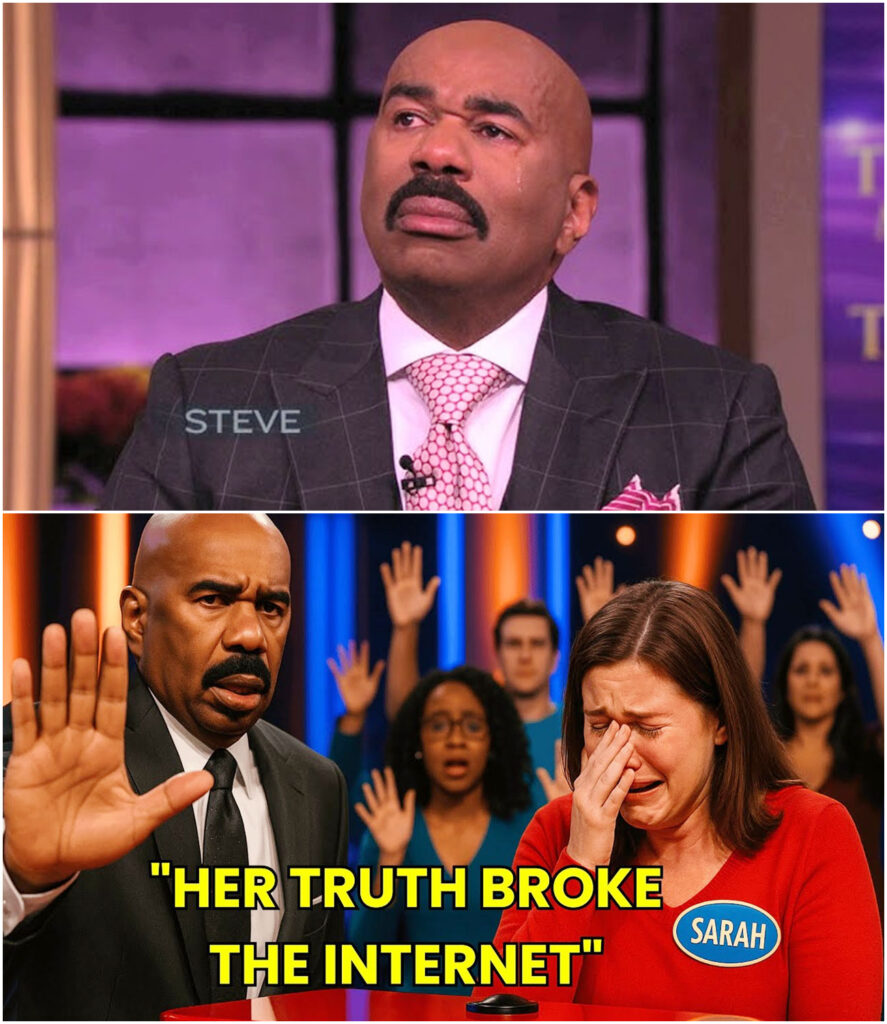





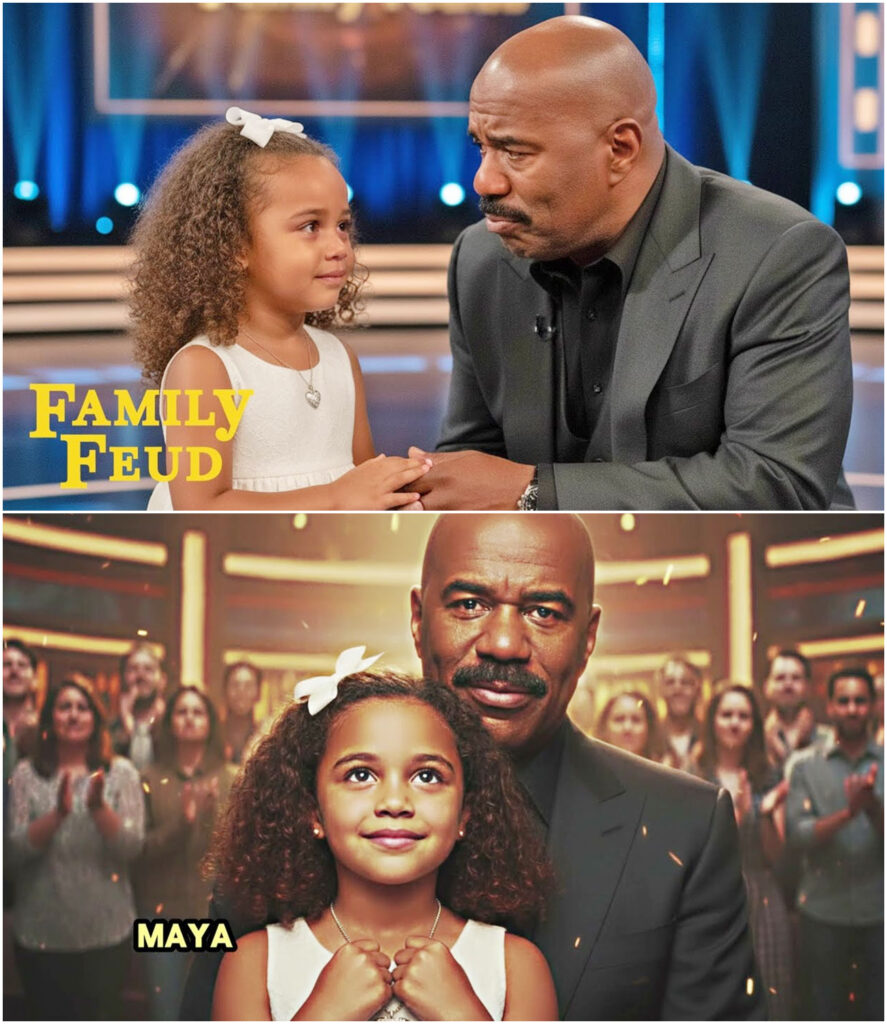
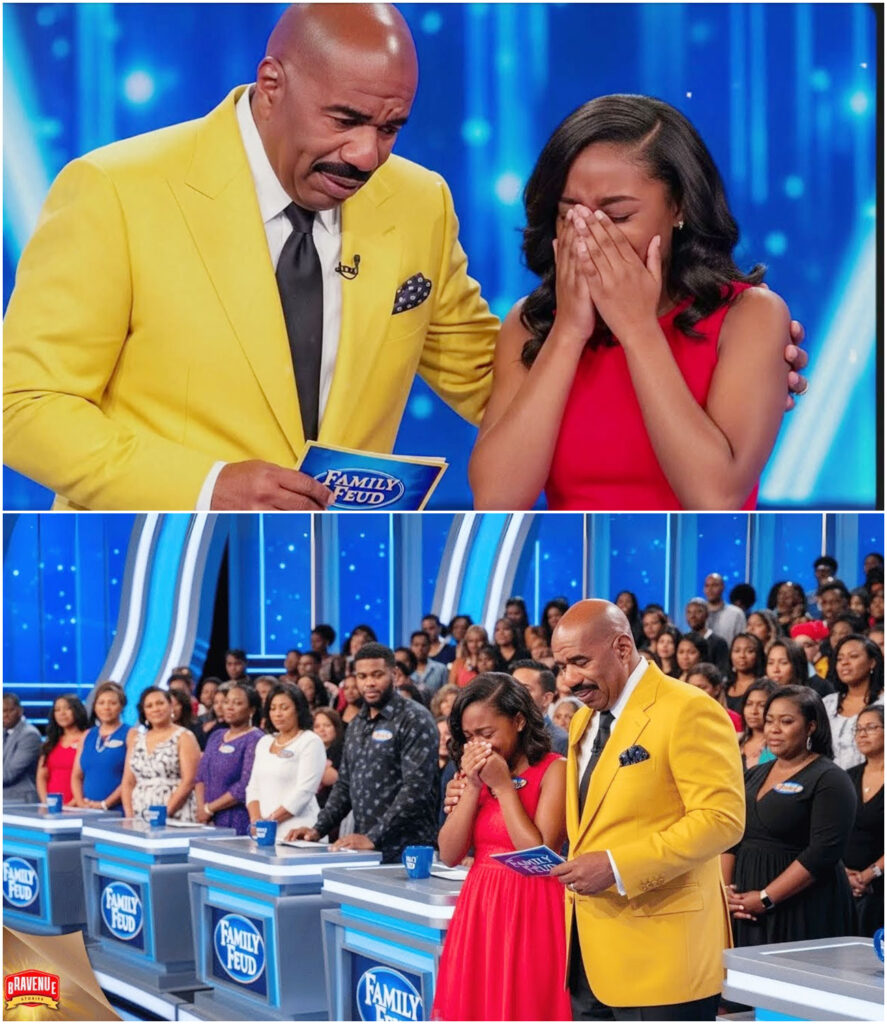
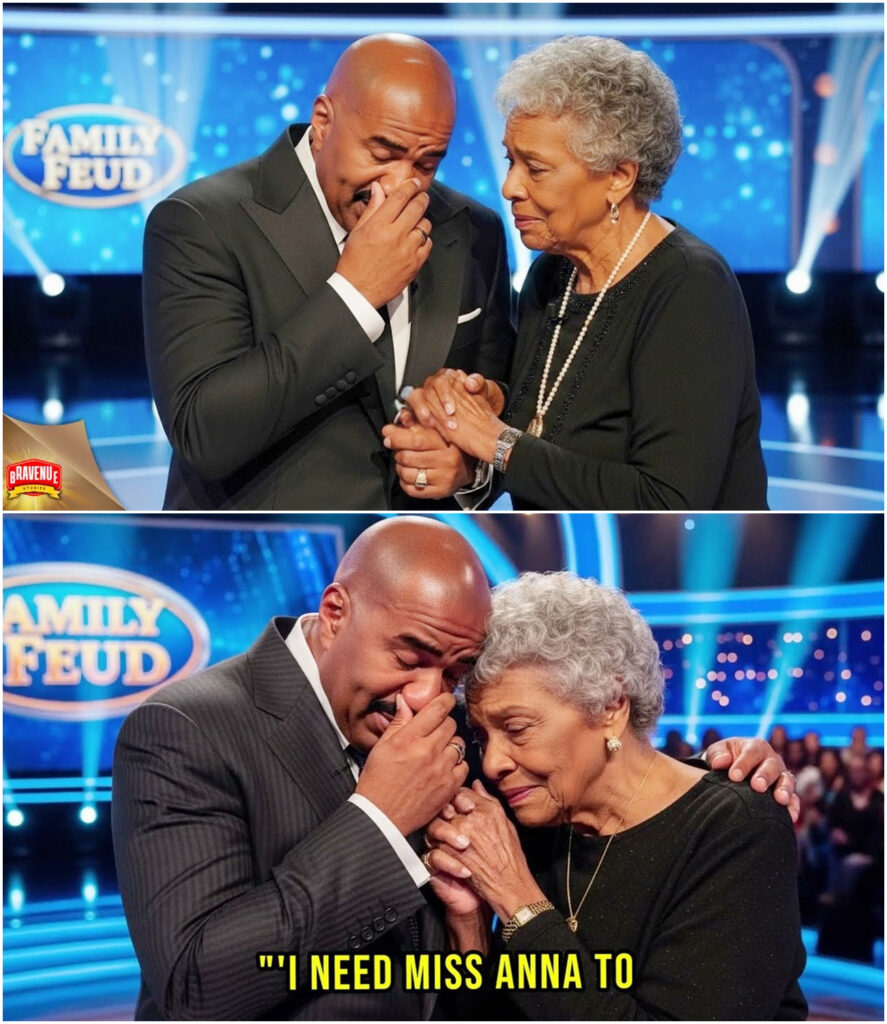









































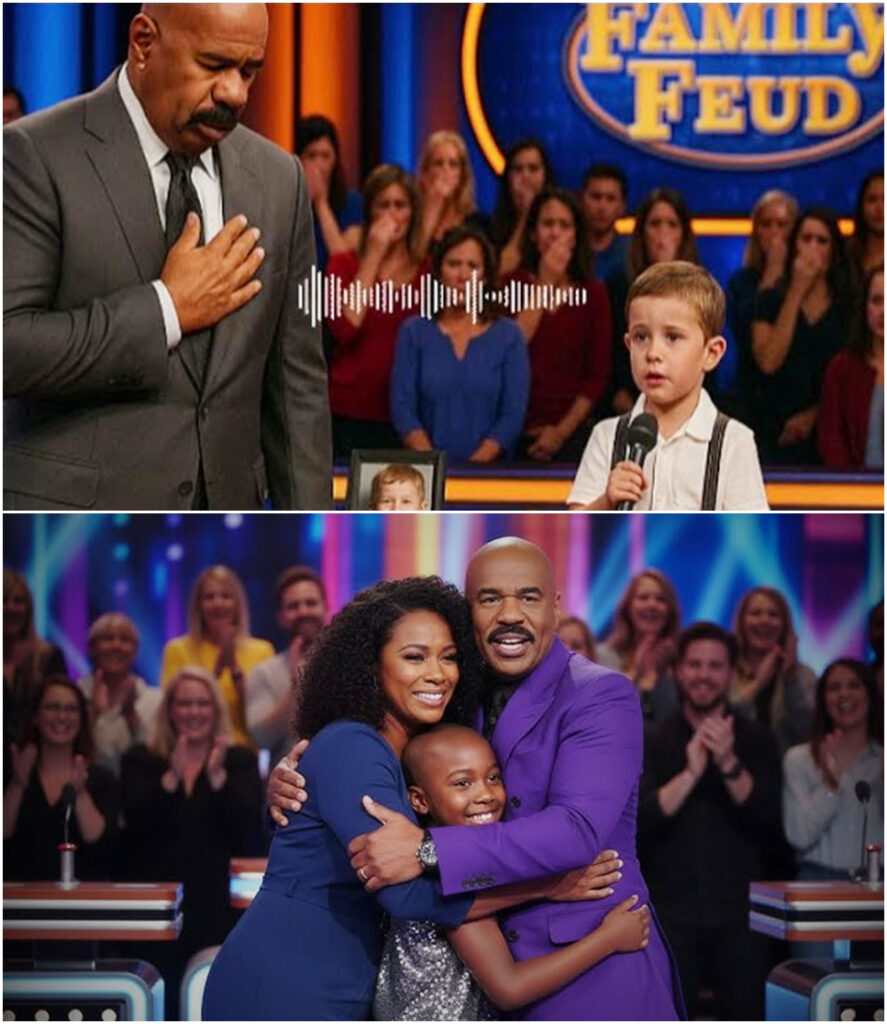


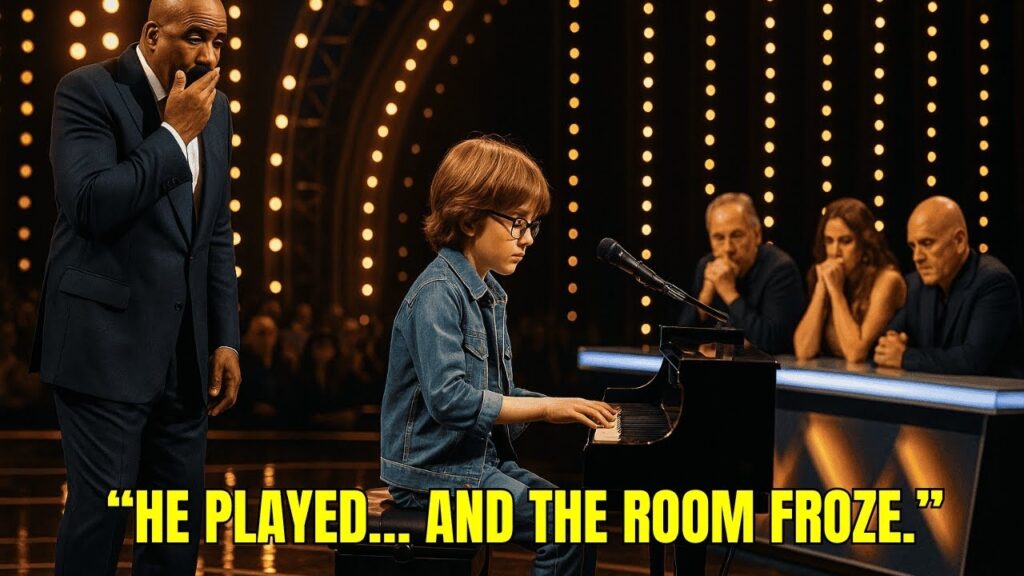
























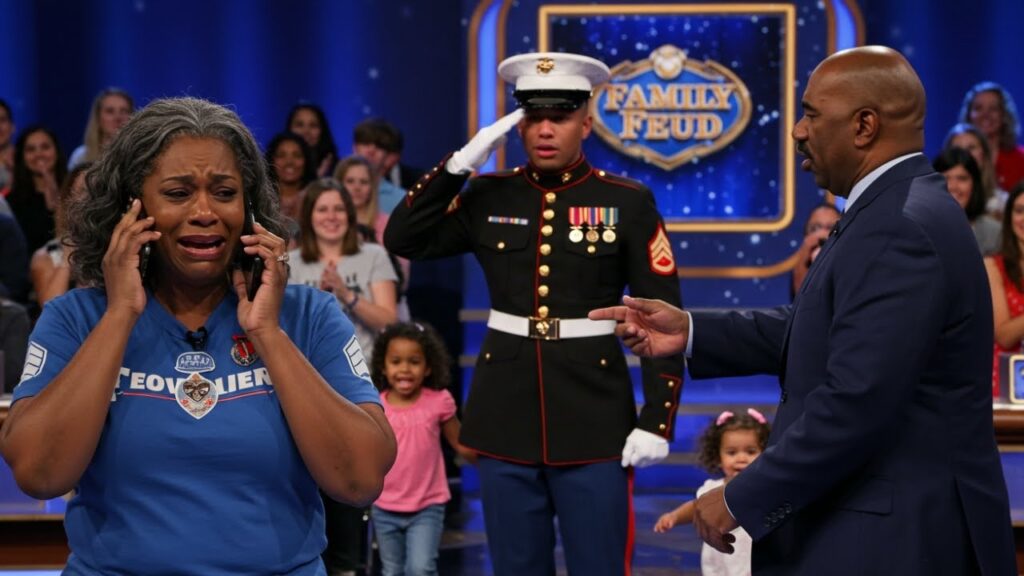















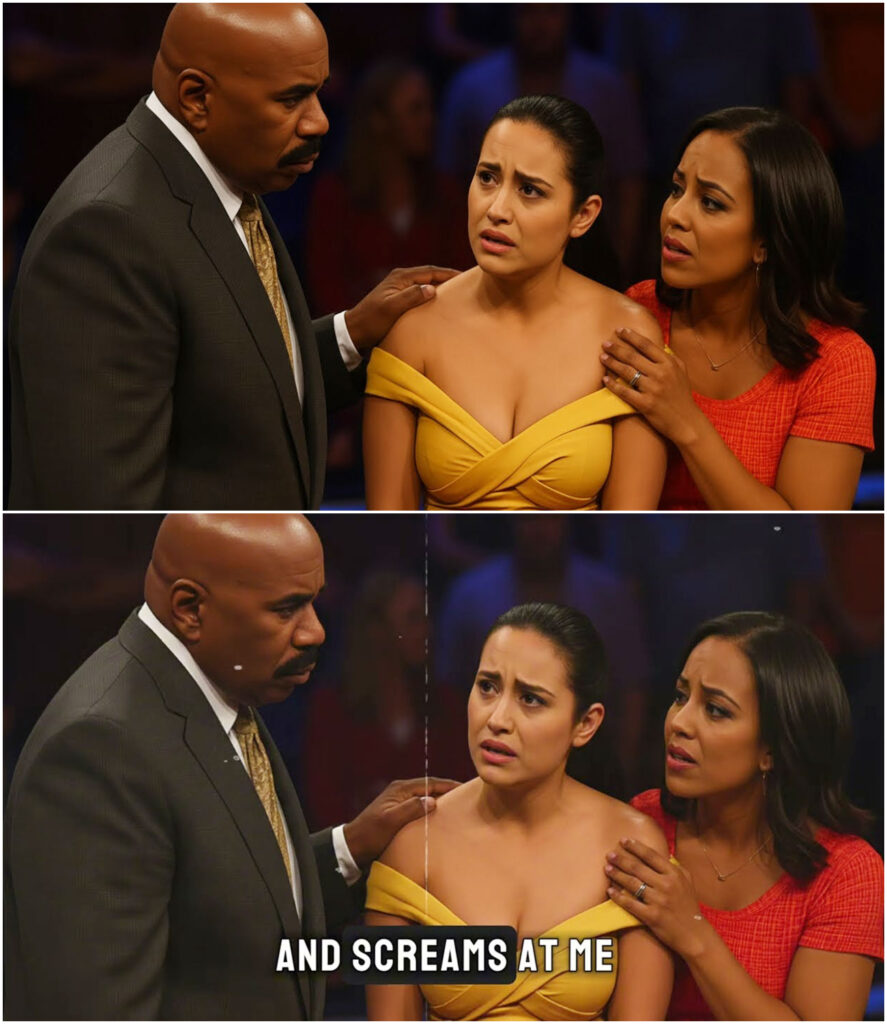






















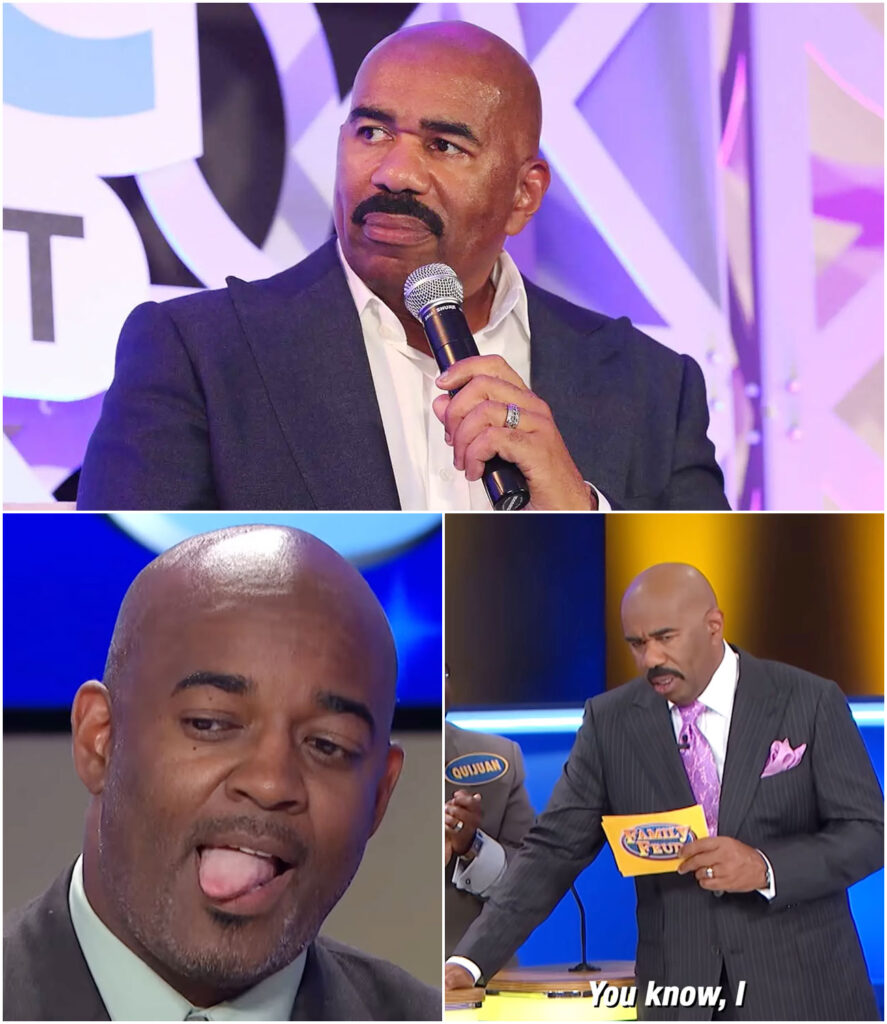

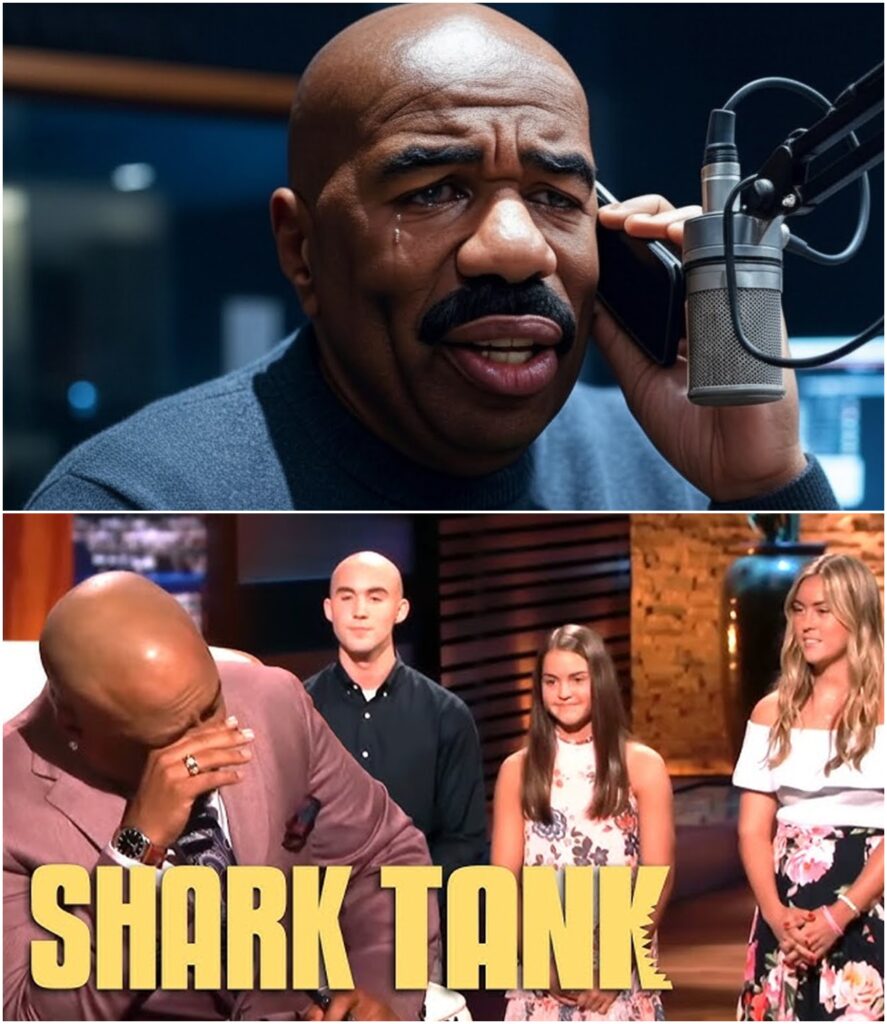
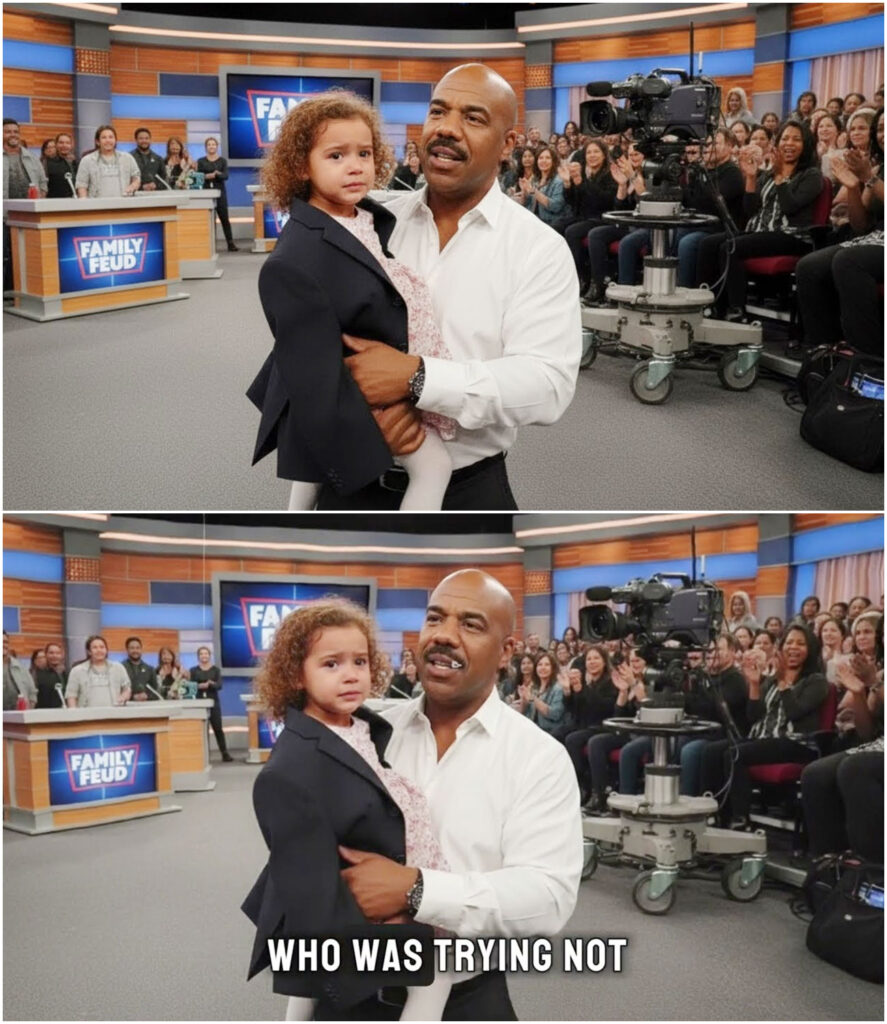

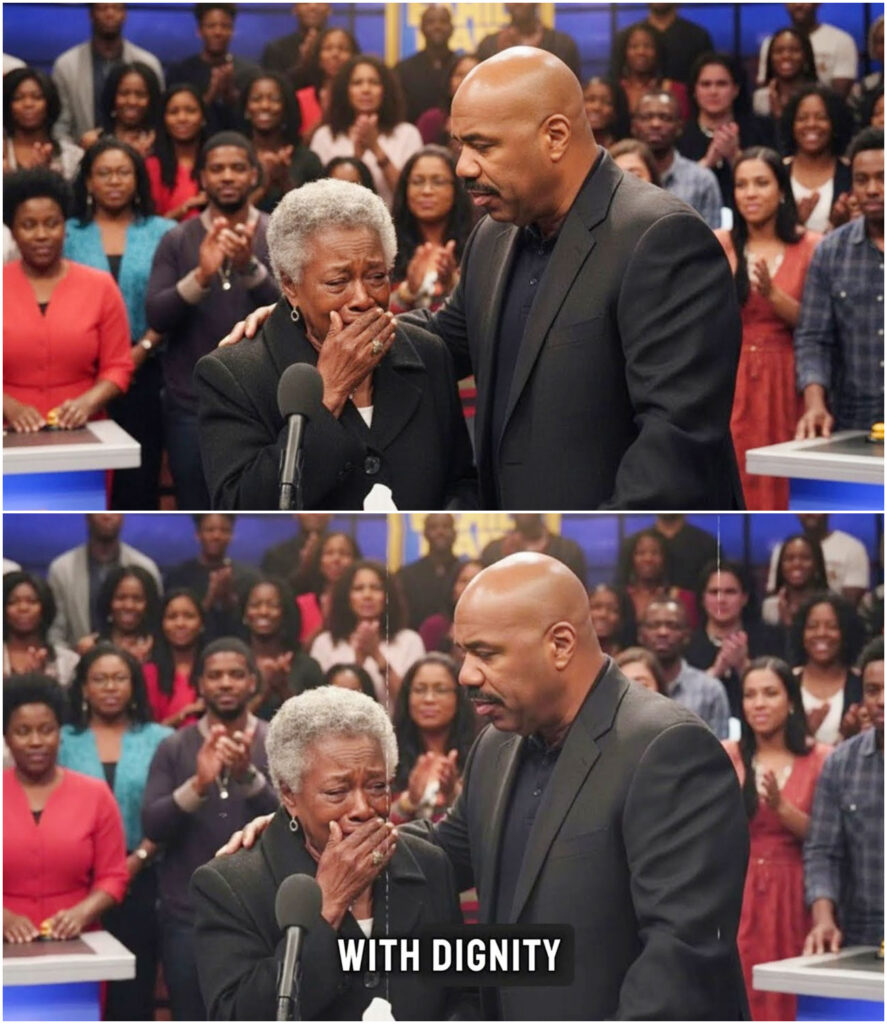
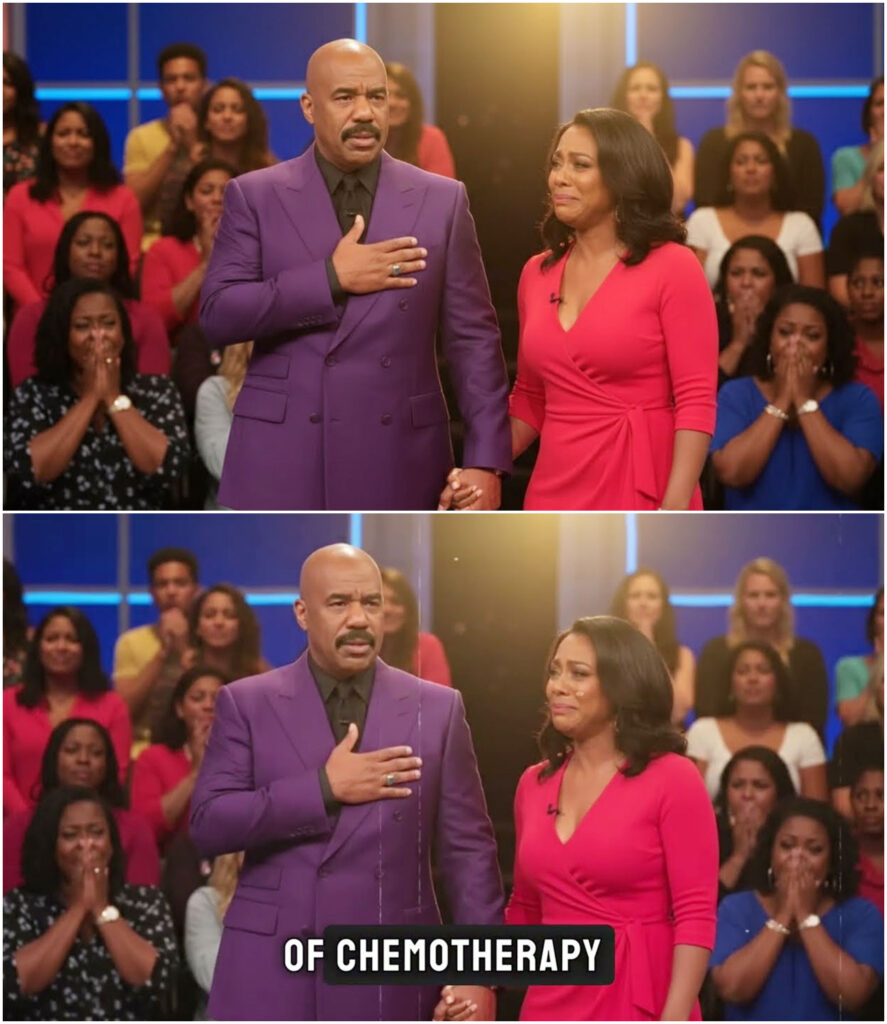















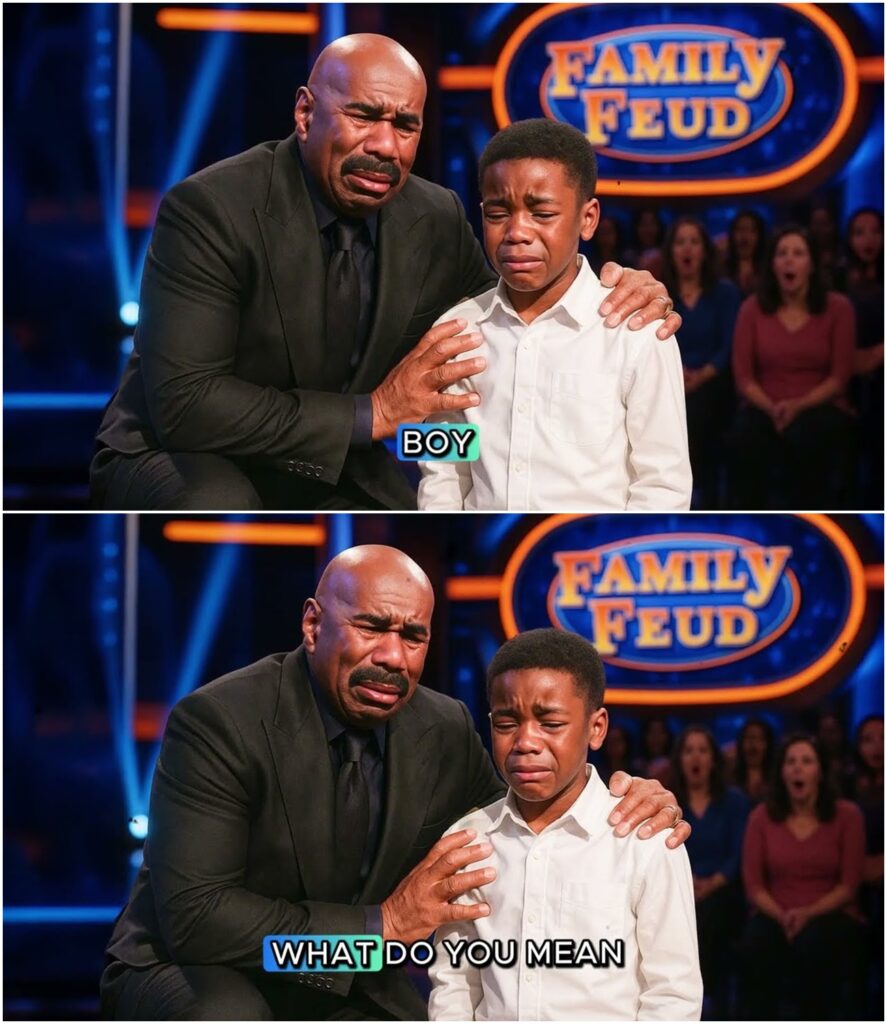




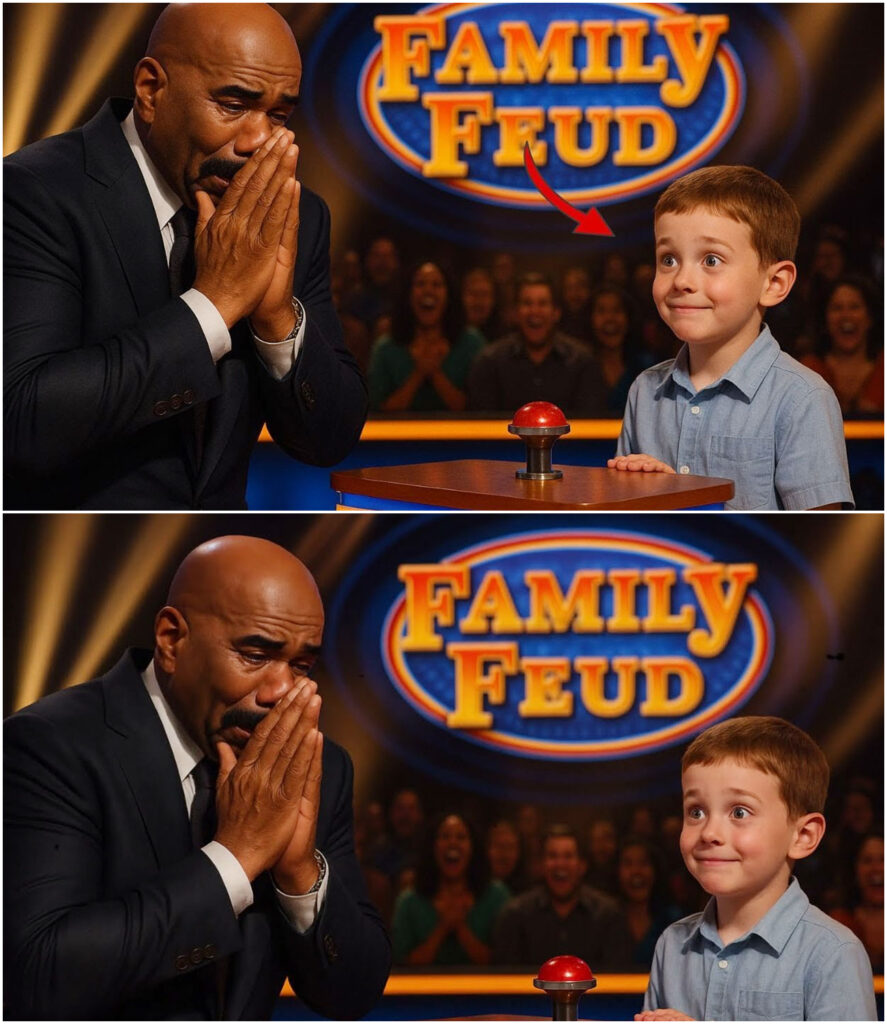








































































































































































































































































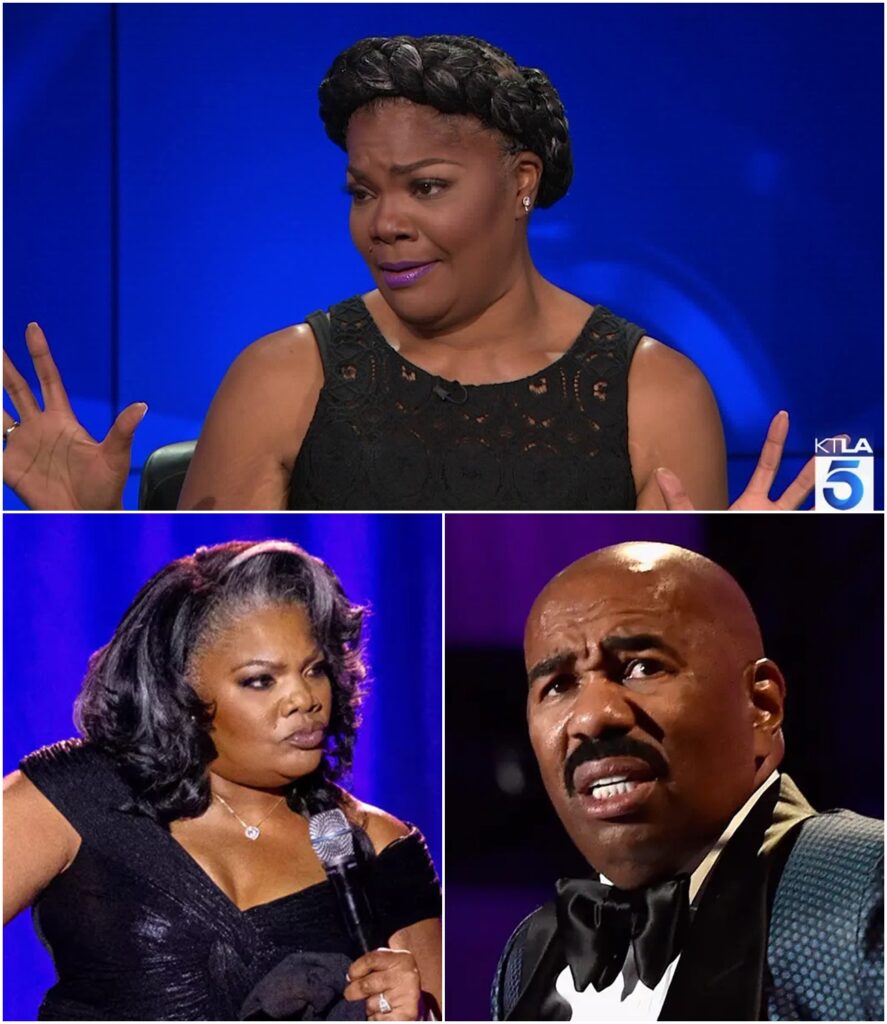









































































































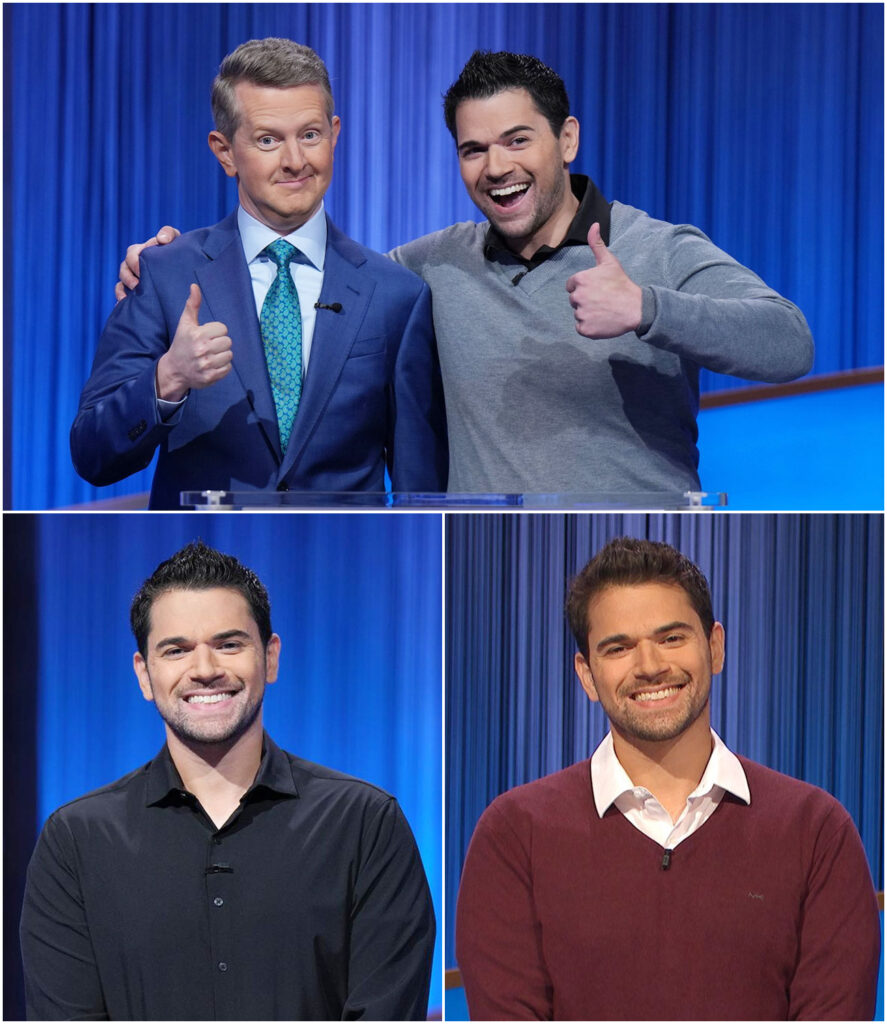




























UNBELIEVABLE: Steve Harvey’s Unexpected, Emotional Response to a Veteran’s Crisis SILENCES the Crowd and STOPS the Show Cold—You HAVE To See What He Did!

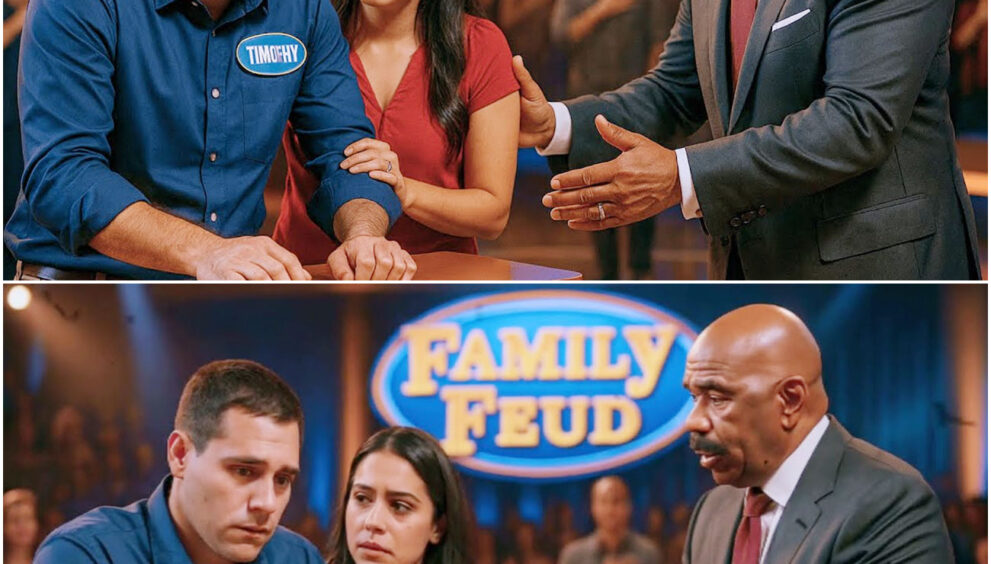
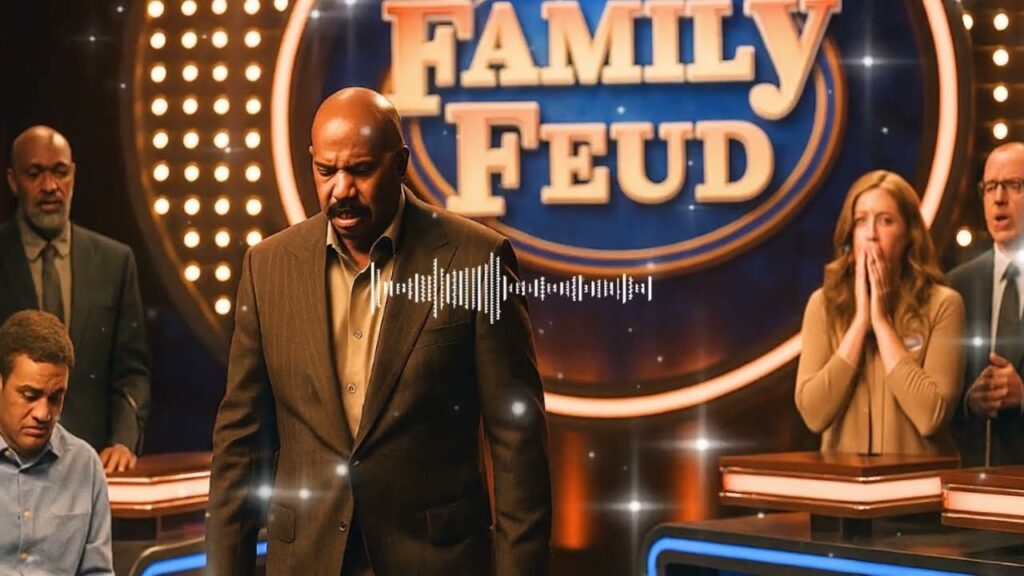
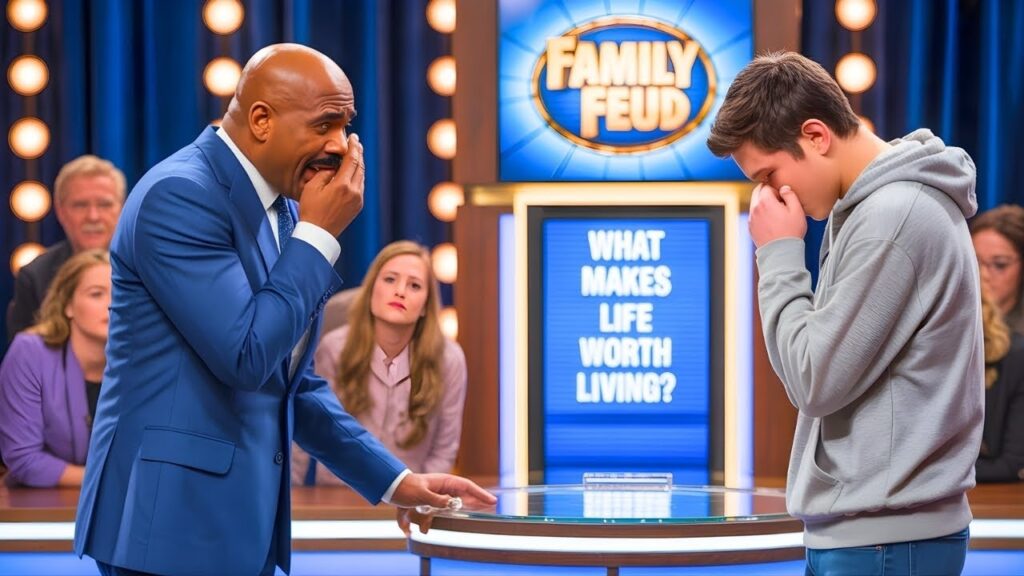
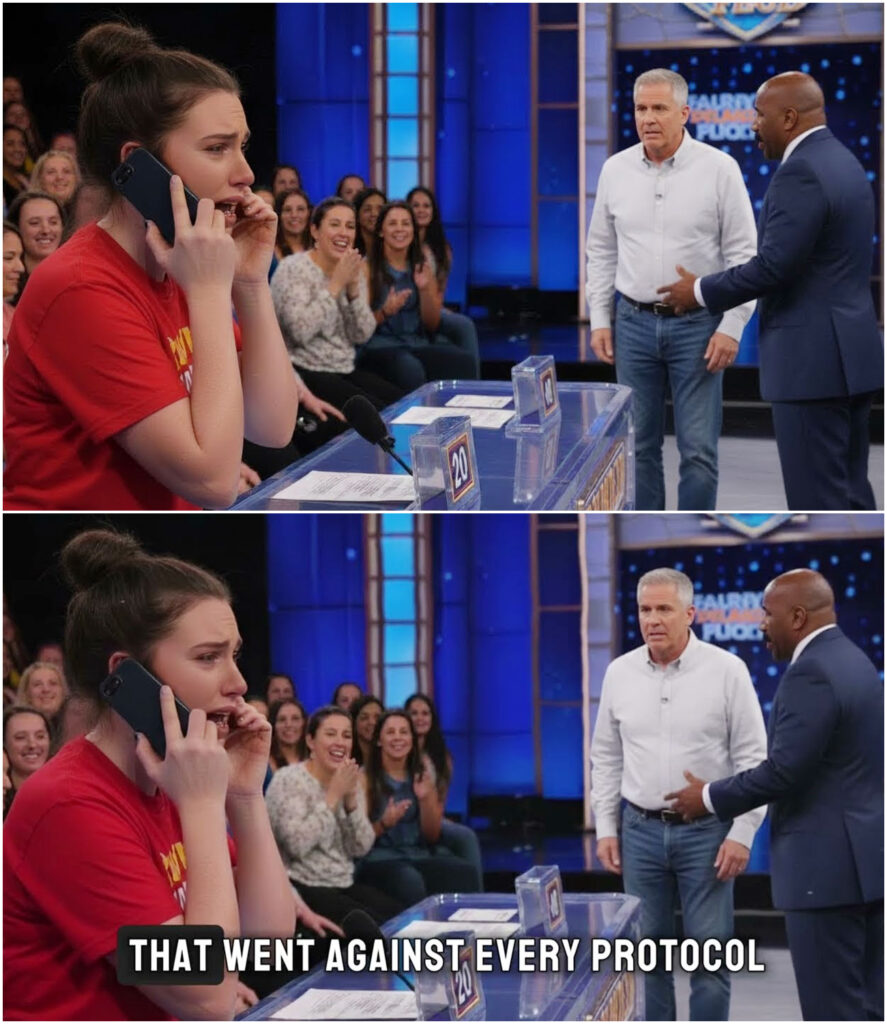
The buzzer echoed through the studio like a gunshot and everything changed. Timothy Rodriguez wasn’t hearing Family Feud anymore. He wasn’t in Atlanta. He wasn’t safe. The sound had transported him instantly across thousands of miles and 3 years back in time to a dusty compound in Kandahar Province, Afghanistan, where that same sound meant incoming mortars.
where that same sound meant someone might not make it home. His hands began to shake against the family podium. His breathing became shallow and rapid. The bright studio lights transformed into the harsh desert sun that had burned down on him during his final patrol. The day everything went wrong. The cheering audience became the chaos of a firefight.
the screaming of wounded soldiers, the thunderous roar of helicopters trying to evacuate casualties under heavy fire, and somewhere in the distance, he could hear Sergeant Martinez’s voice calling for a medic, calling for help that would come too late for the 19-year-old private lying bleeding in the sand, calling Timothy’s name because he was the squad’s designated combat lifesaver.
The memory was so vivid, so real that Timothy could taste the dust in his mouth. could feel the weight of his combat gear. Could hear the distinctive whistle of incoming artillery that had taught him and his brothers in arms to hit the ground and prey. But there was no ground to hit here, no bunker to dive into, no way to protect the people around him from the danger that felt so immediate and terrifying.
In his mind, he was back in that Humvey, leading a convoy through the narrow streets of Kandahar. When the world exploded in a brilliant flash of orange and white, when the deafening roar swallowed everything. When he woke up 3 days later in a field hospital, missing his left leg and two of his closest friends.
It was supposed to be the Rodriguez family’s moment of triumph. They driven 18 hours straight from their small apartment in San Antonio, Texas, cramming into Miguel’s aging pickup truck because they couldn’t afford plane tickets. The truck had broken down twice on the way. Once outside of Bowmont when the radiator overheated, and again in Louisiana when the alternator failed.
They’d spent their last emergency fund money on repairs, sleeping in rest stops, and surviving on gas station coffee and determination. For three days before the taping, they’d stayed in the cheapest motel they could find, a place that smelled like disinfectant and broken dreams, practicing answers and trying to manage their nerves while Timothy fought off the anxiety that came with being in unfamiliar places around unfamiliar people, dealing with unfamiliar situations.
The Rodriguez family had been selected for family feud after Maria had sent in their applications 6 months earlier. During one of Timothy’s darkest periods, he’d been having nightmares every night, waking up screaming and drenched in sweat, reliving the explosion that took his leg and the lives of two of his closest friends.
He’d been isolating himself, pushing away the people who loved him most. Convinced that he was broken beyond repair and that his family would be better off without him, Maria had hoped that getting selected for the show would give him something to look forward to, something positive to focus on besides the endless cycle of medical appointments and therapy sessions that filled his days, but seemed to offer little hope for real healing.
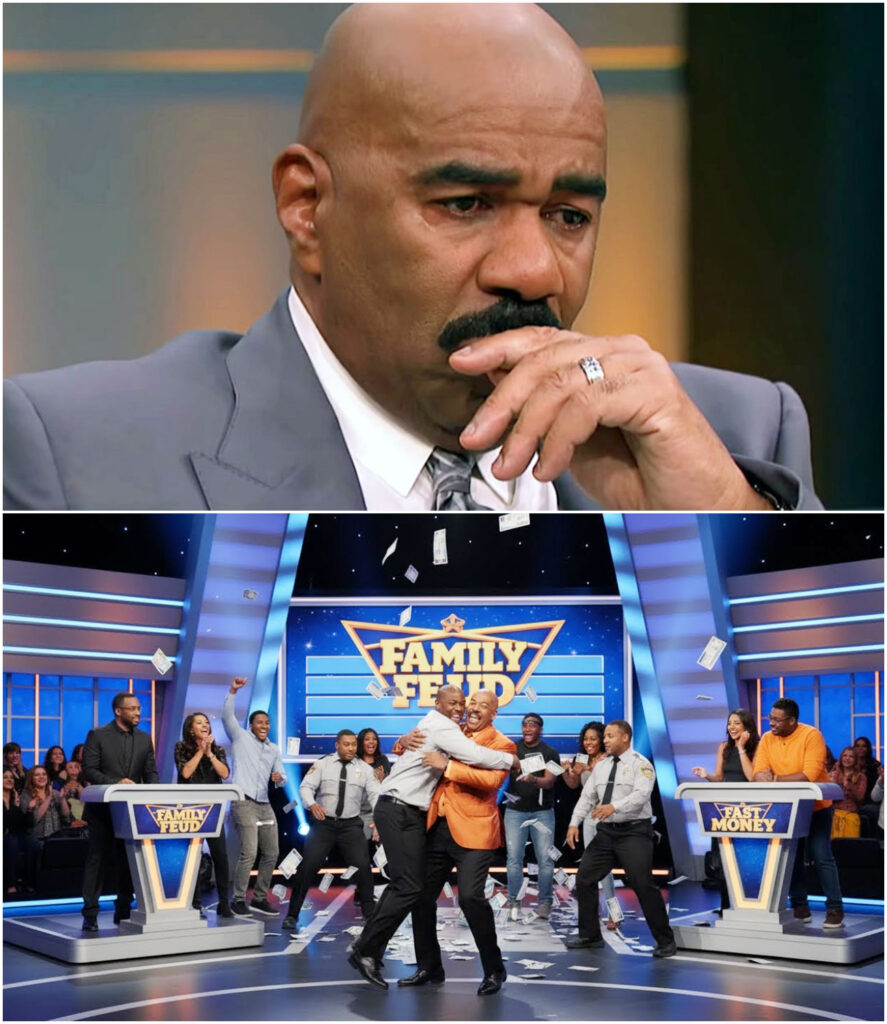
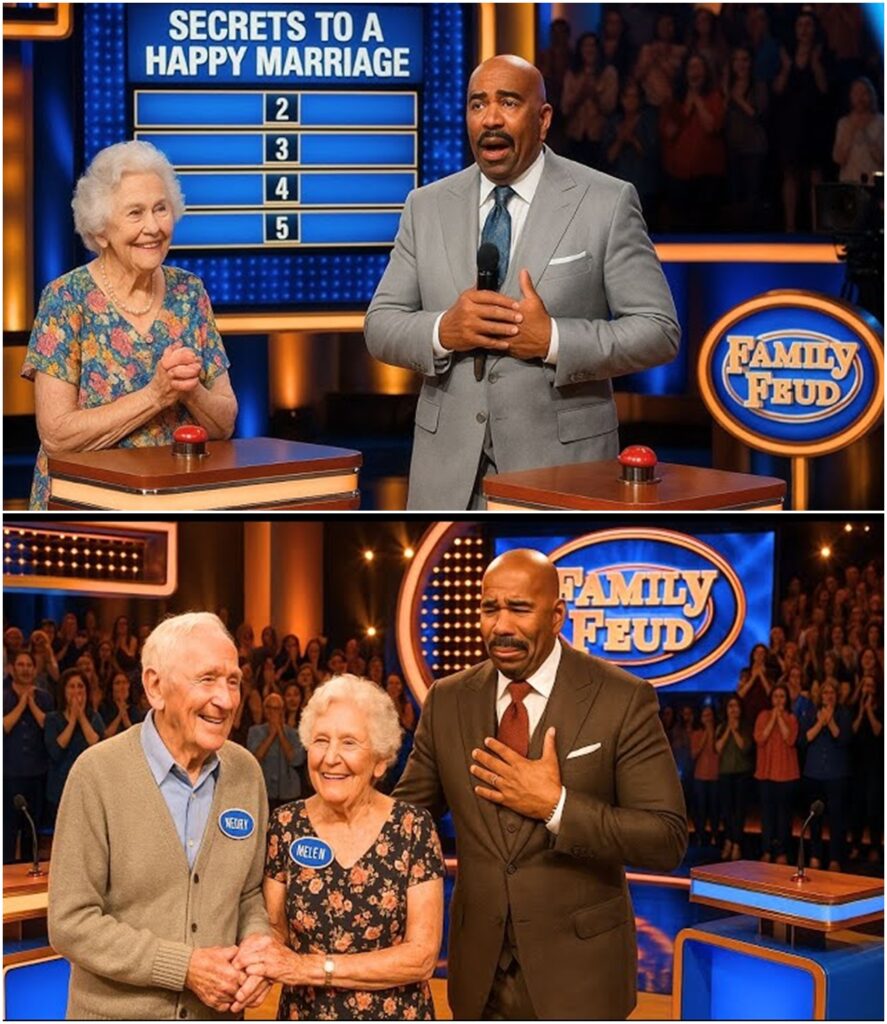
They just won the fast money round, securing $15,000 that would change everything for them. The money would help pay for Timothy’s advanced prosthetic leg, the computerized one that would let him walk without the constant pain. It would cover his younger sister Isabella’s college tuition, making her the first Rodriguez to attend university.
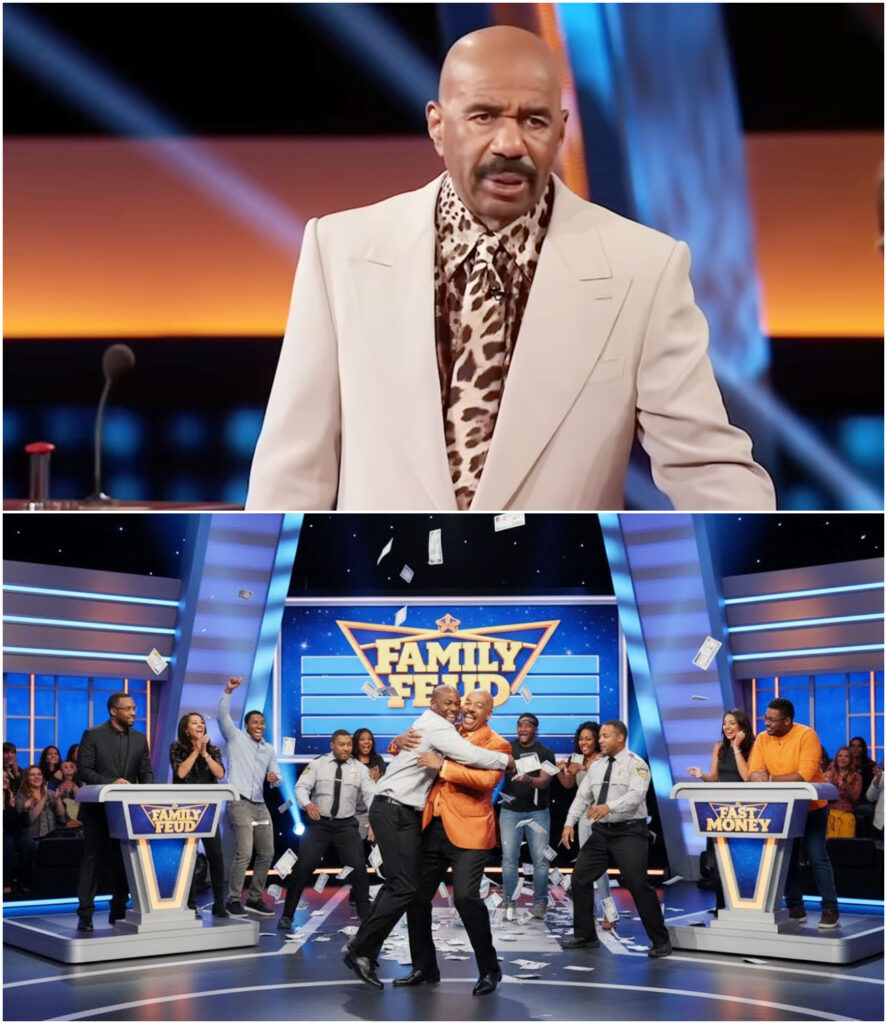
It would help his parents, Miguel and Rosa, finally catch up on the medical bills that had been crushing them since Timothy came home. The confetti was falling like snow. Each piece catching the studio lights and creating a magical atmosphere that should have felt like pure celebration. The audience was on their feet, cheering wildly for this family that had shared their struggles with such honesty during the introductions.
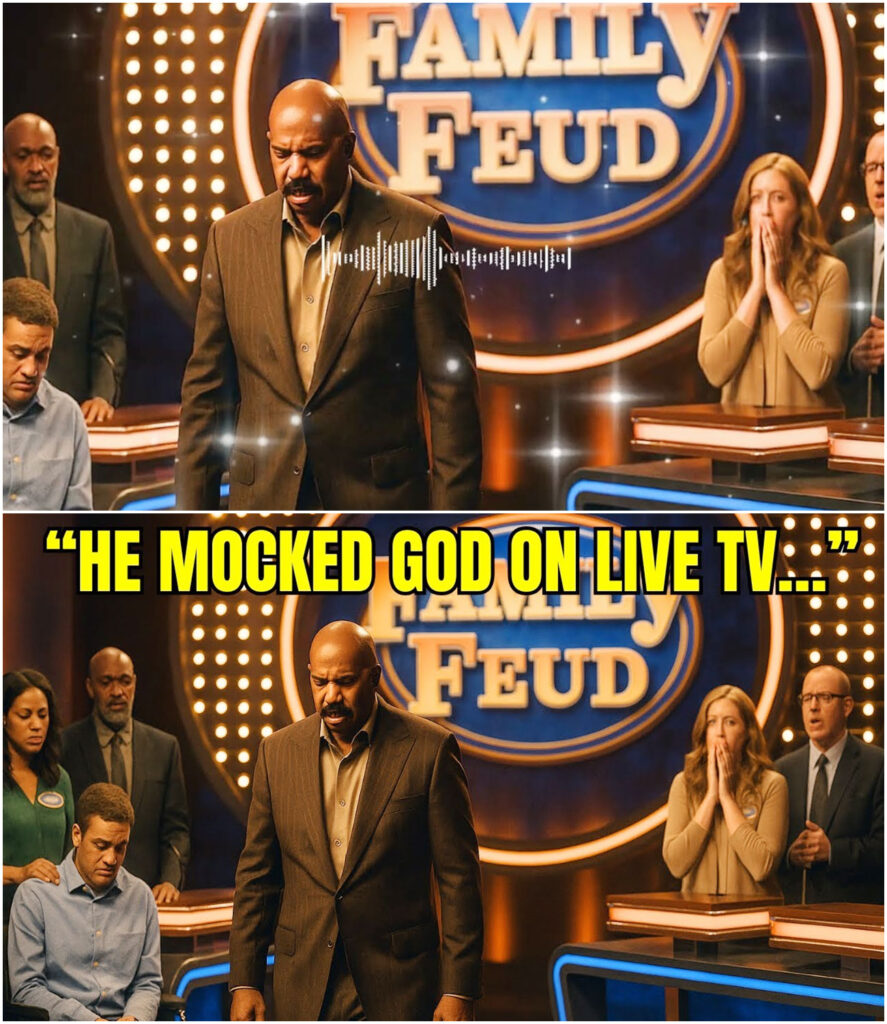
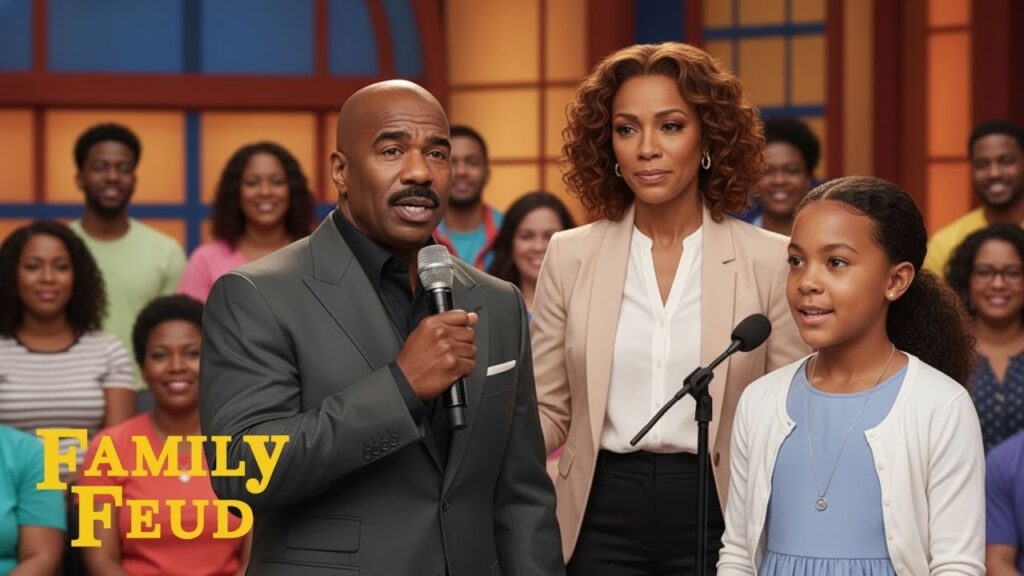
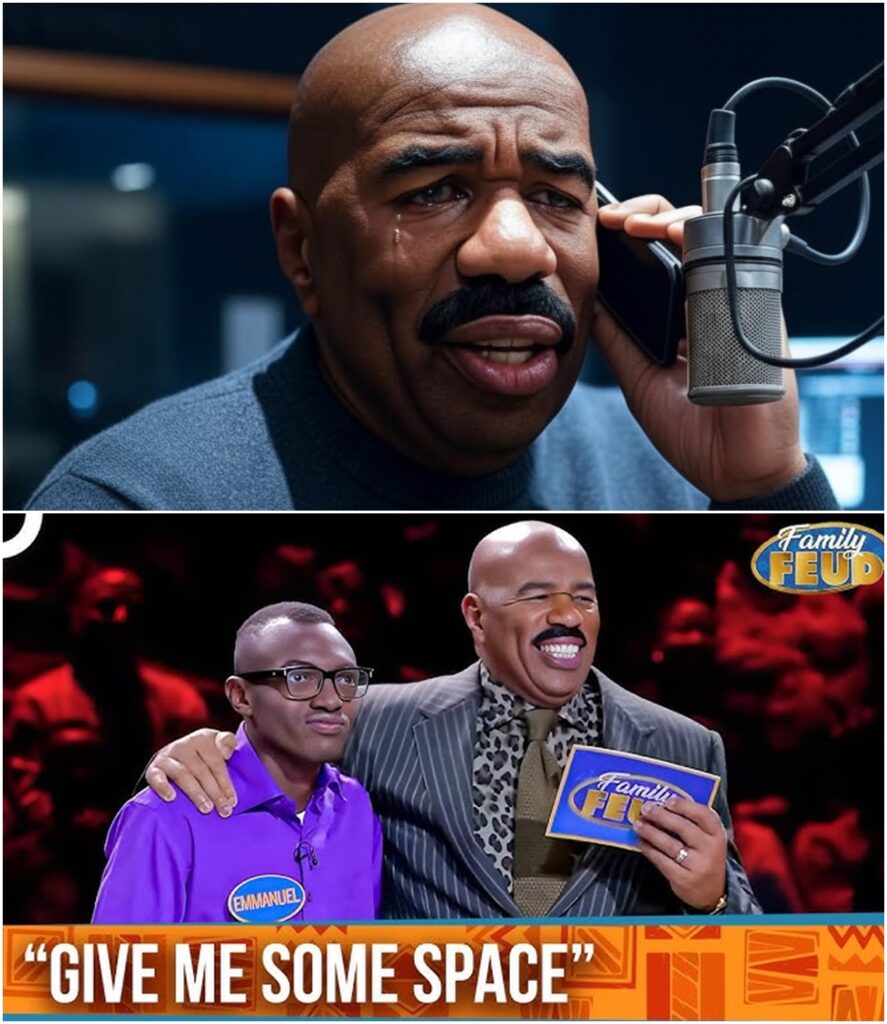
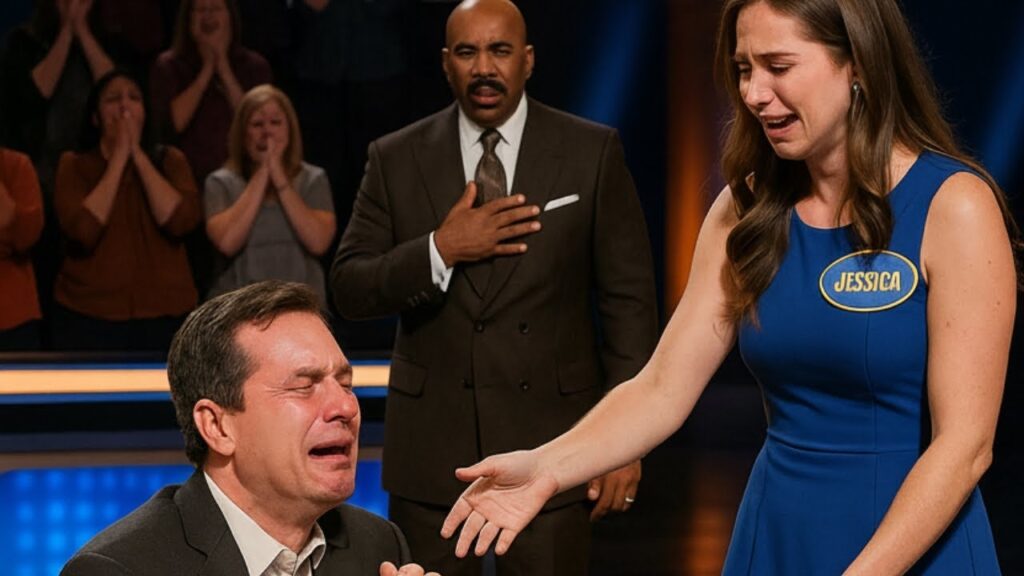
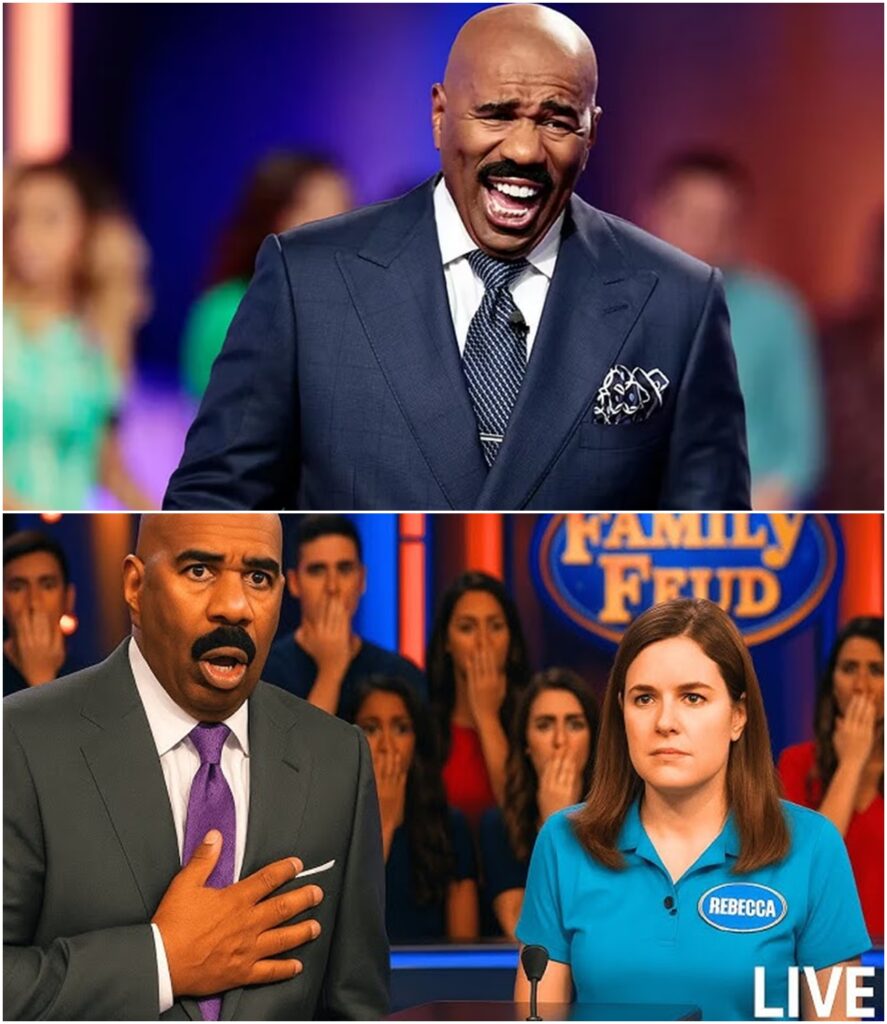
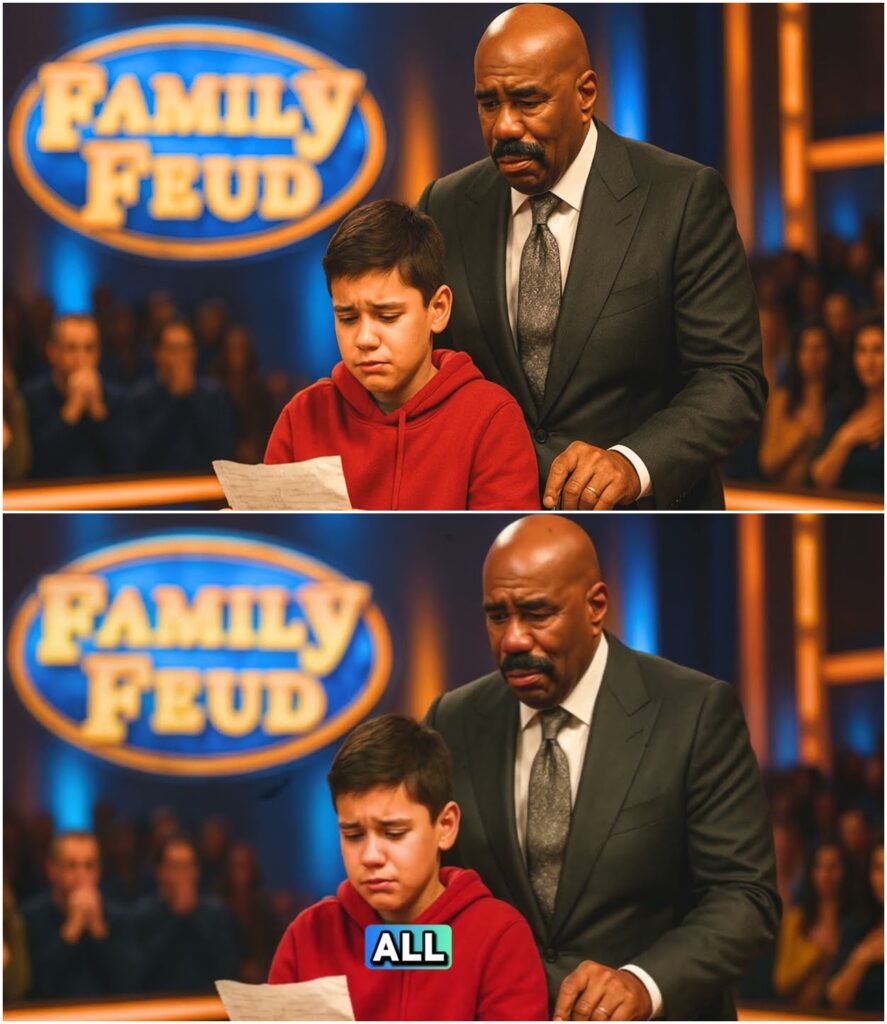
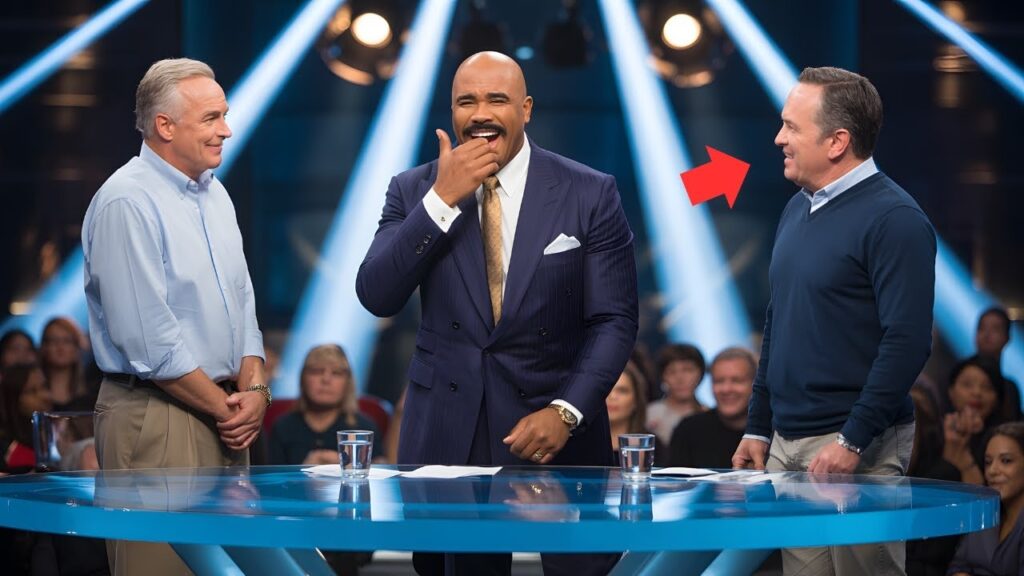
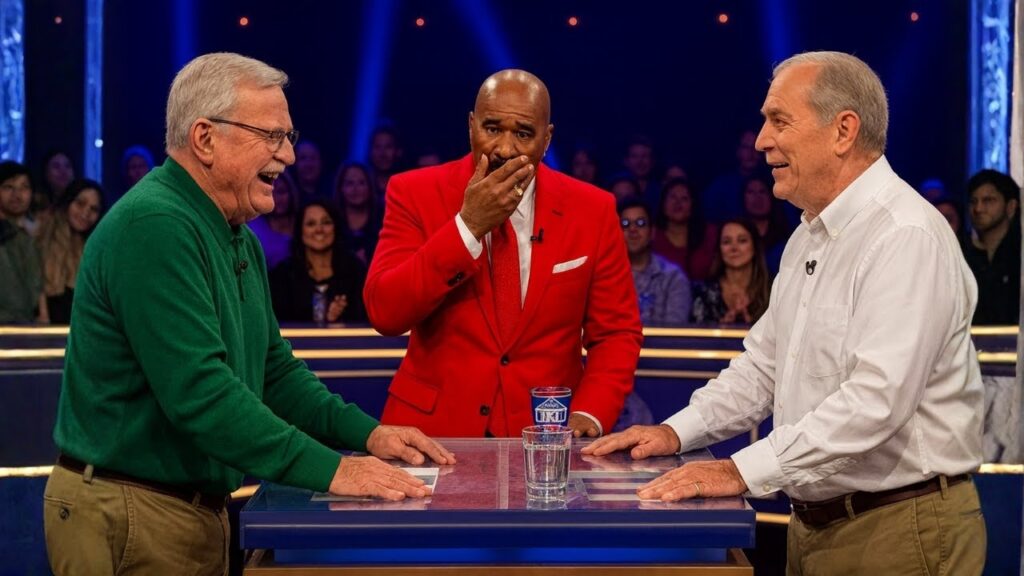
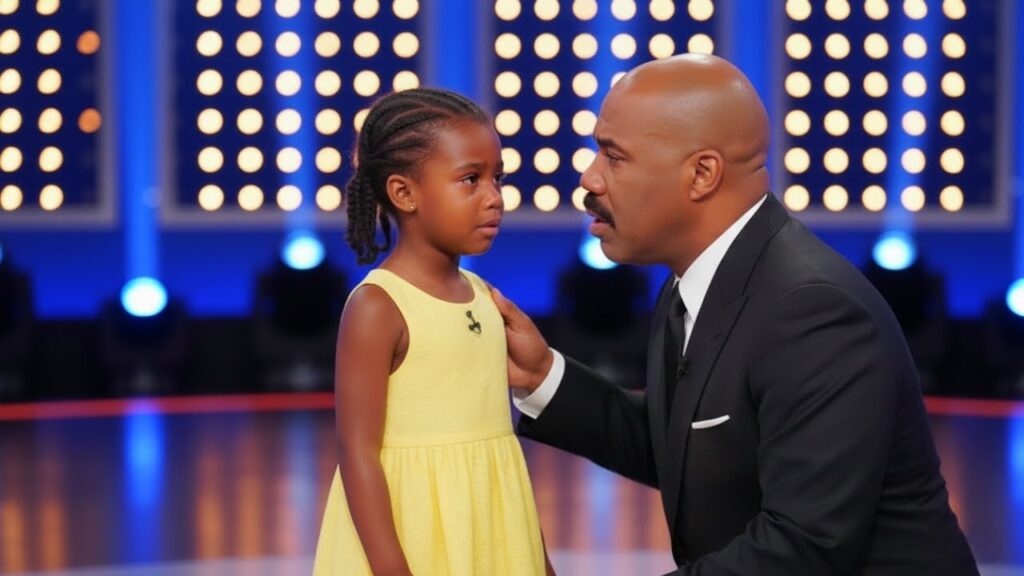
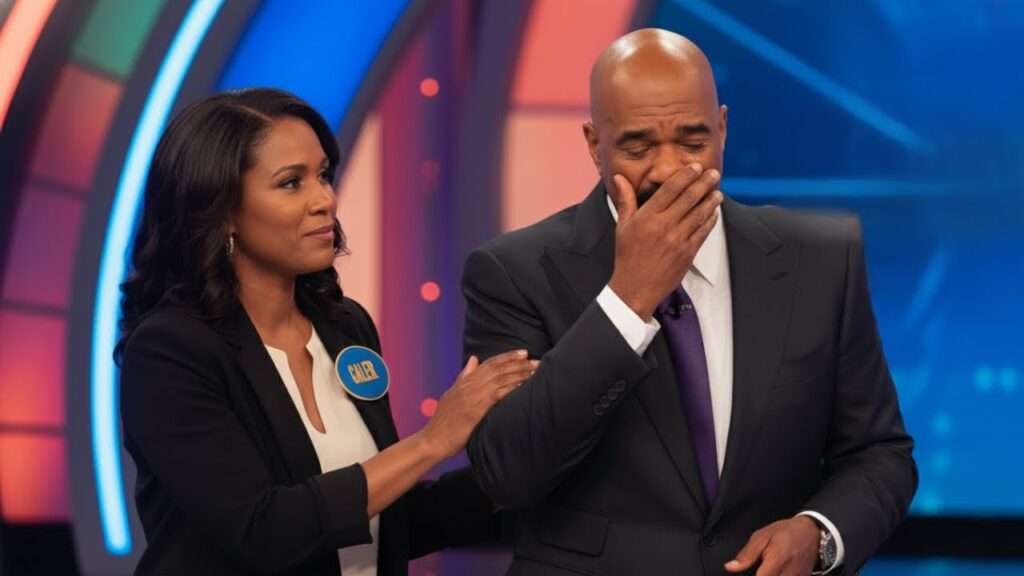
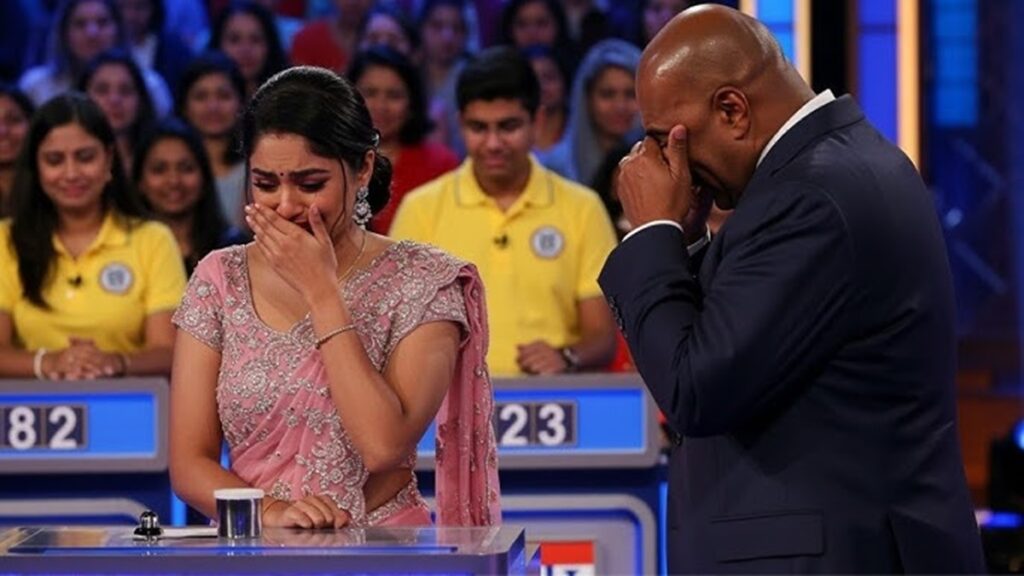
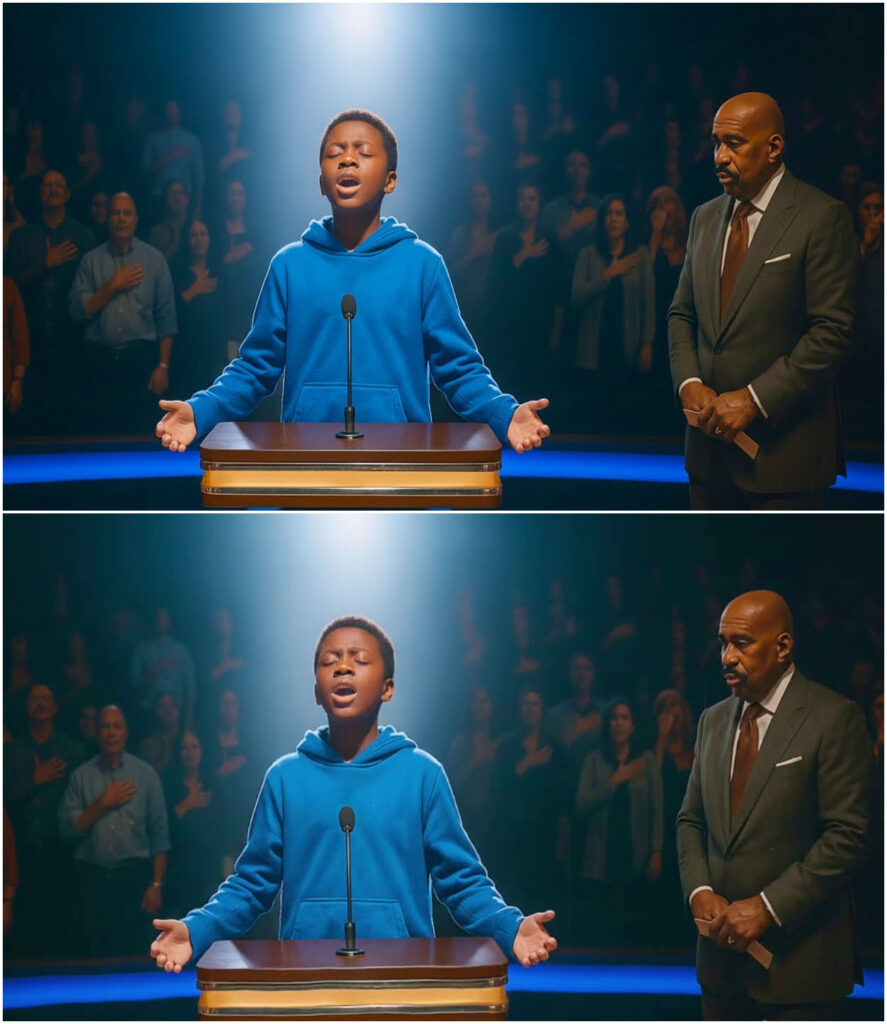
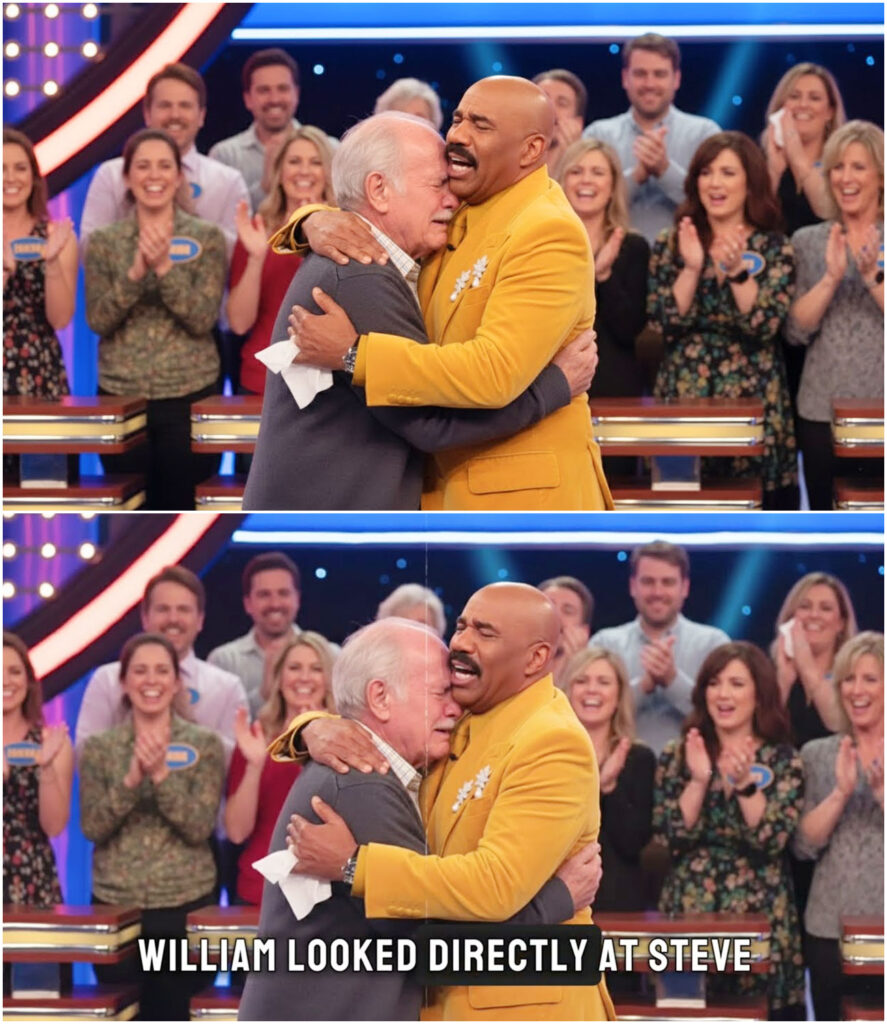
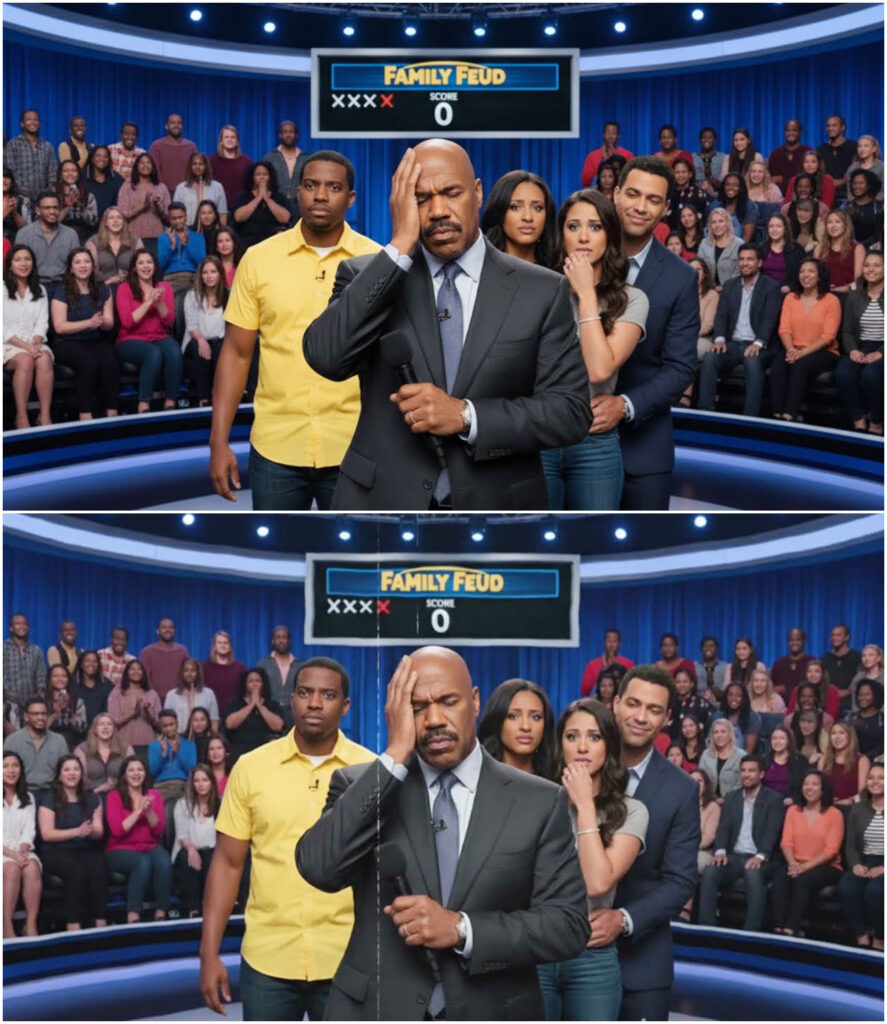
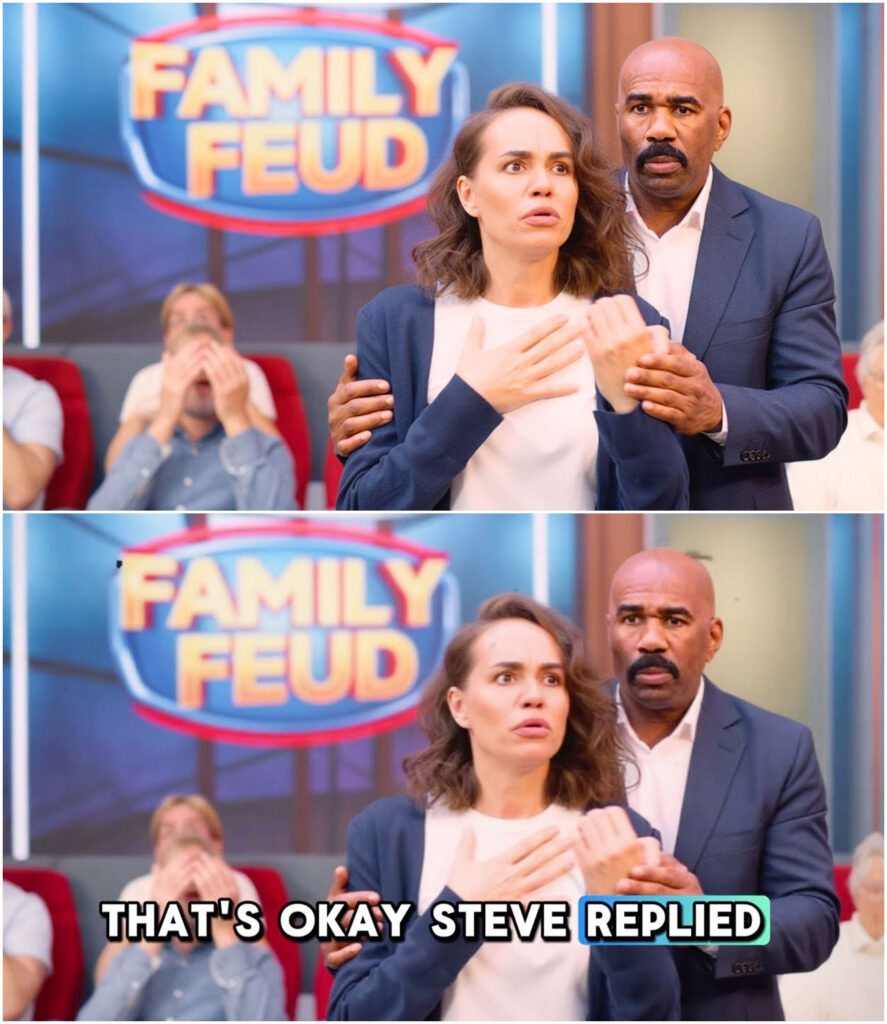
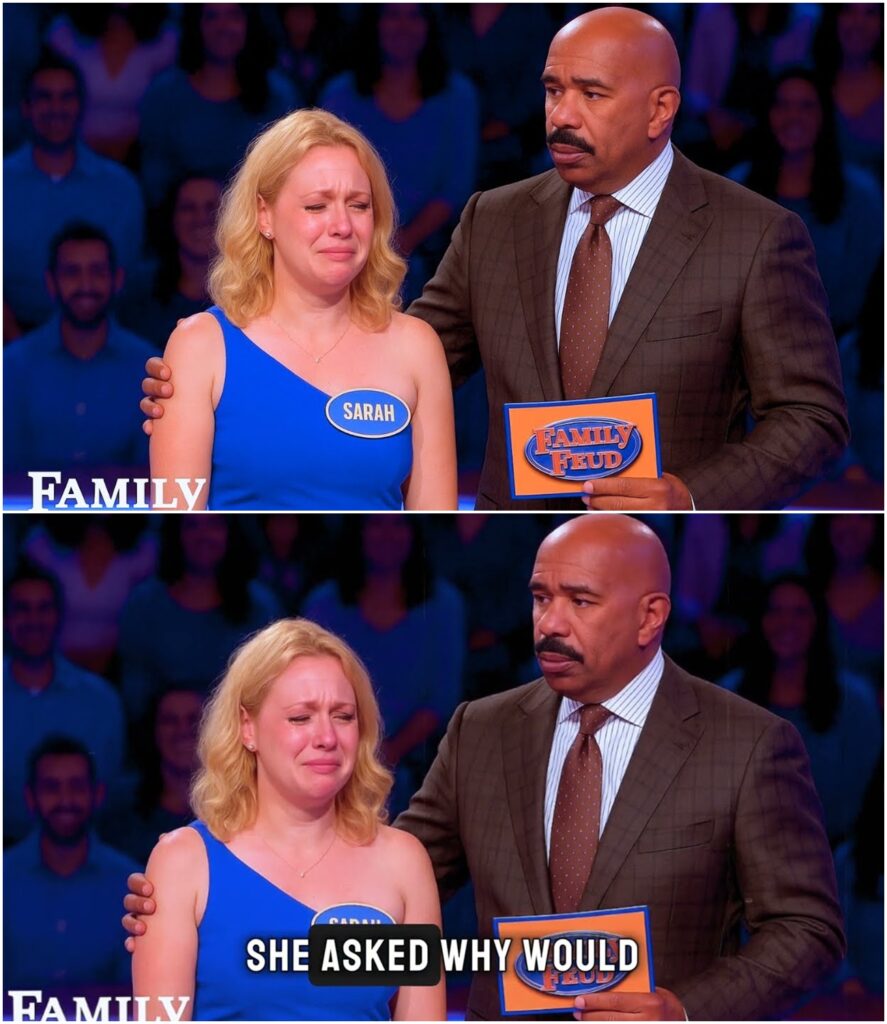
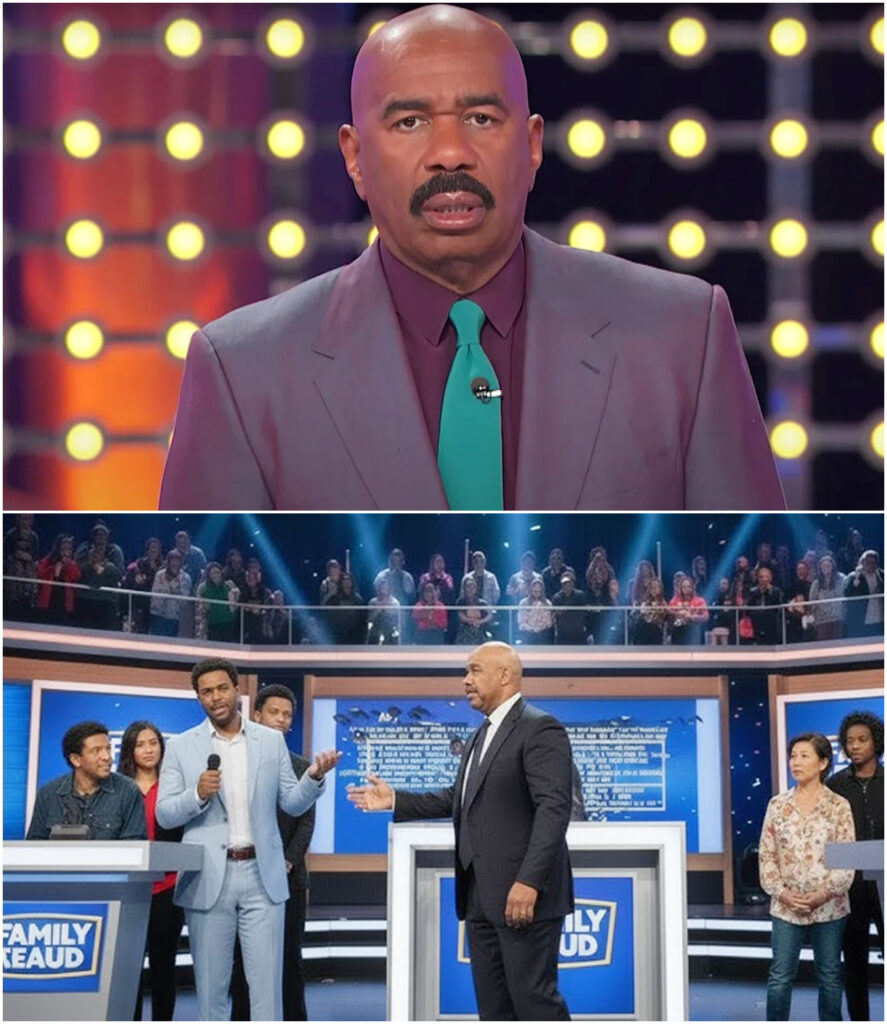
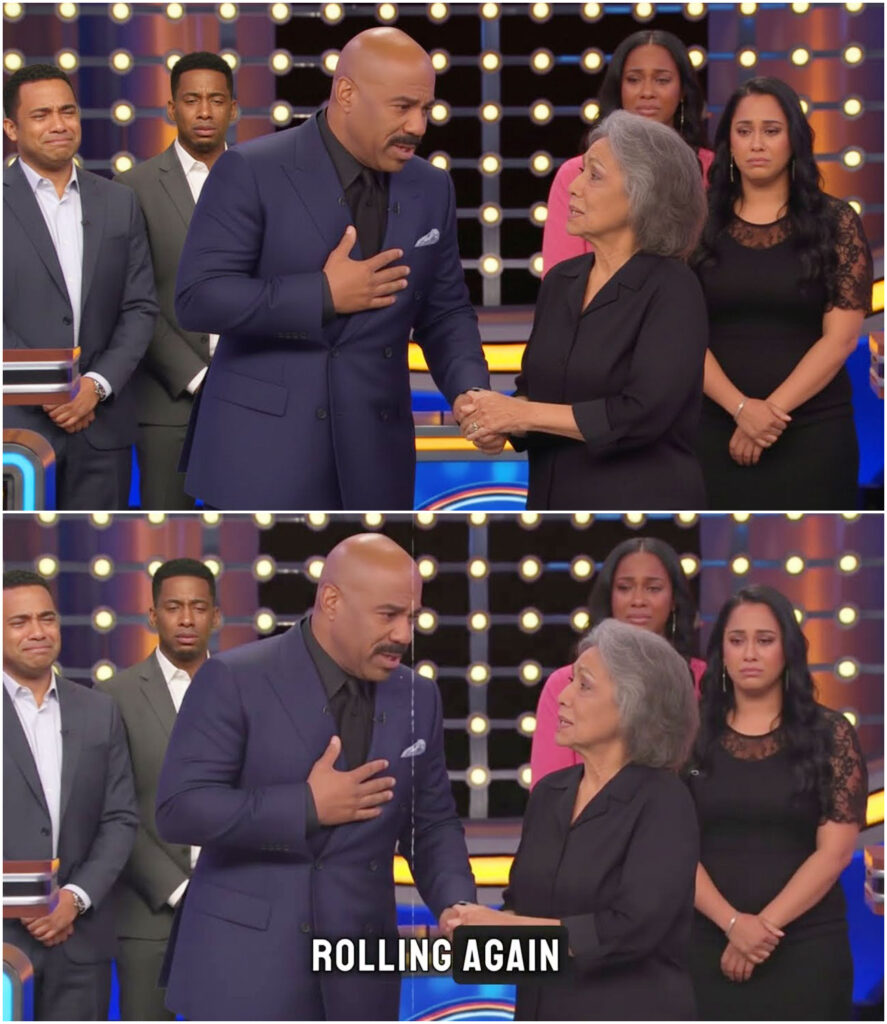
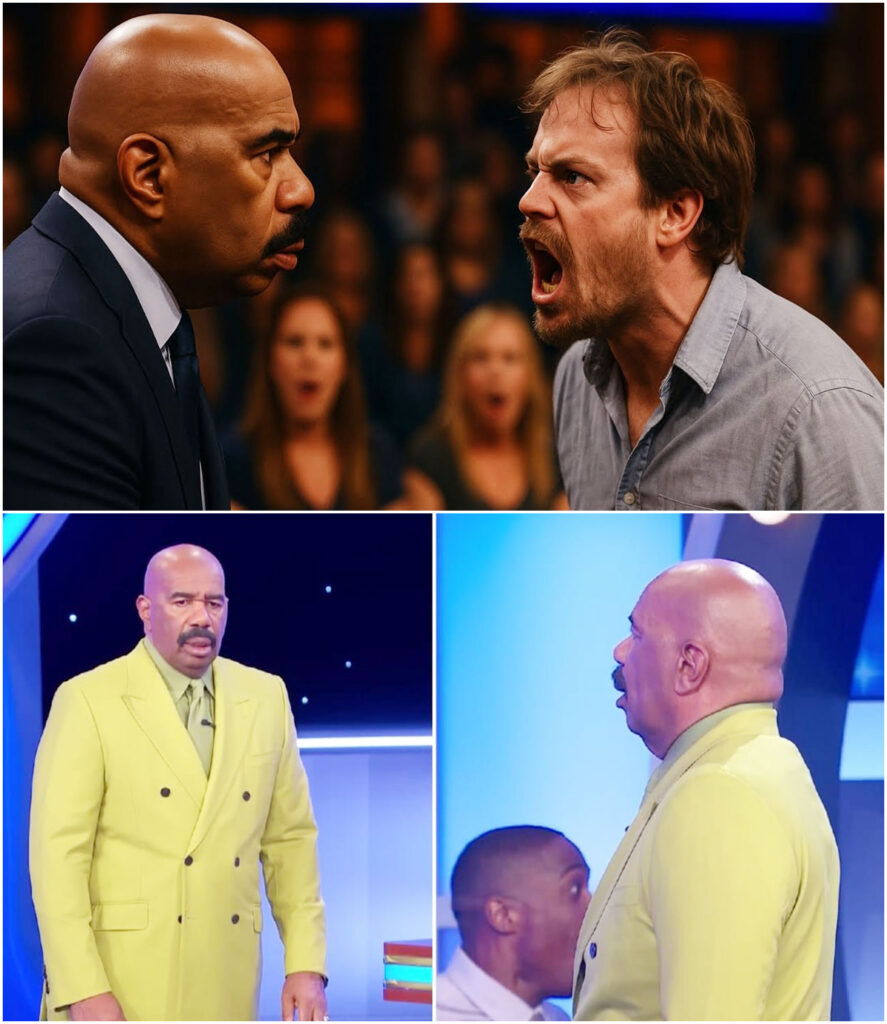
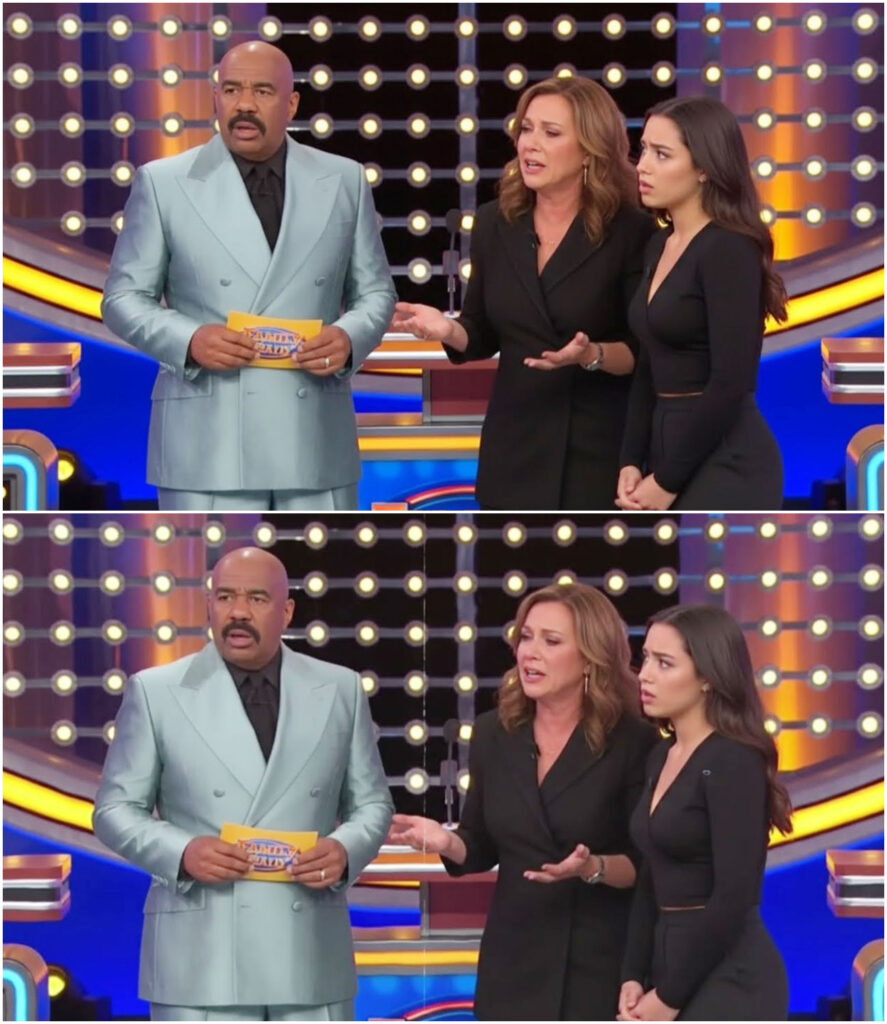
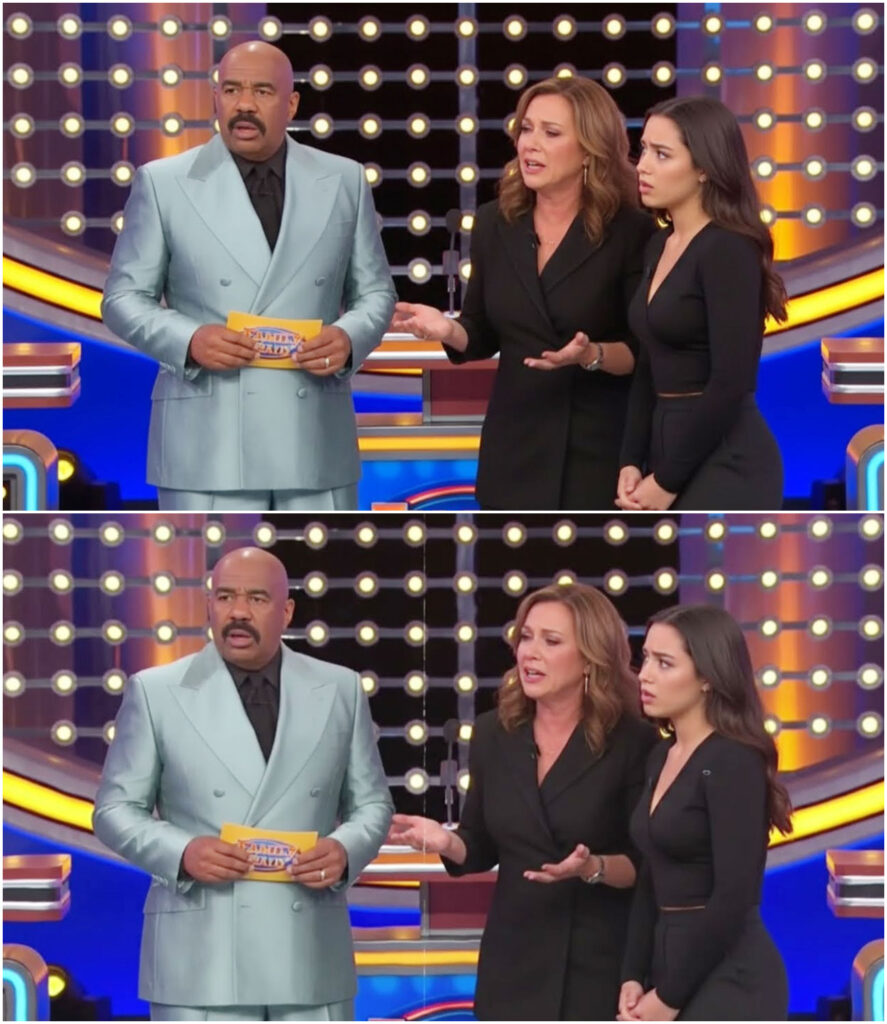
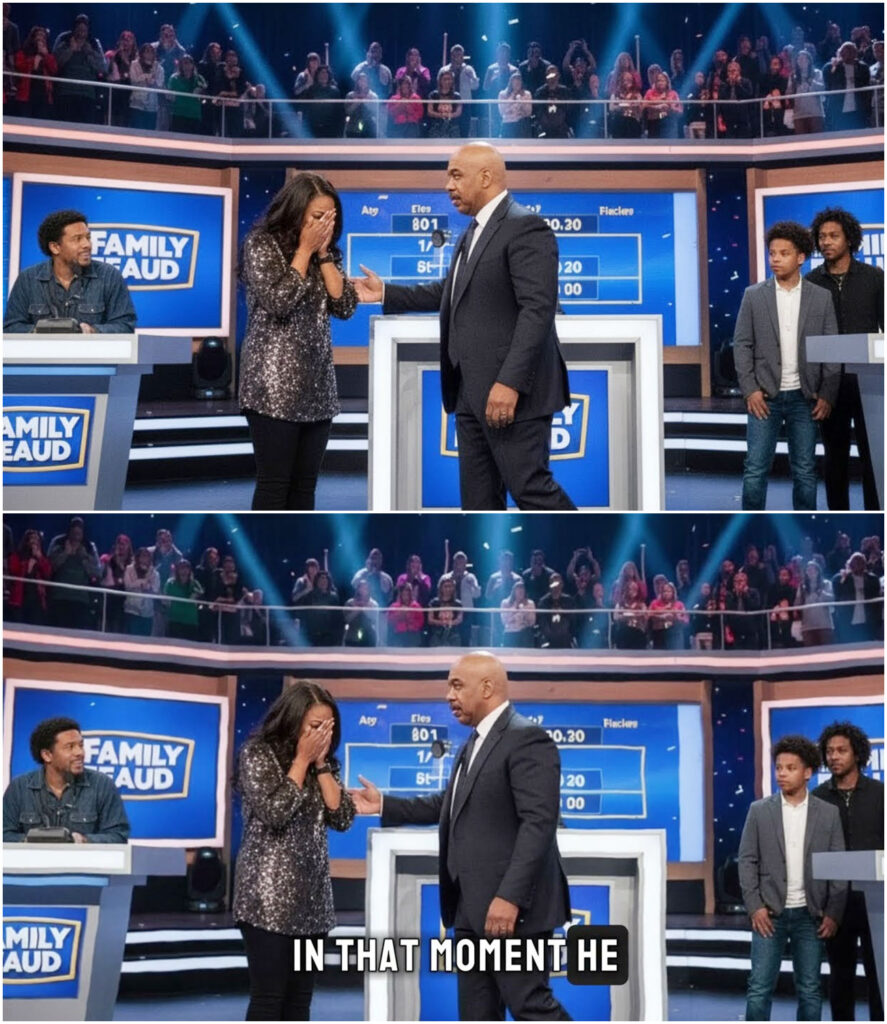
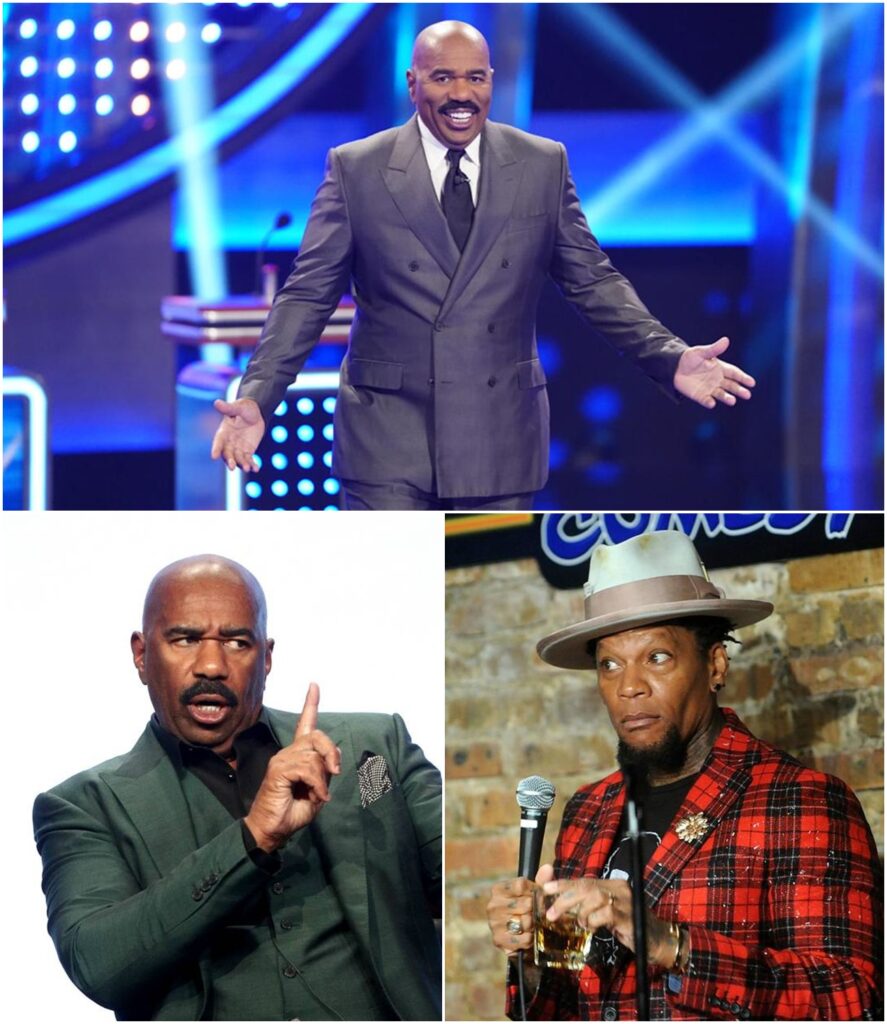
Steve Harvey was walking toward them with that megawatt smile. His arms spread wide, ready to embrace another family whose life had just been changed by the show he loved hosting. But when Steve reached the Rodriguez family podium, something made him stop midstride. Something made his smile fade and his celebratory energy shift into something else entirely.
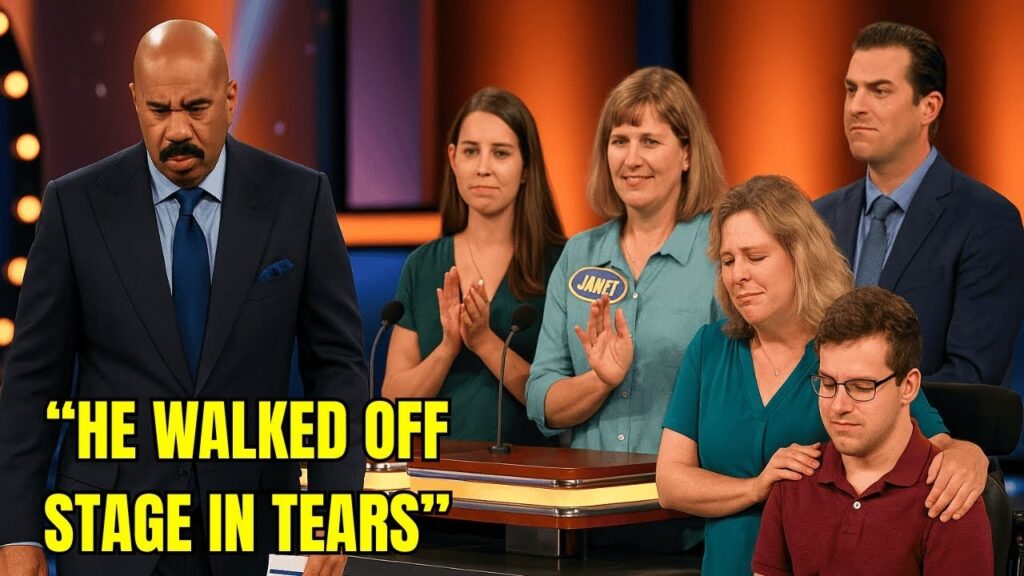
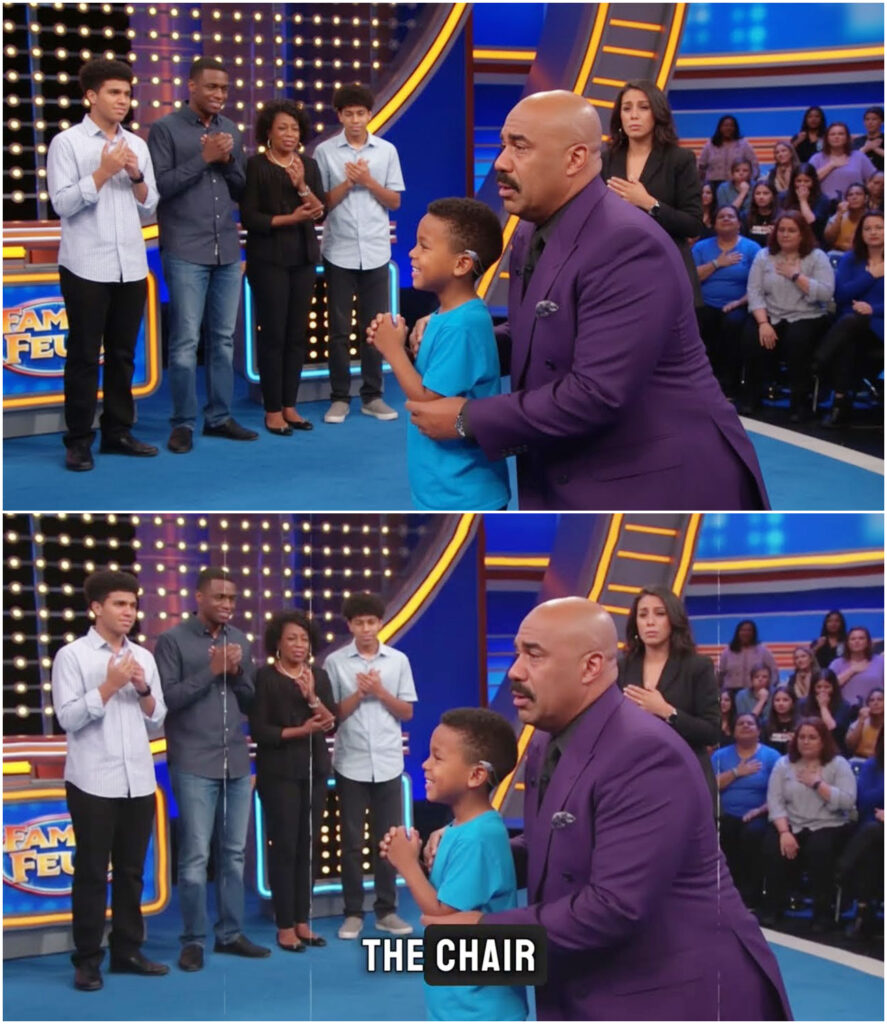
Timothy Rodriguez, 28 years old, decorated combat veteran with two purple hearts and a bronze star for valor, loving husband and father, devoted son and brother, stood frozen among his celebrating relatives like a statue carved from pain and memory. His wife, Maria, was hugging their six-year-old daughter, Sophia, spinning her around as the little girl squealled with pure delight, her princess dress twirling in the studio lights.
His mother, Rosa, was crying tears of joy, her weathered hands pressed to her heart, her face showing the relief of a woman who had worked three jobs to support her family and could finally see light at the end of a very long tunnel. His father, Miguel, was embracing his daughter, Isabella. both of them laughing and crying at the same time, speaking rapid Spanish words of gratitude and disbelief.
His brother Carlos, who had driven them all the way from Texas, while Timothy slept fitfully in the passenger seat, was pumping his fist in the air, shouting, “We did it. We actually did it. Mom, we’re going to be okay.” The family had practiced this moment for months, had dreamed of the celebration they would have if they won.
But nothing had prepared them for the actual overwhelming emotion of victory. But Timothy wasn’t celebrating. He wasn’t even there. Not really. His mind was trapped in a place where celebration meant you had survived another day, where joy was a luxury no one could afford. Steve Harvey had hosted thousands of episodes over his years with Family Feud.
He’d met families from every background, every economic level, every corner of America and beyond. He’d seen joy, disappointment, surprise, confusion, anger, gratitude, and every emotion in between. He developed an almost supernatural ability to read people, to understand what they needed in any given moment, to know when to push for humor and when to offer comfort.
It was part of what made him not just a successful host, but a beloved figure who could connect with anyone who stepped onto his stage. His own journey to this point had been marked by struggle and resilience. Growing up in Cleveland, Steve had witnessed firsthand the devastating effects of trauma on communities and families.
His father had been a World War II veteran who never spoke about the war, but whose nightmares and sudden rages had shaped Steve’s childhood understanding that some wounds run deeper than the eye can see. Steve had learned early that behind every smile, every laugh, every moment of joy. There might be someone fighting battles that the rest of the world couldn’t understand.
What he saw in Timothy’s eyes was something different, something that transcended game shows and prize money and television magic. It was the look of someone who wasn’t in that studio anymore. Someone who was somewhere else entirely. Somewhere dangerous and dark and filled with memories that should have stayed buried but had been awakened by a simple sound.
A burst of noise that meant nothing to everyone else but everything to him. Steve had grown up in Cleveland in neighborhoods where violence was common and trauma was a daily reality. He’d seen that look before. But this wasn’t street trauma. This was combat trauma, the kind that carved itself into a person’s soul and waited for moments like this to resurface with all the force and fury of the original experience.
The celebration continued around them, but Steve focused on Timothy’s deteriorating condition. The young veteran’s jaw was clenched so tight that Steve could see the muscles working beneath his skin. His hands were trembling against the podium, and his knuckles were white with the force of his grip. His breathing was rapid and shallow, and his eyes were fixed on something no one else could see.
Steve had heard about PTSD, of course. He’d done charity work with veteran organizations, had donated money to causes that supported returning soldiers, but he’d never seen it manifest like this. So suddenly and completely that it was like watching someone disappear while still standing right in front of you.
Timothy’s breathing was becoming more labored by the second. Sweat was beginning to bead on his forehead despite the comfortable temperature in the studio. His right hand moved unconsciously to his left thigh. to the place where his leg ended and the prosthetic began, a habit he’d developed whenever the memories became overwhelming.
Without breaking eye contact with Timothy, Steve raised his hand in a subtle gesture that he’d developed over years of hosting. The production team knew what it meant. The celebration music began to fade. The confetti cannon stopped firing. The energy in the studio shifted from celebration to concern as Steve’s crew recognized that something unprecedented was happening.
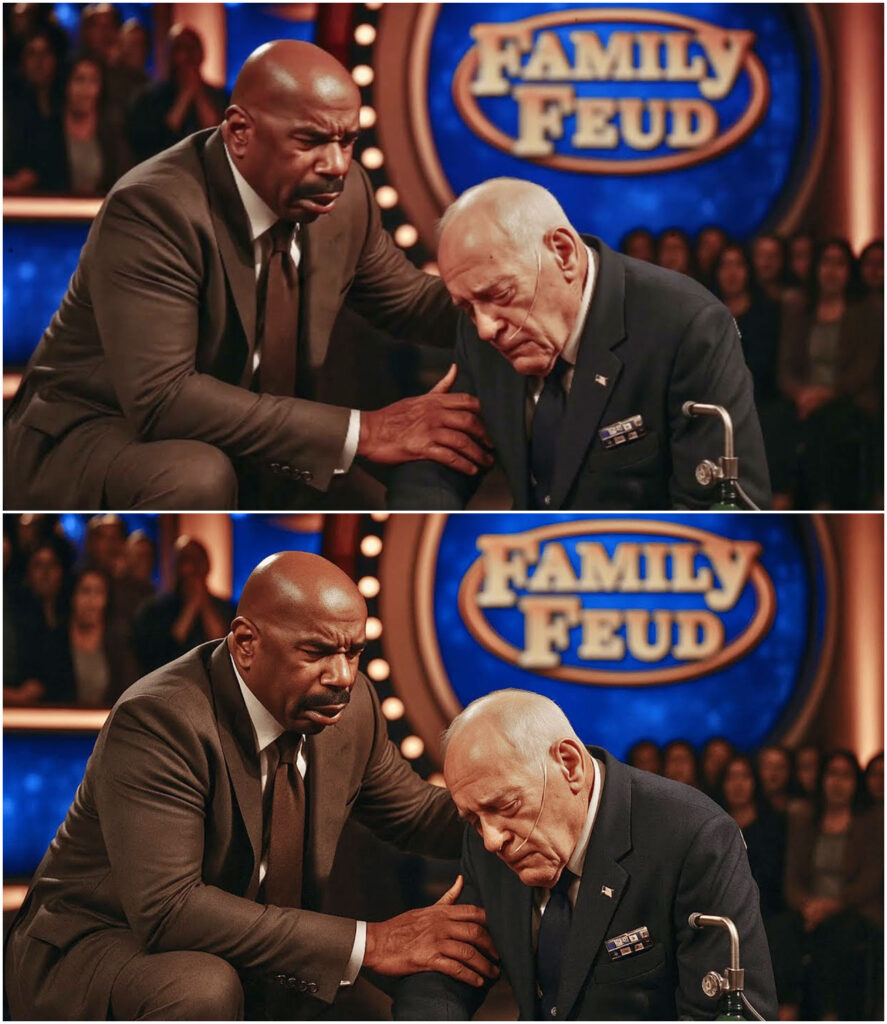
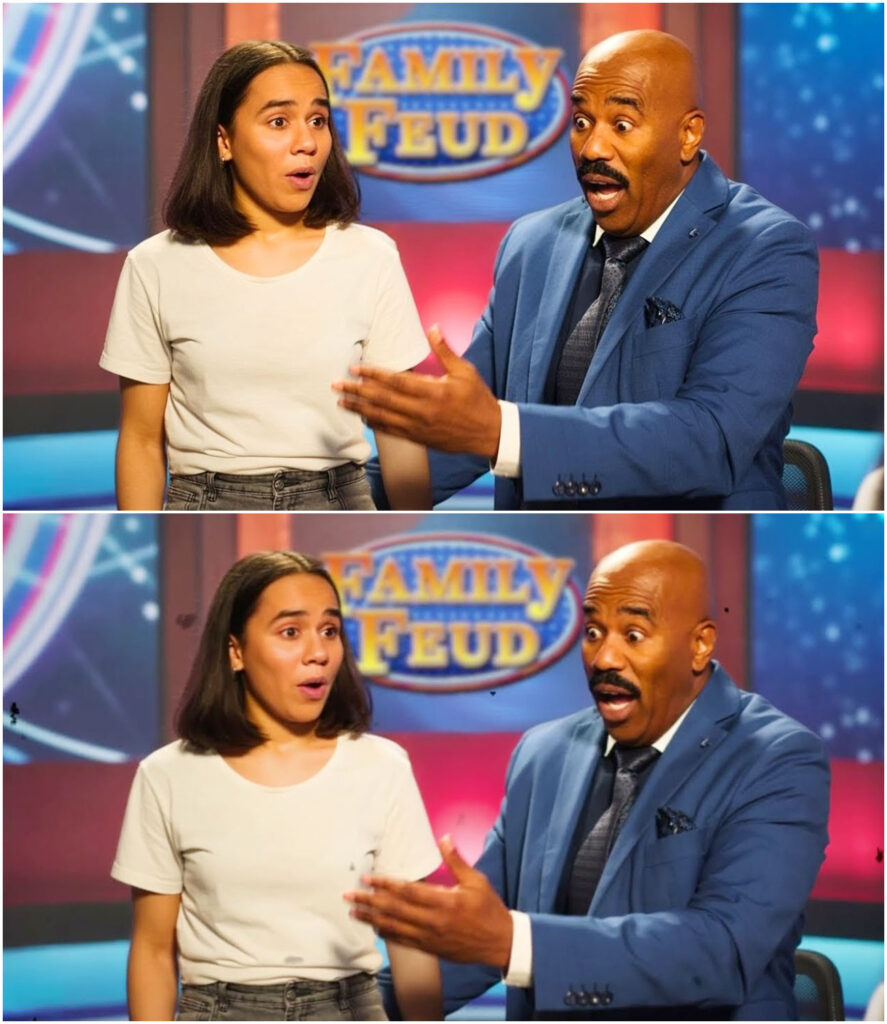
“Timothy,” Steve said softly, his voice cutting through the diminishing chaos with a gentleness that surprised even him. They’d been hosting television for decades. But something about this moment stripped away all the performance, all the entertainment value, and left him with nothing but genuine human concern. “You with us, son?” The words seemed to travel through layers of memory and trauma before reaching Timothy.
Steve could see the young veteran fighting to surface to break through the fog of his flashback and connect with the present moment. It was like watching someone drowning, struggling to reach the surface of a dark and turbulent sea. Steve had learned grounding techniques during his work with various charities, particularly those serving veterans and at risk youth.
He’d taken courses, read books, consulted with experts because he’d wanted to understand how to help people who were struggling. He’d never expected to use those techniques on national television. But here they were, and Timothy needed help more than the show needed ratings. “I know you can’t control what’s happening to you right now,” Steve continued, his voice steady and reassuring, like an anchor in a storm that was raging inside Timothy’s mind.
But I need you to try something for me and I promise it will help. I need you to feel your feet on the ground. Can you do that for me? Just press your feet down and feel the solid floor beneath you. Timothy nodded slightly, trying to focus on Steve’s voice instead of the chaos in his mind. The explosions and gunfire and screaming that felt so real.
He could smell the smoke and taste the dust. He pressed his feet more firmly against the studio floor, feeling the solid surface beneath him, trying to use that physical connection to anchor himself in the present moment. Good. That’s really good, Tim. You’re doing great. I can see you fighting to come back to us, and that takes incredible courage.
Now, I want you to tell me three things you can see right here, right now. Not what you remember, not what your mind is showing you, but three things that are actually here in this studio with us. Timothy’s wife, Maria, turned to look at her husband. And that’s when she saw it, too.
She’d been so caught up in the joy of winning. So overwhelmed by the relief of financial security that she hadn’t noticed the signs she’d learned to recognize over the past 3 years of marriage to a combat veteran. the distance in his eyes, the rigid posture, the way he was gripping the podium like it was the only thing keeping him from falling into an abyss only he could see.
“Tim,” she whispered, placing a gentle hand on his arm. Her voice carried the weight of three years of learning how to navigate his invisible wounds. Three years of late night conversations about flashbacks and triggers. Three years of loving someone who sometimes felt like a stranger in his own body.
Three years of being strong for both of them when he couldn’t be strong for himself. She’d become an expert at reading the subtle signs. The way his jaw tightened when helicopters flew overhead. The way he positioned himself near exits in restaurants. the way certain sounds or smells could transport him instantly back to a place she’d never been but had learned to fear because of what it did to the man she loved.
They’d met during his recovery at the VA hospital in San Antonio where she was working as a nursing assistant while putting herself through school. She’d fallen in love with his determination, his dry sense of humor, his gentleness with the other wounded warriors in the rehabilitation wing.
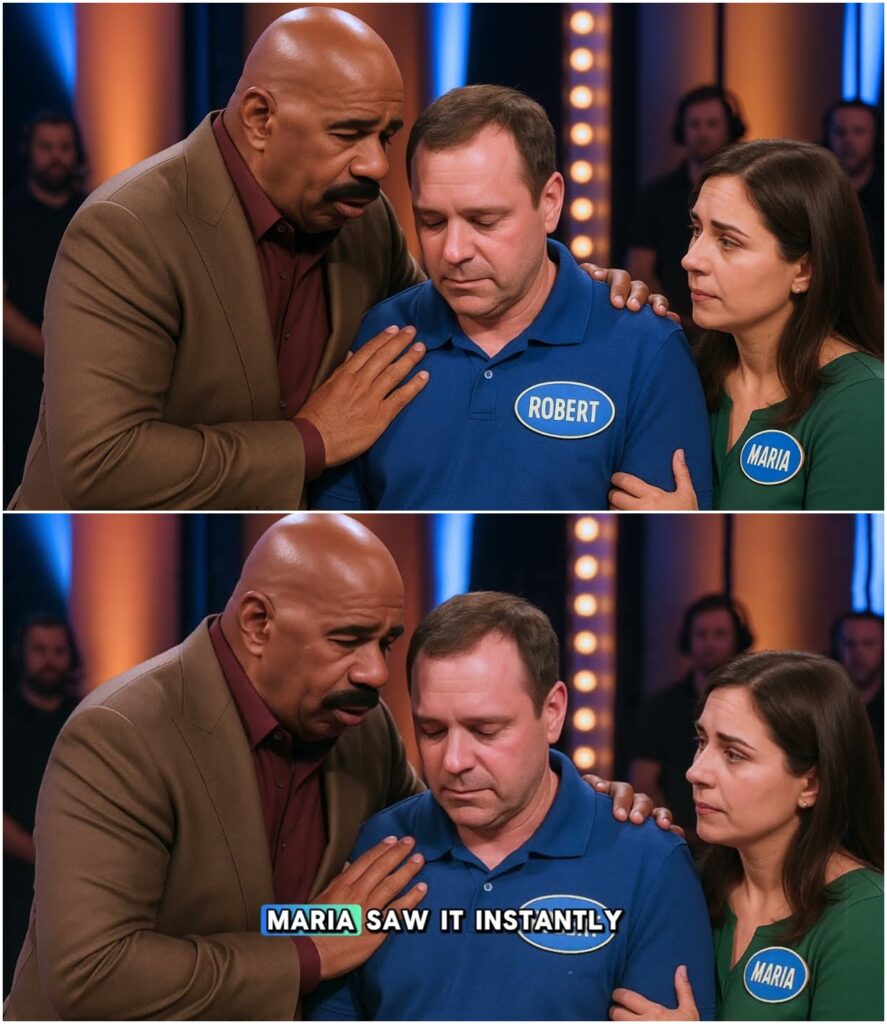
But she’d also learned to love the broken parts of him, the pieces that the war had chipped away, the moments when he disappeared into memories she couldn’t reach. The touch seemed to anchor him slightly, like a lifeline thrown to someone drowning. But Steve could see the internal battle still raging, could recognize the signs of someone fighting desperately to stay present while their mind tried to drag them back to a place of trauma.
Behind the scenes, the production team was in controlled chaos. Producers were speaking rapidly into their headsets, trying to understand what was happening and how to handle it. This wasn’t a planned moment. This wasn’t scripted emotion designed to create viral content. This was a real human being having a real crisis on live television and nobody had a protocol for it.
Should we cut to commercial? Someone whispered urgently. Keep rolling, came the firm response from the director. Steve’s got this. But Steve Harvey, for all his experience and skill, wasn’t sure he had anything. He was a comedian and television host, not a therapist or crisis counselor. But in that moment, he was also a human being looking at another human being in distress.
And every instinct told him to respond with compassion rather than professionalism. Steve made a decision that would define not just this episode, but his understanding of what it meant to truly serve others. He walked directly to Timothy, ignoring every protocol, every script, every expectation of what a game show host should do.
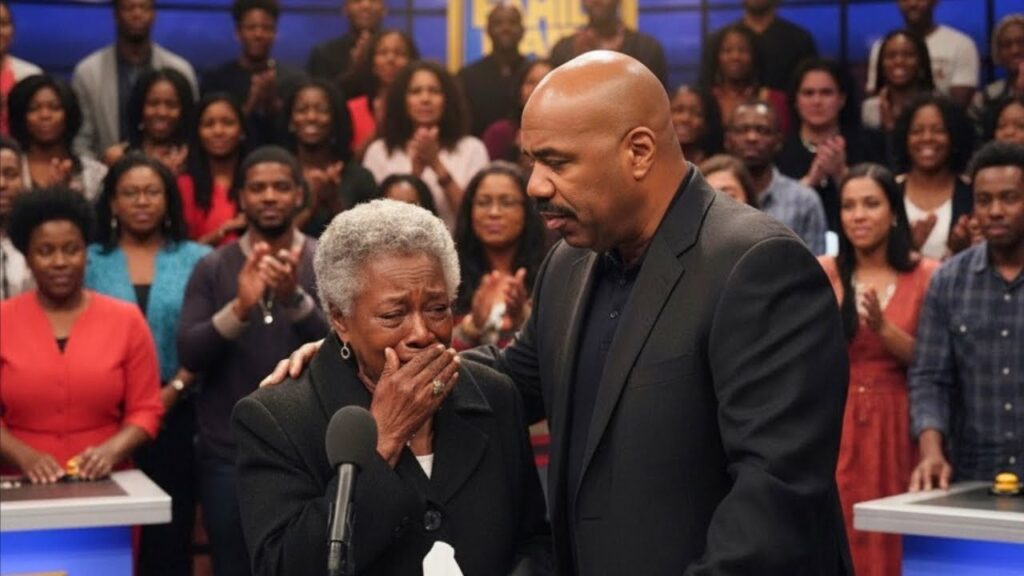
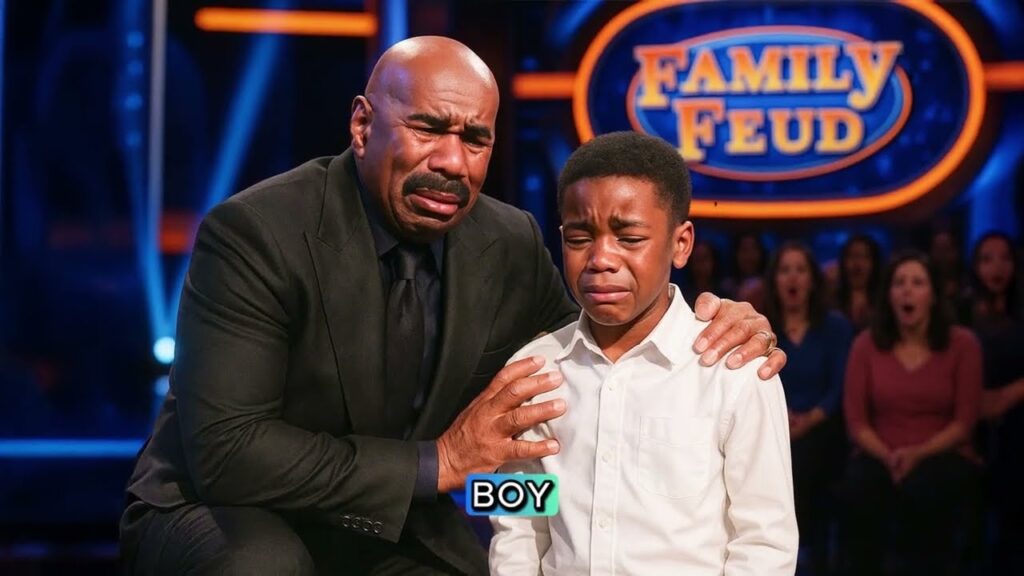
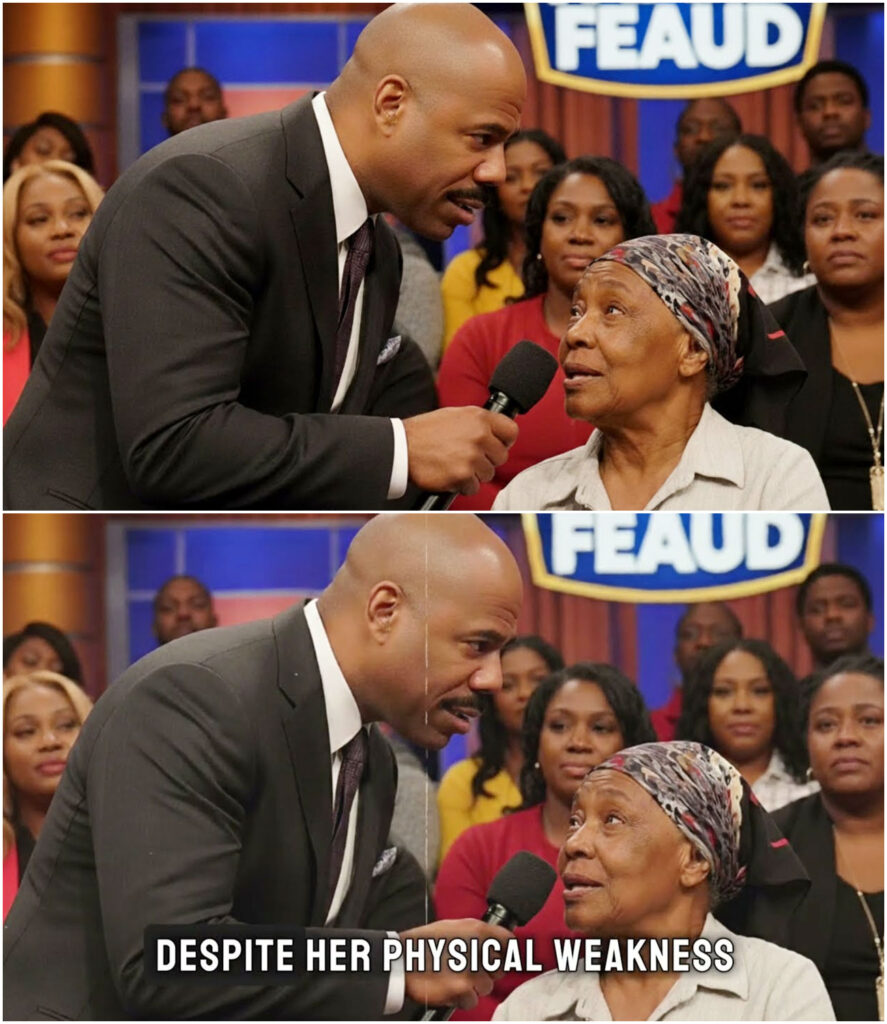
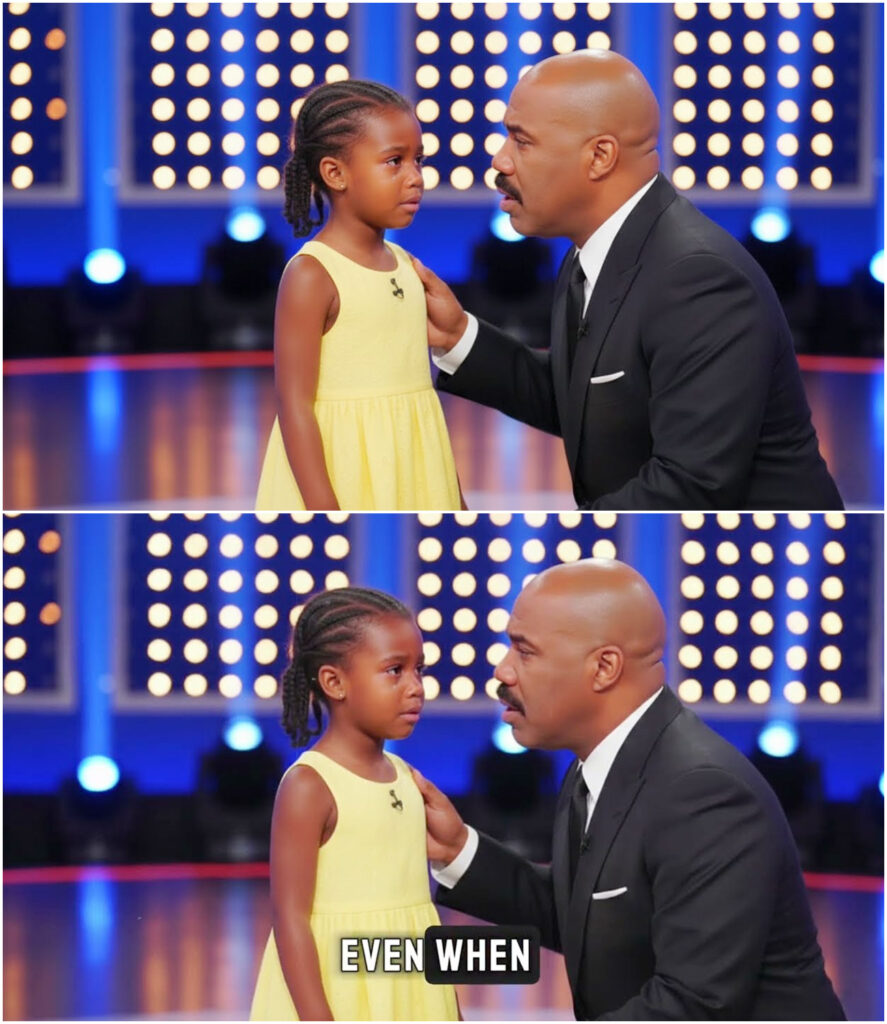
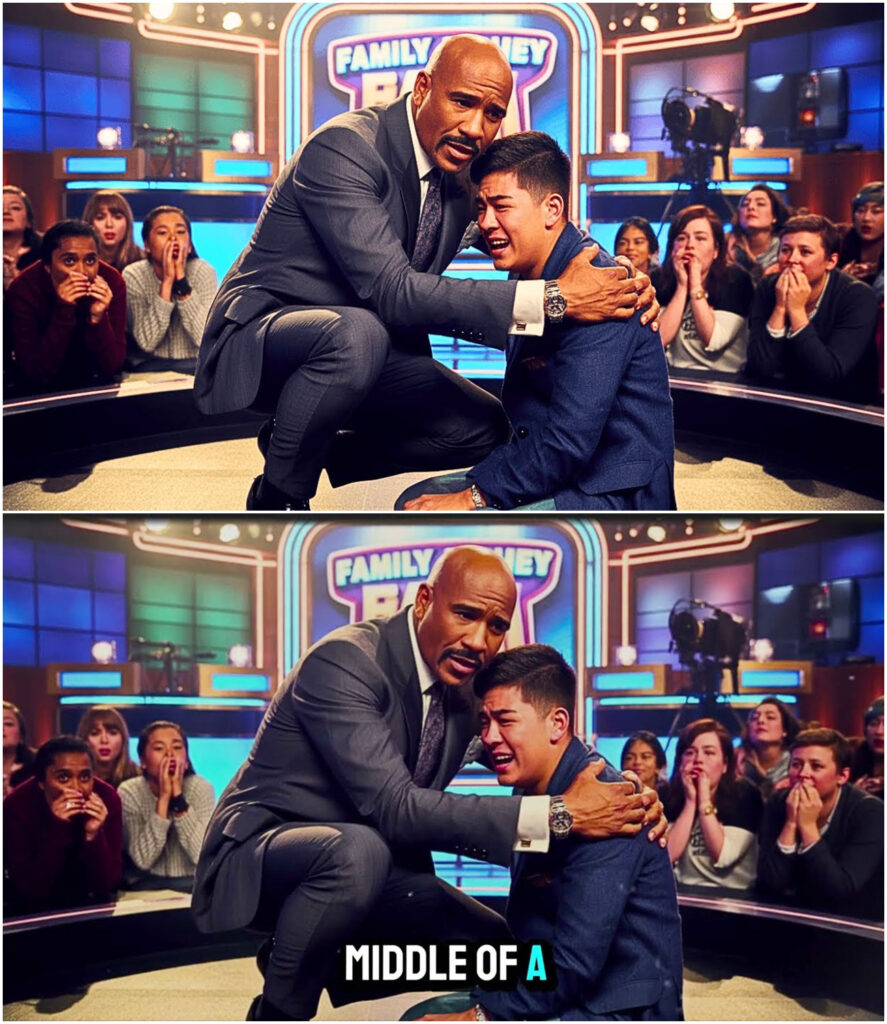
When he reached the young veteran, Steve placed his hand on Timothy’s shoulder and leaned in close. “What do you need right now?” Steve asked quietly. “Just tell me what you need and we’ll make it happen.” Timothy’s response was barely audible. I need I need to get out of here. I need air. His voice broke. I need it to stop. I need the noise to stop and the lights to dim.
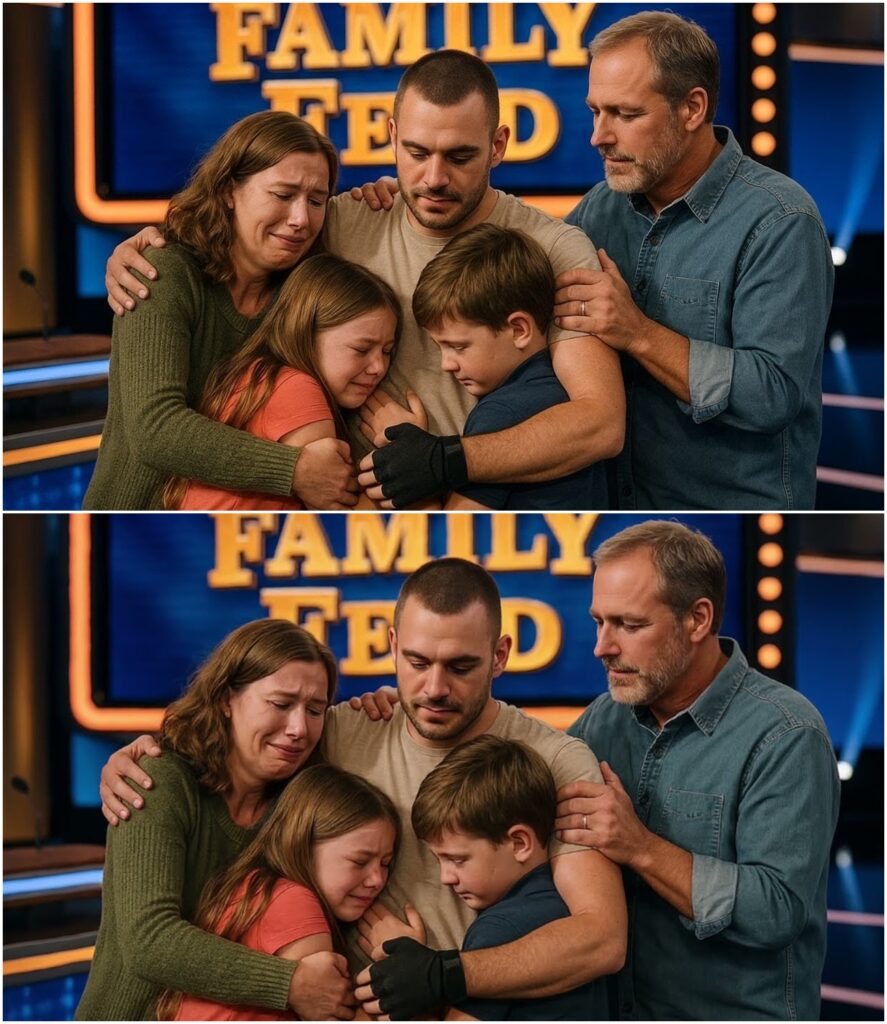
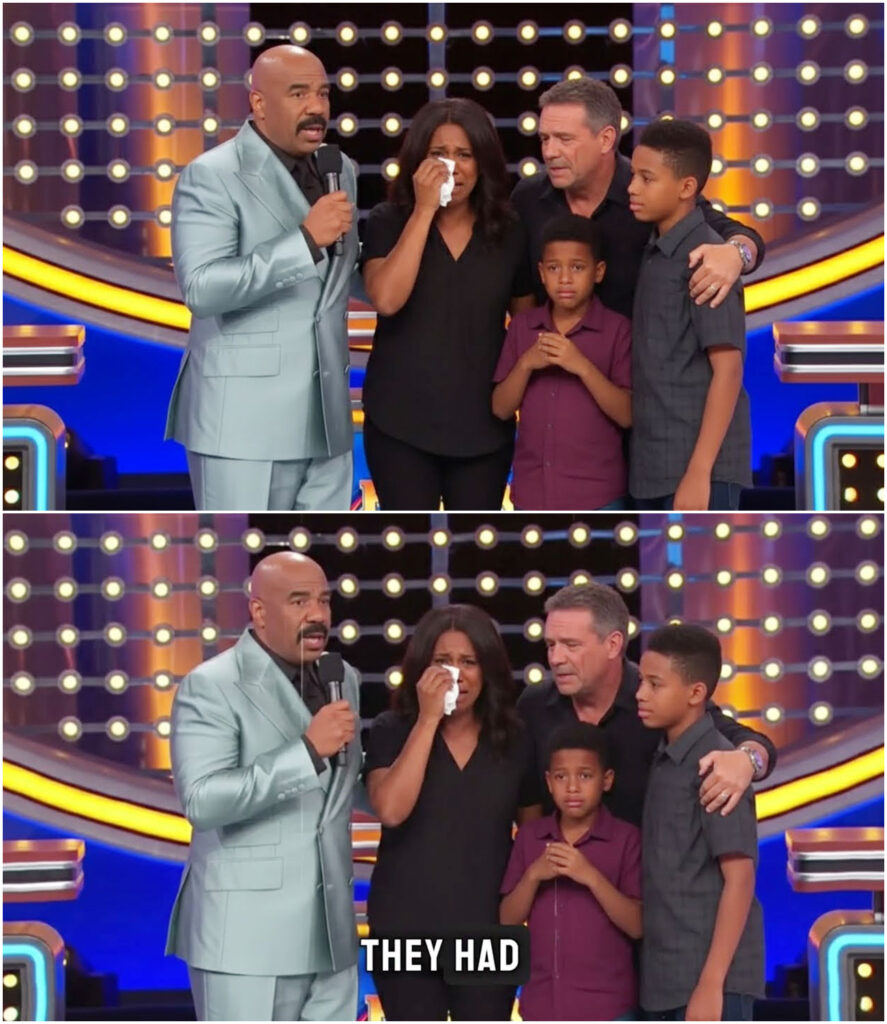
and I need to not feel like I’m back there, like I’m watching my friends die all over again. The family had stopped celebrating entirely now. Maria was crying, not from joy, but from recognition and heartbreak. She’d seen this before, but never so publicly, never with hundreds of people watching. Miguel and Rosa Rodriguez stood frozen with confusion about what was happening.
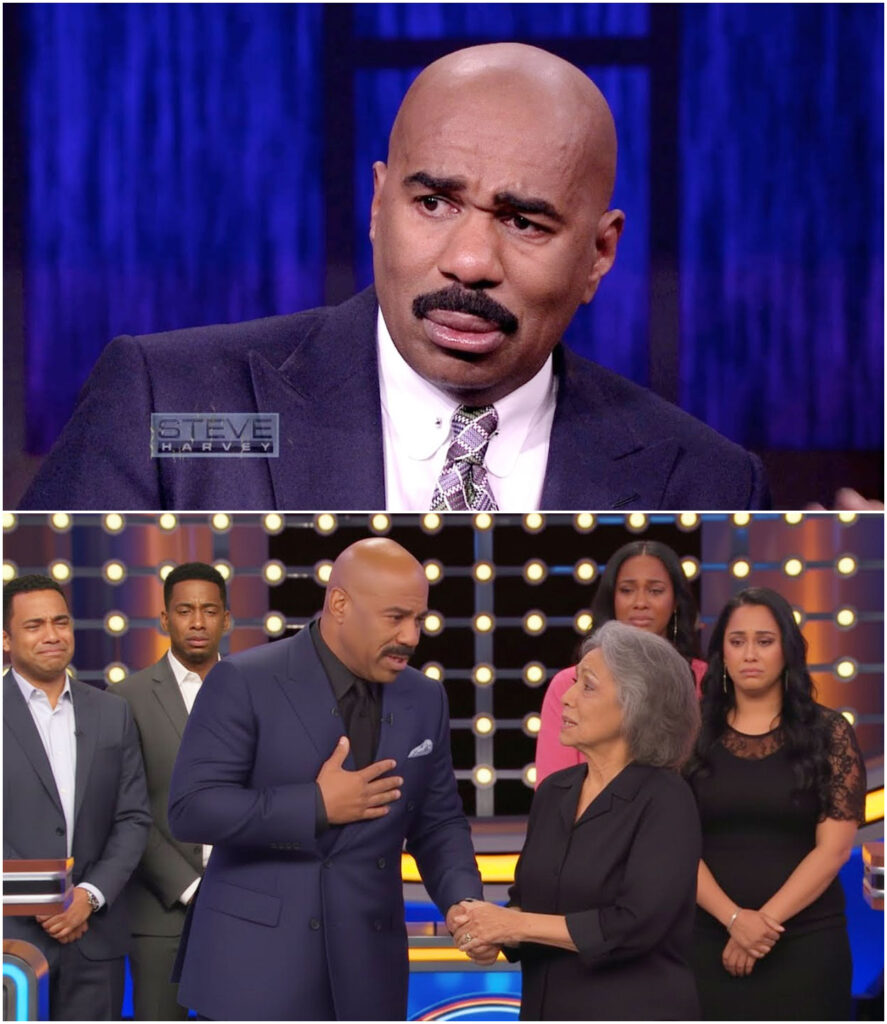
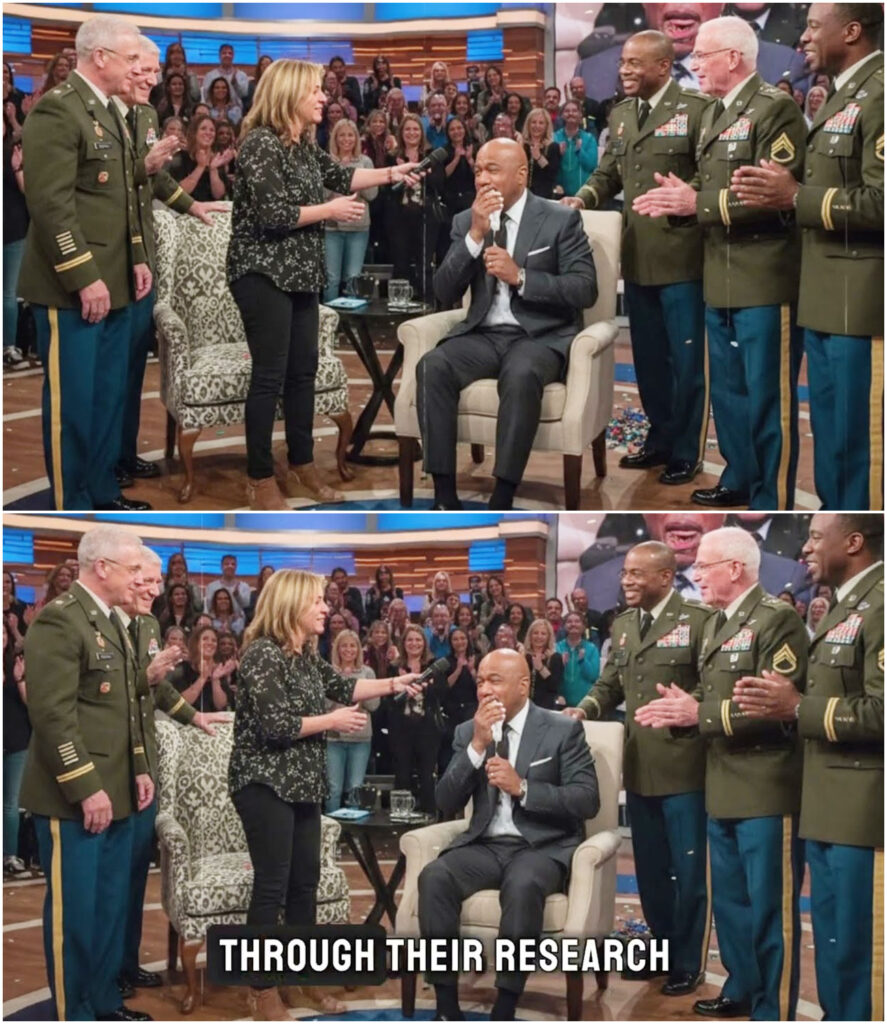
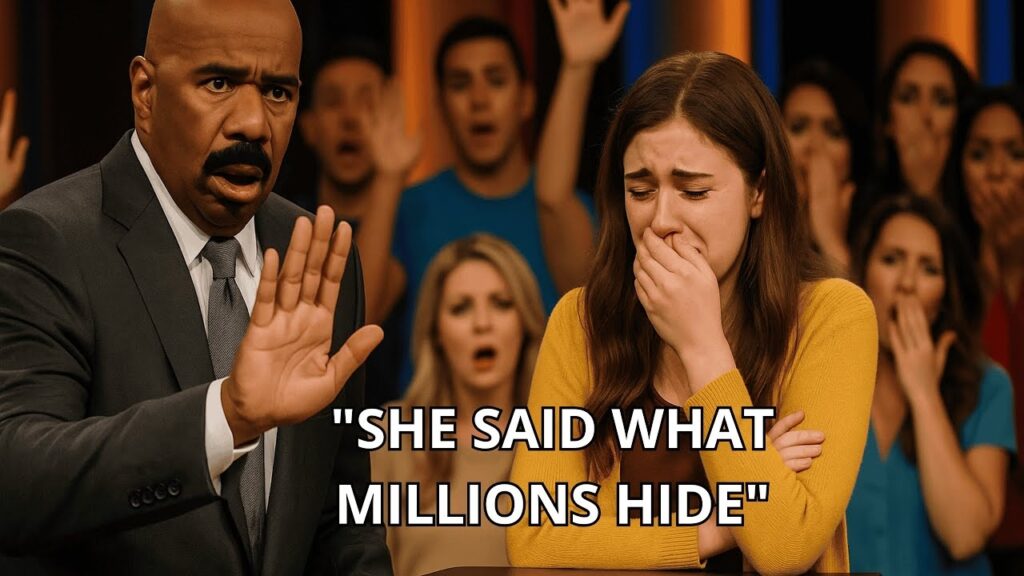
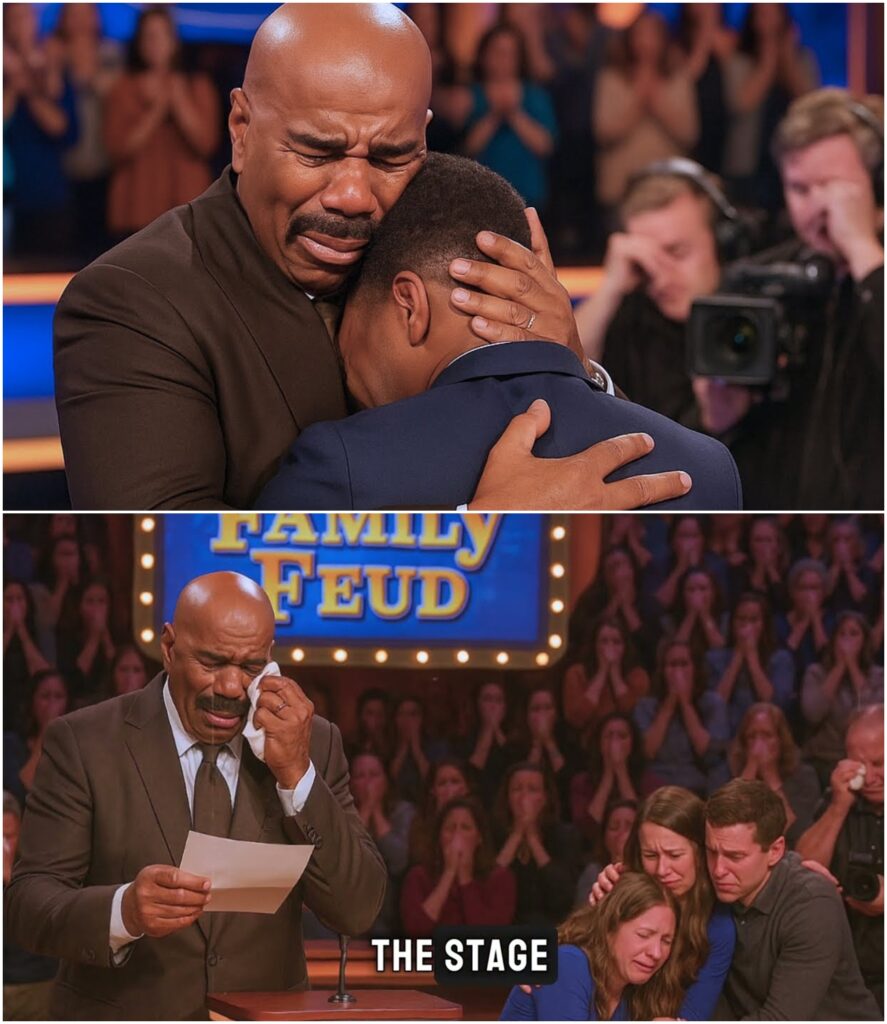
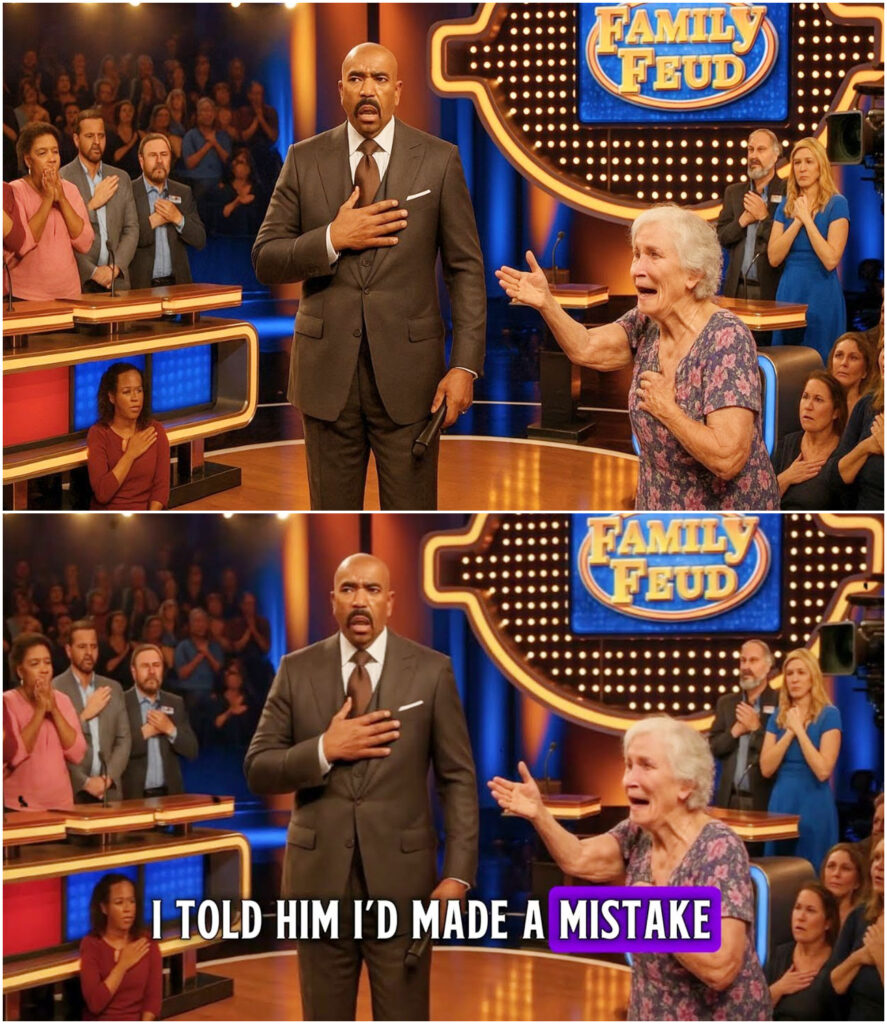
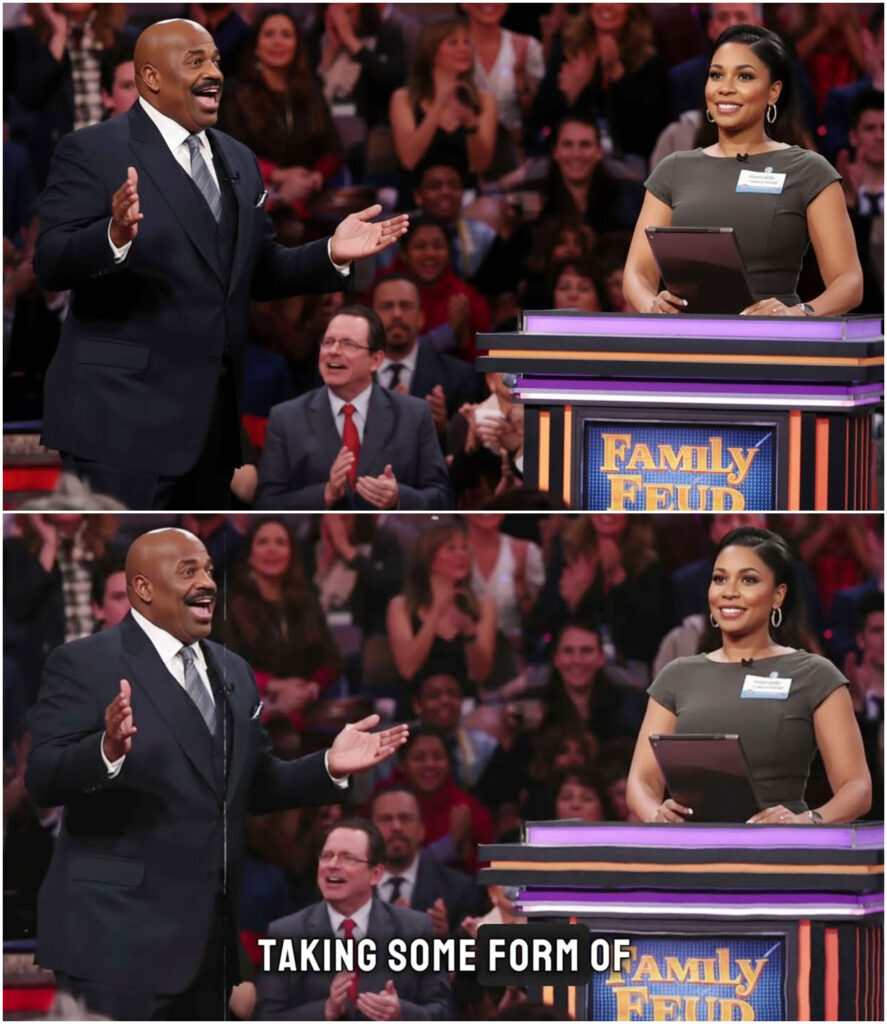
They’d never fully understood their son’s condition, had never known how to help him with wounds they couldn’t see. Steve looked directly into the main camera. His expression serious and calm. Ladies and gentlemen, he said, we need to take a different kind of commercial break. Timothy Rodriguez served our country with honor in Afghanistan and right now he needs our patience and our respect while he fights a battle that most of us can’t see but all of us need to understand.
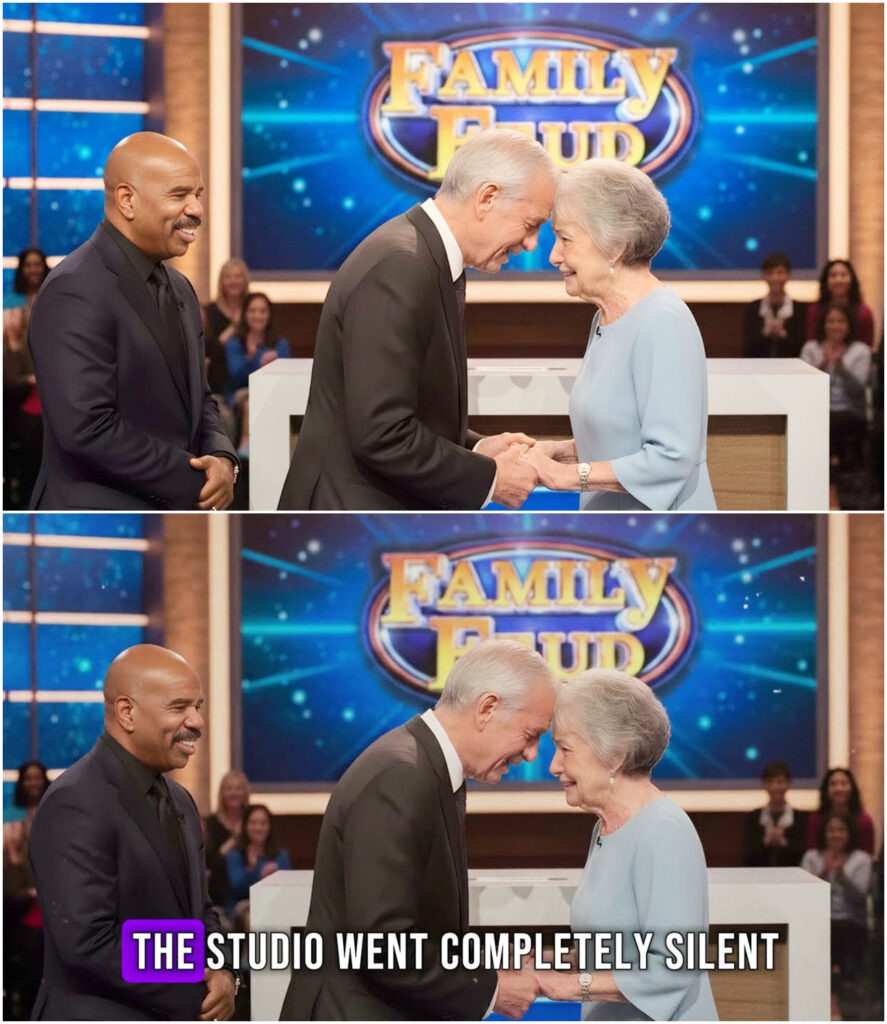
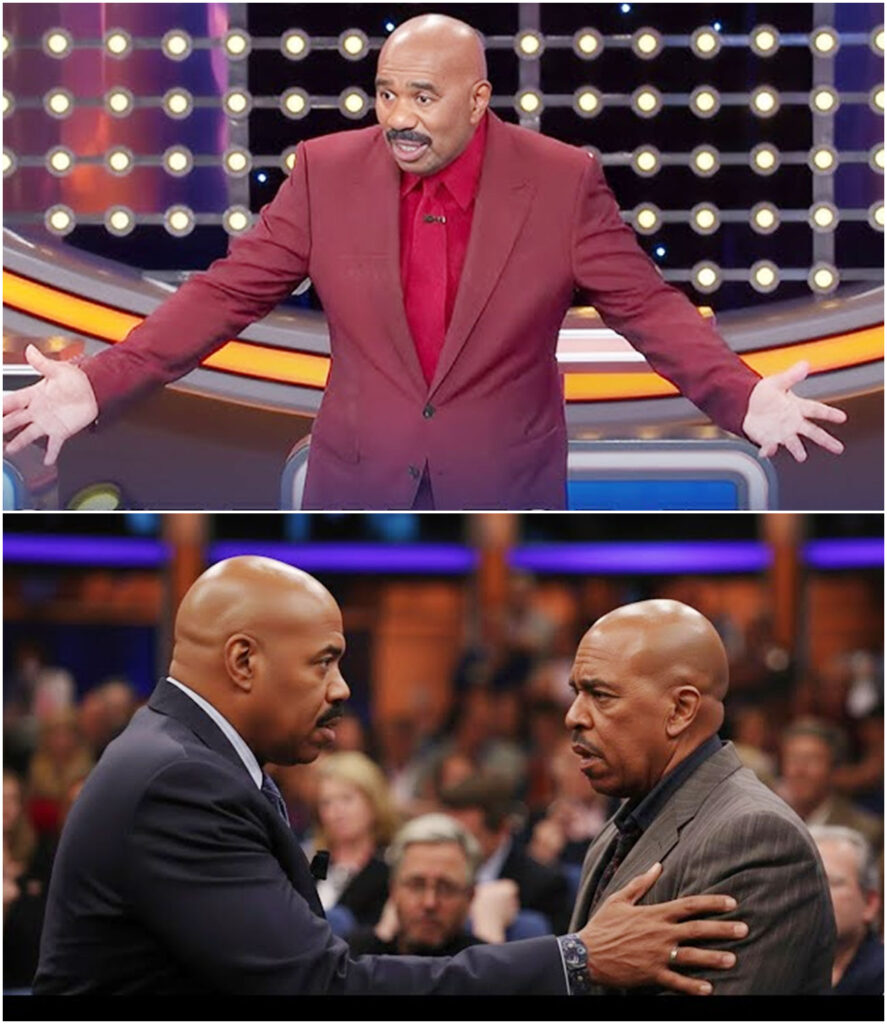
The studio fell completely silent. Even the crew members stopped their usual bustling. Cameras continued rolling. But this was no longer television as anyone understood it. This was something else entirely. Steve turned back to Timothy, his voice gentle but authoritative. Tim, I need you to look at me. Just look at me and listen to my voice.
You’re not in Afghanistan. You’re in Atlanta, Georgia. You’re in my studio, surrounded by people who care about you. You’re with your family. You’re safe. You’re home. Timothy’s breathing was rapid and shallow. Textbook signs of a panic attack triggered by PTSD. The studio lights, the sudden eruption of noise and celebration, the overwhelming stimulation.
It had all combined to transport Timothy back to a battlefield that existed only in his memory, but felt absolutely real. Steve had learned grounding techniques during his work with various charities. He’d never expected to use them on national television, but here they were, and Timothy needed help. I know you can’t control what’s happening to you right now, Steve continued, his voice steady and reassuring, but I need you to try something for me.
And I promise it will help. I need you to feel your feet on the ground. Can you do that for me? Timothy nodded slightly, trying to focus on Steve’s voice instead of the chaos in his mind. He pressed his feet more firmly against the studio floor, feeling the solid surface beneath him. Good. That’s really good, Tim.
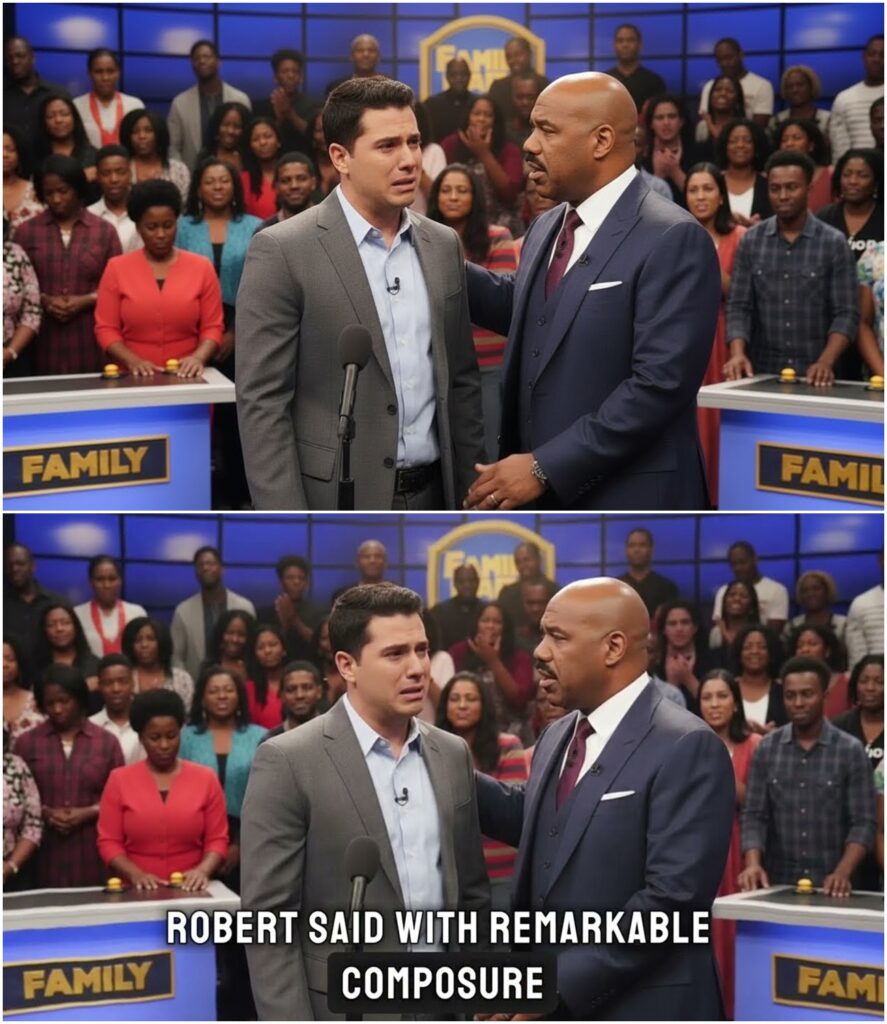
Now, I want you to tell me three things you can see right here, right now. Not what you remember, not what your mind is showing you, but three things that are actually here in this studio with us. Timothy’s eyes moved slowly around the studio, fighting to focus on the present moment. The the lights, he managed, his voice shaky, but stronger than before.
They’re bright, but they’re not they’re not the sun. Your your suit, it’s gray, not green. And Maria’s Maria’s hand on my arm. She’s here. She’s really here. That’s perfect. You’re doing great. Now, tell me two things you can hear right now. Timothy closed his eyes briefly, concentrating on the sounds around him. Your voice, it’s calm.
It’s not It’s not shouting orders and the air conditioning. It’s humming. Steady. Not like not like helicopters. Outstanding. You’re bringing yourself back from a very dark place. Now tell me one thing you can smell. Timothy took a deeper breath. The first full breath he’d taken since the panic began. Coffee. Someone in the audience has coffee and Maria’s perfume.
the same one she wore when I came home. When she met me at the airport and I was so afraid she wouldn’t want me anymore because I was broken. Steve smiled, a genuine expression of pride and relief. You did great, Tim. You brought yourself back and that takes real courage. That takes the same kind of strength you showed when you served our country.
But Steve wasn’t finished. This moment needed something more than crisis management. It needed recognition, understanding, and healing. “I want everyone in the studio to understand something,” Steve announced, turning to address the audience while keeping one hand firmly on Timothy’s shoulder. This young man served three tours of duty in Afghanistan.
He lost his leg when an improvised explosive device exploded near his convoy while he was trying to save the life of a fellow soldier. He was protecting people he’d never met, fighting for freedoms that we get to enjoy every single day. The audience was completely silent, riveted by what they were witnessing.
And when he came home, he brought some of that war with him. Not because he’s weak, but because he’s human. Because when you see things, experience things that no human being should have to see or experience. It leaves marks on your soul that don’t show up in X-rays, but are just as real as any physical wound. Steve’s voice grew stronger, more passionate.
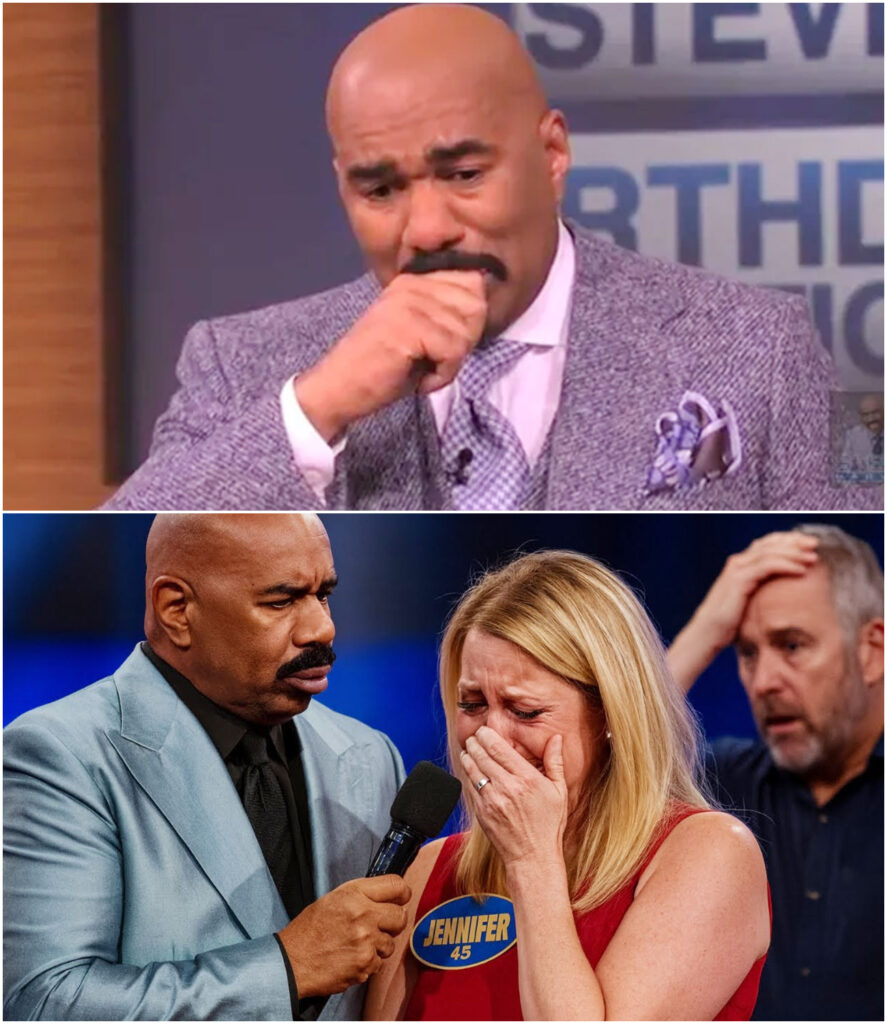
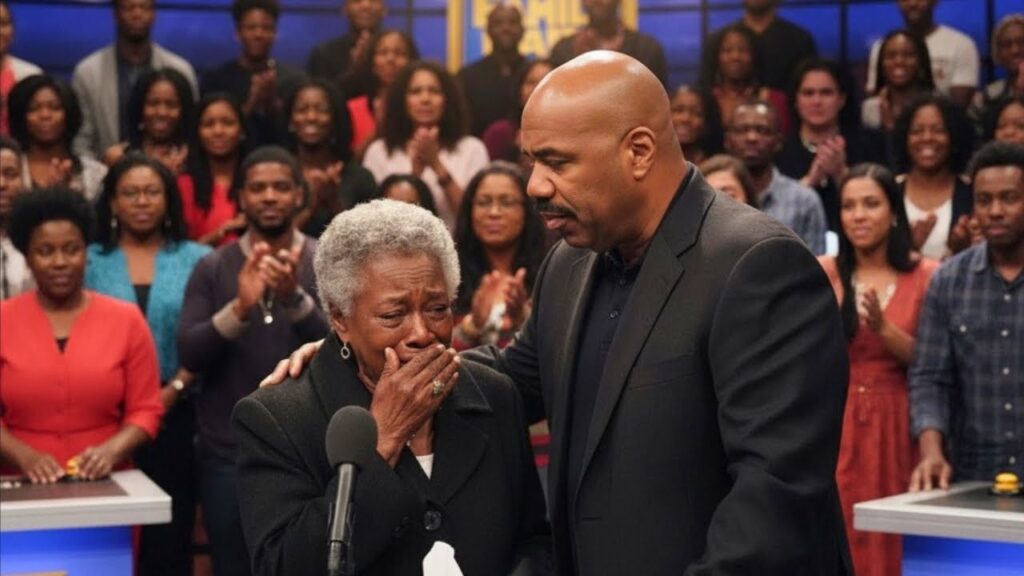
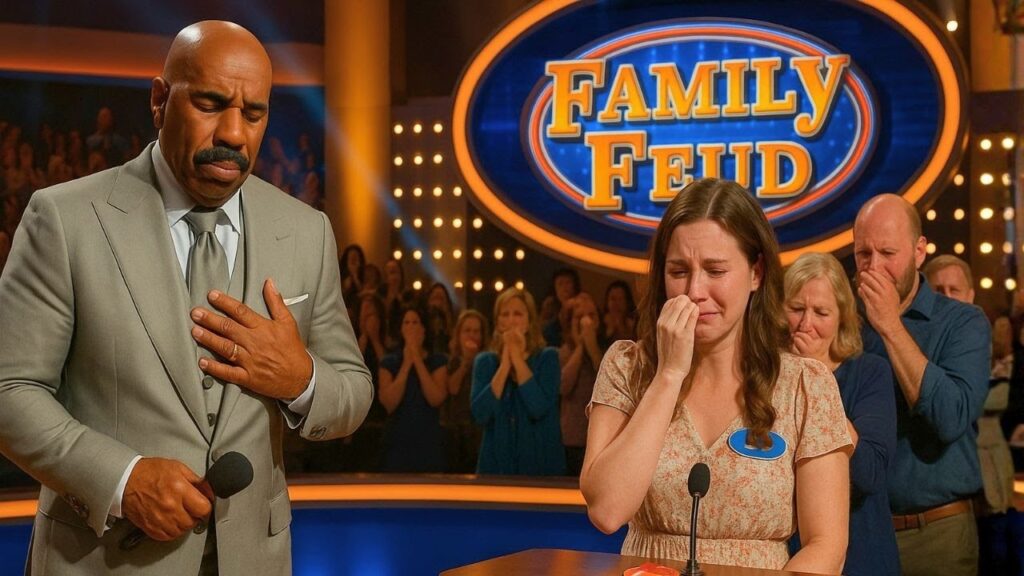
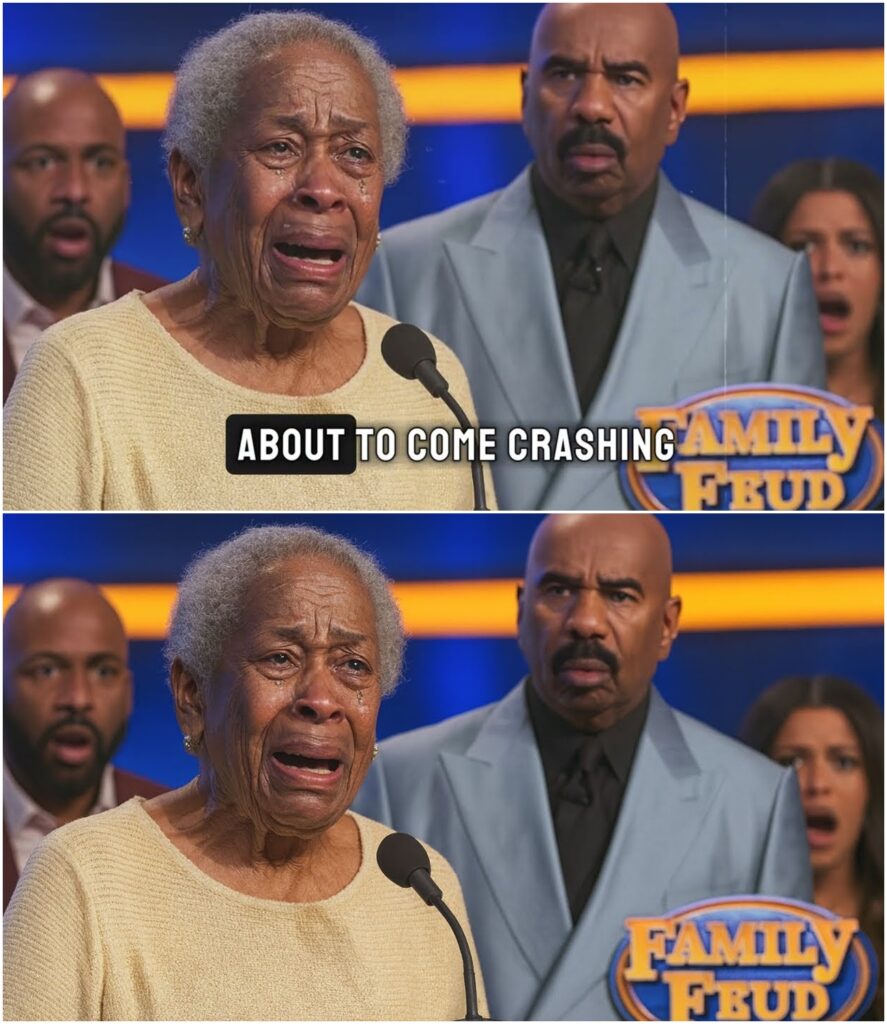
We live in a country where we’re real good at saying thank you for your service to our veterans, but we’re not so good at understanding what that service really cost them. We see the uniform. We see the flag. We see the parades. But we don’t always see the price they paid and continue to pay every single day. Timothy was crying now.
Quiet tears that spoke to being understood and accepted instead of judged or pied. Tim. Steve said, “I want to ask you something, and you can say no if it’s too much. Would you be willing to help me teach these folks something important? Would you be willing to share what it’s really like to come home from war? Timothy looked out at the audience then back at Steve gathering his courage.
When people thank me for my service, they think they’re thanking me for the leg I lost. He began his words carrying the weight of 3 years of struggle. But losing my leg, that’s not the hard part. That’s just physical. The doctors can fix that with prosthetics and physical therapy. The hard part is everything else that came home with me.
He paused, looking directly at the audience. The hard part is coming home and trying to fit back into a world that kept moving while you were gone. The hard part is sitting in a restaurant and needing to face the door because you can’t shake the feeling that danger is coming. The hard part is loving your family so much that it hurts, but sometimes feeling like you’re watching them through glass, like you can’t quite reach them.
The studio remained absolutely silent. The hard part, Timothy continued, is having moments like this where everything gets too overwhelming and suddenly you’re not here anymore. You’re back there in the worst moment of your life and you’re ashamed because you should be celebrating, but instead you’re falling apart. Timothy looked directly at Steve.
Then back to the audience. The hard part is feeling like you left part of yourself in a place you never want to think about again. But that place won’t let go of you. It follows you home. It sits at your dinner table. And no matter how much you want to be the man your family deserves, sometimes that place is stronger than you are.
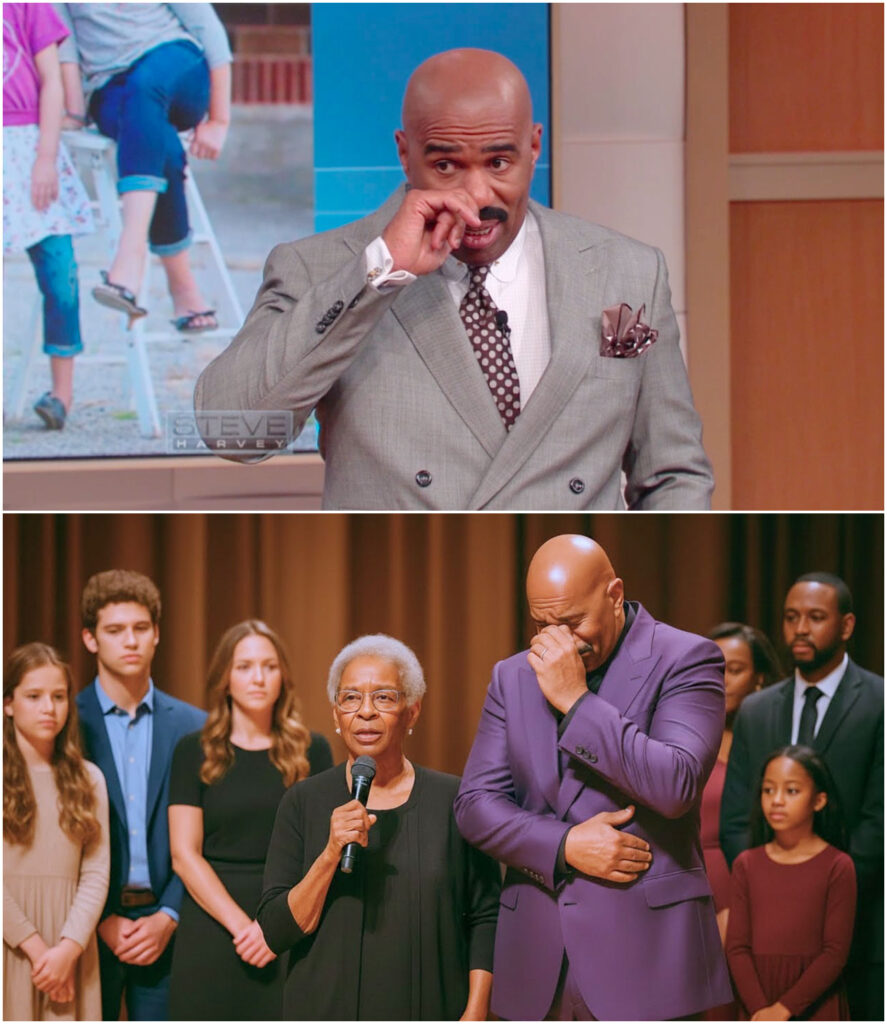
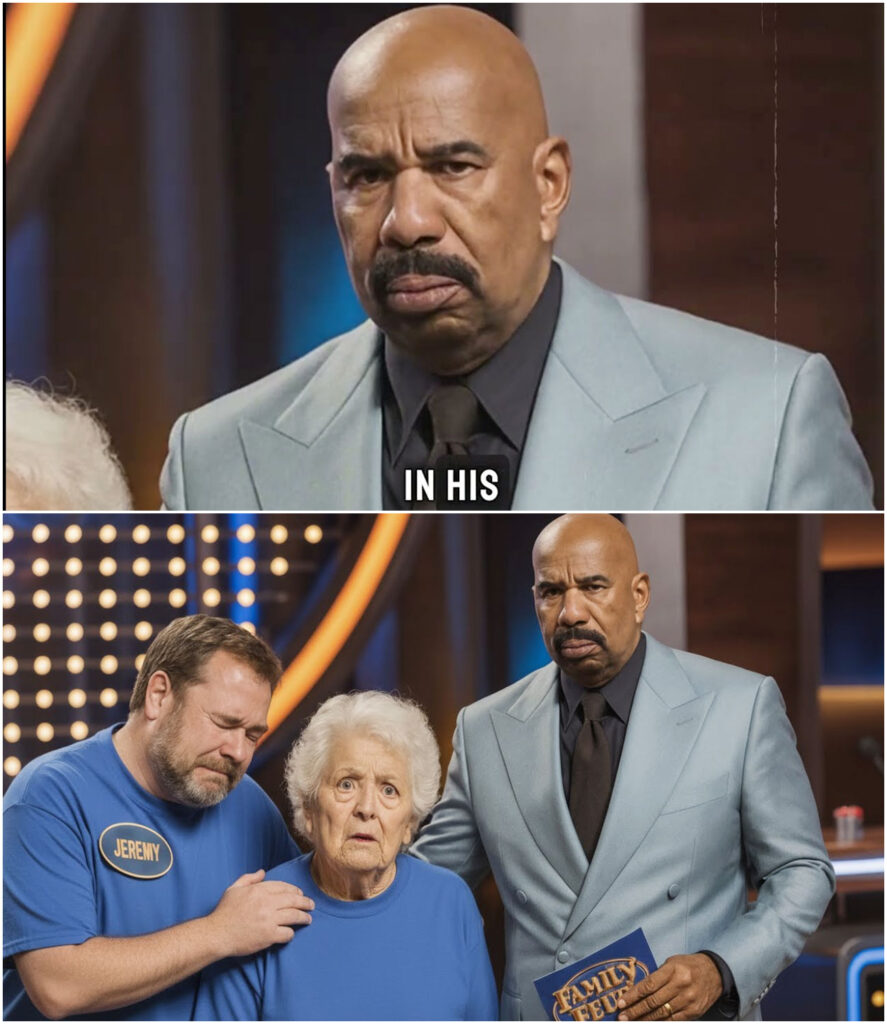
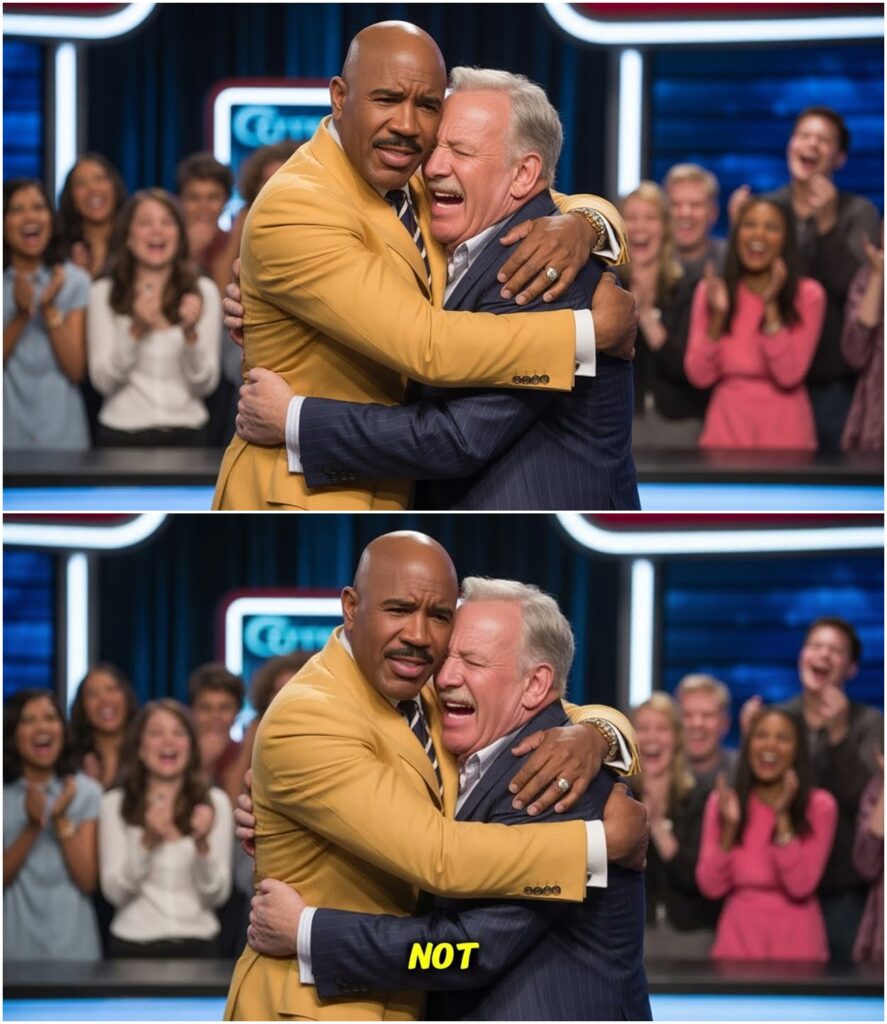
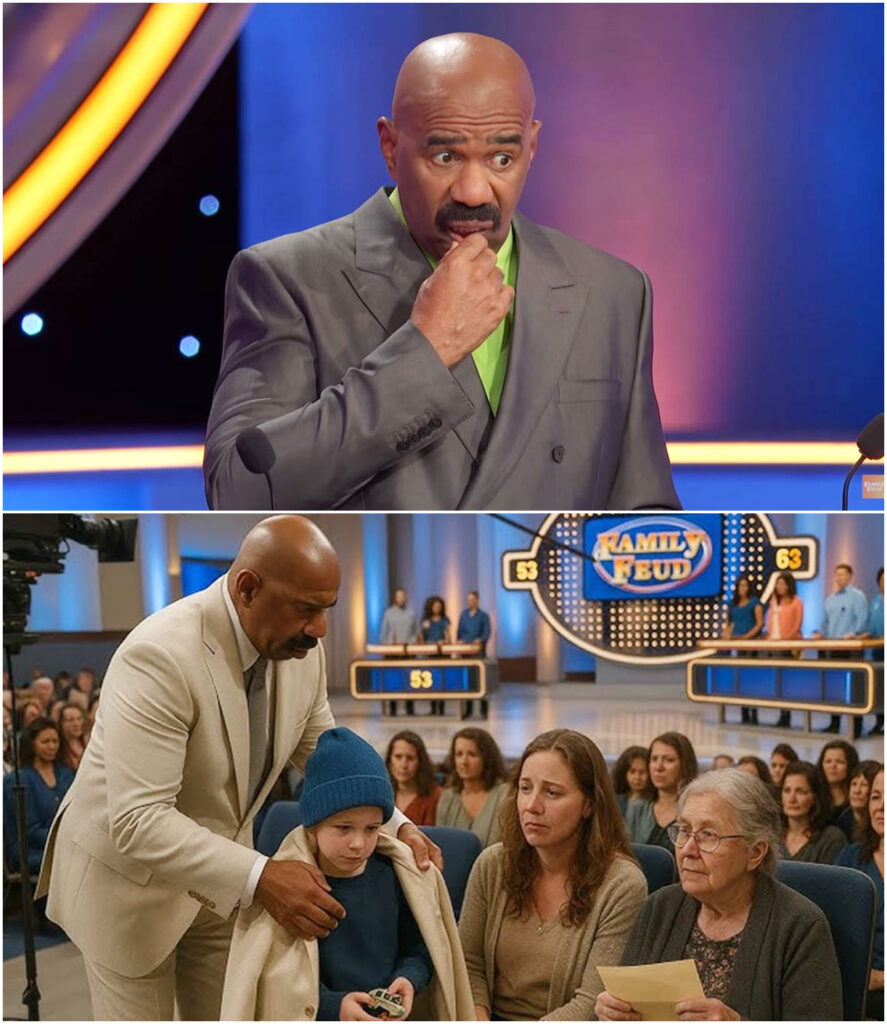
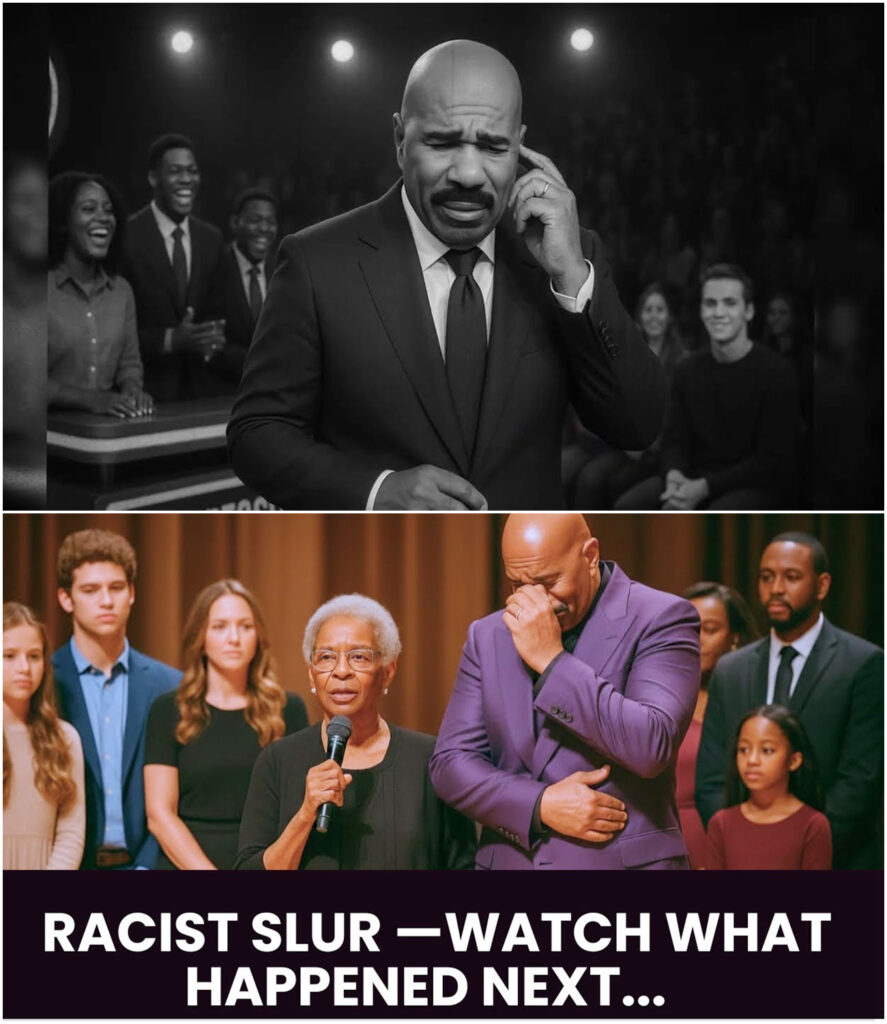
Steve Harvey was momentarily speechless. But then he did something that would be replayed and remembered millions of times. He began to remove his suit jacket. But this time, as his hands moved to his lous, he paused and looked directly into Timothy’s eyes. Tim, this jacket has been with me for every show I’ve hosted this season.
It’s been with me through victories and defeats, laughter and tears. But I want to do something different today. Something that I hope will mean as much to you as your story has meant to all of us. Steve carefully removed the jacket. I want you to take this jacket, but I want you to understand what it represents. It represents the respect and gratitude of every person in this studio, every person watching at home.
And most importantly, it represents a promise. What kind of promise? Timothy asked. The promise that you don’t have to carry this alone anymore. The promise that when you have moments like today, you have people who understand. People who won’t judge you or tell you to just get over it.
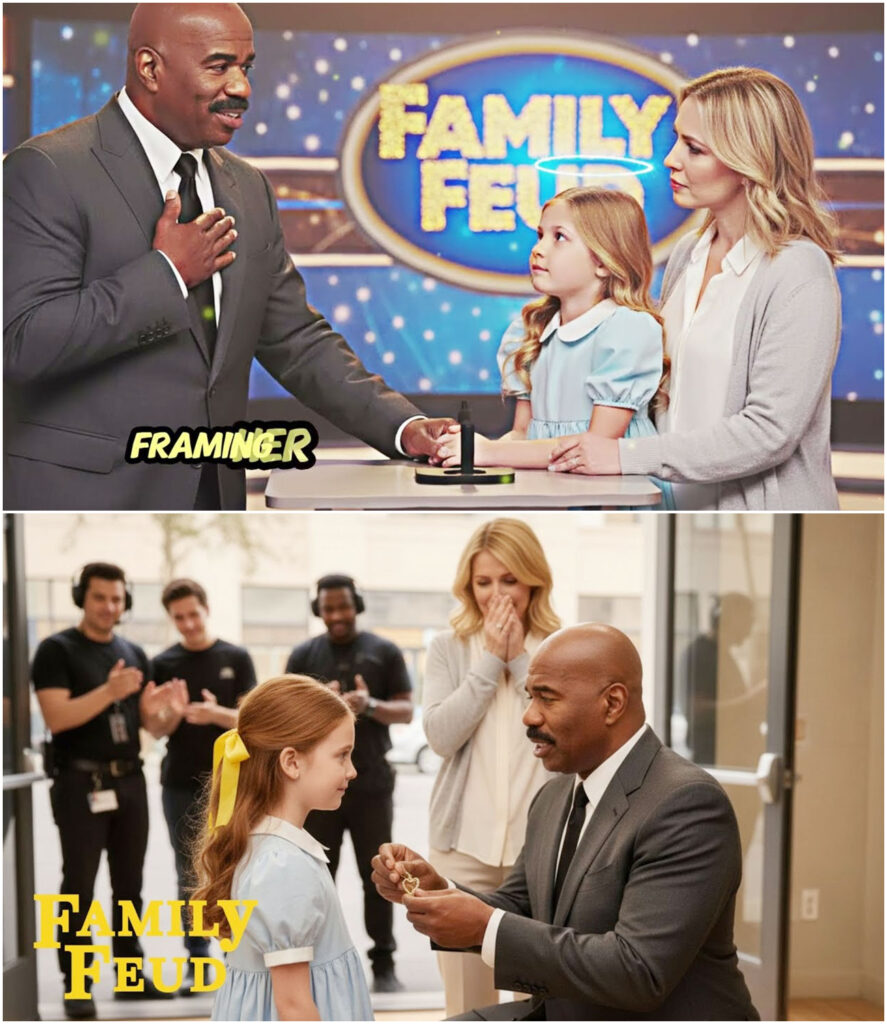
the promise that your service matters, your sacrifice matters, and your healing matters, too. Steve carefully placed the jacket around Timothy’s shoulders. I’m also going to give you my personal phone number, Steve continued. Not my agent, not my manager. Me? Because sometimes when the world gets too loud and the memories get too heavy.
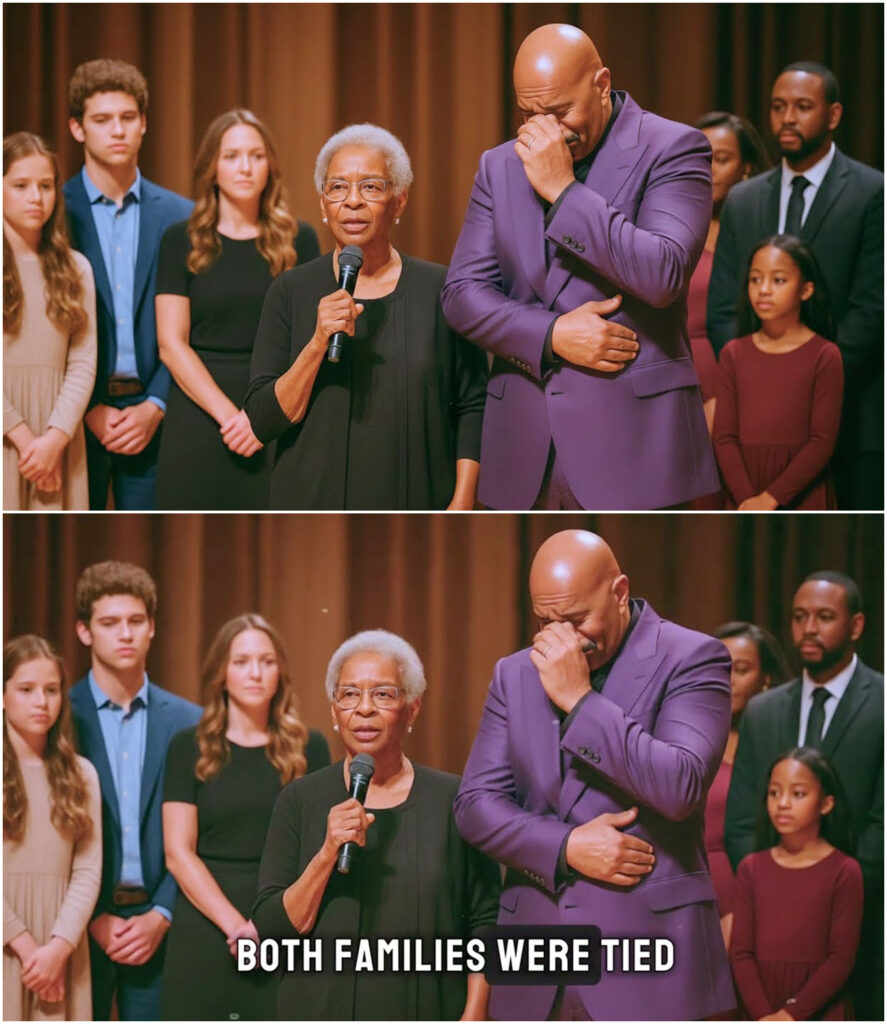
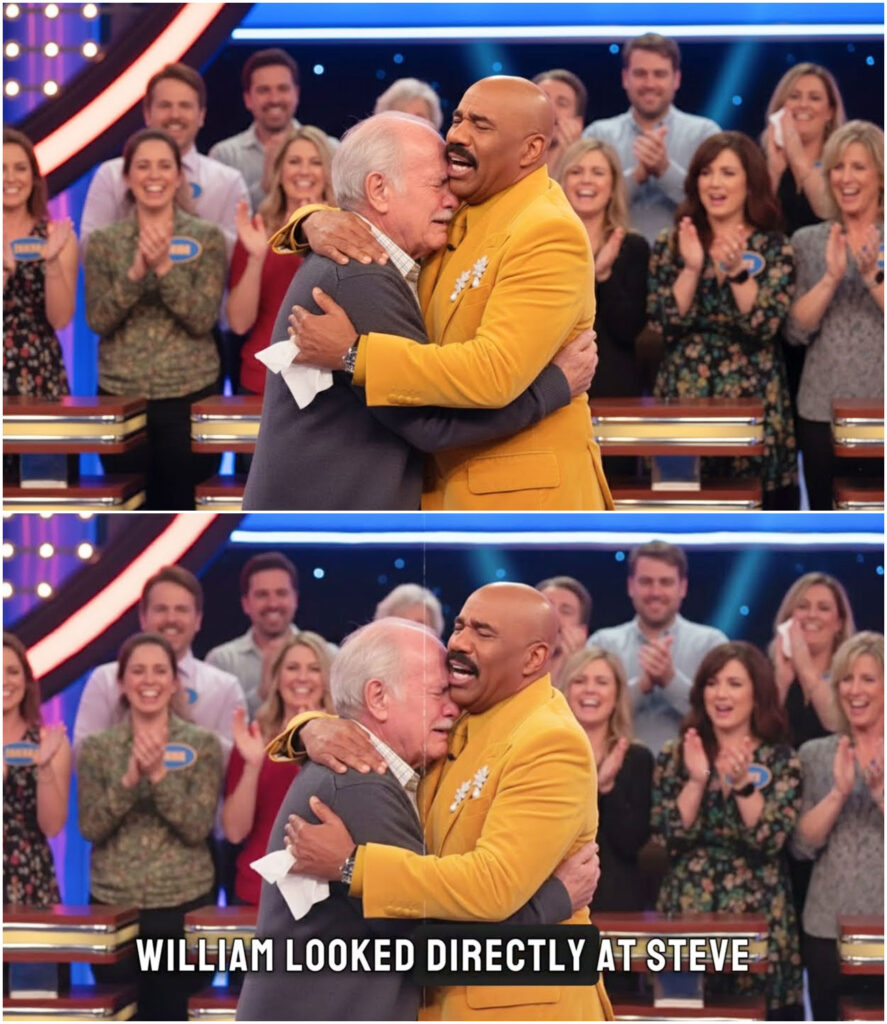
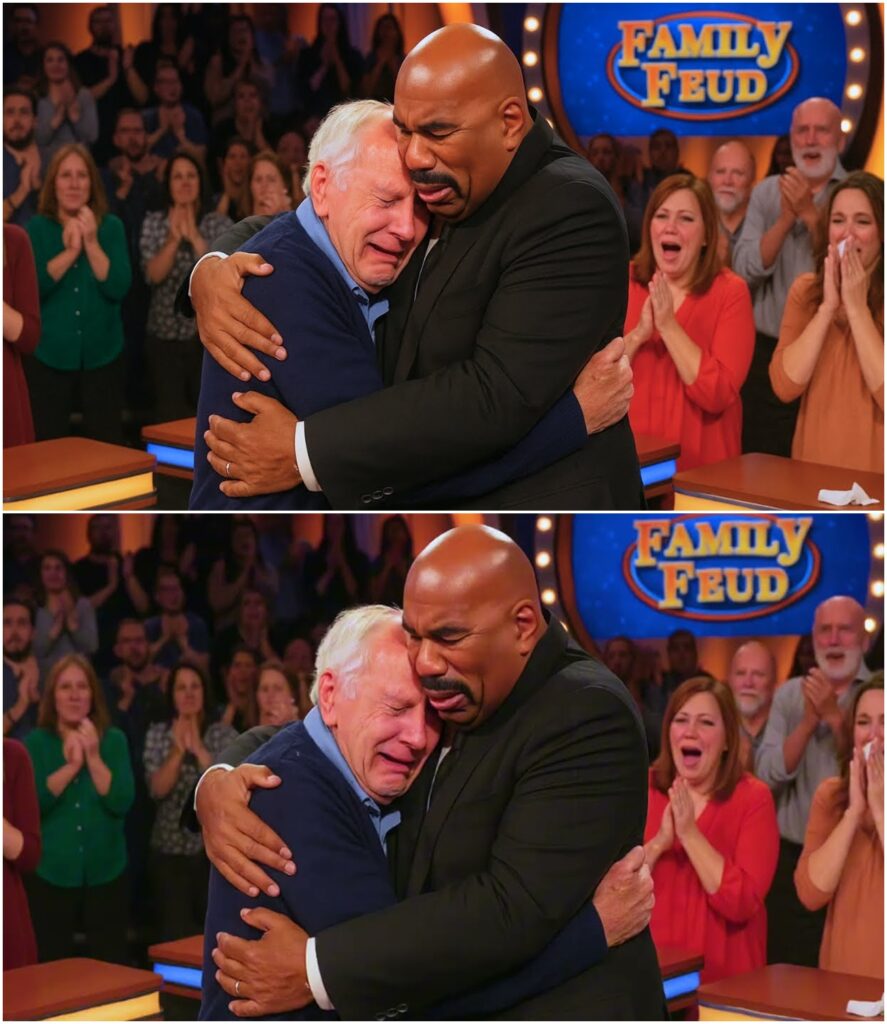
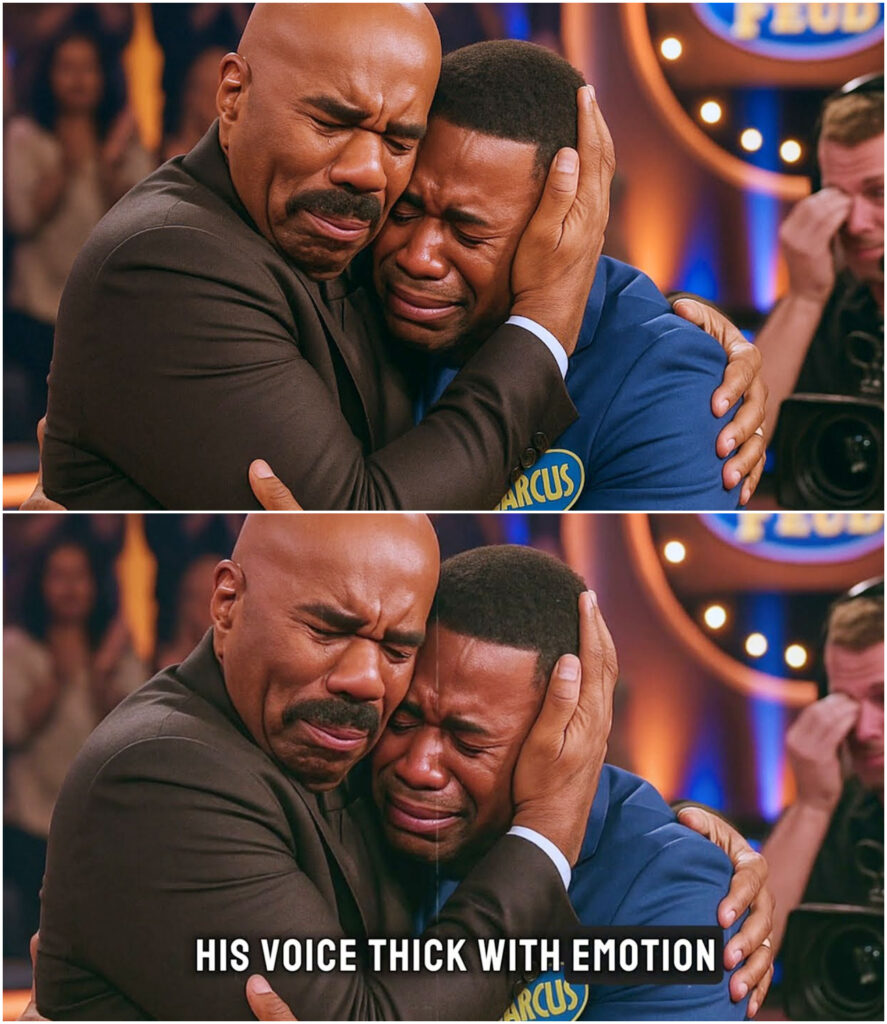
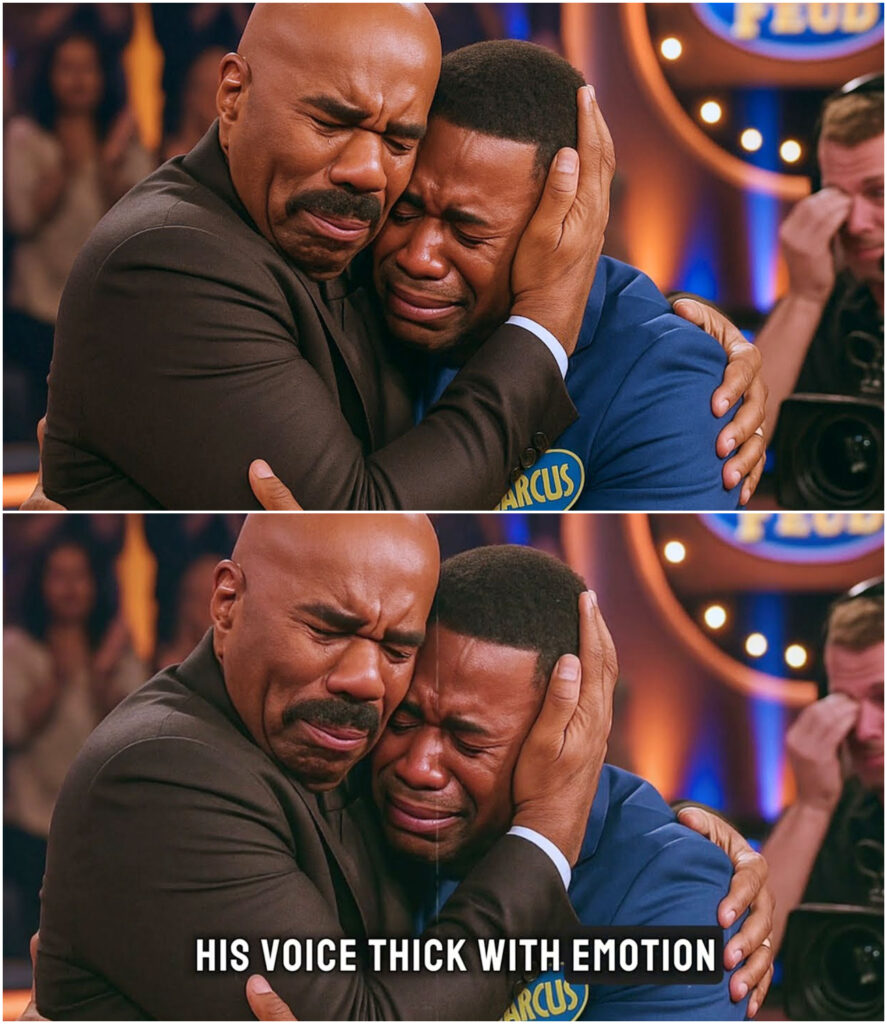
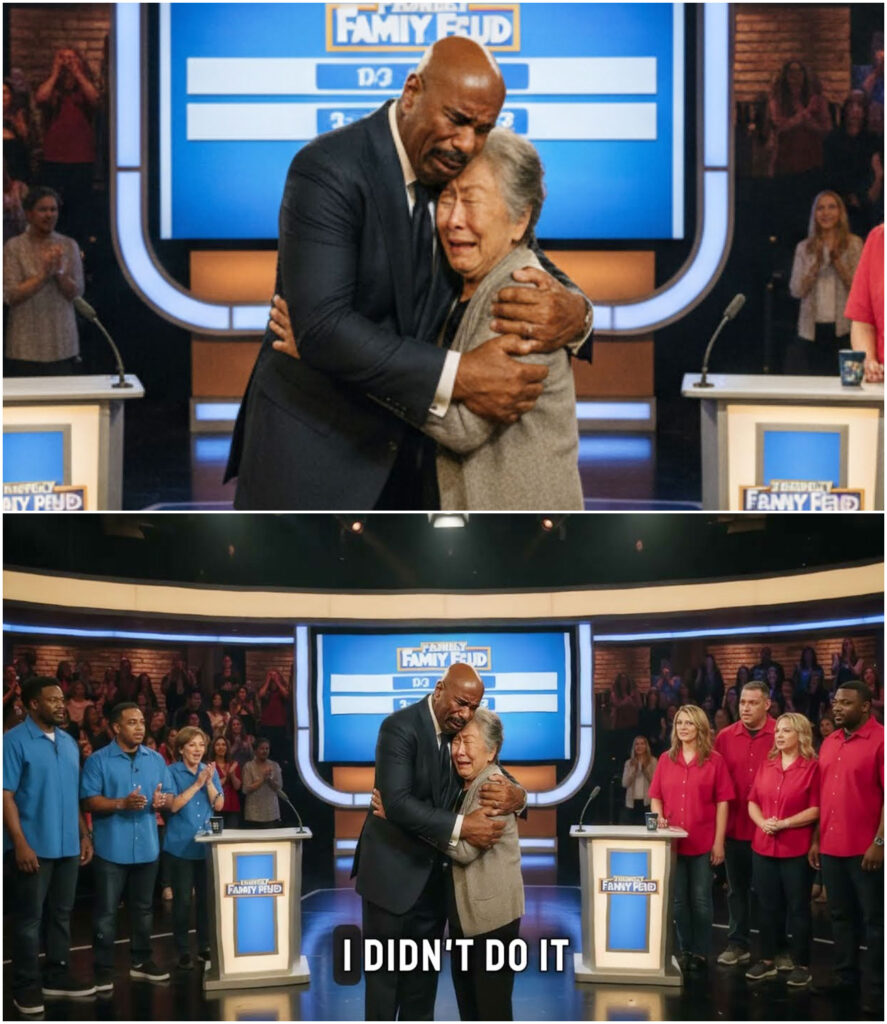
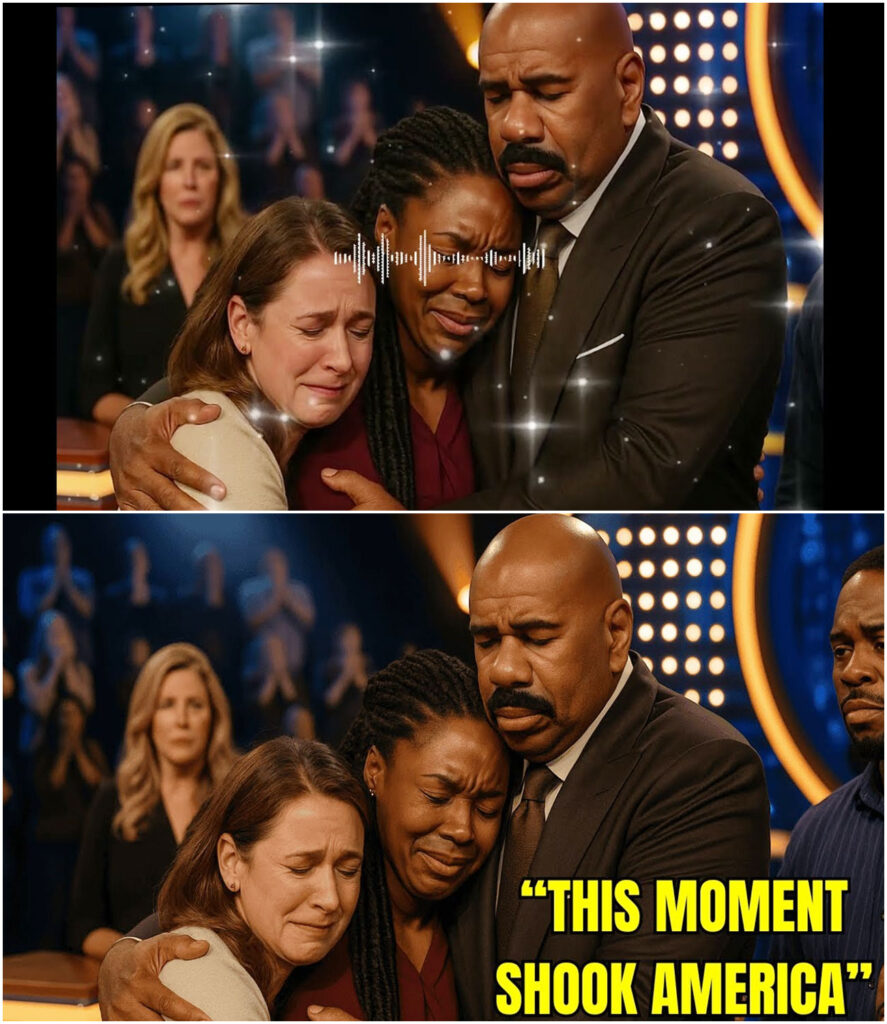
You need someone to remind you that you made it home. You survived. You did your job. And now you deserve to live, not just exist. The audience rose to their feet. But this wasn’t typical game show applause. This was something deeper, something that acknowledged transformation. Timothy’s family surrounded him, and for the first time since the episode began, he seemed fully present.
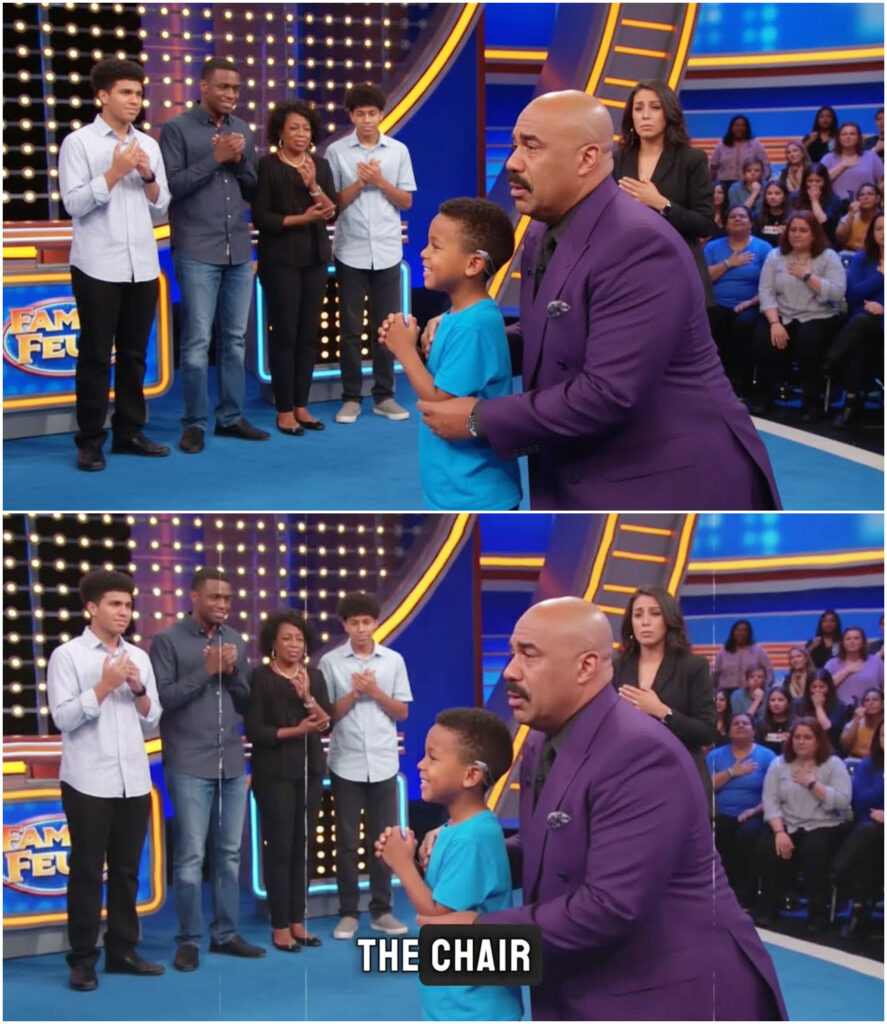
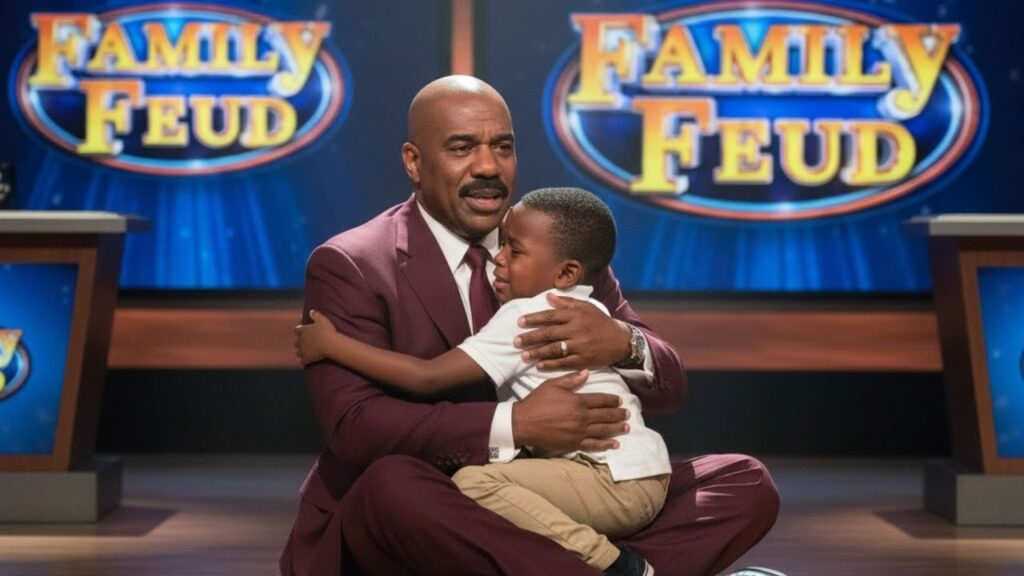
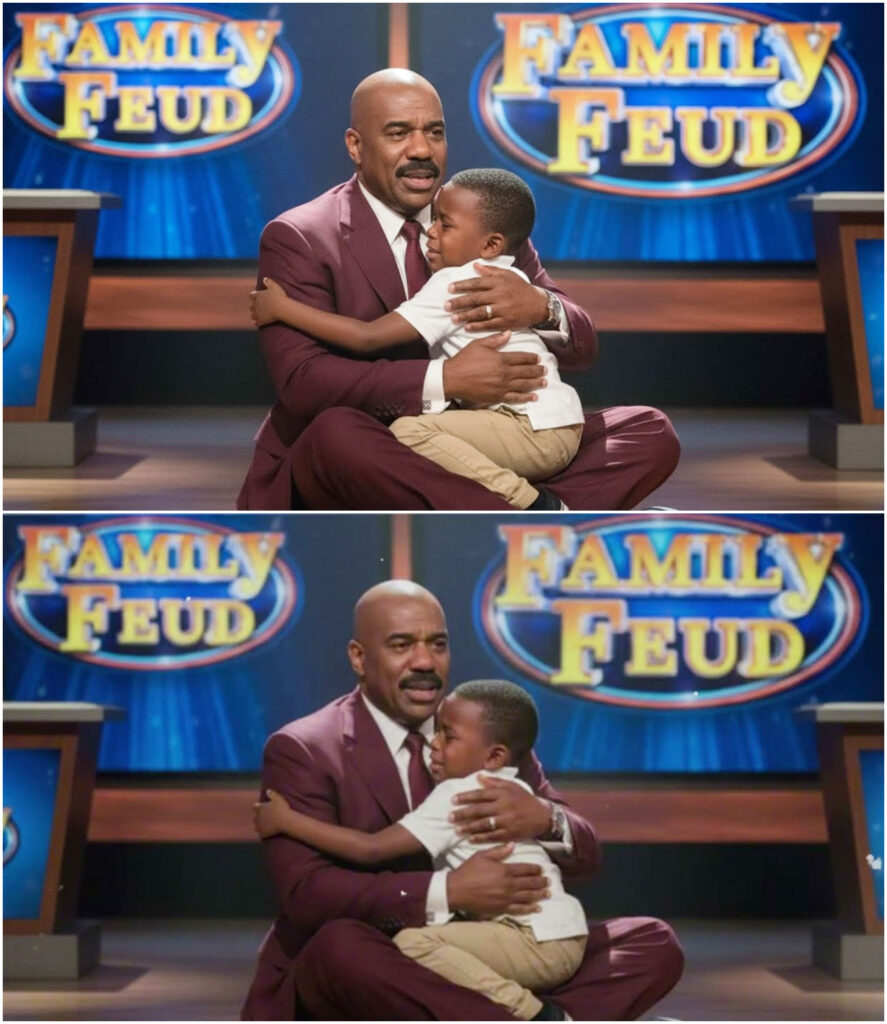
Maria wrapped her arms around him, and little Sophia climbed into her father’s lap. Daddy, are you okay? She asked. I’m getting there, baby girl. Timothy replied, his voice steadier than it had been all day. I’m getting there. And you know what? I think I’m going to keep getting better. Miguel Rodriguez, Timothy’s father, stepped forward with tears in his eyes. Mhjo, he said.
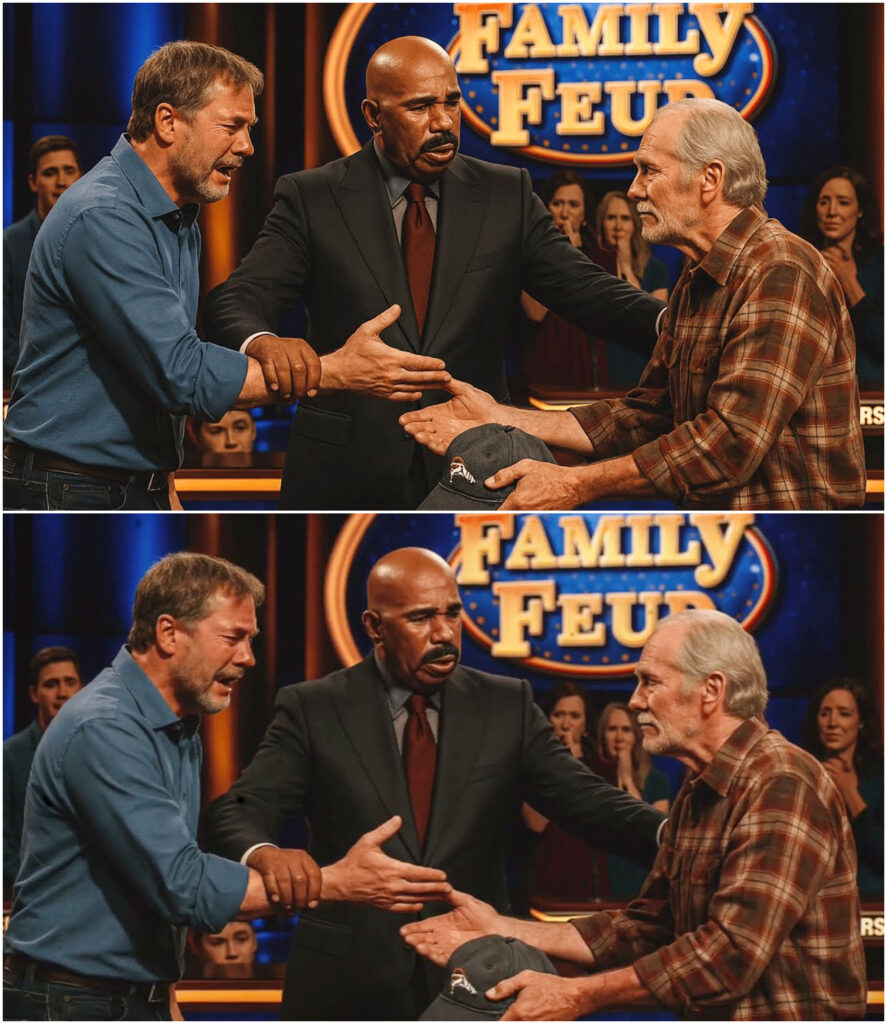
I’m sorry we didn’t understand. I’m sorry we didn’t know how to help. It’s okay, Papa. Timothy replied, embracing his father. I didn’t know how to let you help. I didn’t know how to explain something I couldn’t understand myself. But Steve had one more gesture. Ladies and gentlemen, he announced, Timothy Rodriguez and his family came here to win money to help with medical bills and college tuition.
They won $15,000, and they earned every penny of it with their courage and love. He paused, looking directly into the camera. But sometimes some moments are worth more than money. So here’s what Family Feud is going to do. We’re going to cover Timothy’s medical expenses completely, every doctor visit, every therapy session, every piece of equipment he needs.
We’re going to set up a scholarship fund for his daughter Sophia. and we’re going to establish a foundation to make sure that any veteran who comes on this show knows they have a place where their service is understood and honored. The impact of that moment extended far beyond the studio walls. When the episode aired 6 months later, it broke viewing records not because of the game, but because of the grace.
Veterans organizations across the country reported increased calls from veterans seeking support and families trying to understand their loved ones struggles. Timothy Rodriguez became an advocate for veteran mental health. Speaking at conferences and working with organizations to help other veterans navigate their transition from military to civilian life, he partnered with Steve’s Foundation to create support programs specifically for combat veterans dealing with PTSD.
He still wears Steve’s jacket to speaking engagements, not as a costume, but as armor against the shame and stigma that too many veterans carry. The jacket became a symbol of acceptance, understanding, and the power of human connection to heal wounds that medicine alone cannot touch. and Steve Harvey. He learned that sometimes the most powerful moments happen not when you follow the script, but when you throw it away and simply show up for another human being in their moment of deepest need.
He learned that television could be a force for healing. That his platform could be used not just to entertain, but to educate and build bridges of understanding. Years later, Timothy still has difficult days. PTSD doesn’t disappear because of one powerful moment on television. But he has tools now, resources, and most importantly, he has the knowledge that he’s not alone.
He knows that there are people who understand, who care, and who will support him through the dark moments that still come. Sophia Rodriguez, now 10 years old, understands more about her father’s service than most children her age. She knows that heroes sometimes come home wounded, that strength isn’t always visible, and that love means supporting someone through their battles, seen and unseen.
Maria Rodriguez became an advocate for military families, sharing her experience of loving someone with PTSD and helping other spouses navigate the challenges of supporting a veteran partner. She speaks often about that day on Family Feud, not as a traumatic memory, but as a turning point when their family stopped suffering in silence and started healing in community.
Because that day in Atlanta, television stopped being just entertainment and became something sacred. A reminder that behind every uniform, every flag, every thank you for your service, there’s a human being carrying burdens that the rest of us can barely imagine. A reminder that sometimes the greatest act of patriotism isn’t waving a flag or singing an anthem, but simply creating space for our veterans to be human, to be wounded, and to be loved exactly as they are.
The game ended that day, but the healing had just begun. And in a world that often feels divided, Steve Harvey and Timothy Rodriguez showed us that there’s still room for grace, understanding, and the kind of love that changes everything it touches. is
News
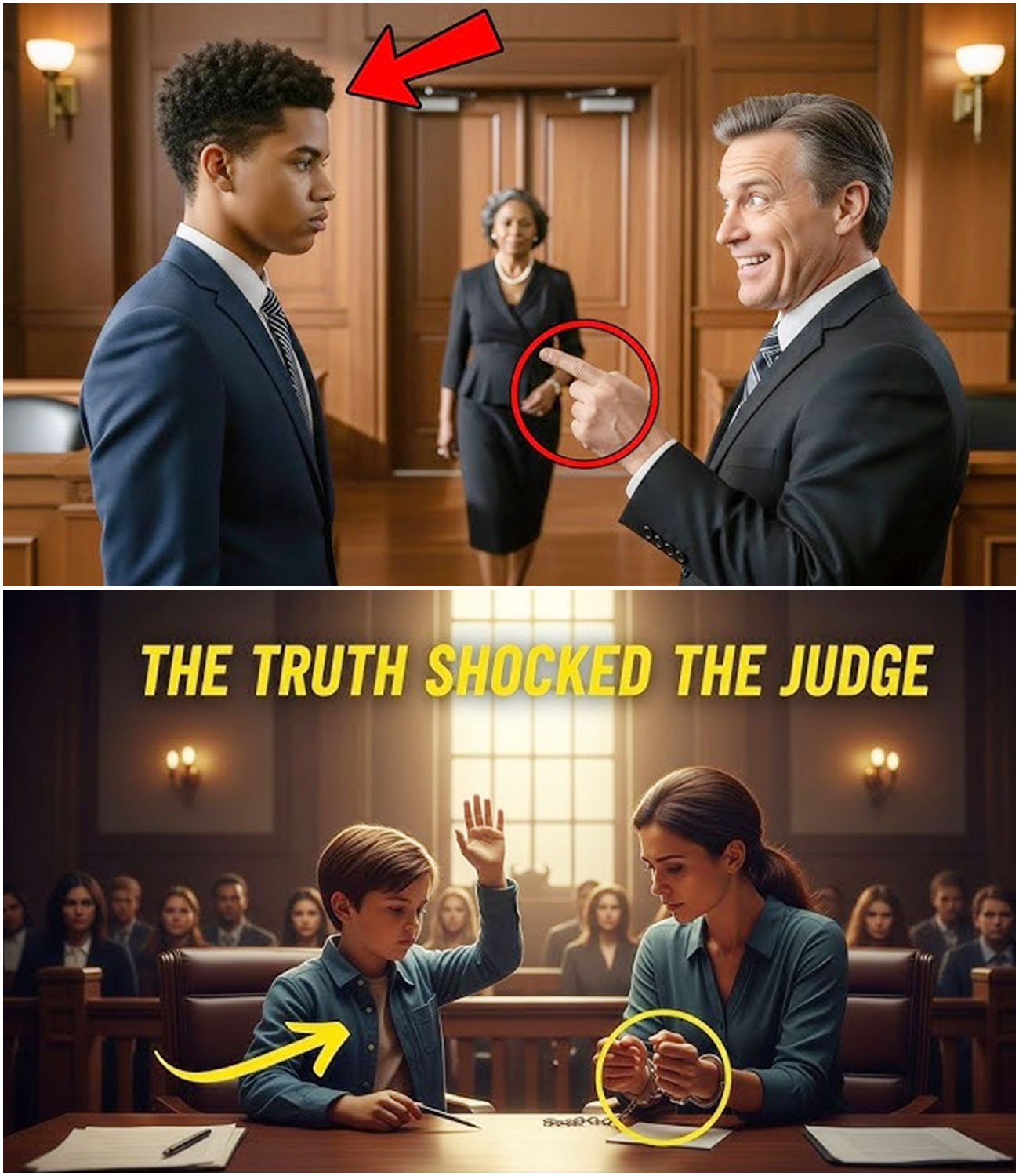
“My Mom Is Not Guilty,” Said the Small Boy — What the Judge Found Out Left Him Speechless
The courtroom was silent until a trembling voice cut through the tension. Your honor, my mom didn’t steal anything. Gasps rippled across the room. A 9-year-old black boy stood alone before the judge, clutching a folder bigger than his chest. Behind him, his pale, tearful mother watched, handcuffed and accused of a crime she didn’t […]
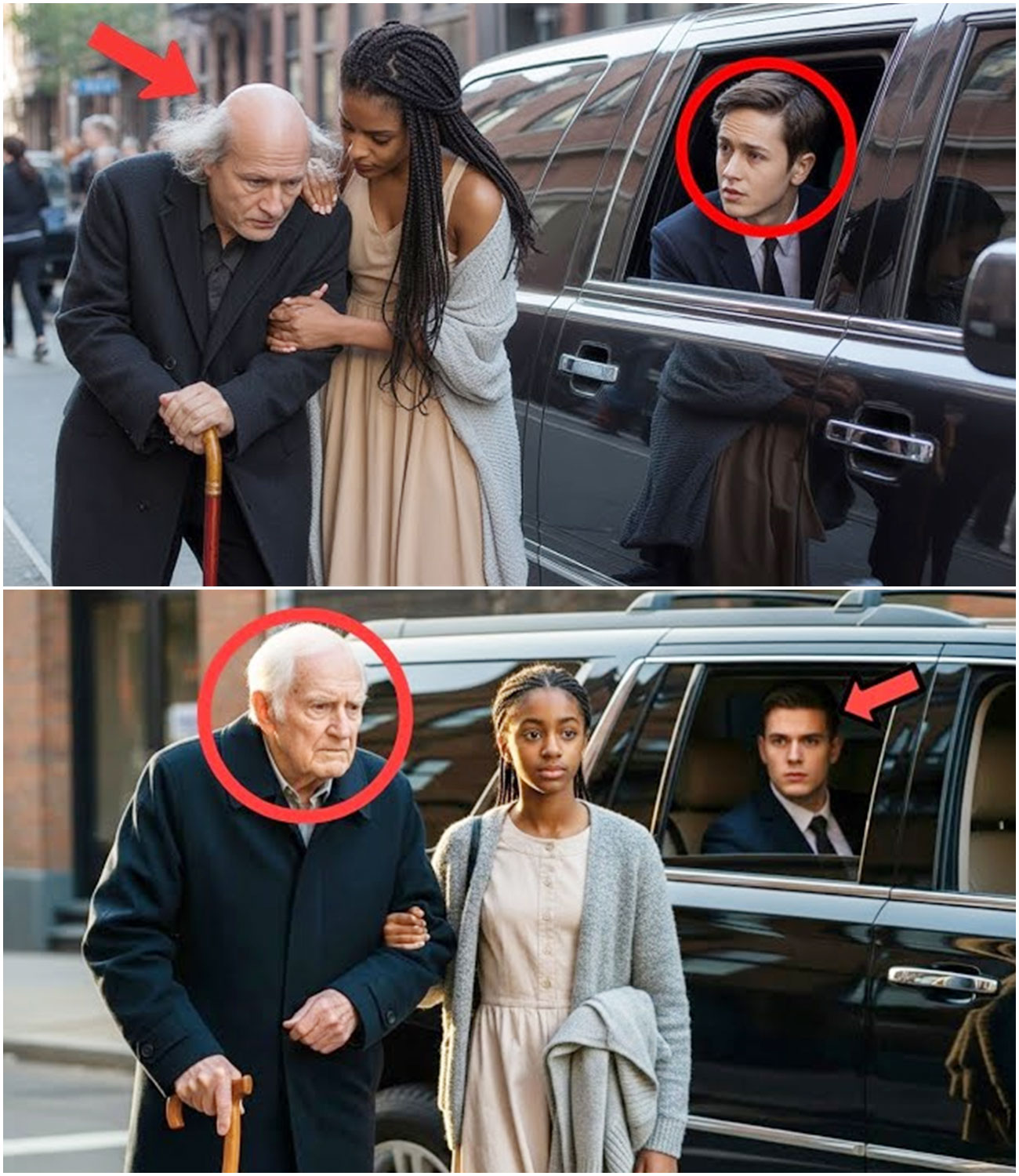
Poor Black Girl Helped an Old Man Cross the Street — Unaware He Was the Town’s Richest Farmer…
At the busiest corner of town, traffic thundered and no one cared except Amir with patched shoes and a bag stitched together. She noticed an old man frozen at the curb, his cane trembling as cars sped past. Everyone else ignored him. Some even laughed at her for stepping forward. But Meera didn’t flinch. She […]
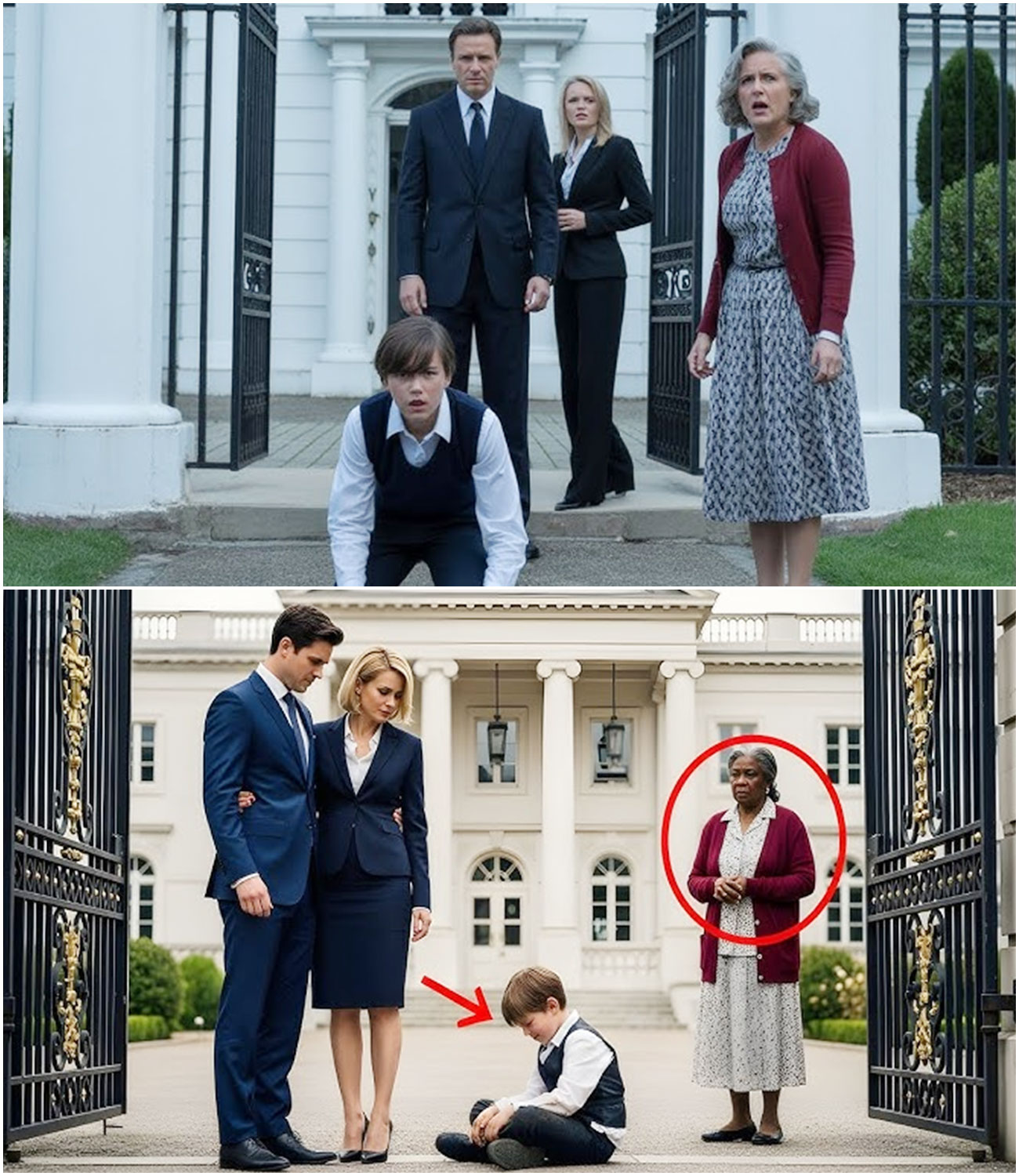
Boy Kicked Out by His Parents Returns 12 Years Later with his Nanny and Does Something Shocking.”
Thrown out for being dumb, young Daniel was left kneeling on the cold pavement while his wealthy parents shut the gates behind him. The only one who refused to walk away was Miss Ruth, the family’s old nanny, who quit her job and took him in with nothing but faith and sacrifice. Years later, Daniel […]
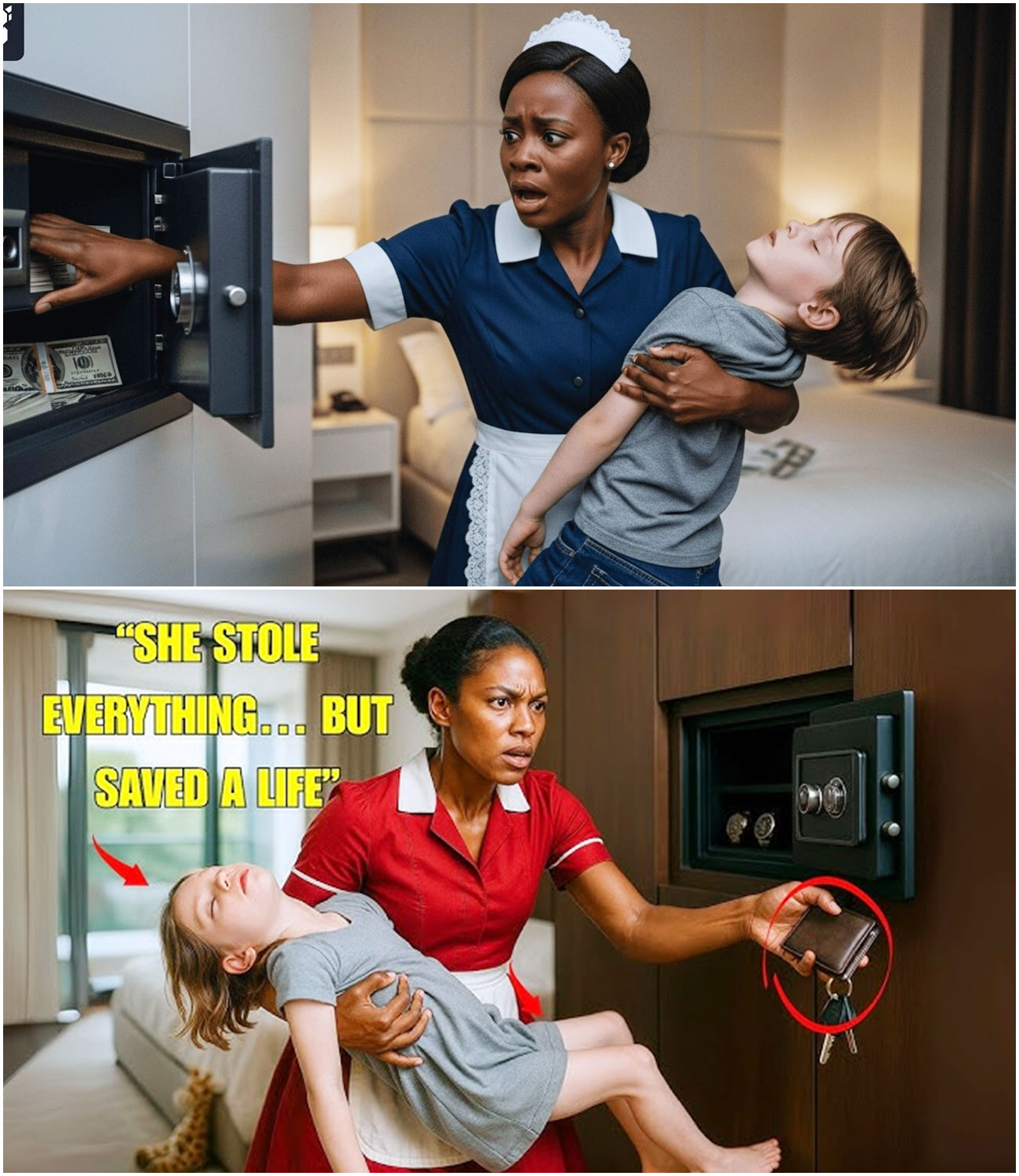
Black maid Stole the Billionaire’s Money to save his dying daughter, —what he did shocked everyone
Tasha was just a new maid, barely noticed, barely trusted. But when she found the billionaire’s daughter barely breathing, with no staff around and the mansion silent, she panicked. No calls were going through. No help was coming. So she did the unthinkable, broke into his locked office, grabbed the car keys and a bundle […]

Millionaire Comes Home and Finds His Pregnant Wife Crying—What He Discovered Shocked Him.
Millionaire comes home and finds his pregnant wife crying. David Whitman thought he had built the perfect life, but nothing prepared him for the day. He walked in early and found his young wife, Aisha, sobbing, her body covered in fresh bruises. Through her tears, she asked, “Am I ugly? Am I a monkey? Don’t […]
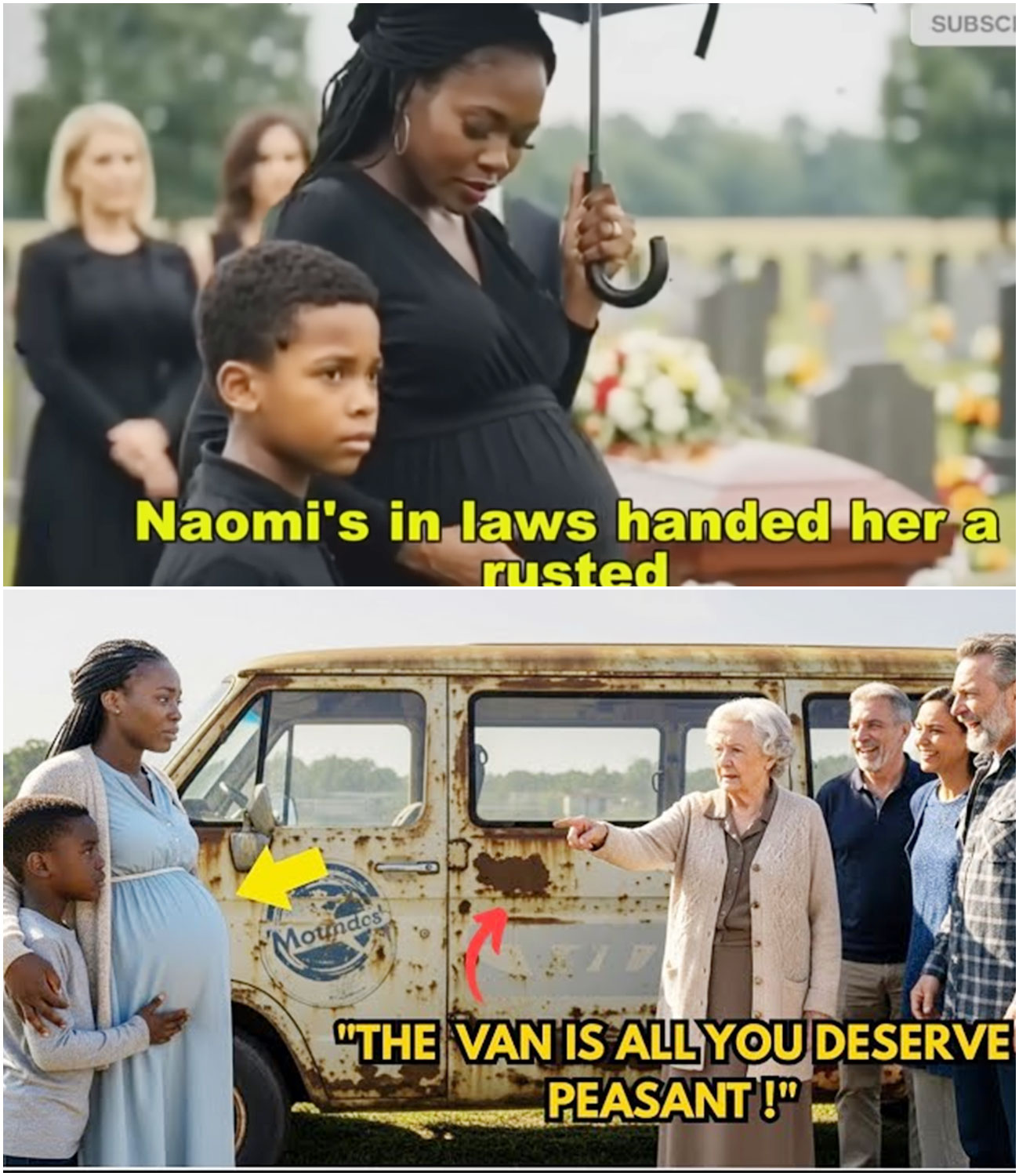
InLaws laugh as they gave her the Rusted van as her inheritance, — Unware the van was made of gold
At her husband’s funeral, Naomi’s in-laws handed her a rusted broken down van as her inheritance, laughing as they threw her out of the house and stole the businesses she’d built with him. 7 months pregnant, with her 10-year-old son beside her, she had no choice but to live in the van they claimed was […]
End of content
No more pages to load