


























































































































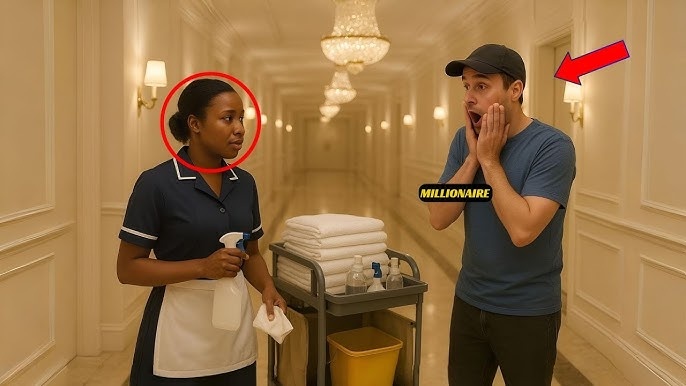





































































































































































































































































































































































































































































































































































































































































































































































































































Black Maid Stole the Billionaire’s Money to Save His Dying Son—What He Did Shocked Everyone

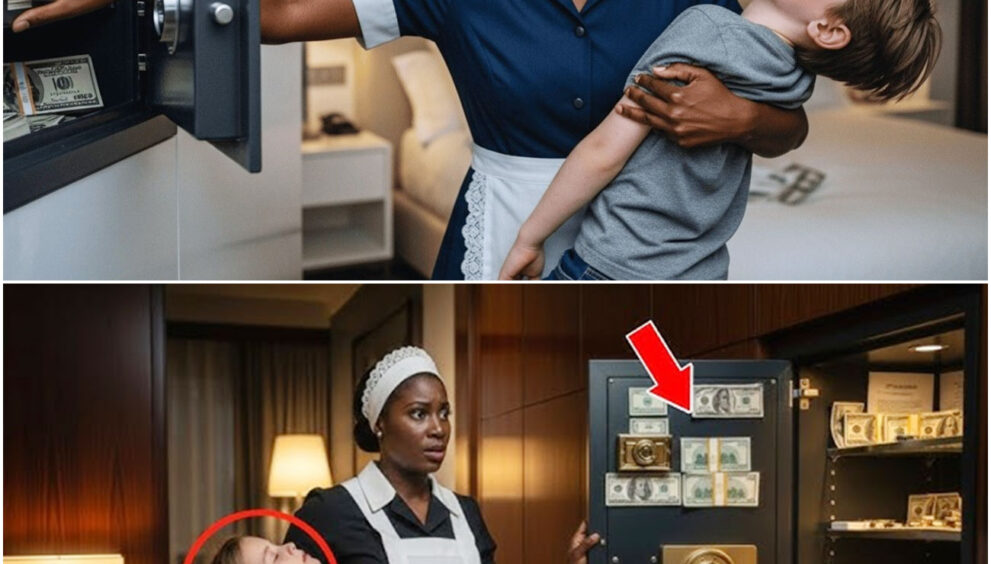
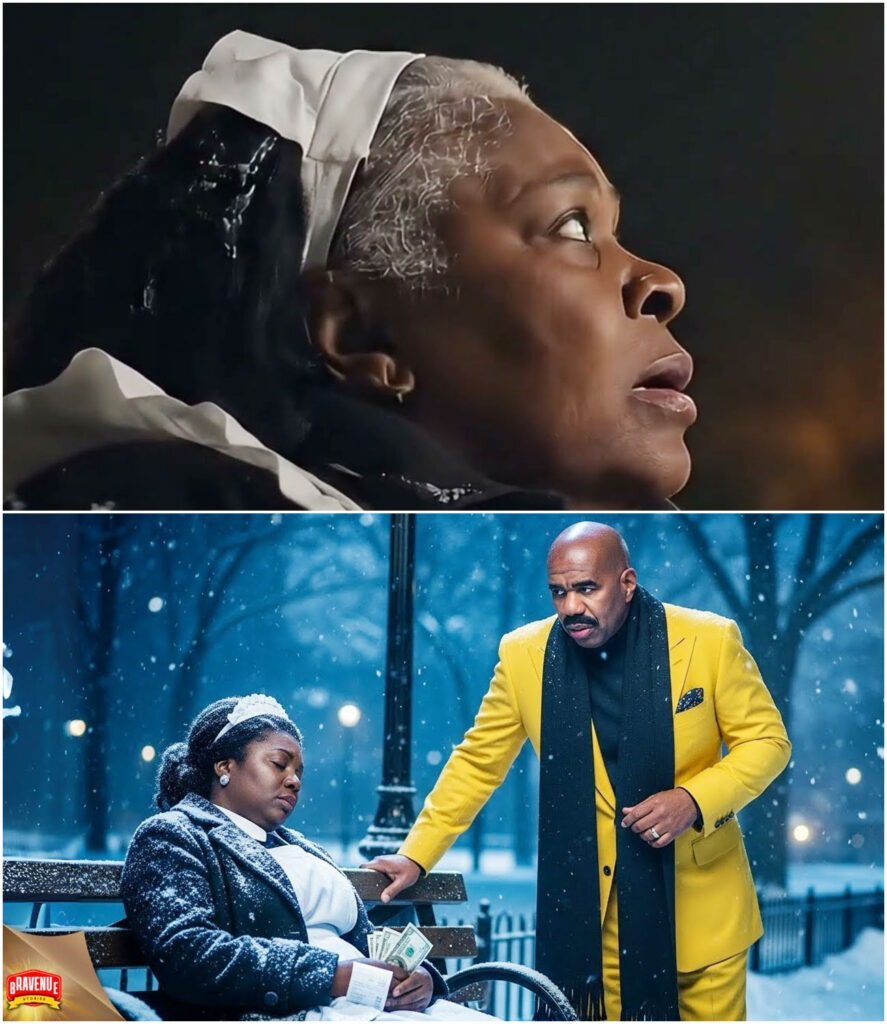
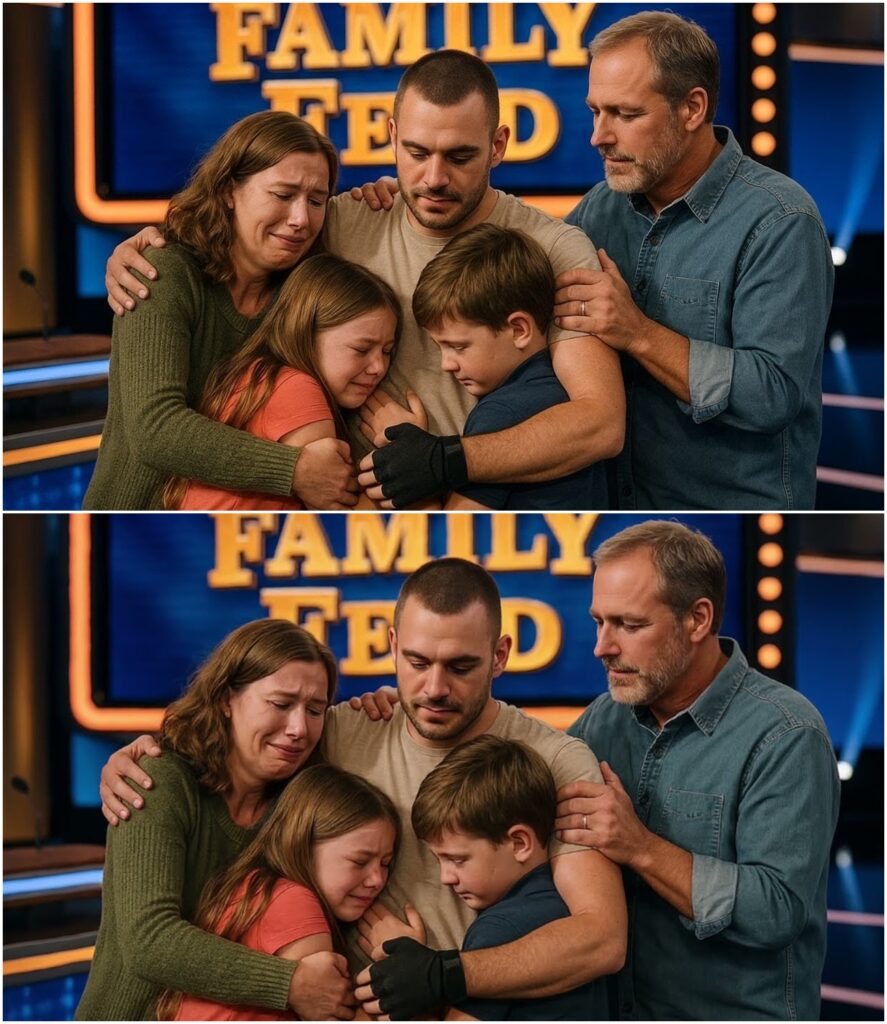
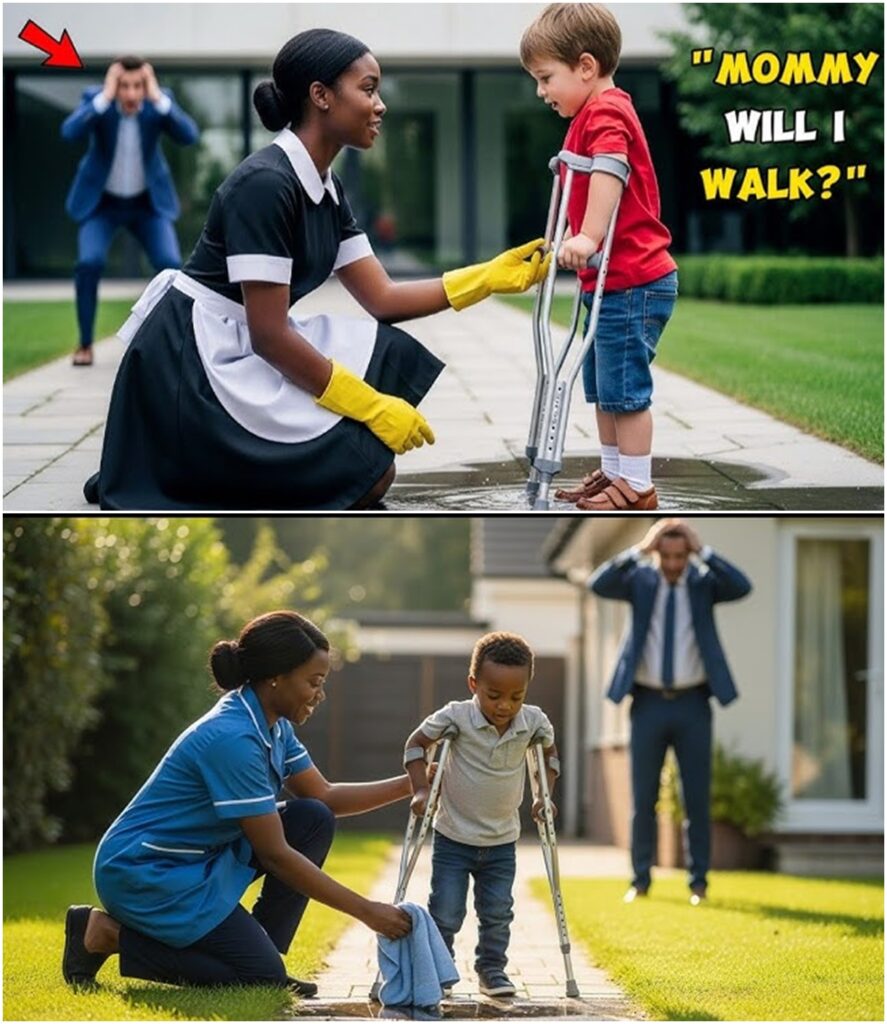
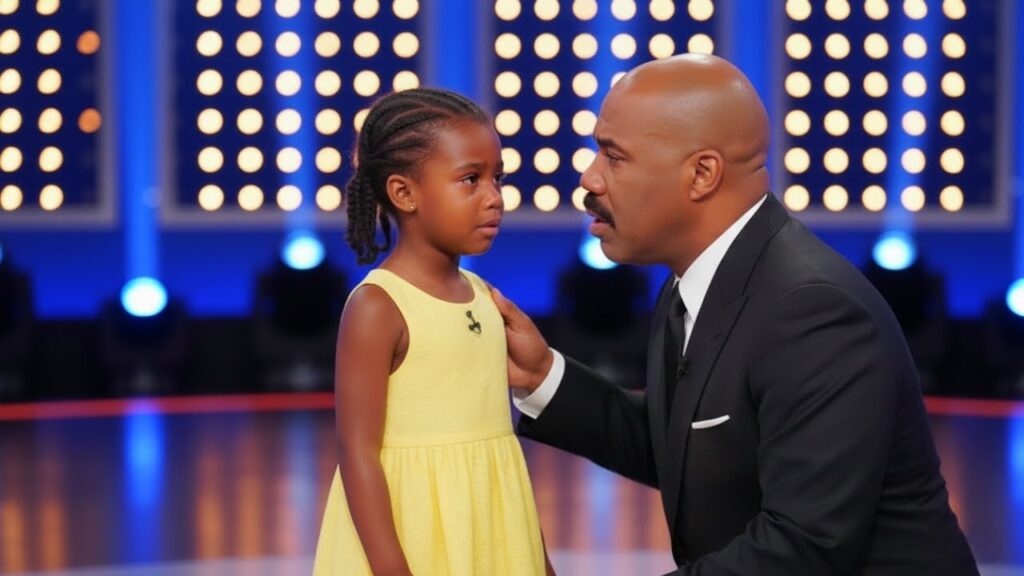
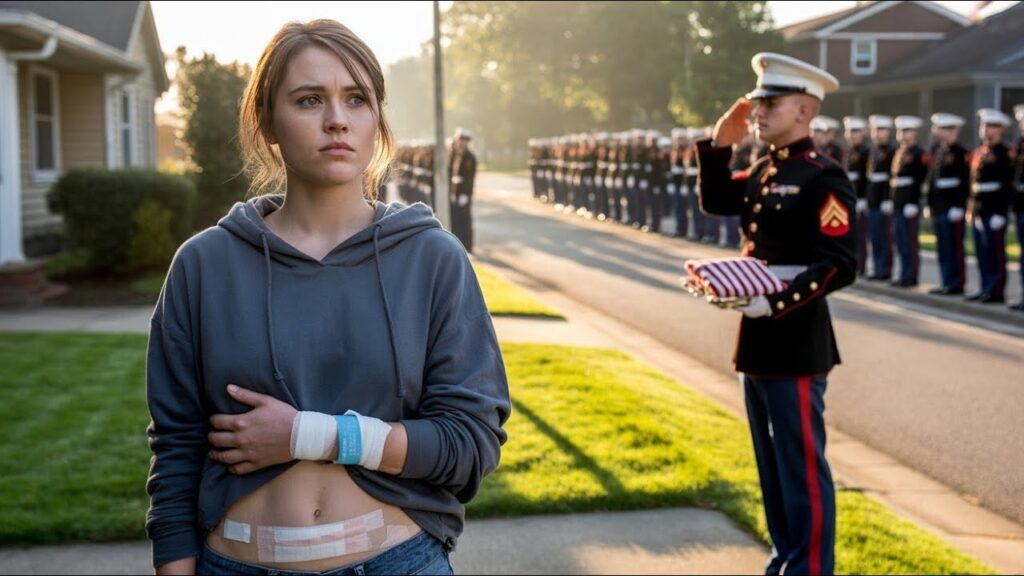
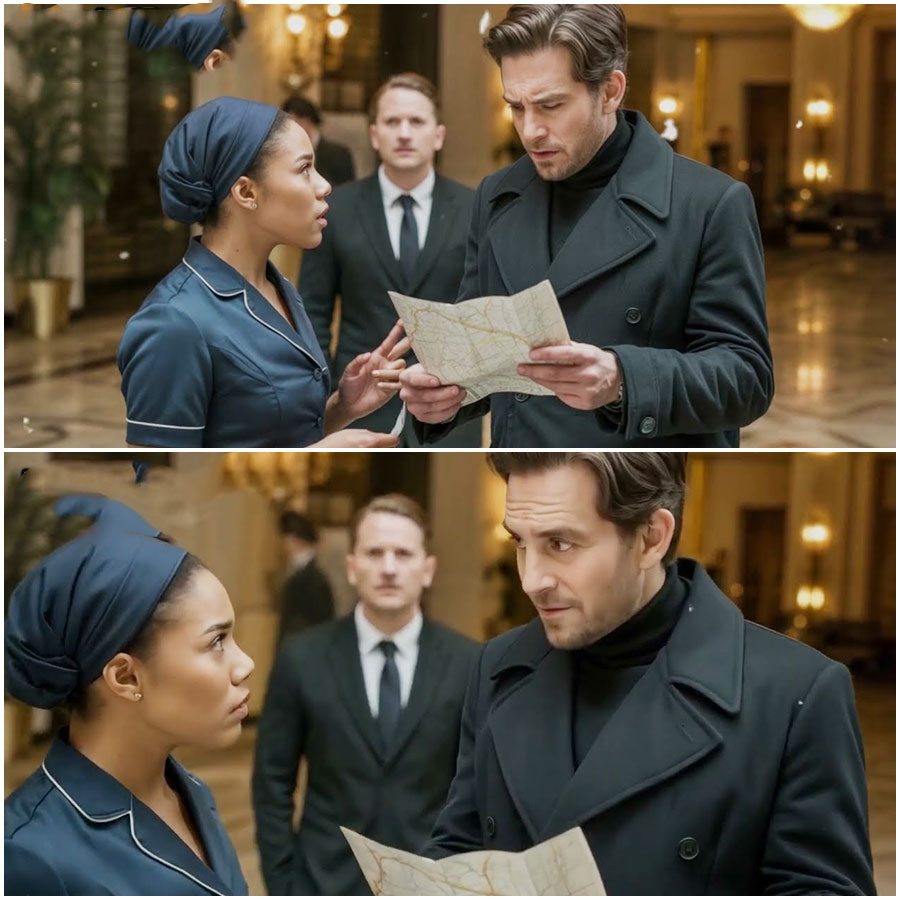
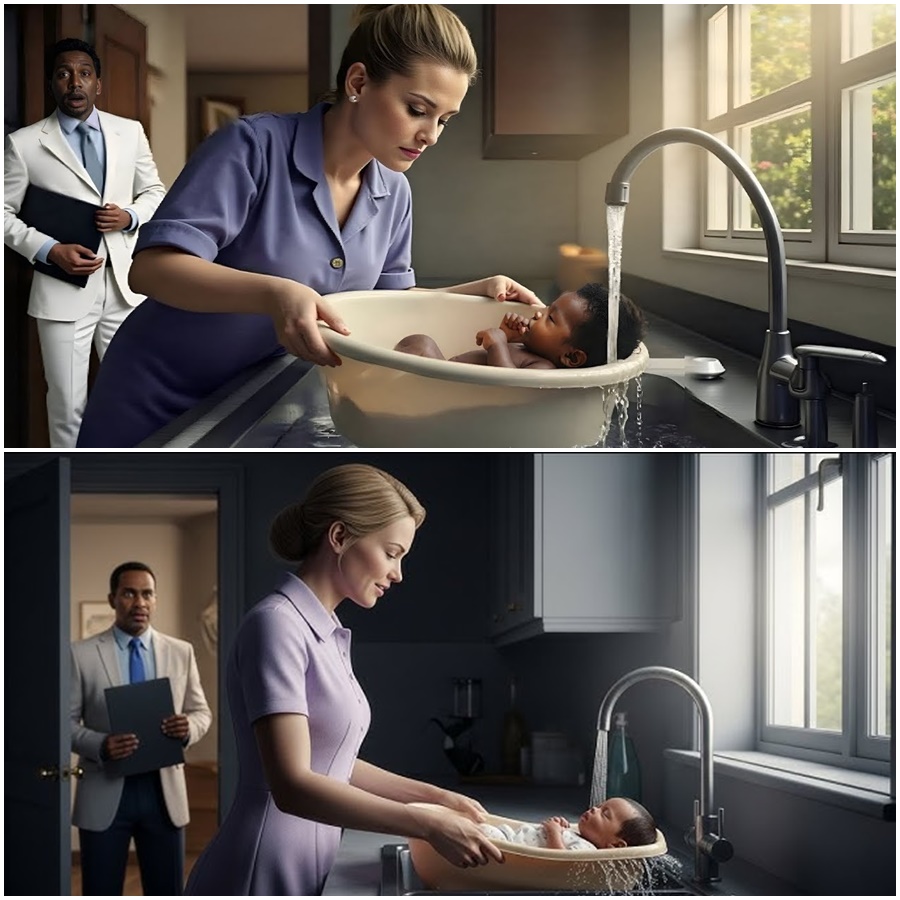
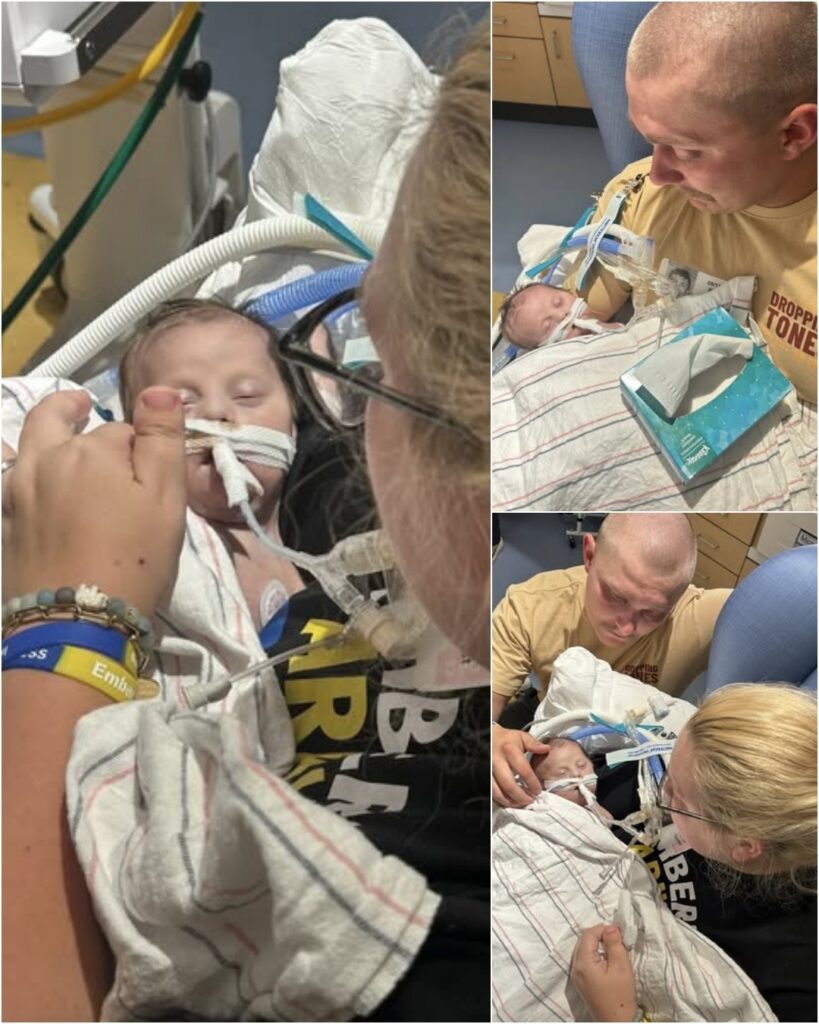
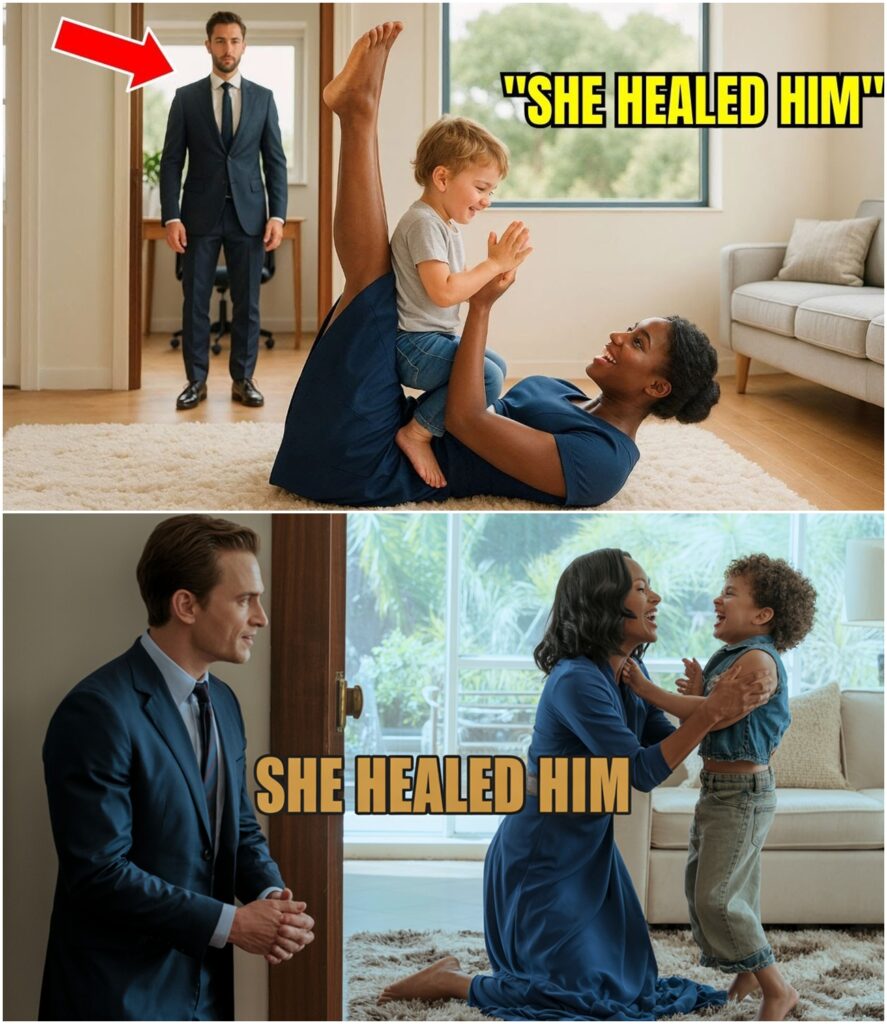
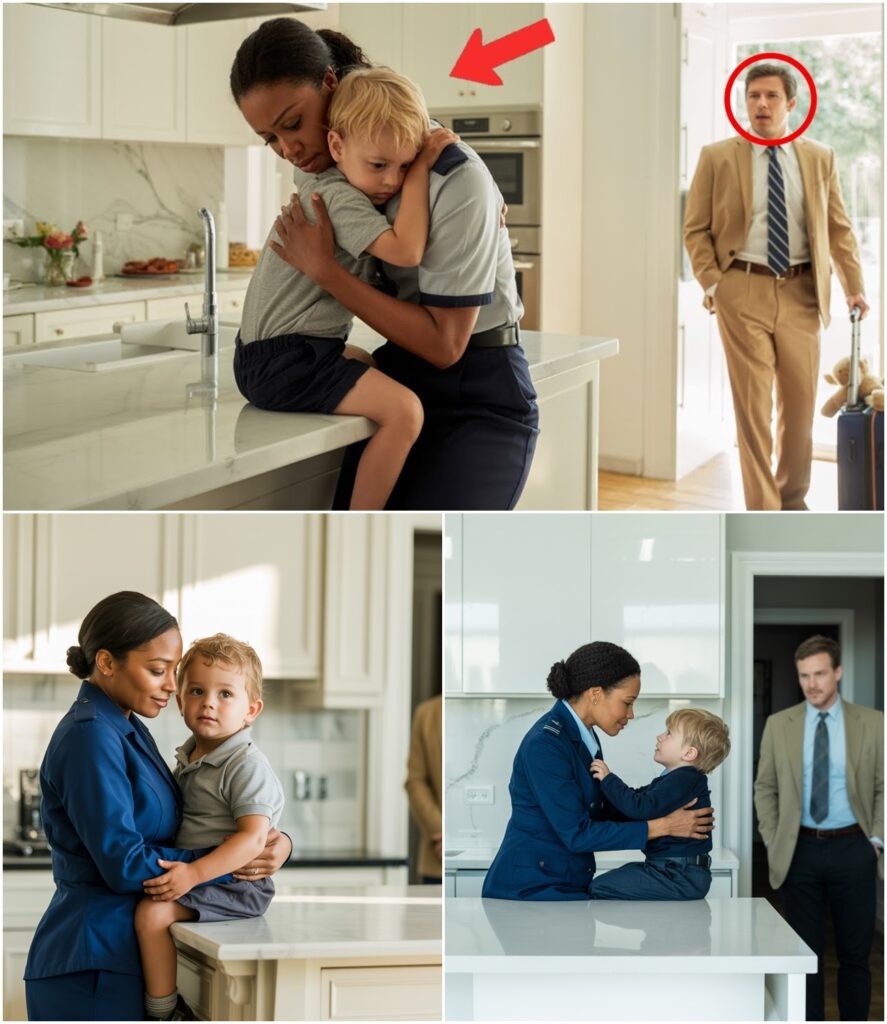
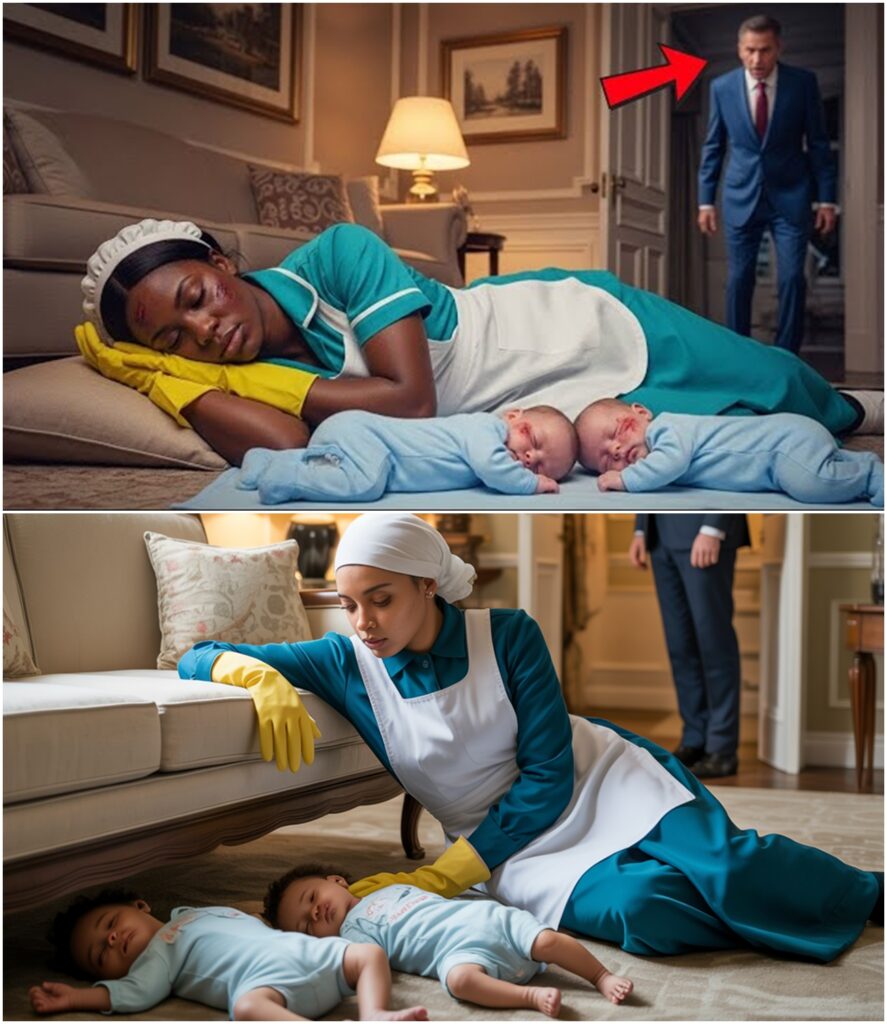
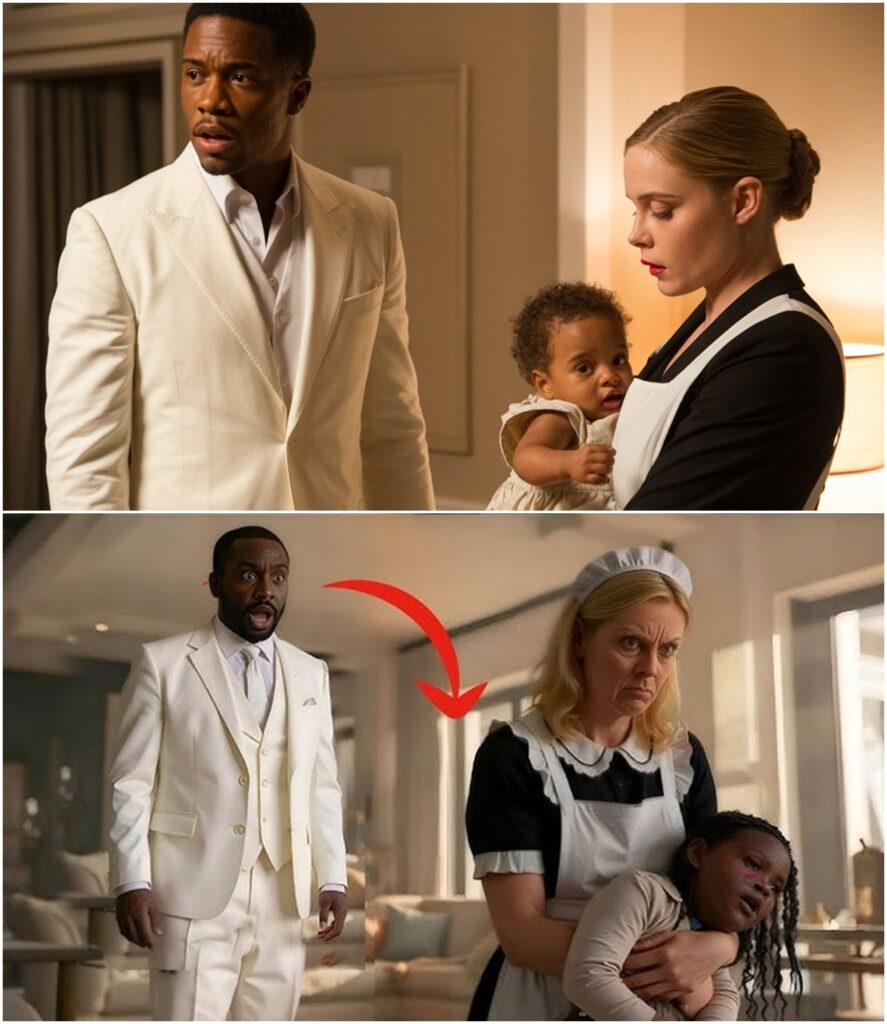
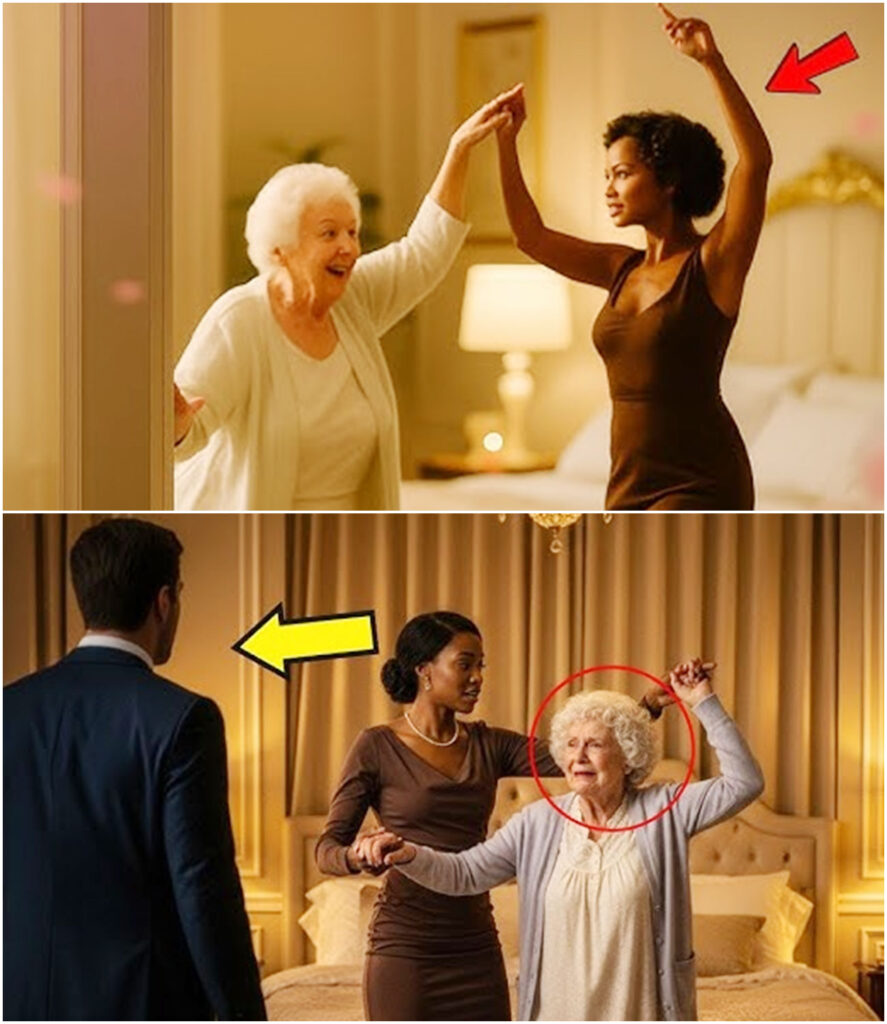
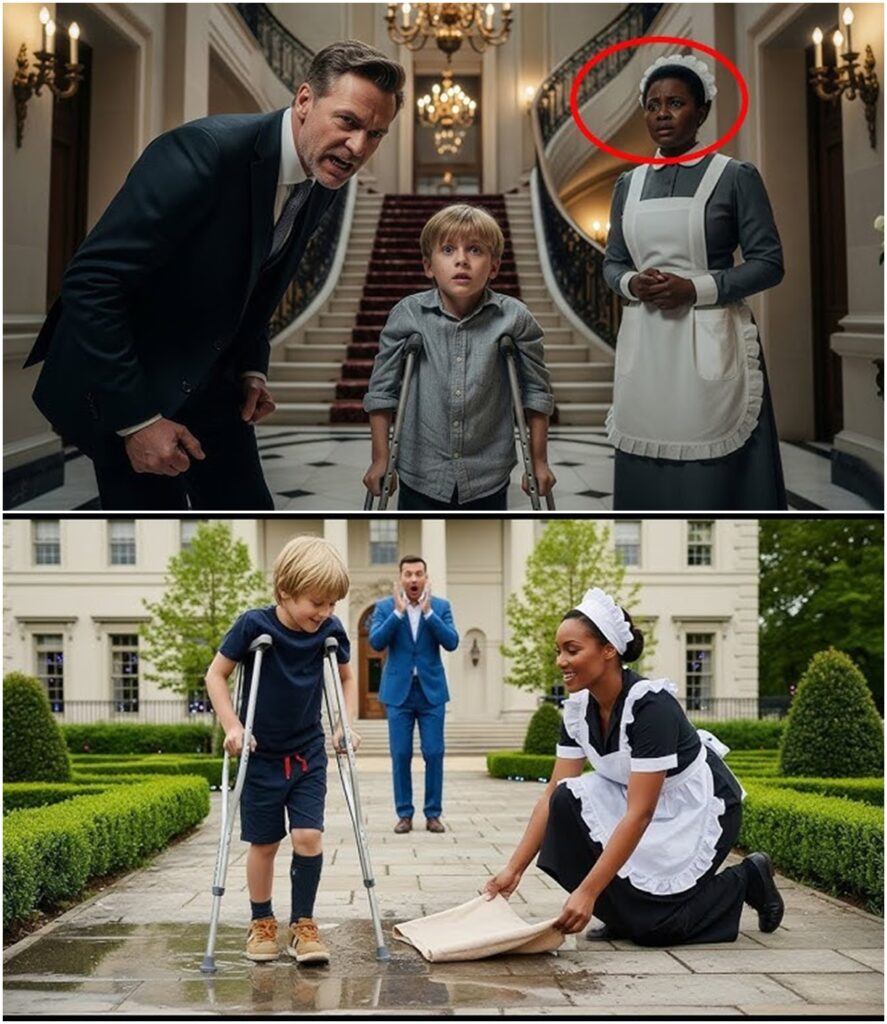
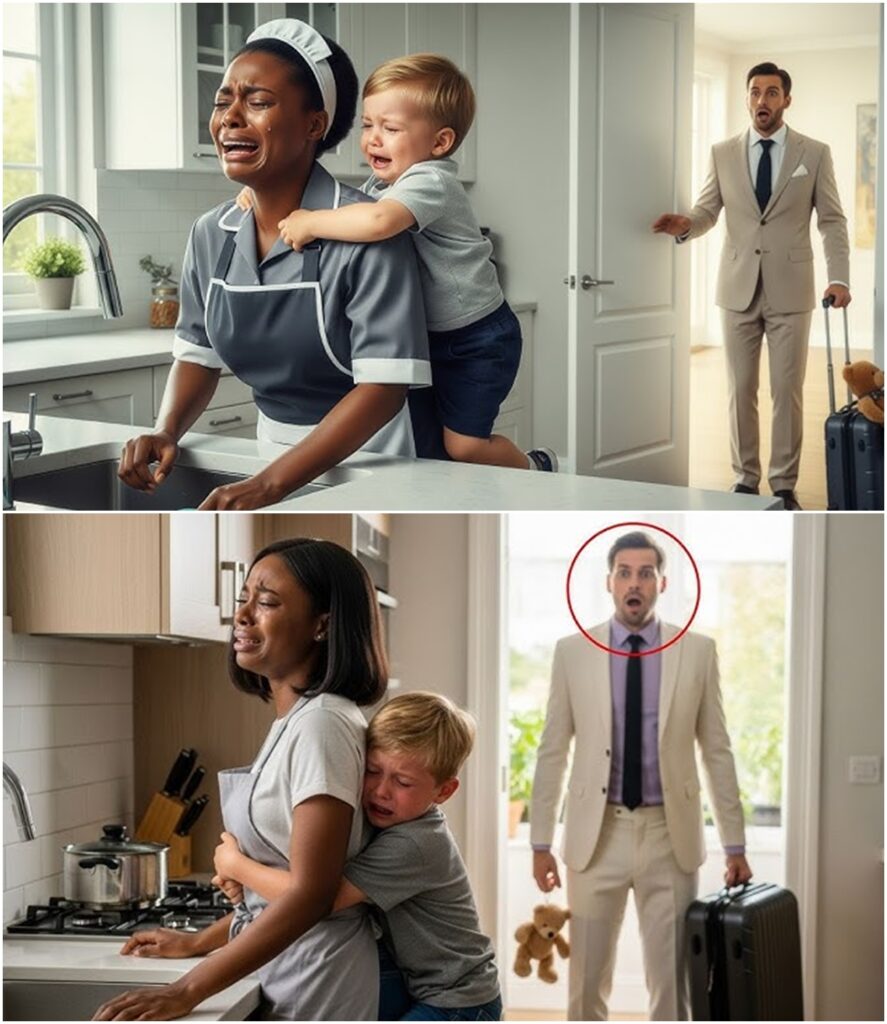
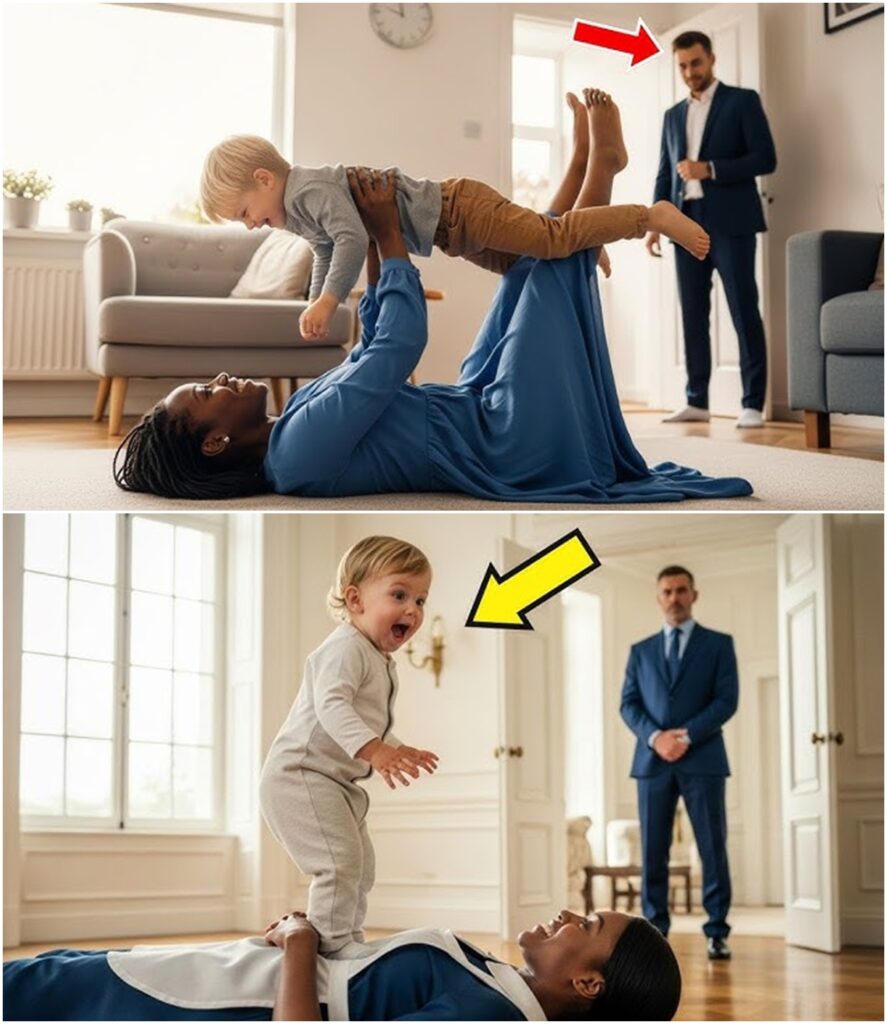
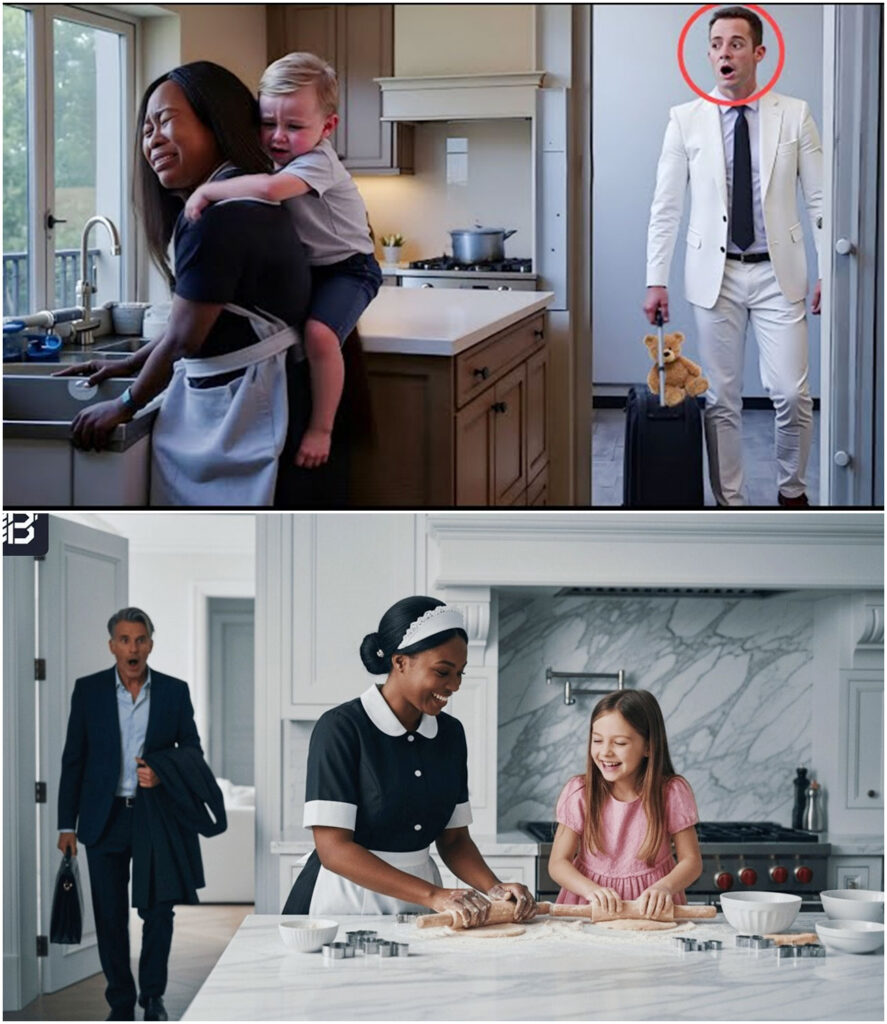
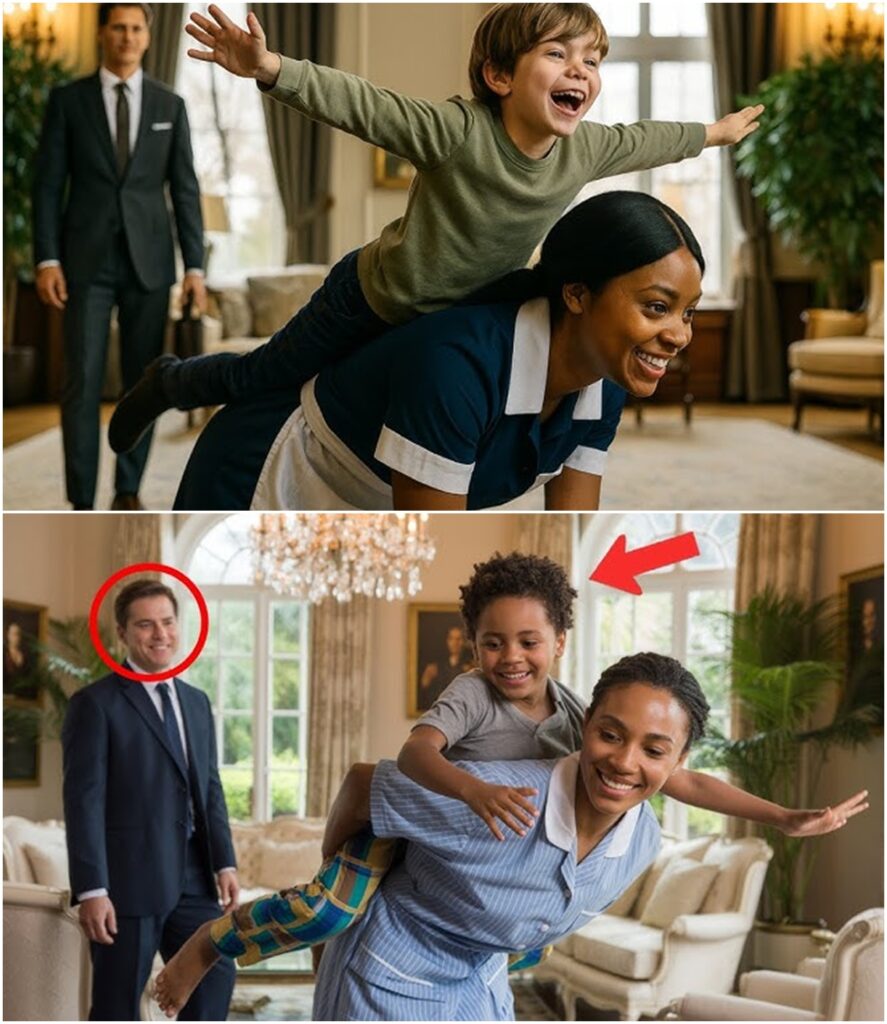
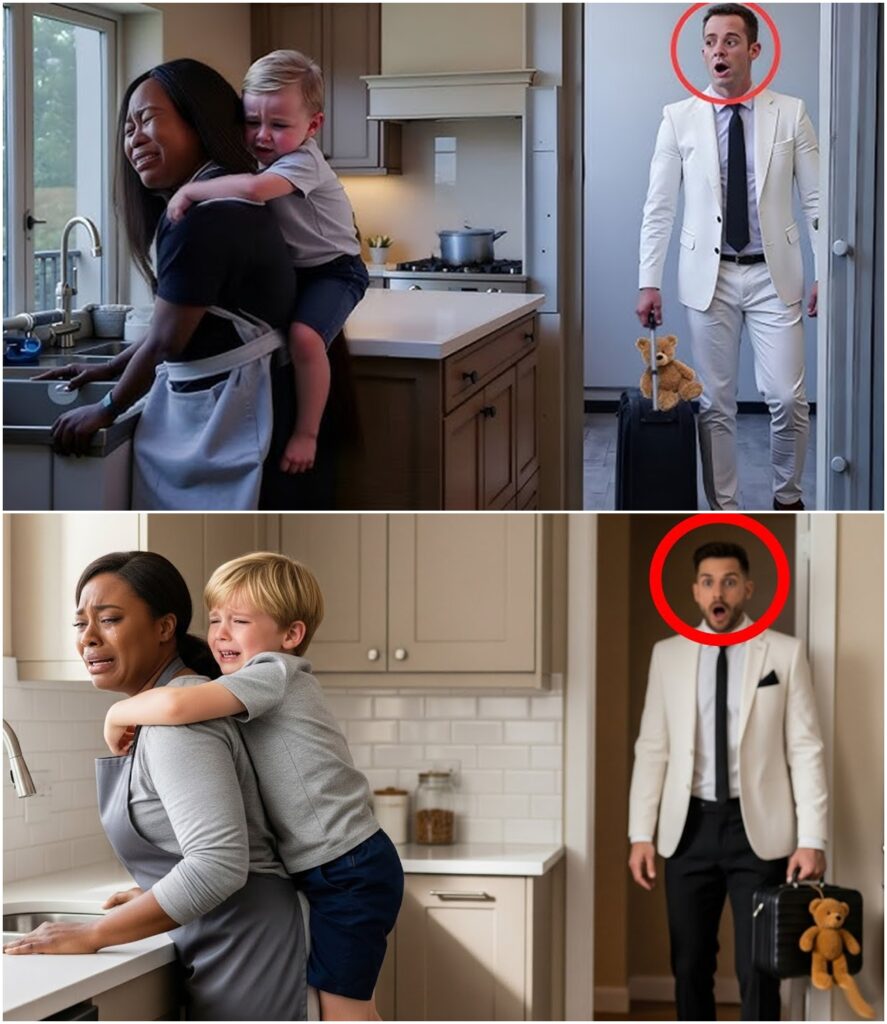
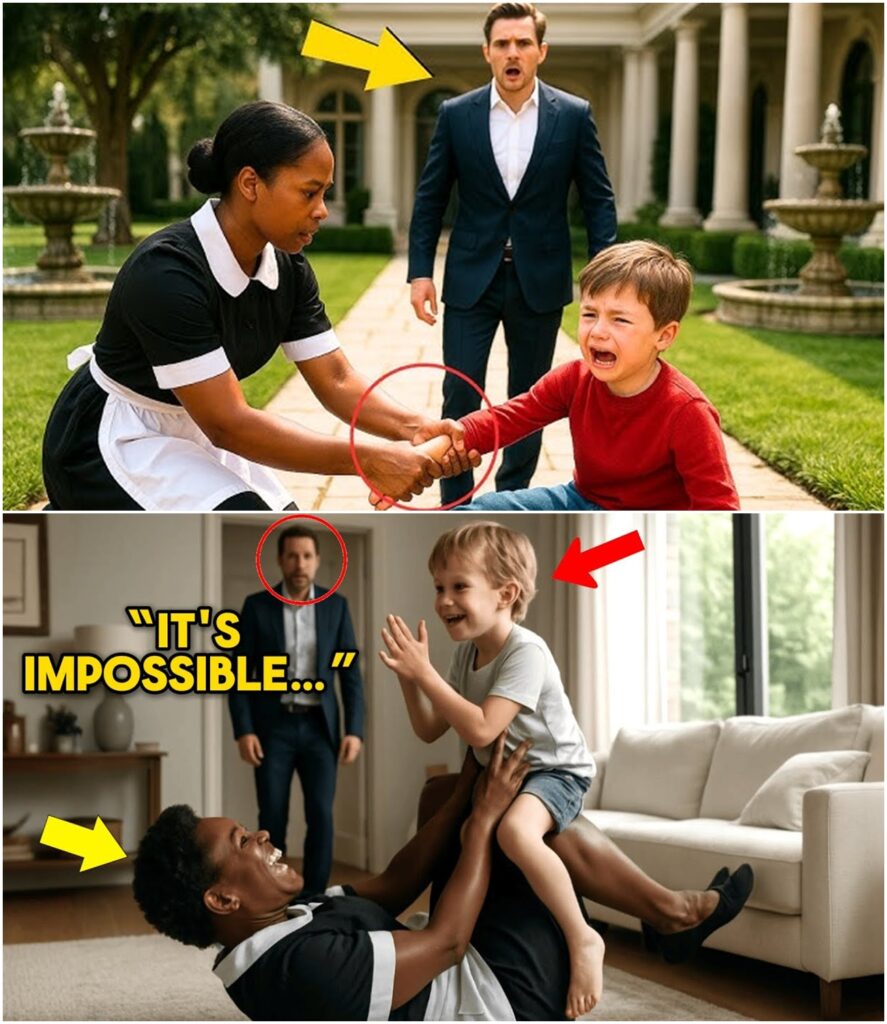
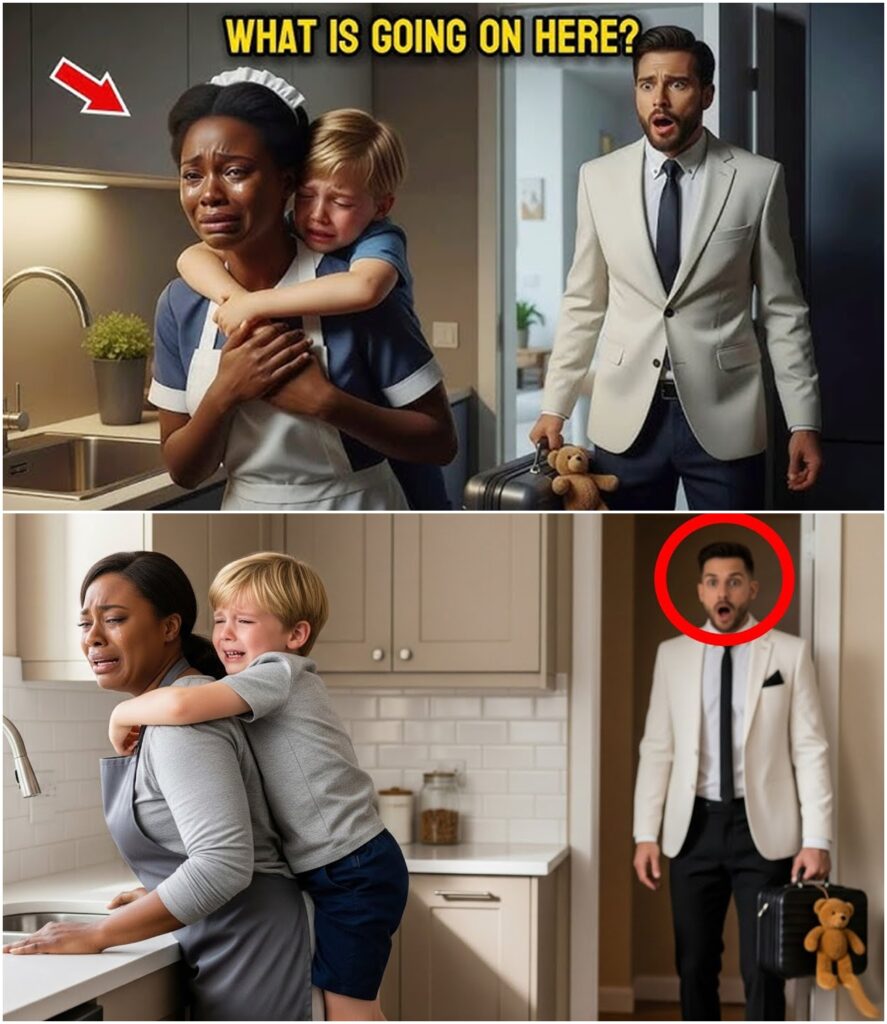
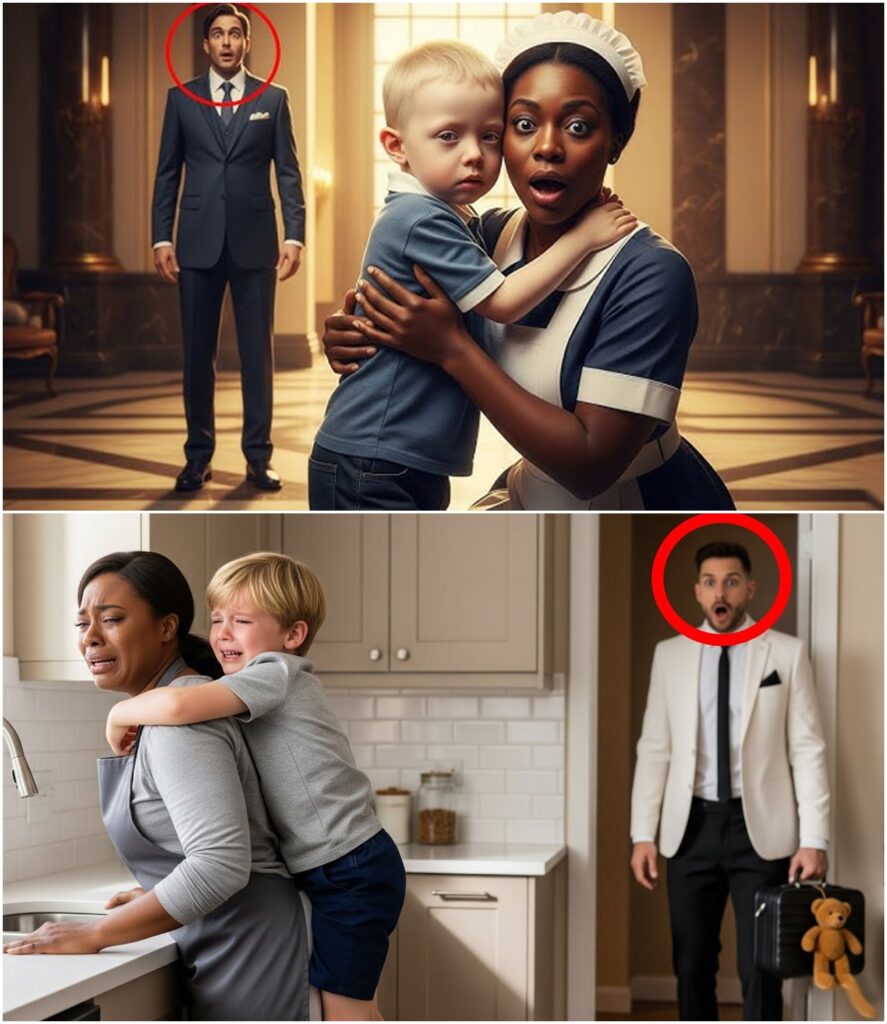
Oh my god, Eli, stay with me, baby. Don’t you close those eyes. Maya Williams dropped the basket of freshly folded laundry, towels scattering across the polished marble floor as she rushed into the boy’s room. Eli Hawthorne, just 9 years old and far too small for his age, lay collapsed beside his bed, his tiny chest trembling, lips tinged blue, his hand clawing weakly at his chest.
Maya fell to her knees beside him, checking his pulse. Weak, shallow, fading. Eli, sweetie, look at me. Stay with me. Just hold on a little longer, baby. Please, nothing. Just a soft weeze. She lifted him into her arms, his little body far too light. Her instincts screamed, “No time. No help. Do something.” She ran down the hall to the kitchen. Help, please. Someone help me.
Eli’s not breathing right. Two staff members looked up. Connie, the housekeeper, blinked slowly. Jerome, the groundskeeper, barely stirred. That’s not our responsibility, Connie muttered. He’s not even supposed to be our problem, Jerome added. You’re the one always poking around that kid. Ma’s voice cracked. He could die.
Then call Mr. Hawthorne, Connie said flatly. This isn’t your call to make. A storm had knocked out the estate’s power the night before. No phones, no internet, no backup comms. She was alone, her breath shallow. Maya turned and ran toward the east wing toward the forbidden study.
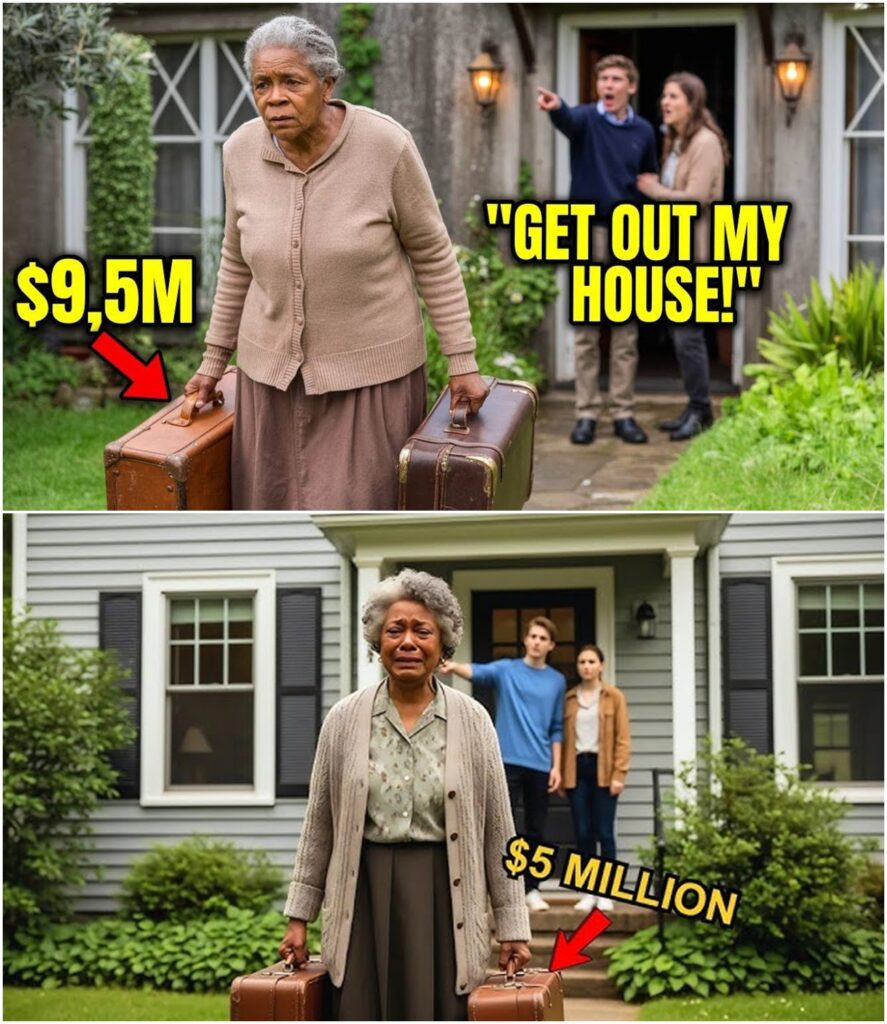
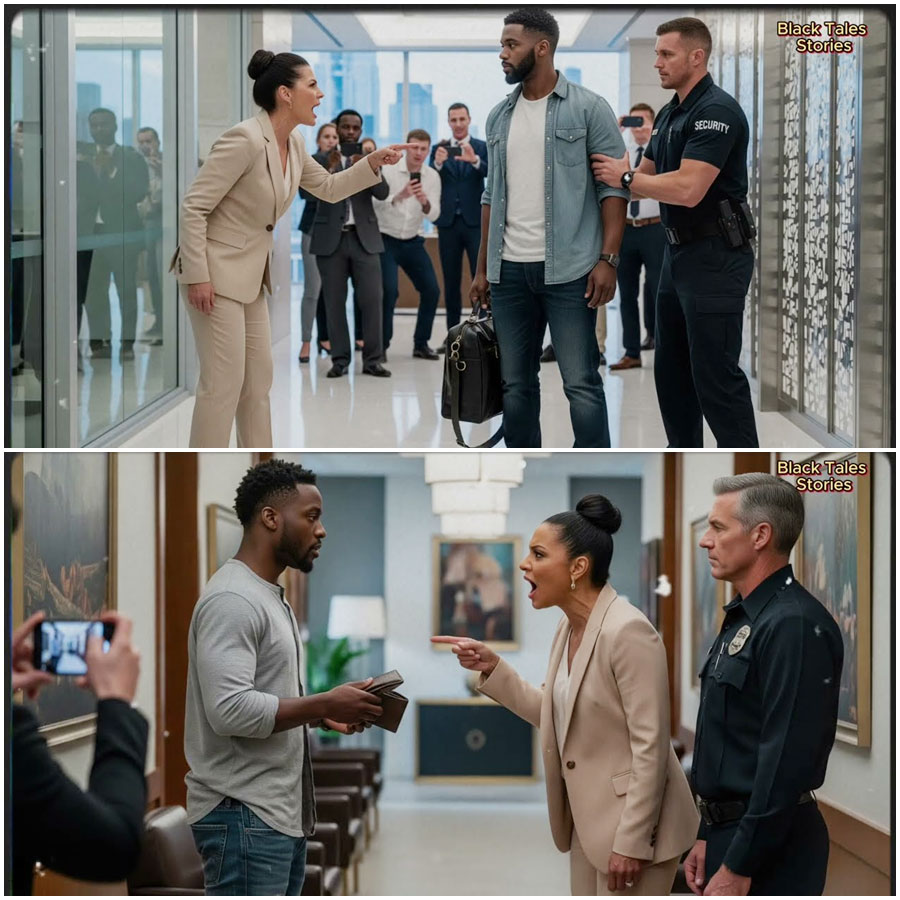
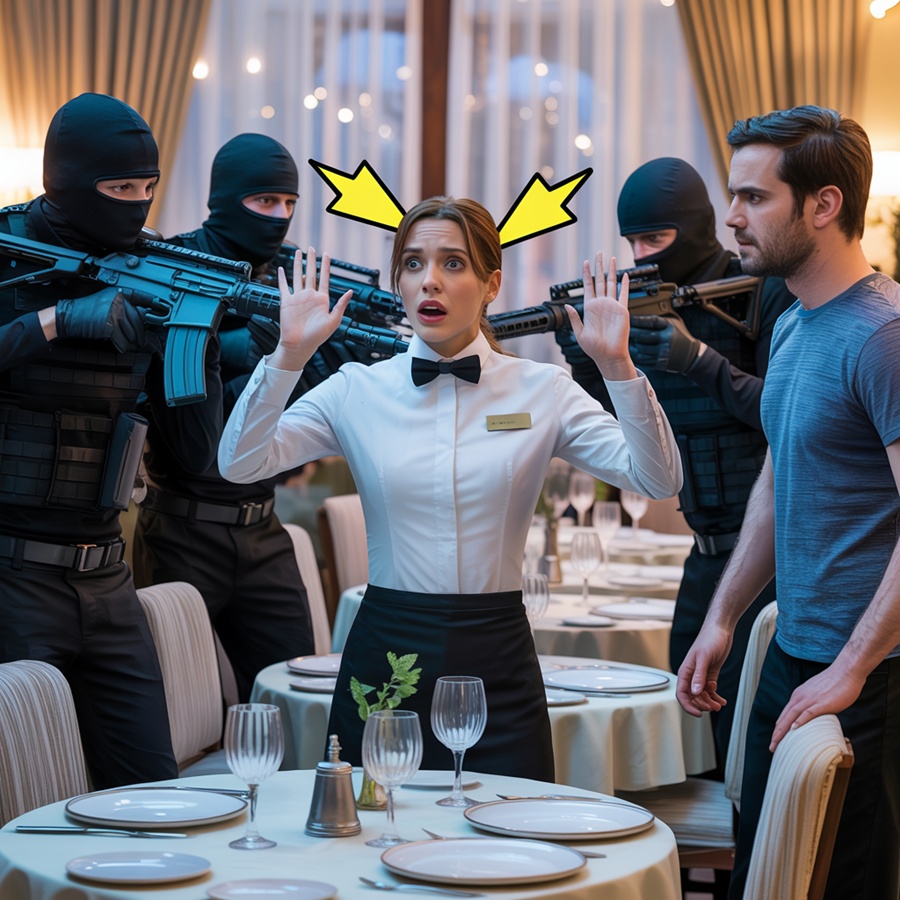
She jammed a small fruit knife into the lock, clicked it open. Inside, the billionaire’s private office was sleek and cold. She yanked open the wall panel, revealing a safe. It wasn’t locked. Inside, neatly stacked bundles of cash. She grabbed a thick roll of $100 bills. The alarm screamed instantly. Red lights flashed. Maya didn’t flinch.

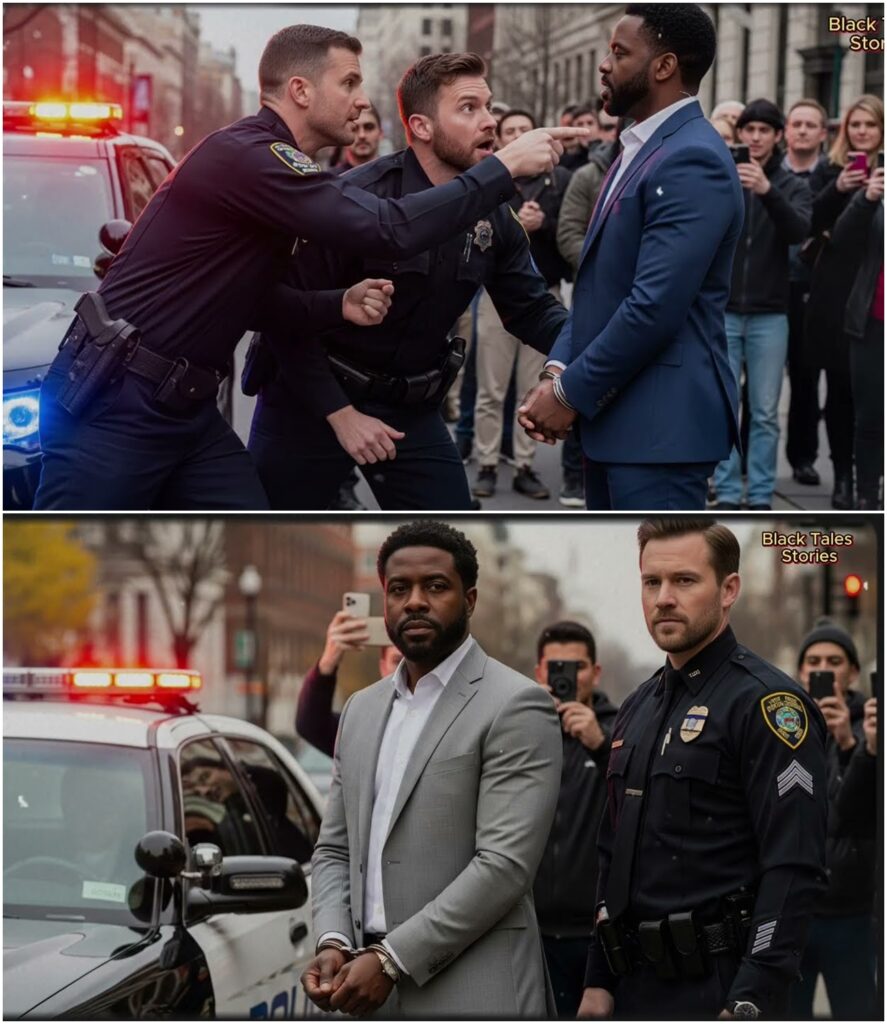
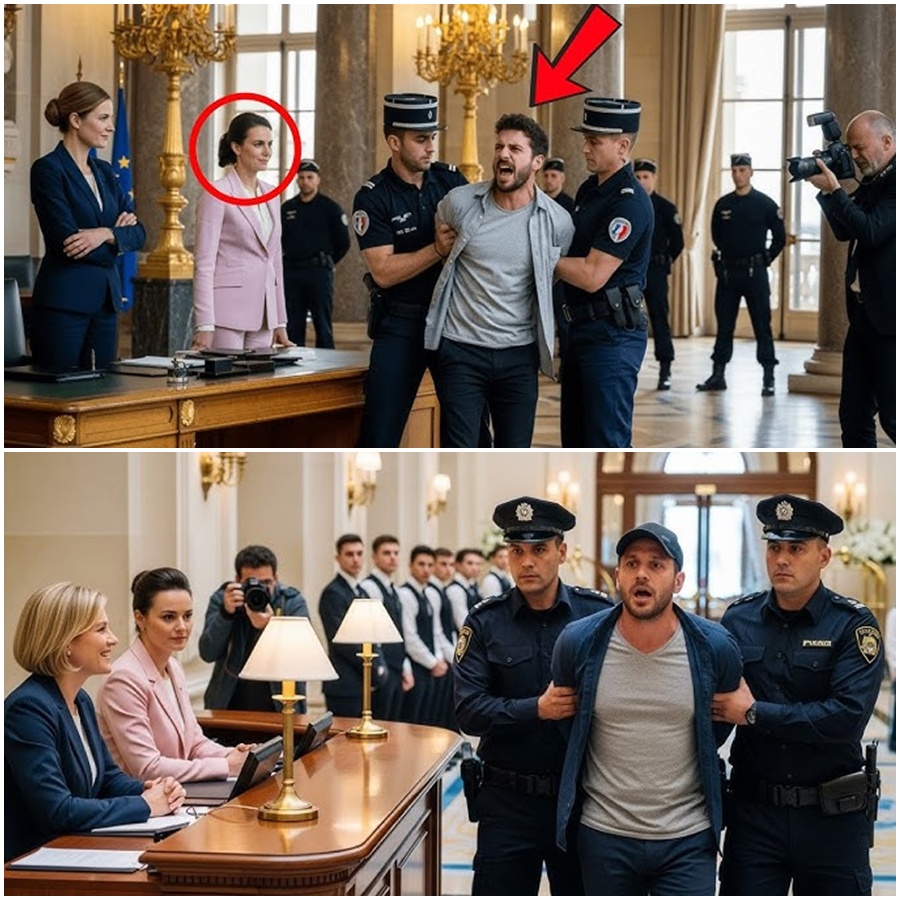
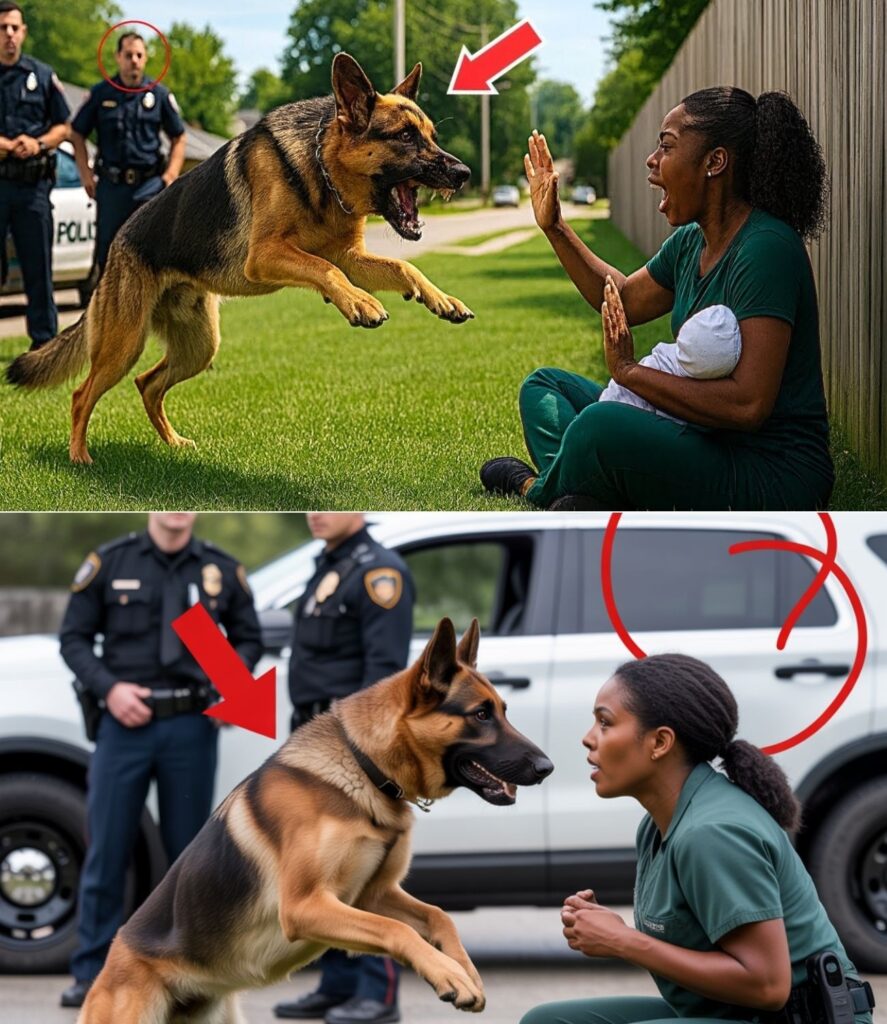
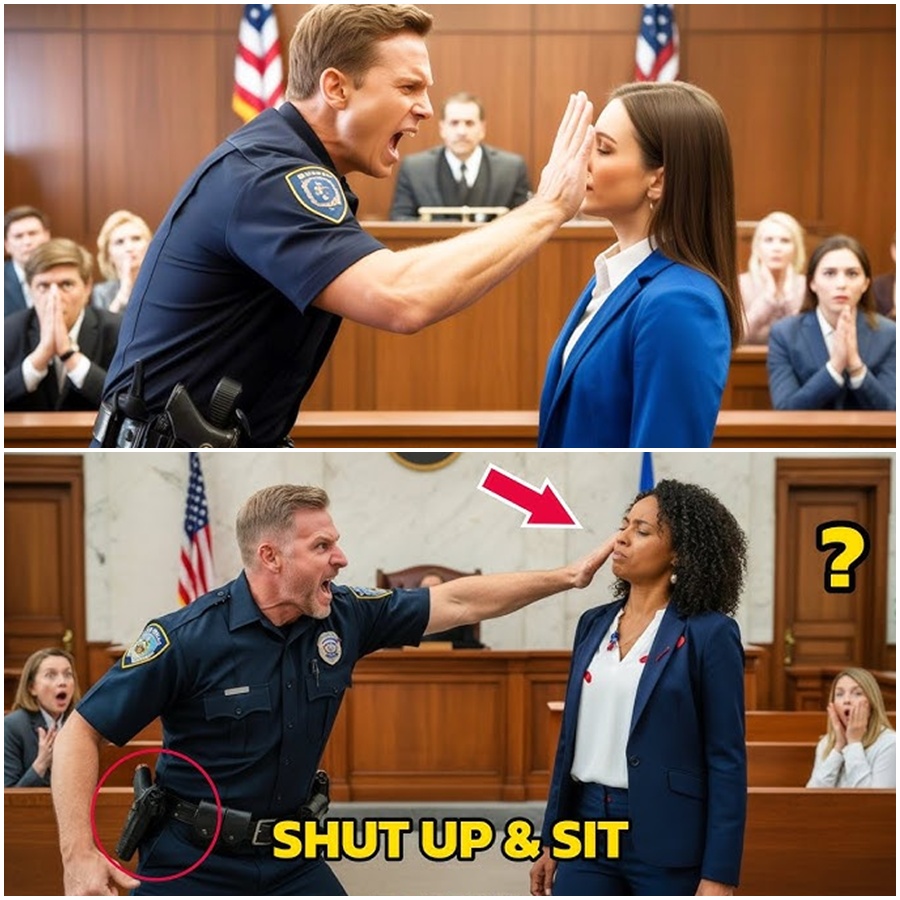
She snatched the Tesla key fob from the desk, wrapped Eli tighter in the blanket she’d grabbed, and sprinted to the garage. By the time she reached Mercy Hills Hospital, the rain was pouring and her clothes were soaked through. Help! I need help. This child has a heart condition. Nurses rushed to her side. Took Eli, wheeled him away, and then came the police. Maya Williams. Yes, you’re being detained for theft and unauthorized vehicle use.
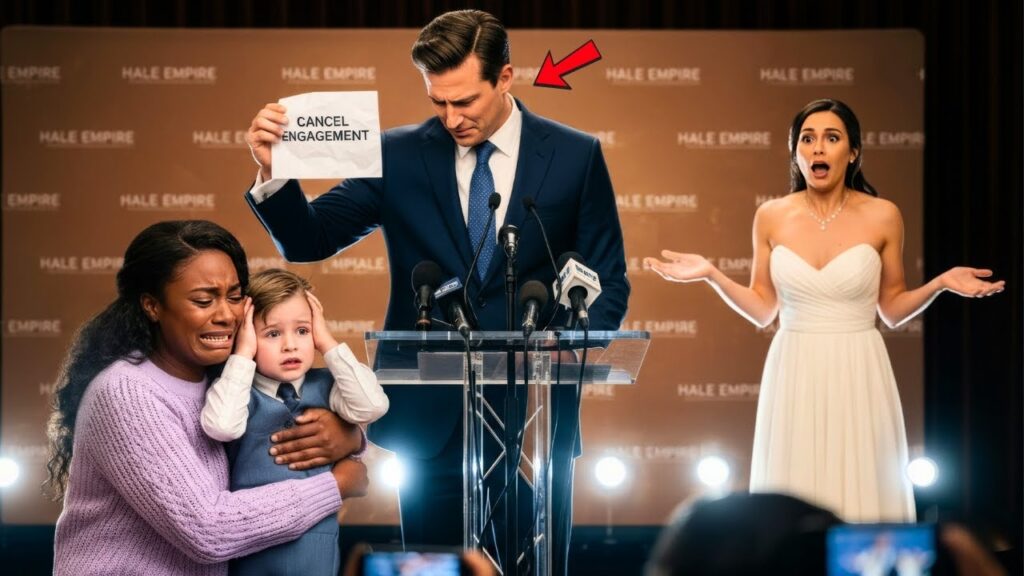
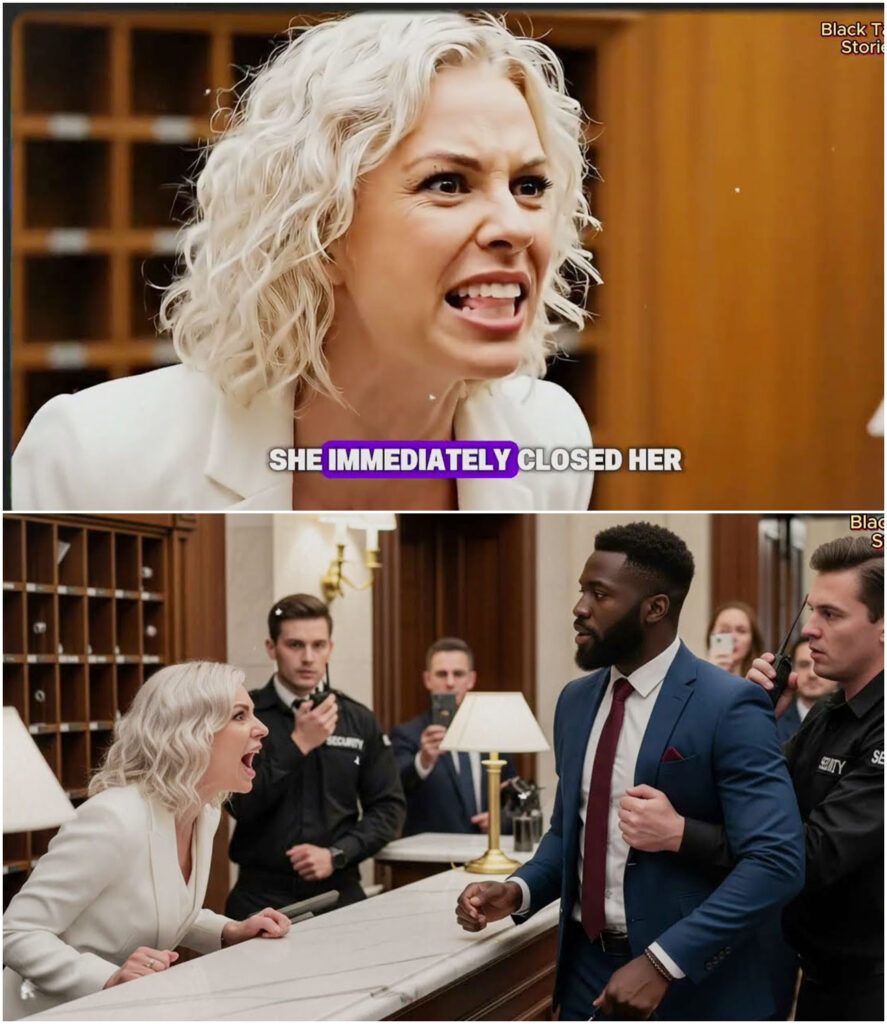
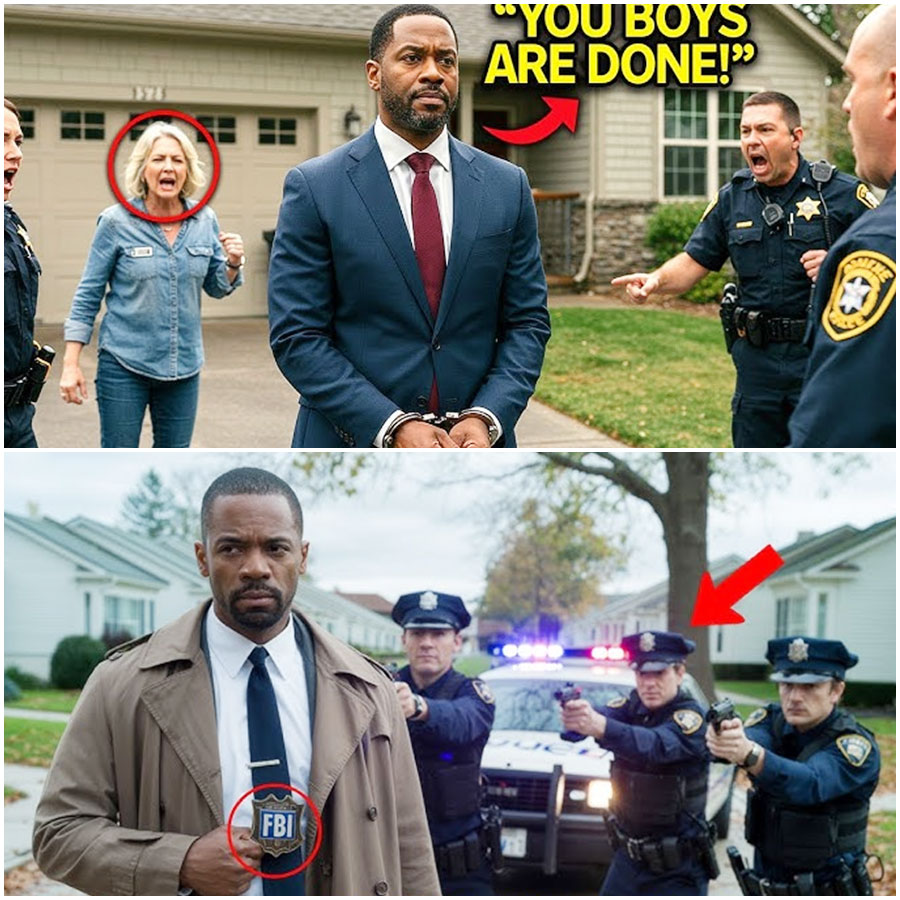
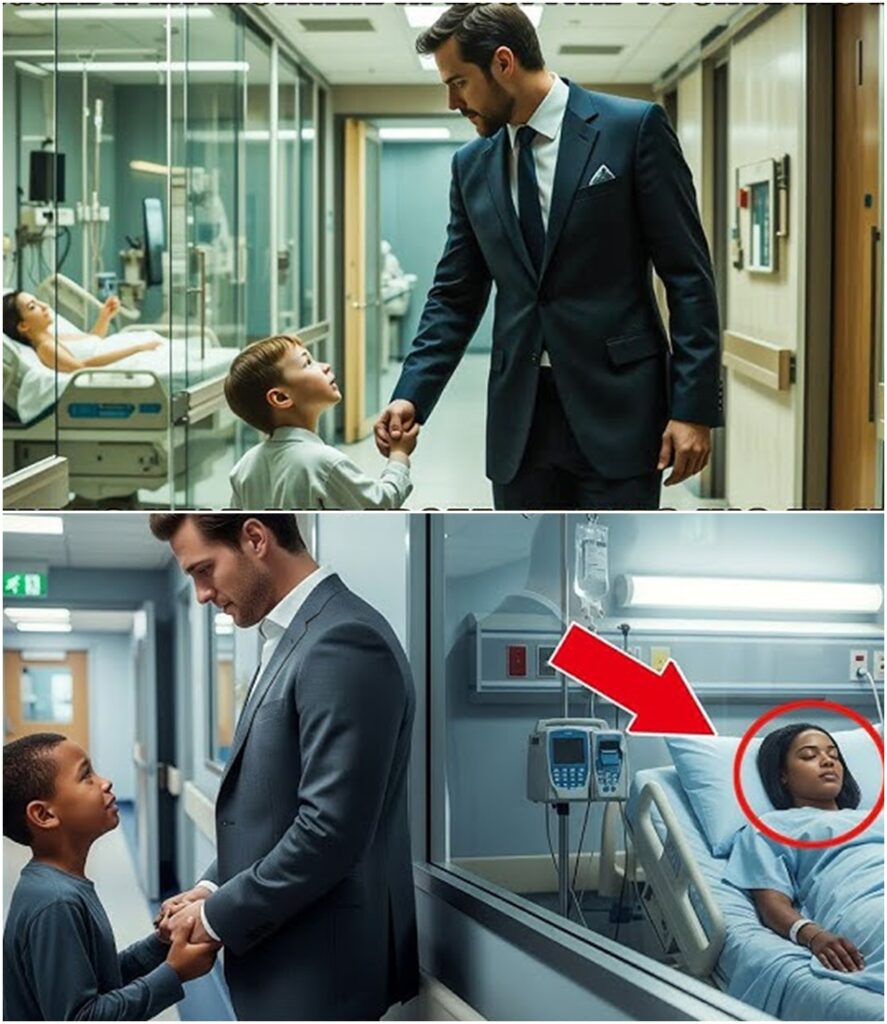
Turn around. Cuffs clicked around her wrists. I wasn’t stealing. I was saving him. Hours passed. She waited in handcuffs near the ER, heart pounding, wrists aching. Then came him, Richard Hawthorne, tall, commanding, rain trailing off his long coat, his jaw clenched with fury.
Janelle walked at his side, every inch of her glowing in diamond earrings and disdain. What the hell happened here? Richard demanded. The head nurse stepped forward. Sir, Eli suffered a severe arrhythmia. If this woman hadn’t brought him in when she did, we may have lost him. by land. She broke into my home. Richard snapped. My office. Stole my vehicle. My money.
She saved your son. The nurse repeated. Janelle stepped forward, arms folded, voice sharp. Or she pretended to. You ever think of that, Richard? She’s been obsessed with Eli since day one. Quiet, watching, always hovering. This whole thing smells like a setup. Excuse me. Maya snapped. That boy was dying.
I did what no one else would. Oh, please. Janelle scoffed. You staged this to get into his life, into our lives. Maybe even looking for a payout. Richard looked between the two women, his eyes uncertain, but already poisoned. I don’t buy it, Janelle pressed.
She broke in, stole from you, and conveniently becomes the hero. The nurse tried again. Mr. for Hawthorne. Your son asked for her when he woke up, but Richard’s face was hard. He turned to the police, filed the charges. “What?” Maya whispered. “You’re serious? You’re dangerous. You crossed every line.” “I trusted you in my home. I didn’t do it for you,” she shouted.
“I did it because he was alone because your staff didn’t care. And your girlfriend sure as hell didn’t notice he was sick.” Janelle’s expression turned venomous. Watch your mouth. Maya stood trembling, soaked, handcuffed, heartbroken. He could have died. And you’re throwing me away like garbage. Richard didn’t speak.
He just nodded to the officer. Take her in. Uh, and just like that, justice turned its back on her again. The patrol car rolled through the rain sllicked streets, red and blue lights flashing against glassy storefronts and shuttered diners.
Maya sat in the back seat, hands cuffed, hair soaked, her wet jacket clinging to her shoulders like the weight of everything she’d just lost. The warmth of the hospital was already fading, replaced by the sterile chill of a world where the truth didn’t matter, only perception did. She watched raindrops slide down the window. Each one a heartbeat. Each one a moment Eli might have never had again.
“He asked for me,” she whispered to herself, the memory fresh. “He asked for me.” The officer driving didn’t speak. The one beside her had barely looked her in the eye since they put her in the car. To them, she was just another story, another low-level worker who crossed a line. Grand theft, breaking and entering, child endangerment. The charges sounded absurd, cruel even.
But in the world she lived in, where money built walls thicker than any fortress, and the word of a maid was worth less than a shrug they would stick. Especially if Richard Hawthorne pressed them, especially with Janelle whispering poison into his ear. Her throat tightened. The boy had lived. That should have mattered. But it didn’t.
15 minutes later, they reached the county precinct. A modest red brick building with flickering overhead lights and a smell of old coffee and tired regret. The officer led her through the back entrance less public, less humiliating, but no less final. They fingerprinted her, took her photo. Her soaked jacket was peeled off.
She shivered in the cell alone, cuffed to a cold metal bench. “This isn’t happening,” she told herself. “You saved him. You saved that boy.” But that didn’t erase the image of Richard’s face, hard and indifferent, when he gave the order. File the charges. She closed her eyes and saw Eli sick, struggling, so small. And for a flash, she saw her own son again.
Tyler, that same pale face, that same desperate look. She hadn’t been fast enough back then. This time she had been, but still this. A door clanged open. A new sound of boots on tile. Then a voice low, worn, deliberate. Williams. She looked up. A detective older, white hair at the temples, a face that had seen more injustice than most, stepped into the room. Detective Carl Evans badge 3,274.
He didn’t look at her with disgust or pity. He just looked tired. I read the report. He said, “Mind telling me your version?” She swallowed. I was doing laundry. I found Eli collapsed on the floor. He wasn’t breathing right. I checked for help. No one would assist. Phones were dead. I ran to the office. Took emergency cash in the Tesla. Got him to the ER in time.
You admit to entering a locked room? Yes. And taking money? Yes. Why not wait for emergency services? They weren’t coming, she said firmly. No one was answering. If I waited, he’d be dead. He scribbled something in a notepad. Any history with the boy? With the family? I took the job a month ago.
I I lost a child once. Eli reminded me of him, but I never crossed any lines. I just cared when others didn’t. Evans looked up. Their eyes met. Did you see anything unusual in the household? She hesitated. Then, “Yes, Janelle.” She didn’t care about that boy. Treated him like a burden. Staff were told not to touch him unless instructed. That child was alone.
Evans tapped his pen. He didn’t say she was right, but he didn’t call her a liar either. I’ll look into the medical records, he said finally. But Hawthorne’s a powerful man, and the media is already sniffing. You’re going to need a lawyer. I don’t have one, she whispered. He nodded once. Then I’ll make sure you get a public defender by morning. He stood just before he walked out. He paused.
You did what most wouldn’t have. Mia blinked. Then why am I in a cell? Because most wouldn’t have done it in his house. He left. The door shut behind him with a deep metallic thud. Mia leaned back against the wall. Her neck stiff, wrists sore, but her mind stayed sharp. She knew what was happening. Janelle saw her as a threat.
Richard, blinded by reputation, saw her as an embarrassment. And now they’d rather see her locked away than admit their neglect. Still, a flicker of hope sparked. Evans hadn’t treated her like a criminal. That meant something. She closed her eyes, saw Eli again. His thin fingers clinging to the blanket, his faint whisper. Maya.
She had saved him. Even if no one else saw it yet, she had. If you stand with Maya, give her a like to show your support. And don’t forget to comment where you’re watching from. Who knows? Someone nearby might be listening to this story right along with you. Oh, but in this world, truth came second to power.
And power didn’t like to be challenged, especially by the help. Tomorrow, they tried to bury her under charges and headlines. But Maya had buried a son. There was nothing left they could take from her, and nothing she wouldn’t fight to protect again. Morning light crept through the blinds of the precincts interview room, casting long shadows across the scuffed floor.
Maya sat hunched over the cold metal table, wrists bruised from the cuffs, hair still damp from yesterday’s rain. She hadn’t slept, not with thoughts of Eli and what they might be telling him, burning holes through her mind. The door opened with a quiet squeal. Detective Carl Evans entered again, this time with a coffee in each hand.
He placed one in front of her without a word, and sat across from her. The silence lingered. Then he slid a manila folder onto the table. hospital confirmed your story. He said, “Boy, steady.” Boy was in cardiac distress. Rare congenital arrhythmia. “You getting him to the ER when you did. That’s the reason he’s alive.” Maya gripped the paper cup tightly, but didn’t raise it.
Her throat was too tight. So, I’m free to go. Evans leaned back. Number not yet. Her heart sank. Richard Hawthorne’s filed formal charges. Grand theft. unlawful entry and endangerment. Endangerment? She whispered. I saved that boy. Oh. Evans nodded slowly. I believe you. But this isn’t about what’s right. It’s about what Hawthorne’s lawyers can prove and how they can frame it.
And right now, you look like a woman who stole from her boss and took a sick child on a joy ride. I wasn’t joying. She snapped. I know, but the media, they don’t know that. Janelle’s already given a statement. She’s spinning this as some twisted obsession says you’ve been fixated on the boy for weeks. Claimed you faked the emergency. No. Maya laughed bitterly. She’s the one who ignored him every damn day.
She’s also the woman standing next to the man with a billion dollar empire, Evans replied. And you’re the maid with a record of breaking into his office. She swallowed hard. “So what now? You’re being arraigned today. Judge will decide if you get bail. Do I get a lawyer?” He gave a half nod.
Public defenders on her way. Just then, the door creaked open again. A petite woman in her 50s stepped inside, dressed in a navy suit, her gray streaked hair pulled back into a tight bun. Miss Williams, I’m Clare Dorsy. I’ll be representing you. Maya stood slowly, hand extended. Thank you for coming.
I read your file and I saw the ER footage, Clare said with a quiet intensity. You did the right thing. But Wright doesn’t always win in a courtroom. And Clare turned to Evans. What’s the DA pushing? Felony theft. Unlawful entry. Potential child endangerment. Clare scoffed. They’re overreaching. Classic PR play. Make her a villain. Distract from the family’s negligence. Evans said nothing.
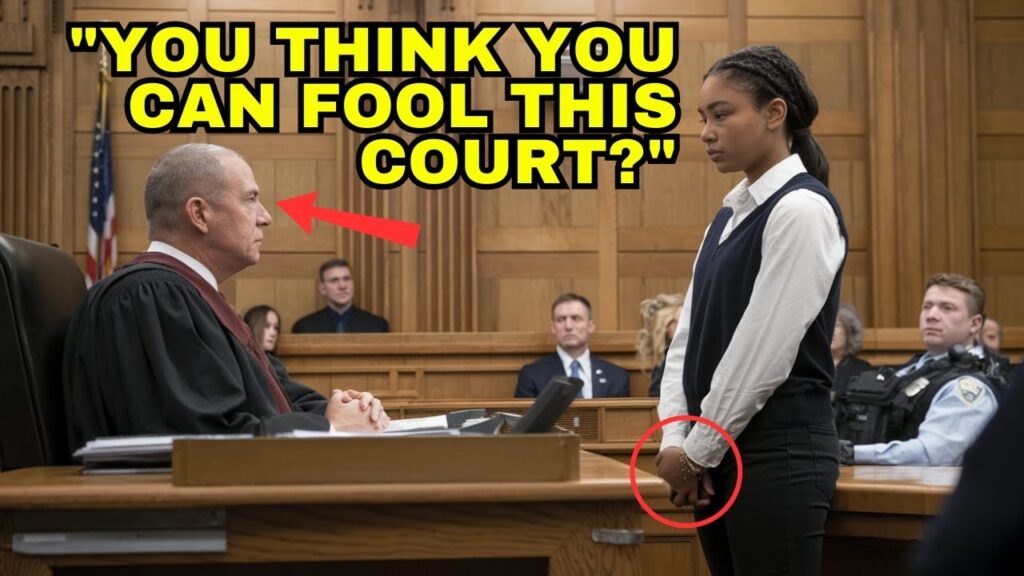
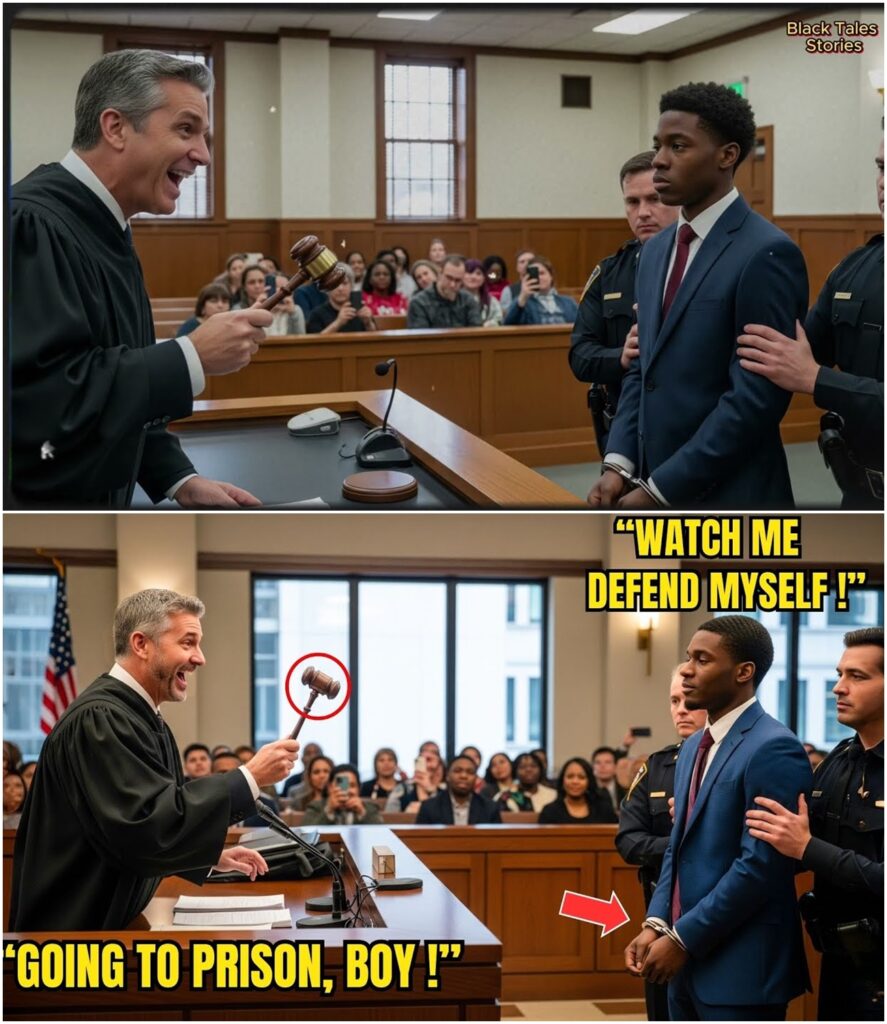
Clare continued. Here’s what’s going to happen. We’ll go before Judge Hastings. I’ll push for bail. You keep your answers short. Respectful. No grand speeches. No tears. Maya nodded, her voice low. I understand. 3 hours later, Maya stood in a packed courtroom. Reporters filled the benches. Cameras weren’t allowed, but the energy buzzed like they were.
At the prosecution table sat a sleek young ADA in a gray suit, flanked by two men. Mia didn’t recognize Hawthorne’s private counsel. Richard himself wasn’t present. Neither was Janelle, but their absence was louder than any words. The baiff called her case. Clare stepped forward. Your honor, my client is not a flight risk. She has no criminal record.
She acted under extreme circumstances to preserve the life of a child in medical crisis. The ADA rose calm and cutting. Miss Williams unlawfully entered a private office, stole over $20,000 in cash, and absconded with a child she is not legally authorized to transport. Her actions may have endangered the boy more than they helped. Clare’s voice was iron.
The hospital’s chief of cardiology credited her quick thinking with saving the boy’s life. Her so-called theft was a desperate immediate response to an emergency. The judge leaned back, expression unreadable. Then bail is set at $25,000. Maya’s shoulders sagged. She didn’t have $20 to her name. Clare leaned in. We’ll try to get a bail reduction hearing. Mia was led back into holding.
Hours later, she sat alone again until the door creaked and someone new stepped in. She recognized her immediately. Esther, an older black woman in her 60s, a former nurse and the woman who trained Maya during her first days at the Hawthorne estate. Esther didn’t speak at first. She just walked over and took Mia’s hand. I saw the news, she whispered.
I knew it couldn’t be true. They’re making me out like I planned this, Maya choked. Like I use that child to steal money. Esther’s grip tightened. People like us when we stand between the powerful and their shame. They’d rather bury us than face the truth. I don’t know how I’m going to survive this, Maya whispered. You already did.
You made it out of that house with a child in your arms. You told the truth. You stayed standing. Now you just keep standing. Esther pulled something from her purse, a small laminated photo. A young boy, Tyler. My son, Mia whispered, eyes flooding. I know. That’s why you saved Eli. Uh Maya nodded, her voice breaking. Because I couldn’t save him. Esther tucked the photo into Mia’s pocket.
Now, let’s make sure they don’t forget that. Maya closed her eyes. The courtroom wasn’t justice. The mansion wasn’t safety, but in that tiny room for just a moment, she wasn’t alone. And that, for now, was enough. The following morning, Maya sat on the edge of the hard cot in the women’s holding unit, staring at the pale light filtering through the narrow window above.
Her body achd from the metal bench and restless sleep, but her mind buzzed like a hornet’s nest. Somewhere out there, Eli was breathing, maybe awake, maybe asking questions. And somewhere else, the man she had once trusted with employment, Richard Hawthorne, was letting his lawyers build her gallows. The intercom clicked. Inmate Williams, you’ve got a visitor. Maya was led down a narrow corridor into a small partitioned room where visitors sat behind bulletproof glass.
On the other side of the pain sat a woman with dark rimmed glasses, silver streked hair, and an air of confidence that radiated through her pressed suit. Clare Dorsy, her public defender. Morning, Clare said, picking up the phone. You look like you slept on concrete. I did, Maya replied, voice.
Clare offered a tight smile. I’ve got news. Some bad, some not so bad. Start with the bad. The DA’s office is pushing for a full trial. No plea deal. They want to make you an example. Rogue help overstepping their place. Their words, not mine. Maya closed her eyes briefly. And the not so bad. Eli’s condition has stabilized. He’s out of ICU. And from what I gathered, he’s been asking about you.
That was something. A heartbeat of hope in a sea of storm. Also, Clare added, tapping her briefcase. We may have a crack. The security camera footage from the estate, some of it’s been conveniently erased, but the system logs show manual deletions. A judge might see that as evidence tampering, especially if we argue they’re hiding something.
You think it was Janelle? Maya asked. Clare raised an eyebrow. Let’s say she’s invested in this narrative where you’re the villain. It wouldn’t be the first time someone covered their tracks with tech and money. Maya leaned closer to the glass. She never liked that I cared about him. Eli Clare nodded. That might be our case.
Build it around neglect around your moral obligation to act when no one else would. But we’ll need witnesses. Mia thought for a long moment. There’s Esther. She trained me. She saw how things were run in that house. She believed me. I’ll track her down. As Mia was led back to her cell, she felt something different occurren. Not quite justice, but movement.
Meanwhile, across the city in Richard Hawthorne’s penthouse office, the storm was building in a different way. Richard stood by the window, phone pressed to his ear, jaw tight. Yes, I understand. But keep this off the front page, he said, voice low and sharp. We’re not going to let this spiral.
From across the room, Janelle sat perched on a leather armchair, scrolling through headlines. Too late, she murmured. maid turned hero or thief. It’s everywhere. Social media is eating it up. Richard turned to her. This wasn’t supposed to happen. I trusted her with my son and she broke into your study and took your money,” Janelle said quickly. “People forget that.” Richard didn’t respond.
Instead, he walked to his desk and opened a drawer. A small framed photo of Eli smiled back at him, his eyes too big for his face. His frame too delicate. She got him there in time. Richard said quietly. Doctor said she also disobeyed every rule you put in place. You want to run your company with chaos like that? Janelle’s voice rose slightly.
She crossed a line. If you show weakness now, the board will start whispering. Investors already are. Richard hesitated. I just need this to go away, he muttered. Janelle smiled thinly. Then let the court handle it. But Richard’s silence lingered because deep down under the ice of his public image, something in him twisted.
The image of his son small, sick, but alive, calling for Maya. Not Janelle, not even him. Later that day, Clare returned to the jail, a thin folder in her hand and a gleam in her eye. “We’ve got our first break,” she said as she sat beside Maya in the attorney meeting room. “What is it?” “A nurse from the ER. Her name’s Valerie. She’s willing to testify.
Said she overheard your conversation with Richard. Saw how he dismissed you even after you saved Eli. Said it didn’t sit right with her. Uh Maya blinked. She’s willing to speak up. Clare nodded. She’s already given a statement. Said you held Eli like he was your own child. Said the boy woke up asking for you by name. That’s powerful stuff.
Maya felt the weight in her chest loosen just slightly. But Clare wasn’t finished. I also got a call from a journalist. Independent wants to talk. Says they’re not buying the prosecution story. Wants your side. I don’t want the spotlight, Mia said. Clare shrugged. Maybe not, but if we control the story, we control the pressure. And pressure works wonders in courtrooms.
That night, Mia lay in her c staring at the ceiling. Somewhere above, the city moved on eating, sleeping, scrolling headlines. But now she wasn’t just a name in a file. She was a question, a challenge, a whisper that maybe the maid wasn’t the villain after all. And whispers Maya knew had a way of turning into thunder. The buzz of fluorescent lights filled the narrow hallway as Clare walked Mia through the side entrance of the courthouse the next morning.
No cameras here, no screaming headlines, just steel doors, worn lenolium, and the heavy echo of justice on slowmoving feet. You ready? Clare asked softly, tucking a file under her arm. I haven’t felt ready since this began, Maya admitted. But I’m not afraid anymore, Clare gave a curt nod. That’ll do. They entered the courtroom, smaller than the one from the arraignment.
Less press, but still enough eyes to make Maya feel like every movement, every breath was being documented. The hearing was for a bail review. A second chance to argue for release. Maya’s supporters had started showing up quiet. Unnoticed faces in the back row. Esther, Valerie, the nurse.
Even an older man Maya recognized from the estate’s grounds crew, now wearing a modest suit and clutching a Bible like a shield. The prosecutor was ready with fire. He called Maya a threat to boundaries, a manipulative figure who had used a child’s vulnerability to gain access to money and influence. He painted her actions as reckless and self-serving. Clare let him finish, then rose calmly. Your honor, this is a woman who acted out of desperation, not greed.
The boy she helped, Eli Hawthorne, was left in the care of a household that refused to acknowledge his condition. The staff ignored his distress. The primary caregiver was absent. Phones were down. There was no ambulance, no protocol, no supervision. Just a sick child and a woman who refused to let him die. She stepped forward.
We have eyewitnesses, medical professionals, and most importantly, we have the boy’s voice asking for her when he woke up. That doesn’t happen if she’s some villain. That happens when someone saves you. Oh, the judge, an older woman with a face carved by years of difficult decisions, looked from Clare to Maya, then down at the documents before her.
Bail is reduced to $5,000, she said. Cash or bond. Defendant is to surrender her passport and remain within county limits until trial. Claire squeezed Mia’s hand. It was the first win. Small, but real. Outside the courtroom, Esther approached with a tight smile and a quiet envelope.
I know it’s not much, she said. But I got some folks together from the church. We’ll cover your bail, Mia’s eyes welled. You didn’t have to. Yes, we did. Esther interrupted. Because you stood up when others didn’t. That counts for something in this world. Maya was released just before noon. The outside air hit her lungs like a rebirth cold, sharp, free.
She didn’t even realize how long she’d forgotten what fresh air smelled like. Clare drove her to a safe house provided by a local women’s advocacy group, Neutral Ground, private. With no cameras or press knocking on the door, it was modest, clean, and above all, quiet. That night, Maya sat by the small bedroom window, staring out into the amber haze of the city.
She wondered if Eli was asleep, if he’d asked about her again, if Richard had told him anything at all. And then her phone buzzed. A private number. She hesitated, answered. Maya, her breath caught. It was him, “Eli, sweetheart,” she whispered. “Is that you?” “Yeah, I’m in the hospital still.” “The lady uh Janelle,” she said. “I couldn’t call you, but the nurse helped me when she left the room.” Maya blinked back tears.
How are you feeling? Better. My heart doesn’t feel all weird anymore. They gave me new medicine. I’m so glad, Eli. You scared me. I told Daddy you saved me. That you helped when nobody else would. Mia’s heart cracked open. Did he believe you? She asked gently. There was a pause. I think he’s confused. He doesn’t say much.
Mia closed her eyes, listening to the child’s breath on the other end of the line. I miss you, he said. I miss you, too, baby. Before they could say more, a soft beep came from his end. Then a voice in the background. I have to go, Eli whispered. They’re coming. I’m proud of you, Eli. Stay strong, okay? Click. The line went dead.
The next morning, the city woke up to a shift, a small one, but unmistakable. An op-ed run in a major paper written by a journalist who’d interviewed Valerie and reviewed the hospital’s report. The headline read, “Maid or guardian angel rethinking the case of Maya Williams.” The tone was skeptical of the prosecution.
It questioned the lack of responsibility from the Hawthorne household. It quoted Eli’s request to see Maya as a turning point in public sentiment. Clare called as soon as Mia finished reading it. “This changes things,” she said. “We’re not just defending you anymore. We’re framing the story.
” And people are starting to listen. But Maya wasn’t thinking about media or strategy. She was thinking about Eli’s voice and the small flickering hope that maybe, just maybe, the truth was beginning to speak a little louder than money. Still, she knew better than to get comfortable. The storm hadn’t passed.
It had only shifted, and someone somewhere in the Hawthorne estate wasn’t going to let her go that easily. Maya’s breath caught as she stepped out onto the city sidewalk, the courthouse behind her. It was a strange freedom, one part relief, one part fear. The air felt clean yet heavy with expectation, as if every passer by could read her face and guess the battle she was fighting. Clare met her by the car, expression firm yet kind. They’ll be dropping off your bail paperwork later.
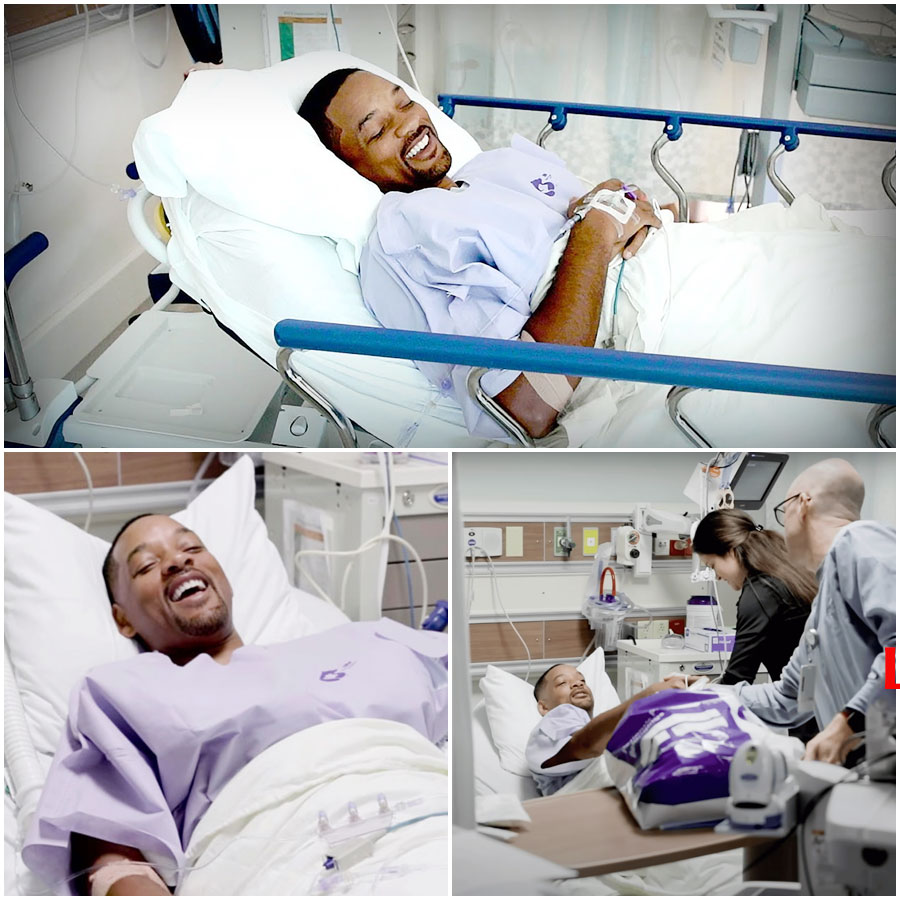
For now, you’re free to go. Ry, Maya nodded, voice small. Where do I go? You’re with me, Clare said. We’re heading straight to the hospital. Eli’s awake. He asked for you again. At Mercy Hills, Maya’s heart pounded as she entered the pediatric wing. The scent of antiseptic, the quiet beeps of monitors, the soft footsteps. It all felt different now.
Personal, vulnerable. A nurse ushered her into a small room. There, on a couch by the window, sat a pale but finally seated Eli. He wore a hospital gown and his eyes were bright with recognition and something infinitely more tender. “Maya,” he exclaimed softly. He rose and she immediately knelt at his side, taking his hand. “Hi, baby.” Her voice trembled.
“How are you? Do you feel okay?” Eli nodded. The medicine helped. The nurse said, “My heart isn’t scary anymore. I kept asking for you.” Tears slipped down Maya’s cheeks. “I’m right here. I’m not going anywhere. Clare knocked and stepped in. Eyes warm. He’s stable. They want to discharge him in two days. Under supervision.
We’re working on a custody agreement for visitation. Eli looked between them. Will you come visit me after I go home? Maya smiled, voice gentle. Of course, I’ll always come. As they spoke, Detective Evans entered quietly. He offered a thin smile. Glad he’s doing better. Maya swallowed. Thank you. Evans glanced at Clare. I may have enough to move for dismissal of the charges once we expose the tampering and negligence.
Clare nodded, appreciation soft in her eyes. Thank you both. Evans left. Maya realized how many allies she hadn’t noticed. That evening, Maya returned to the safe house. No celebrations, no grand speeches, just the quiet hum of the lamp against the wall and the low rustle of the city below. She pulled out the photo Esther had given her Tyler’s face looking hopeful alive. She pressed it to her heart.
You helped me do the right thing, she whispered. Her phone rang. It was the journalist. Wanting more of her story, she hesitated then said yes. She didn’t want the spotlight, but if this could shift the narrative, then it was worth the discomfort. Later, asleep in the narrow bed, Maya dreamt of Eli breathing steadily beside her, a silvery morning light filling the room.
She woke before dawn, heart full and tired. Somewhere in the hush before the next storm, justice was beginning to find its voice. She’d lit a candle against the darkness, and now she only had to keep it burning. Richard Hawthorne stood in his study, the same one Maya had broken into just days before, staring out over the city skyline.
The world below shimmerred with early morning light, but inside the room, a storm raged beneath the surface. The television on the wall behind him murmured with a news anchor’s voice. New developments in the case involving Maya Williams, the housekeeper accused of theft and unauthorized transport of billionaire Richard Hawthorne’s son.
Eyewitnesses and medical experts now suggest Williams may have saved the boy’s life. He turned the volume down. Janelle sat on the leather couch, a glass of orange juice untouched in her hand. “You’ve said nothing,” she muttered. Richard’s voice was low. Because I’m listening to what? She snapped. A bunch of bleeding hearts making this woman into a martyr.
He turned, jaw clenched. To the sound of public opinion shifting to the sound of a father who almost lost his son because he was too blind to see who actually cared for him. She stole from you. She acted when no one else did. You’re defending her now. He didn’t answer right away.
Instead, he walked to his desk, picked up a printed transcript of Eli’s recorded conversation with a therapist, shared discreetly by the hospital’s advocate. She said I was special. Eli had said, “Maya.” She held my hand and stayed when everyone else left. Richard stared at the paper as if it burned. “I failed him,” he said finally.
Janelle rose sharply. “No, you did what any father would do. You protected your estate, your privacy, my pride, Richard interrupted. That’s what I protected. Uh, she blinked. So what now? I want to talk to her. You what? I want to see Maya alone. Without lawyers, without press, just her and me. Janelle scoffed. You’re making a mistake.
No, he said, voice firm. That’s what I’ve already made. Now I’m trying to fix it. Later that afternoon, Maya sat in the community center across from a small folding table. Clare had arranged a quiet meeting off the record. No cameras, no statements, just a conversation. The door creaked open. Richard walked in, older than the last time she’d seen him, though only days had passed.
Grief and guilt carved deep shadows into his face. “Maya,” he said quietly. “She didn’t rise, Mr. Hawthorne.” He sat across from her, folding his hands together. I don’t expect you to forgive me. She stared at him, searching for an angle. A false tone, but what she saw was something raw. I was angry, he continued, confused. My son was sick, and I didn’t even know.
You saved him, and I accused you of theft. You didn’t accuse me, she said softly. You handed me over. He flinched. I trusted you with my home, with my child, but I didn’t see what you really were. He paused, lowering his eyes. The only one who ever truly paid attention to him. Maya exhaled slowly. I lost a son years ago.
Tyler congenital heart defect just like Eli. I couldn’t save him. But I wasn’t going to let that happen again. Not to another little boy. Not if I had a choice. “Oh,” Richard closed his eyes, a long silence stretching between them. “I came to ask what I can do,” he said finally. Maya looked up. “Drop the charges.” “I will. The paperwork’s in motion.” “And Janelle,” she asked. He paused again.
“We’ve ended things.” “There’s more I’ve learned from the staff. From Eli?” “She wasn’t who I thought.” Maya nodded slowly. And Eli, she whispered, “He’s coming home tomorrow. He’s asked to see you.” Richard hesitated, then added, “I’d like to offer you a position, not as staff.
As part of the team that cares for him formally, respectfully, on your terms,” Maya’s eyes filled. “He deserves more than caretakers. He deserves to be seen.” “I know,” Richard said. “And he sees you.” She didn’t respond right away. The words weighed heavy. Finally, she said, “I’ll come see him, but not because you offered, because he asked.” Understood. They rose.
No handshake, no forced smile, just the quiet acknowledgement of something broken trying to mend. That night, Maya returned to the safe house, heart torn between peace and uncertainty. She stood by the window again, holding Tyler’s photo close. “You’d like him,” she whispered. He’s kind even with everything. In the city below, the lights flickered like stars.
And for the first time in days, Maya allowed herself to hope not just for Eli, but for herself. Because maybe this wasn’t just about justice anymore. Maybe it was about belonging. And that she realized was a harder fight, but worth every breath. The morning sunlight filtered through gauzy curtains as Ma stood outside the Hawthorne estates towering iron gates once more.
a place she never thought she’d return to. Not after the humiliation, the accusations, the cold clink of handcuffs. But today was different. Today, she wasn’t the maid sneaking through hallways with quiet footsteps. She was a woman answering a child’s call. The gates opened slowly, and a familiar face appeared.
Esther, the older housekeeper, who had once been Maya’s guide and ally. She offered a soft smile. He’s been asking about you since dawn,” Esther said gently. Mia stepped onto the gravel path, her steps slow, hesitant. Each footfall echoed with memories carrying laundry baskets past grand portraits, whispering lullabibis to a lonely little boy, while the rest of the house ignored his cries. Inside, the mansion remained polished and cold, like a museum.
But this time, something was different. Janelle’s harsh perfume didn’t hang in the air. The staff weren’t avoiding her gaze. There was space here, space for something softer. Esther led her to the sun room where Eli lay curled in a cushioned chair wrapped in a soft blanket, eyes alert and sparkling.
When he saw her, he sat up so quickly that the blanket tumbled off his lap. “Maya,” he squealled, arms outstretched. She dropped to her knees and embraced him tightly, her eyes stinging. “Hey, sunshine,” she whispered. “You look stronger already. I missed you, he murmured into her shoulder. I missed you more.
They sat like that for a while, just breathing, just being. Richard stood a few feet away, watching silently. There was a humbling in his posture now, a subtle deflation of the arrogance he once wore like armor. He hasn’t stopped talking about you, Richard said, voice subdued. He sleeps better now knowing you’re near.
Maya looked over Eli’s head and met Richard’s gaze. I’m not here to fix what was broken. I’m here for him. That’s all. He nodded. And that’s more than I deserve. The day passed gently. Maya stayed by Eli’s side as he read his favorite dinosaur book, laughing and making sound effects. They had lunch together, grilled cheese sandwiches and apple slices.
Nothing fancy, just food made with intention. In the late afternoon, as Eli napped under the sun-drenched windows, Maya stepped out into the garden. The roses were blooming just like they had when she first arrived, petals wide and unapologetic in their beauty. But today they seemed brighter like the house itself had exhaled. Richard approached her quietly. I meant it, he said. About the position.
I want Eli to have someone in his life who truly sees him. Someone he can count on. I’m not a nanny, Mia replied. And I’m not here to be managed. He smiled. faintly. I wasn’t offering you a job. I was offering you a place. Maya studied him wary. You don’t get to fix everything with a gesture.
I know, but I want to start somewhere. I want to rebuild trust, not just with you, but with him. I’ve spent so long hiding behind wealth and control. I forgot what it meant to listen. Maya considered his words. They weren’t perfect, but they were honest. And that she had learned was a rare currency in houses like this.
I’ll stay for now, she said, but on my terms, and Eli comes first. Every time, Richard extended a hand, not as a boss, but as a father, reaching towards something real. Deal. She didn’t shake it. Not yet. But she nodded. That evening, as she prepared to leave, Eli stirred from his nap and called out, “Will you come back tomorrow?” Maya knelt beside him. “Every day if you want me.” his small hand wrapped around hers.
I do. Driving away from the estate, Maya felt something shift inside her. This wasn’t the end of a battle. It wasn’t even the end of a beginning, but it was peace for one boy, for one day. Back at the safe house, Maya made tea and sat by the window with Tyler’s photo in her hands.
She touched the edge gently, tracing his smile with her thumb. “I couldn’t save you,” she whispered. “But I saved him.” Oh, outside the city pulsed on horns blaring, footsteps racing. But for once, her world was still. And in that stillness, she found a kind of grace. Tomorrow would bring more questions. But tonight, she had an answer. The early morning sun cast gentle rays across the safe house living room.
Maya sat at the small wooden table, kettle steaming beside an untouched cup of tea. She stared out the window at the quiet street, her reflection blurred against the rising day. For the first time in weeks, the world felt as if it might carry on without pulling her under. Her phone chimed Clare with an update. Court dates been moved up, Clare said, voice brisk.
Prosecution is trying to speed things along. They’re pushing for a fast trial, claiming the case is dragging. We need to be ready. Mia closed her eyes. I’m ready. Her voice felt stronger than she expected.
Later that morning, Maya returned to the estate, not as a desperate intruder, but as a woman with presence and purpose. She walked the halls with Esther at her side, dust moes dancing in the midday light. Staff offered nods not thawed completely, but curious. The mansion seemed to hold its breath. She found Eli in the sunroom, perched at his easel, painting a bright red dinosaur on a pale blue background. He looked up, grinning wide. Maya, look.
She crouched low to see his work. The dinosaur’s toothy grin was fierce but friendly. That’s amazing, Eli. You’ve got real talent, he beamed. You’ll come home with me so I can show daddy. I will, she promised. He frowned slightly. We need to talk about court, she said gently. We’re going to have a trial soon. His brow furrowed. Are they mean to you? Maya’s heart nodded.
Some people are, but we’ve got friends who believe me, and you’re the best witness one could have. Eli nodded thoughtfully. I can tell them how you held my hand. Maya felt her chest tighten. He understood what mattered. Later, she met with Clare in a small conference room tucked behind the estate’s law office. Charts, timelines, witness lists.
The trial loomed. The Janelle narrative is going to come at us fast. Clare warned. She’s already giving interviews. The goal will be to paint you as manipulative. We need our narrative controlled. We have Valerie’s testimony. Esther is ready to speak, but we need you to tell your story clearly. calmly. No flash, just truth.
Maya nodded, swallowing the lump in her throat. I saved a boy when nobody else did. It wasn’t dramatic. It was simply true. They crafted her opening statement, soft, unwavering, rooted, in fact. I’m Maya Williams. I’m not here to be a hero. I’m here because a child was dying and no one else moved. As they prepared to leave, Maya paused.
Thank you for believing. Clare offered a rare smile of warmth. Believe in what’s right. That’s enough. That evening, back in the safe house, Maya prepared for court. She traced the edges of Tyler’s photo. She whispered into the stillness, “This is for you, my love.” Then she folded it carefully and tucked it into her purse.
That night, the world beyond her window pulsed with life. Silence was a fragile ally. She slept, but her dream stayed close to the sunroom. Eli’s face, the echo of his small voice, calling her name. The morning of the trial dawned cold and clear. Sitting in the courtroom, Maya felt grounded. The prosecutor sleek, polished rose to open accusations that she had manipulated a household, abused trust, lied under the guise of compassion, words built to fracture her story. When her turn came, she stood slowly.
Clare gave her a small nod. Maya met the judge’s eyes. “My son had a congenital heart condition,” she began. “I lost him in a hospital while people argued over paperwork. When I saw Eli lying there, gasping to breathe. I knew I couldn’t wait. I loved him then. Not as a stranger’s child, but as someone who needed help,” she looked at the prosecution’s table. “I don’t deny entering a locked office.
I don’t deny taking money. But I ask, “What else could I do?” Waiting kills children. She stepped back. The room held its breath. Testimonies followed. Valerie the nurse, eyes glistening, recounted how calm and nurturing Maya had been. Esther spoke of neglect in the estate of Janelle’s indifference. Detective Evans produced logs showing security footage deletion.
It all built layer by layer a portrait of a woman guided by love, not greed. Finally, the judge cleared her throat in light of the evidence presented, particularly testimony from qualified professionals and inconsistencies in the prosecution’s case. I find reasonable doubt in the charges of theft and child endangerment. The case against Miss Williams is hereby dismissed.
Enter not guilty on all counts. Relief washed through her. She exhaled until she thought she might float. Eli was brought in by Esther and sat beside her. He pressed his hand into hers. No words were needed. On the drive back to the safe house, Maya stared through the window, sunlight breaking across her face like a promise. She had survived the courtroom. But more than that, she had reclaimed her voice.
And tomorrow, she hoped would be about belonging, not defense. As dusk settled, she allowed herself to imagine something else. A life anchored not by tragedy, but by connection. A life once lost now shaping a new purpose. The courthouse air was crisp with anticipation, carrying with it a tension that held Maya’s heart in silent suspense.
Court had convened early this morning, but she had arrived late, lingering in the back to keep from showing weakness. Just the thought of returning made her pulse quicken this time. However, no judge was about to rule over her fate. Today was different. Today was about rebuilding. Clare met her just outside the courtroom doors, her face flushed with urgency.
They’re granting a formal acknowledgement in the record. Official exoneration, but there’s more. They want you to testify in an internal investigation regarding the estate’s negligence. Her eyes held fierce pride. You’re not a defendant anymore, Maya. You’re a witness for the truth. Mia nodded, feeling as though she were being stitched back together stitch by stitch.
Moments later, she stepped through the estate’s marble foyer once more, not with caution or fear, but with quiet resolve. The scent of polished wood and the hum of classical music floating from the living room felt foreign no longer. She walked through the halls that once echoed with judgment into the sunroom, where Eli sat coloring bright shapes into his sketchbook.
When he looked up and saw her, his small face brightened, and he ran, arms flung wide. “Maya!” He breathed and she knelt, hugging him gently. Hey, my brave dinosaur boy, she whispered. Ready to have mommy home again? He beamed. Forever. Maya pressed her cheek to his if you’ll have me. Later, she met Richard in the study.
He closed the door softly behind her. No guards, no cameras, just two people. One learning to trust again, the other learning to yield. There’s an internal review being conducted, he began voice low. The board is examining chain of command failures, communication breakdowns, and systemic negligence. My unawided, that’s necessary.
He took a deep breath. I want to say in that, too. I want to help. And I want you at the table. Not just as someone who saved my son, but as someone whose voice matters here. Maya blinked, the sunlight streaking through the tall windows catching the edges of his silhouette. That would mean I’m offering you an official role, adviser for child welfare initiatives.
It’s a foundation we’re starting scholarships, medical support for families with sick children, policies to empower caregivers. I would like you to help lead that. Her heart stuttered, a foundation formed from the love that cost her so much already. A chance to shape something real. I’ll do it, she said, nodding slowly. But only if it’s not just words.
If you’re truly committed. He exhaled. I am. They stood in silence. The weight of the house held less burden now layers of regret, recognition, and redemption. That evening, Maya returned to her small apartment, picking up Tyler’s photo and laying it gently on the kitchen table. The city lights outside flickered like distant stars. She pulled out her phone, composing a message to the journalist who had first believed her.
It’s time they hear the real story, not the spectacle, the truth. She hit send and leaned back against the table. In the darkness, she felt the faint but steady pulse of hope. Tomorrow would bring new challenges, board meetings, legal documents, press inquiries. But tonight, she had peace.
She had reclaimed her dignity, her purpose, and a small, pale boy who needed her. and she was exactly where she was meant to be. Two weeks after the courtroom decision, Maya walked through the quiet corridors of the office for the new child welfare foundation. It had its own modest headquarters, not in the mansion, but in a clean, simple building downtown, plastered with bright posters of hopeful children and painted in warm shades of blue.
With her appointment as adviser, she finally had a workspace that was entirely hers. Clare met her in the conference room, flanked by Esther and Valerie. They made a formidable team, the lawyer who believed, the friend who nurtured, the nurse who testified. And now in the center, Maya found herself both scared and proud.
“Welcome,” Clare said quietly, unfolding a stack of blueprints and organizational charts. “We’ve got partners wanting to contribute. We’re working with local hospitals. We have grants in motion. Esther leaned forward, her voice fierce yet gentle. You’ve given hope to one child. Now we can give hope to many. Valerie offered a soft smile. I’ve piloted screening procedures for hospitals, underprivileged families.
Insurance won’t be an obstacle anymore. At that moment, Maya felt the weight of herself shift. This wasn’t just redemption. It was transformation. Later, Maya sat at her desk, just an old wooden table with a single lamp and her favorite pen beside Tyler’s small framed photo.
She stared at it for a moment, letting grief mingle with resolve. Then the phone rang. “Hello, Maya Williams.” Her pulse quickened. The voice on the line was gentle but determined. A producer from a national public radio program seeking to feature the foundation’s mission and her story. Her fingers trembled. “Yes,” she paused. then quietly. I’d like that.
As Maya ended the call, she looked out the window at a hopeful city afternoon. Today, she wasn’t afraid of being heard. That evening, she arrived home to a quiet apartment, opened the refrigerator, and stared at leftovers uneaten. She hadn’t yet learned how to cook for one again. But tonight, there was something different, a spark in her chest that felt like belonging.
She dialed a number, her own voice, shaky. Dad, you up? Silence. Hey, Dad. I wanted to tell you things are good. I She paused. I know I wasn’t perfect before, but you’d be proud. A line connecting across miles. The static crackled. I miss you, she added softly. Her father’s voice broken and unexpectedly tender.
I’m proud more than you know. Tears filled her eyes. She pressed the phone to her chest. The next morning, she picked up her coffee and prototyped a newsletter template that would be sent to early donors and community members. She typed, “For every child who might be overlooked. For every caregiver who stands up, we are here.
” When she pressed send, she didn’t hold her breath because now she knew hope needed action to survive, and she had plenty left. By lunchtime, her inbox overflowed with replies, messages from parents, advocates, strangers who had read the article. “Your courage gave me strength,” one wrote. Another, “Let me volunteer.
” Another, “My niece has the same condition.” The words wrapped around her like reassurance. Later, Richard stopped by her office. He offered a cake, simple vanilla, with chocolate frosting. He smiled awkwardly. “For the occasion,” he said. They sat sharing vanilla and small bits of peace. “You’re doing something beautiful,” he said, voice soft.
“He’s calling you Miss Maya at home now.” She smiled, warmth spreading through her chest. “You earned that title,” she said. “And in that quiet room where grief and love intertwined, Maya realized something profound. This story, her story, wasn’t just about saving one boy. It was about reclaiming a life stolen by loss, shaped by courage, and rooted at last in hope.
Tomorrow there’d be challenges, foundations to build, funding to secure, narratives to protect. But tonight, she had a room of her own, a title earned, and words that carried more weight than any courtroom. She would rest, she would fight, and she would keep growing because some truths were born when a soul refused to remain invisible and hers was already rising. Maya returned to the estate that evening, her steps measured, calm.
She had exchanged words with Richard earlier in the day, finalizing some initial grant proposals, offering her perspective on how the foundation should engage with local hospital systems. Now she carried with her a folder, a proposal for inclusive caregiver training modules drafted in her quiet office downtown.
Passing through the front door, she was greeted by a warmth she had not expected, not heat instead, a hush of familiarity. The house felt welcoming, not fortress-like. The staff, who once averted their eyes, now offered quiet smiles. The chef nodded as she passed with a plate of warm soup meant for her later. The household didn’t yet fully understand what Maya meant to them, but they sensed she belonged here.
Eli met her in the foyer, a dinosaur-shaped backpack slung over one shoulder, his slippers barely reaching his ankles. He looked up at her with solemn brown eyes and grinned. “I got good grades today,” he announced proudly. “That’s my smart boy,” Maya said, reaching for his hand. “Do you want to tell me what you did?” I helped, he said simply. I listened.
They climbed the stairs together, whispering about school and dinosaurs. She felt proud as she carried his bag to his room, helping him lay out his drawing supplies. “Am I still your Miss Maya?” he whispered as she tucked the bag beside his desk. “Always,” she replied, brushing hair from his forehead.
That night, Mia sat alone in the study, the candle she had brought placed quietly beside a stack of papers. ideas filled her mind. Workshops on emergency action in households, parent caregiver communication strategies, outreach to schools to spot hidden illnesses. Her heart felt full and focused. Yet beyond that comforting glow, there was a quiet anxiety, too.
The foundation was in its infancy, fragile. Money hadn’t yet arrived. Richard was supportive, but he had business obligations, board pressure, and an estate to manage. Janelle’s departure had left an undercurrent of gossip among staff and donors. Maya could feel it like a rustle behind her back, uncertain whispers of the nanny turned activist and the maid who overstepped.
She closed her eyes, remembering Esther’s words. People like us, when we stand between the powerful and their shame, they’d rather bury us than face the truth. Nah. But she also remembered Eli’s hug earlier, his earnest. I listened. And the message from her father that morning, I’m proud more than you know.
Those were the chords that pulled her forward. Her phone buzzed. A text from Clare. Morning pitch meeting tomorrow. Be ready. Maya exhaled, steadying herself. She had come too far to falter now. The next morning, she arrived at the Foundation’s downtown headquarters early. The meeting room’s long table glistened under fluorescent lights, papers, and prototypes laid out neatly.
Training modules, sample flyers, budget outlines. Clare and Valerie were already there, coffee steaming beside them. It’s pitch day, Clare said with a half smile. Maya nodded. Let’s do it. Late that morning, Richard joined them. He gazed at the documents, his expression thoughtful, protective. Your vision is clear, he said quietly. I’ll support this fully.
You have my word. Um, when Richard left, Clare placed a hand on Mia’s shoulder. They’re ready. Then came the presentation. Mia stood before a small group of trustees and community partners in a sleek conference lounge. Her voice was firm, controlled, gentle. Thank you all for being here. I’m not an expert in boardrooms or budgets.
I’m someone who lost a child and refused to lose another. This foundation exists because there are children like Eli, fragile, unseen, lacking advocates when their lives hang in the balance. We’re starting with emergency training for caregivers. Recognizing subtle signs, knowing when to act, knowing whom to call. We’re pairing that with accessible medical support for underinsured children.
and we want to expand into preventive outreach schools, community centers, churches, anybody who sees a child and needs to speak up. Uh, she paused, letting the room absorb her words. One older woman raised her hand, a philanthropist known for supporting women causes. You’re asking us to trust you with money, with children’s lives, she said softly.
Why should we? Maya felt her heart pound, but she held eye contact. Because this isn’t charity. This is action. This is accountability. And because I know what it means to wait for help that never came. Silence. Then one by one, heads nodded, moved not by rhetoric, but by truth. They approved the initial funding. Back at the safe house that evening, Maya allowed herself to collapse onto her bed.
Exhaustion and relief mingled as tears slipped down her cheeks. Not sadness, but release. Her phone buzzed. It was Eli. I drew a picture, he said. I want to show you tomorrow. I can’t wait to see it, she told him. Afterwards, she made tea and pulled Tyler’s photo from her purse. She held it close and murmured. I did good today for him. For you.
She traced the photos edges and thought, “There’s a life I couldn’t save. Then I saved anothers, and now maybe I can help save more.” The foundation space felt small, fragile. But the roots were being planted deep, steady, and compassionate. And for Maya, that was enough to keep growing. Because some stories don’t end with tragedy. They begin with courage and bloom into sanctuary.
It was early spring when the foundation’s first community workshop took place in the modest downtown hall. Maya stood before a semicircle of parents, caregivers, teachers, and nurses, faces etched by fatigue and hope. She wore a simple blouse, her expression steady and compassionate. “Welcome everyone,” she began, voice warm.
“This workshop is about noticing things that might get overlooked. Heartbeats that skip, children who are sick, but it’s quiet. It’s about having the courage to act.” Um, she shared her own story, not to draw attention, but to illustrate how a single moment of inaction could feel like failure and how a single act of bravery could change everything.
Eli sat beside her now, coloring quietly, his presence a reminder of her mission. He glanced up at her with pride when she spoke of life-saving urgency. Dr. Valerie then took the floor. a local pediatric cardiologist. She explained how arrhythmias like long QT syndrome, tacicardia, or brady cardia can appear suddenly in otherwise healthy children.
She passed around pocket EKG recorders and discussed symptoms like fainting, dizziness, and blue lip signs Maya knew too well were often mistaken for fatigue or daydreaming. As she demonstrated how a small event monitor worked, a teacher at the back raised her hand. “What can schools do on a budget?” she asked. Valerie smiled gently. Start by training every staff member to recognize abnormal symptoms.
Then create a response team, not just for emergency drills, but for empathy. Ask the child. Do you feel okay? It’s not a burden. It’s life. The hall nodded. Hope began to weave through their fatigue. After the workshop, Maya lingered, signing up new volunteers and answering questions. A mother walked up with tears in her eyes. “My son has congenital heart defects.
” “We’ve been afraid. This This is everything.” Mia took her hand gently. “We’re building a village for kids like him.” That evening, Maya arrived at the estate. The grounds had awakened with spring tulips blooming, ivy unfurling. Inside, the house felt different. It no longer echoed with hesitation. It felt like a rebuilding. Richard met her in the foyer holding the organization’s quarterly report.
We managed to secure a federal grant, he said quietly. They’re expanding title 4 B services for child welfare workers training support flexible services. Your workshop inspired part of their plan. She blinked, stunned. That’s huge. He nodded. It’s a start. Real change. They walked together to the sun room where Eli was building a Lego castle. He looked up and called, “Miss Maya.
” She sat beside him. “How’s your day?” “Great. I drew a superhero capes to go with your foundation.” She laughed softly. “Perfect.” That night, back at her apartment, Maya lit a candle and looked at Tyler’s photo. She spoke softly. “I’ve planted seeds today, and tomorrow they may bloom.” Her phone chimed with a message from Esther. Would you speak at church next week? We want everyone to hear what you’re doing.
Maya pressed her finger to the screen, then typed. I will. She closed her eyes, breathing in the candle light. Tomorrow would bring challenges, grants to manage, skeptics to convince, bureaucracy to navigate. But tonight, she had proof that courage rippled outward. She lay down with hope in her heart, no longer hidden, but growing.
And in that gentle room, a foundation took root, one life, one heartbeat at a time. Sunday morning dawned soft and golden as Maya stepped out of her car onto the church’s front lawn. The spring air smelled of fresh grass and blooming magnolia. She straightened her jacket. Tyler’s photo tucked safely in her satchel.
Today she would speak not in court, not for headlines, but for a congregation that had quietly held her, supported her, believed in what she was building. Inside the sanctuary was warm and familiar. Wooden pews, stained glass windows depicting care and kindness, and the hush of neighbors gathering, some smiling quietly as Mia passed, others offering nods of encouragement. Among them sat Esther, her eyes bright with pride.
Pastor Jacobs approached, grasping Mia’s hand. “Thank you for coming today,” he said, voice gentle. “The pulpit is yours.” Maya inhaled slowly. Standing there would feel familiar, like facing a courtroom again. But today, she wasn’t defending her life. She was sharing it. When the service began, she stepped to the lectern, the hush wrapping around her like Shawl.
Good morning, she began, voice calm, but strong. I stand here not as someone who has power, but as someone who is powerless, who lost everything and refused to stop seeing. There were no cameras, only kind eyes. She continued, “When I lost my son, Tyler, I thought I’d lost my purpose.
I carried that grief silently, her voice caught as she fingered the photo in her pocket, until I met Eli, a child no one else recognized was dying.” After that morning, when I brought him to the hospital, I didn’t do it for credit. I did it because love required me to act. Her words hung in the vaulted air. She paused. Our new foundation isn’t about granting charity. It’s about teaching us to look.
To notice the child whose skin flushes blue when she stands. To know that fainting in the hallway isn’t just a daydream. To understand that a weak heartbeat needs advocacy as much as medicine. We want to give families and schools the confidence and the tools to act when minutes matter. Uh murmurss of agreement rippled across the pews.
A woman near the front raised her hand. How can we help? Maya’s throat tightened with gratitude. Join us volunteers. sponsors, mentors, or simply tell someone this story. We need you all. SC after the service, people lined up. A school counselor offering to include arhythmia screening and staff training.
An EMT wanting to volunteer for workshops. A grandmother with tears in her eyes who said, “Thank you for saving lives in more ways than one.” Later, outside the church, Esther folded Tyler’s photo and handed it back to Maya. He’d be proud,” she said firmly. “And I am.” Maya nodded, emotion soft but sure. And so am I. Dawn.
That afternoon, back at the foundation office, Maya found Richard waiting at her desk. He wore a casual sweater. His guards softened. Behind him stood child welfare officials impressed by the growing interest in caregiver training and emergency awareness.
One of the officials said, “Mayor wants to pilot your program in community centers across the county. He says it’s exactly what his district needs.” Maya’s breath caught. “That’s incredible.” “Um”” Richard smiled, pride in his eyes that matched her own. “You’re moving hearts and policy. You’re doing this.
” She looked around the small room, Clare reviewing grant spreadsheets, Valerie updating module designs, Esther quietly organizing volunteer contact lists. Each person there was a step forward in what had been broken. Maya caught Tyler’s photo sitting near the lamp. She set it gently beneath her keyboard, letting his memory anchor this moment not as loss, but his legacy.
That evening at the safe house, Maya sat by her window with a hot cup of tea. The city lights shimmerred. The world had shifted around her from accusation to advocacy. From accusation to action, she thought of tomorrow’s workshop, the school partnerships, the families who would feel seen because someone finally looked. And she whispered into the hush. We’re growing something that lasts. No.
In the silence, she realized grief could be transformed into grace and hope could be taught, shared, nurtured. In Sunday light, among familiar walls, Maya found that the quiet fires she’d lit were flames of change and the world would burn brighter for them. Sunlight filtered through the foundation’s glass walls, casting warm patterns across a room filled with courage, laughter, and quiet determination.
Today was the first full meeting of the Child Welfare Foundation’s board, an eclectic group of educators, nurses, local officials, and advocates. Maya stood at the head of the table, herself, both humble and fierce, knowing this was more than a meeting. It was Spring’s promise unfolding. By her side sat Clare, Esther, and Valerie, the team who believed before anyone else.
Across from her was a new face, a community health worker, a liaison who would bridge neighborhoods and the foundation. Research shows that community health workers, CHWs, are critical in strengthening connections between families and resources, especially in underserved areas. This board understood that trust and proximity could save lives.
The meeting began with introductions, then rolled into the draft proposal for caregiver training modules, now enhanced with community-based support frameworks. Maya watched faces nod, then shift as she shared data drawn from listening sessions across different communities. Surveys illuminating how caregivers needed more than pamphlets.
They needed empathy, policies, living wages, and respit programs. One trustee, the philanthropist from before, leaned forward. These stories, they’re not just statistics, she said. They show real gaps in our systems. Respite care, training, emotional support. They’re not luxuries. They’re prevention.
I Maya felt something align, a recognition that her advocacy had transformed into architecture, building systems to support those forced to act without support before. The medical liaison spoke next, describing how early detection modules could integrate with local clinics and pediatricians. Val the nurse added insights from hospitals about family centered care approaches where caregiver strengths and agency are essential to a child’s recovery. They approved not only the content but the direction expanding to include kinship caregiver programs for
families raising children without formal foster care, those grandfamilies and relatives stepping in to protect the vulnerable. Crowning goals now included training workshops, paid caregiver stipens through Medicaid-like models, and advocacy for policy changes.
After the meeting, as Maya packed her notes, Richard appeared at the doorway, quiet, supportive. “You did more than build a foundation,” he said softly. “You built a network rooted in compassion.” She smiled, weariness shifting into resolve. That afternoon, Maya arrived at the hospital for a follow-up check on Eli.
He sat upright at the nurse’s station, coloring, the light catching his grin when he saw her. Guess what? He whispered, handing her a drawing. It depicted Maya and Eli as superheroes capes fluttering, hearts glowing. She felt her throat tighten. I love it, sunshine. W. The nurse emerged from the medical records office with a new scan. He’s stable. They want to publish your workshop results to other hospitals. Another ripple.
Eli’s voice filled the space, confident, I told them, “Miss Maya is my hero.” She held him close. That evening, Mia sat across from Esther and a coffee table full of event flyers and gratitude letters. Esther had recruited a group of grandmothers and caregivers from neighborhood kinship programs. They were coming to help run workshops and mentor new parents. Mia’s eyes glistened.
We’re not just growing programs. We’re weaving a community. She looked at Esther. Thank you. Esther squeezed her hand. You made us all visible. Later, as dusk fell, Maya lit Tyler’s photo lamp. From her phone, Clare messaged. The state Grant came through. Waves of relief warmed her. She typed back. “We’re ready.
” She gazed at the photo, touched its frame, and murmured. “This is for you, Tyler. We’re saving more lives now, and that’s your legacy. Outside, the city’s lights flickered in concert with the first buds of spring. And in that heart-lit room, a foundation endured, woven from grief, hope, courage, and belonging. Spring wasn’t just arriving. It was rooted.
The familiar hum of the foundation office felt different this morning, charged with energy, and promise. Sunlight poured through the front windows, illuminating blueprints, volunteer schedules, and a new whiteboard scrolled with brainstorming ideas. Maya stood before it, marker in hand, ready to map the next phase.
Today’s goal: mobilize community health workers and expand kinship support, drawing inspiration from innovative models across the country and beyond. In a sense, Maya began addressing Valerie, Esther, and Clare. We’re imagining our own caregroup model. Trained volunteers, serving households in pairs, teaching emergency signs, delivering resources, and building peer networks.
The caregroup approach successful in reducing child health risks globally by cascading information through small peer groups felt just right for neighborhoods here. Valerie nodded enthusiastically. And in addition, community health workers, those promas can be our eyes and ears in the field. They understand language, culture, and local barriers. Across the US, CHWs have reduced hospital visits and improved preventive care access. Maya pointed to notes on the board.
Recruit CHWs, promouras from local community centers. Train them in pulse screening, arrhythmia signs, caregiver support. Pair them with careg groupoup volunteers to create ripple networks across neighborhoods. Offer stipens or Medicaid consumer support where available.
Some states already pay family caregivers or allow hiring of relatives through Medicaid funded programs. Esther’s voice added warmth. and we expand kinship navigator networks, grandfamilies and relative caregivers desperately need resources, legal guidance, respit care. The national family caregiver support program provides funding and supports grandparents raising grandchildren, but many don’t even know how to access it. Clare brought focus.
This integrates emergency awareness, community trust, and policy creating a system caregivers can rely on. Let’s pilot in two neighborhoods, measure outcomes, and then scale. A week later, Maya stood in a modest community center packed with hopeful faces. Promurs from two Spanish-speaking neighborhoods sat beside older caregivers, grandparents, aunts, and kin, eager for a new kind of support.
Today, Mia said, voice full of warmth, we’re planting bridges between families who need help and a system built to respond. You’re not alone. She handed out pocket EKG monitor demos. A mother looked at the device, awe in her eyes. I didn’t know how to explain what was happening with my child before, she whispered. Prom Rosa chimed in.
I’ve seen so many children quietly losing color in school. Now I can do something. Maya glanced around and felt pride rising in every hand that volunteered. Later, speech after speech faded into planning. One grandmother organizer shared, “My grandson comes to stay on weekends. I worry because I don’t know what to look for. This gives us tools.
They closed their first meeting by forming clusters. Each team assigned 10 households to visit monthly, deliver materials, and report concerns back to the office. Back at the foundation HQ, Maya and Clare reviewed the first progress notes in neighborhood. A Clare reported, “Cobble visits reduced school emergency calls by 8% in 2 weeks.
That’s real impact.” Maya breathed. Esther added, “We’ve submitted for a kinship navigator grant. If accepted, we can offer legal clinics and respit funds.” The day ended with Maya holding Tyler’s photo, smiling through tears. “Look at this,” she whispered to the room. “We’re weaving safety nets from the wounds of our past.
That evening in the estate sunroom, she found Eli surrounded by crayons and drawings. “Miss Maya, you’re building bridges like in my picture.” She hugged him. “I’m trying, little one. I’m trying. I Richard entered quietly, his expression softer than it had ever been. I’ve submitted your proposal to the hospital board.
They’re open to integrating our training into staff orientation starting next month. Maya’s chest lifted. That’s beyond hope. That’s real change. He nodded, eyes bright, because you taught us how to listen. They sat with Eli between them. Three hearts healing toward a shared future. Outside, night air settled gentle like a soft promise. In the center of that quiet, Maya felt the truth she’s longed for.
Bridges built of compassion last longer than walls. And she was building more than a foundation she was building belonging. Sunlight poured through the large windows of the foundation office, illuminating a room humming with activity. Blueprints, data, charts, and rows of framed photographs, each showing smiles, open palms, and hands raised in solidarity lined the tables. Maya stood at one end, watching volunteers prepare care packets.
Inside her, the quiet hum of hope had become a steady glow. A knock on the door interrupted her thoughts. Clare stepped in, holding an official looking envelope. They called, Clare said softly. It’s the state health department. They want to pilot our caregroup model statewide. Maya’s heart stilled. Our model.
Clare nodded, eyes bright. They want to integrate the training into every community health network in the state. They cited our data from the pilot. 9% reduction in emergency calls. Six resolved crises. Dozens of families already connected. Maya inhaled deeply. After weeks of planting, tending, and nurturing, the roots were reaching outward.
Later that morning, she returned to the Esther’s neighborhood meeting. They gathered in the same community center where the pilot began. Now filled with eager faces again. Maya stood at the front, kneading her hands together. Today it’s not just two neighborhoods, she said. It’s the whole state. You built this with your care. Now others will follow.
Rosa, the promator’s informal leader, grinned. We did. We showed them how to see. They raised their cups of coffee in a quiet celebration. That afternoon, Maya was back in the sun room at the Hawthorne estate with Eli coloring beside her. He looked up with a thoughtful expression. “Miss Maya,” he said, “did you know your model could help my school.” Maya paused. Then she smiled, voice soft.
“I think it already has, Hunter.” “It already has.” That evening at the foundation office, Valerie and Maya reviewed neighborhood visit maps. line graphs and bar charts showed lowered hospital admissions, increased caregiver referrals, growing volunteer registrations, and emergent support networks forming like constellations across the city. Richard appeared at the window, backlit by the fading sun.
They’ve scheduled a budget session for early fall, he said. They want your testimony to secure funding. Maya folded her hands. I’ll tell them what you all showed me. that love when taught and supported becomes community. He watched her, pride softening his stance. I’m proud, he whispered.
They didn’t need more words. That night, Maya sat alone by her apartment window. Tyler’s photo in one hand. She typed a short message to a parent who had reached out earlier. Your courage speaks for many. Thank you for trusting us. She pressed send and gazed out at the city lights. Somewhere below, family slept a bit safer tonight because someone had learned to listen. The next morning dawned early.
Maya arrived at the state capital building. Her footsteps sure on the polished marble floor. She carried with her a folder striking before and after numbers, policy proposals, heartfelt testimonials from caregivers, and Eli’s own drawing of them as caped heroes.
In the hearing room, she stood at the podium facing legislators and journalists. At her side sat Esther and Valerie. She began, voice steady. I lost my child. I refused to lose another when Eli collapsed. I didn’t wait. I acted. But what if every caregiver and every system acted with the same urgency, compassion, and training? Her presentation unfolded like tapestry.
emergency protocols, community intervention models, kinship networks, all rooted in the truth that love can be structured, systemic, and empowered. At the end, the chair leaned forward. You’re asking for more than criminal reform, she said. You’re proposing social infrastructure. Are we ready? Mia’s voice softened. We are because it’s already working. A long pause, then applause.
First sparse, then filled the room. Driving away, Maya closed her eyes. The map of her life from grieving mother to accused outsider to architect of change felt like a story with purpose. Not ending, but ascending. That night at home, she made tea, placed Tyler’s photo beside her cup, and whispered, “We did this. You started the story, and now it’s echoing everywhere.
” Outside, the city’s pulse felt steady. In the hush of accomplishment, she slept, knowing the ripple she started had become a wave. Maya hadn’t just built a foundation. She’d echoed courage into systems and transformed loss into lasting hope.
The early autumn light glimmered over the city skyline as Maya walked into the foundation’s headquarters one final time for the day. The air inside held a quiet hum of purpose whiteboards marked with future project plans. volunteers chatting softly, filing cabinets filled with reports destined for legislation. Today felt different and quietly triumphant. The journey had brought her here from accused intruder to trusted architect. At her desk rested a handmade card from Eli.
Inside he’d drawn two figures, one wearing a cape, the other with a notebook standing side by side beneath a shining sun. The caption read, “Miss Maya and me, saving the world together.” Her chest tightened. It encapsulated everything. Clare joined her at the desk, a stack of thank you letters in hand, one from a school principal, another from a mother who had lost her child to sudden cardiac arrest and now advocated for screening programs.
The state approved funding beyond initial pilot into full sustainable programming, Clare said, voice quiet with pride. They specifically cited your testimony, your story as the tipping point. Um, Maya nodded, tears bright at the edges. We did it. Clare squeezed her shoulder. You built more than a foundation.
You built a movement. Later that afternoon, Maya arrived at Mercy Hills Hospital, entering the peaceful pediatric wing with a basket of homemade cookies and a bouquet of freshly picked sunflowers. Today was Eli’s last outpatient check before permanent discharge.
Eli awaited her, tidy in his school uniform, fingers tapping his lap with anticipation when he spotted her. He grinned wide and ran into her arms. “Hi, sunshine,” she whispered, hugging him tight. “Mama, I told the doctor I had to thank you.” He looked up at her with solemn pride. “I did say it.” Tears surfaced again. “I’m proud of you,” Maya said, voice cracking. “But you don’t have to.
” They sat together listening to the doctor deliver the good news. Eli’s heart was stable. His medication dose adjusted to a maintenance level. His future clear. The doctor smiled at Maya. Thanks to early detection and your quick action, he’s on solid ground. Maya reached into her purse and pulled out the drawing. Her and Eli in capes.
The doctor looked at the picture, then back at them, clearly moved. That’s the best prescription I’ve ever seen. That evening, Maya returned to the estate not to work, but to coexist in a new chapter of life. The office was quiet, the corridors free of cold echoes. She found Richard in the sun room, reviewing Foundation impact reports.
“How’s my superhero?” he asked softly. Eli dashed in and flung himself on the couch. “We have new resumes tomorrow. We’re hiring more careg coordinators.” Richard laughed gently. “I’ll make sure they know who built this.” Mia smiled, looking from Richard to Eli. The house felt warmer now. No longer a fortress of suspicion, but a home of subtle belonging.
That night, back at her apartment, Mia lit a candle and set Tyler’s photo beneath its soft glow. She whispered, “We did it. You’d be proud.” Outside, the city pulsed lightly, autumn leaves drifting across sidewalks. For a long while, she held the photo in silence. Then, she typed a brief message to the board members. Thank you.
You chose compassion. You built safety. We’ve just begun. She placed her phone down and leaned back, letting the stillness cradle her. In that calm, Maya realized how far she had journeyed from being seen as disposable, hidden, silence to becoming a beacon of change, rooted in love, justice, and relentless care. Her life had come full circle. A grieving mother refused her self- silence.
An outsider became the architect of systems that save lives. A child found his voice and she found hers. In the soft autumn light, Maya held hope not as a fragile dream, but as a foundation built on courage, compassion, and human connection. And far from being finished, this story was just
News

Female CEO Mocked a Black Mechanic: “Fix This Engine and I’ll Marry You” — Then He Did
A billionaire CEO mocked a small town mechanic in front of her entire team. But when he fixed what her best engineers couldn’t, the room went silent. Fix this engine and I’ll marry you. The room went silent for a beat. Not because of the words themselves, but because of who said them. Vanessa Aldridge, […]

The Nurse Finished Her Shift — Then a Helicopter Landed and Soldiers Called Her “Ma’am”
late night outside Saint Helena Hospital nurse Avery Brooks clocked out her exhaustion mirroring her cheap worn jacket a colleague snickered dismissively just a mediocre nurse AS Always Avery pulled her jacket tighter accustomed to the contempt that masked her true identity suddenly the silence was shattered AS a thunderous uh sixty Black hawk helicopter […]
I Just Want to See My Balance,” She Said — The Millionaire Laughed… Until He Saw the Screen
On a bright but chilly morning in the middle of the city’s financial district, where glass towers scraped the sky and expensive cars hummed along polished streets, a little girl with dusty cheeks and tired eyes pushed open the enormous doors of the Grand Crest Bank. Her name was Arya Nolan, and her small hands […]

Black CEO Humiliated by White Heiress With Cake, Minutes Later She Ends $4B Deal
Back to the kitchen where you belong. Ghetto trash. The words cracked through the glittering ballroom like glass shattering. Victoria Sterling’s hand slammed a chocolate cake into Maya Washington’s face, frosting exploding across her hair. Her navy dress ruined in front of 300 stunned guests. Phones rose instantly. Gasps filled the silence. Mia didn’t flinch. […]

Bullies Filmed A Deaf Kid Crying Outside Restaurant — Then 40 Bikers Arrived
Teenagers filmed a deaf kid crying outside a restaurant and posted it online for laughs. The video hit 200,000 views by morning. But when one biker saw that boy’s face, he made a single phone call. 3 days later, 40 bikers rolled into that small town and those bullies had no idea what was coming. […]
They Called a Girl a Liar for Saying Her Mom Was a SEAL — Then Froze When the Unit Stormed the Room
They called a girl a liar for saying her mom was a seal, then froze when the unit stormed the room. It started in a quiet middle school classroom on a Tuesday morning, the kind of day where nothing extraordinary was supposed to happen. Emily Carter sat at the back of the room, quiet, shy, […]
End of content
No more pages to load