





































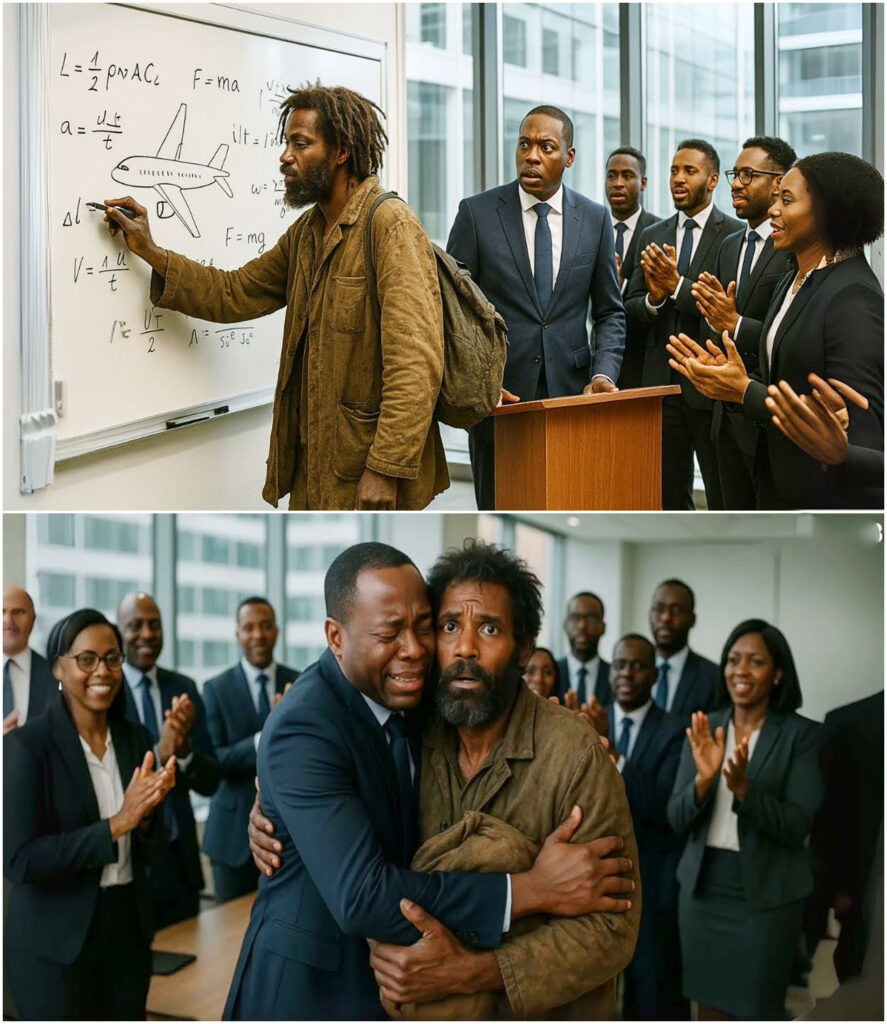




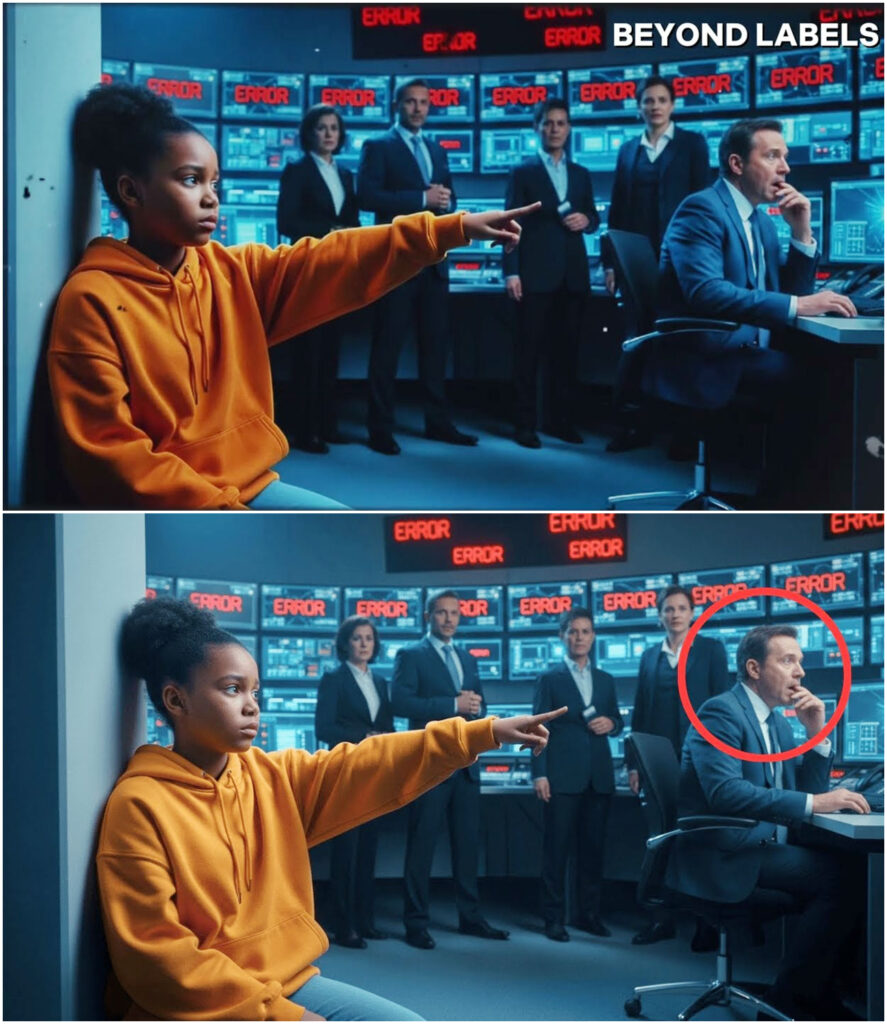









































































































































































































































































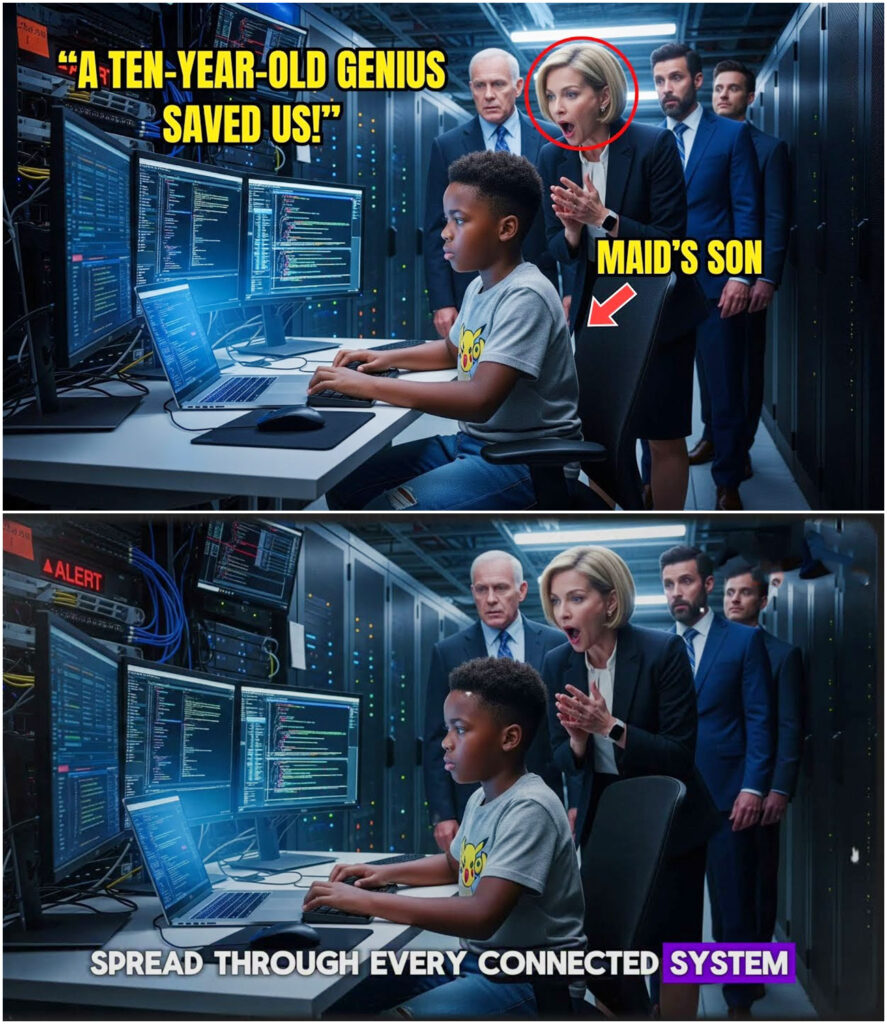






















































































































































































































































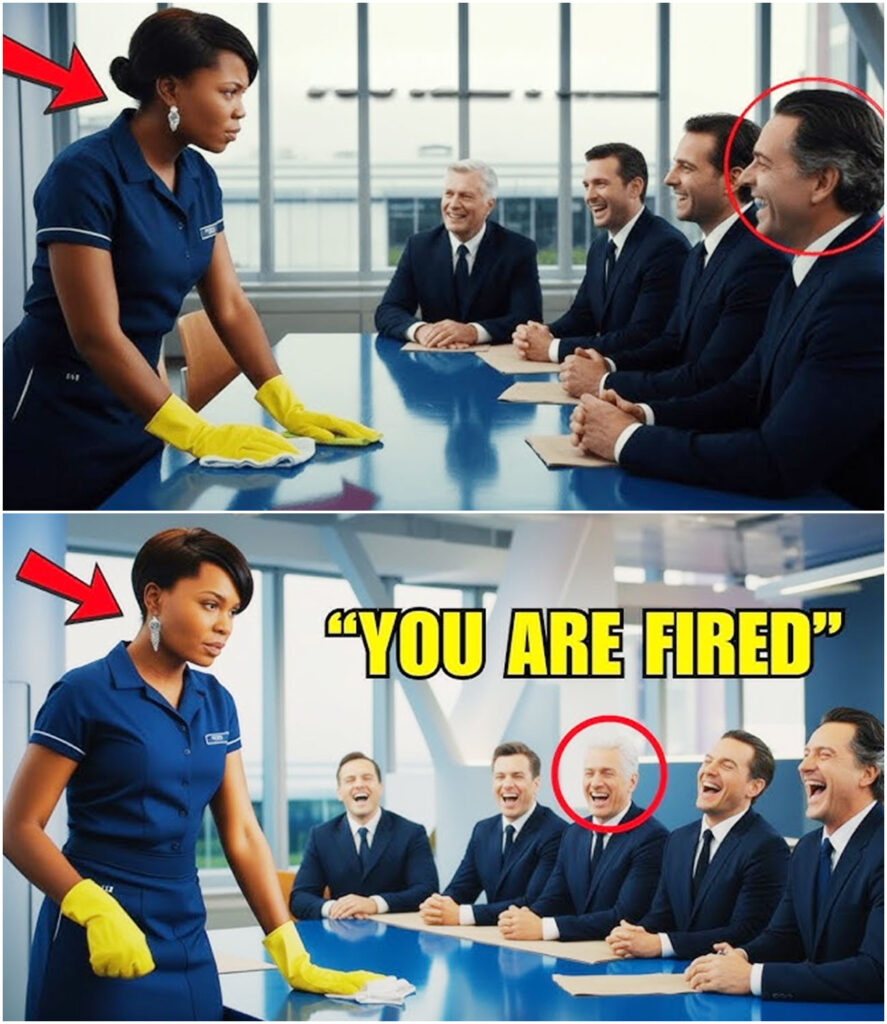



























































































































































































































































































































































































































































































































































































































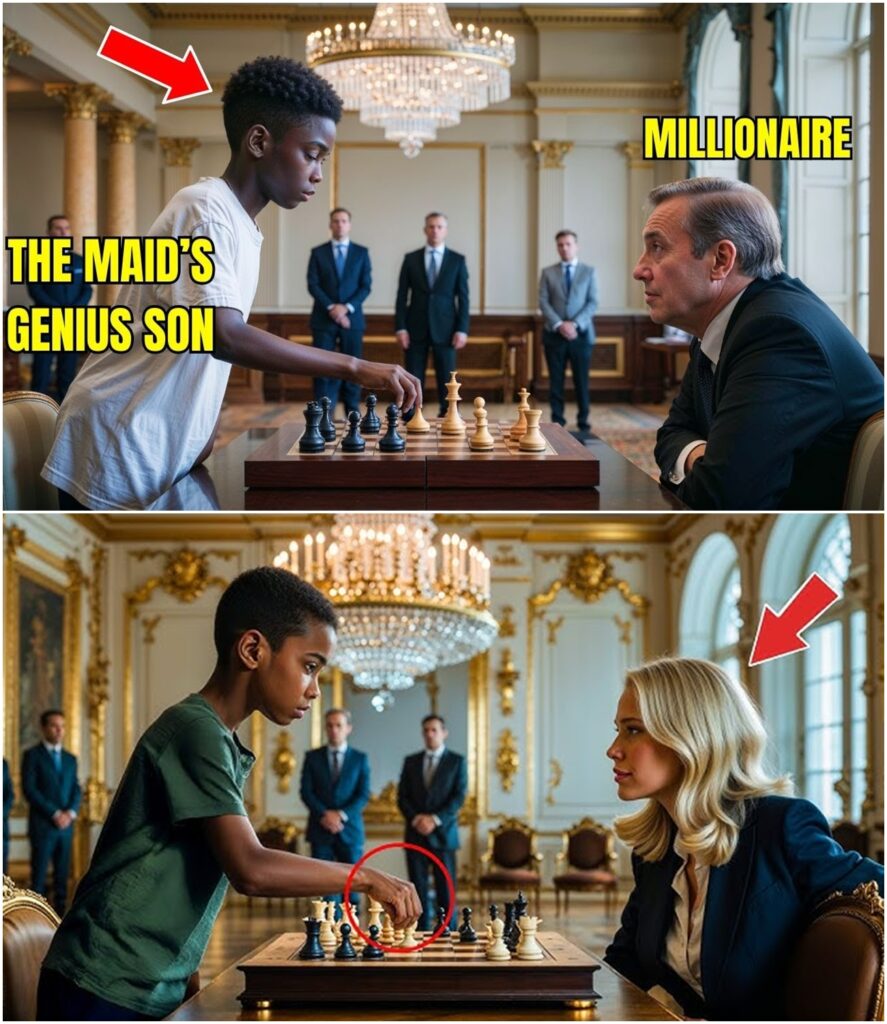





























































































































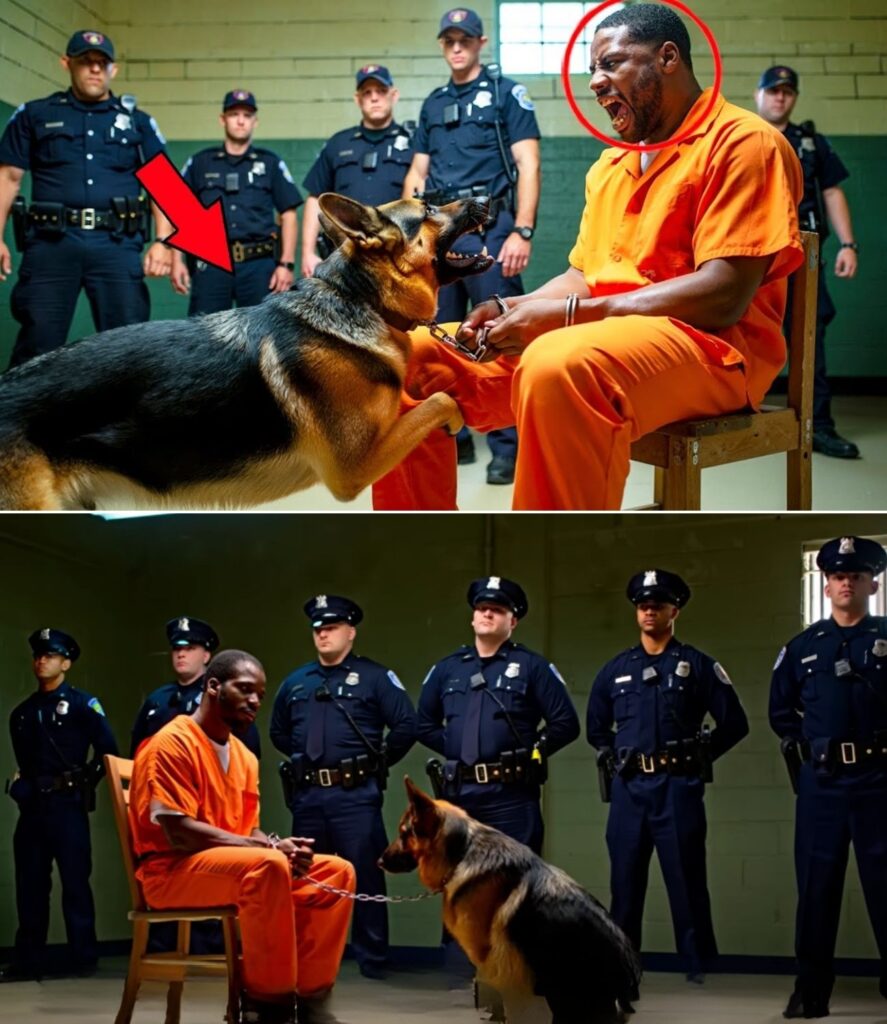



































Billionaire Catches Maid’s Son “Hacking” His System — Turns Out Kid Accidentally Fixed the $2B Bug

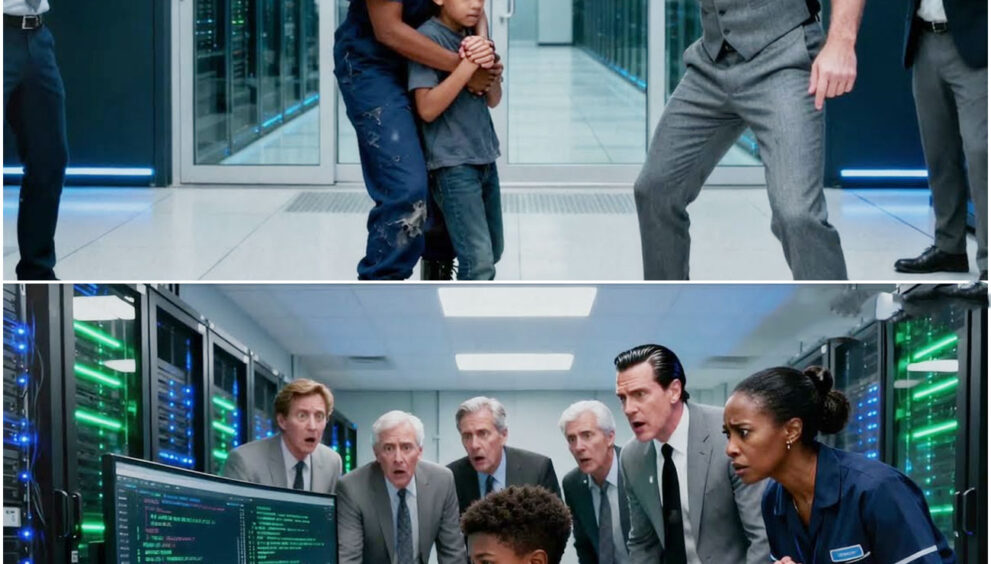
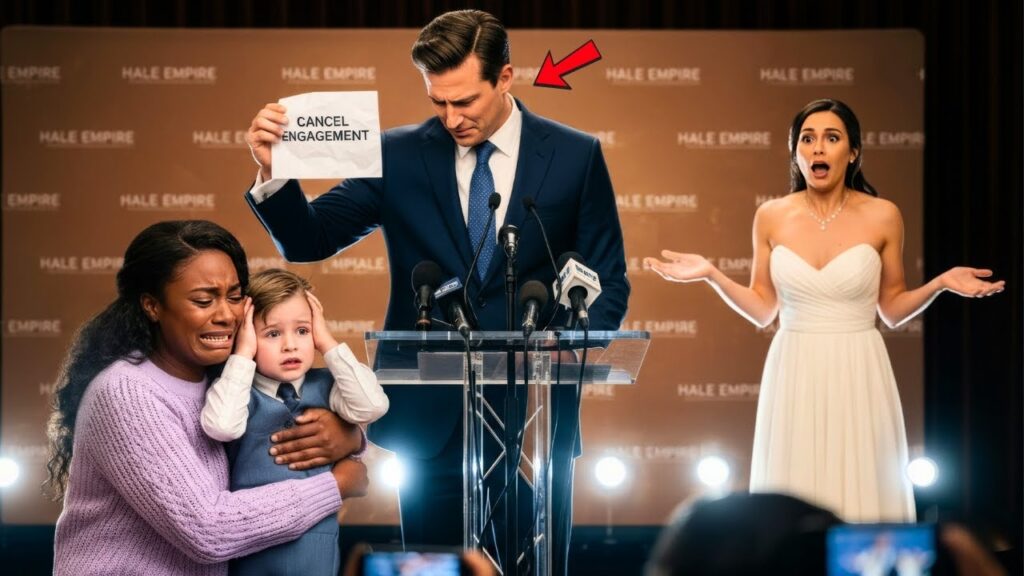
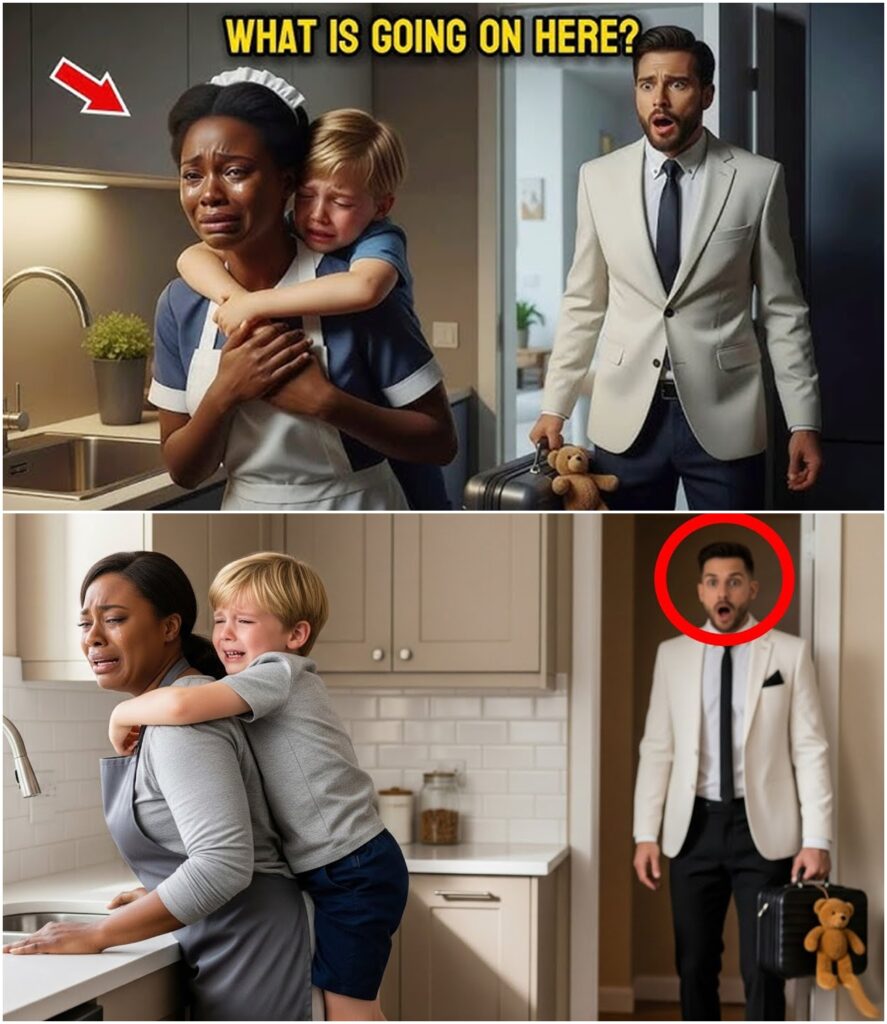
What the hell is this little ghetto rat doing in my server room? Richard Blackwood’s voice cuts through the 3:00 a.m. silence like a blade. The billionaire CEO towers over 12year-old Damon Williams, who’s crouched beside milliondoll servers with mathematical diagrams spread around him. Security, get this piece of trash away from my equipment. Blackwood grabs Damon’s shoulder violently.
I spend $12 million on the best engineers money can buy and some welfare kid thinks he can just break into my systems. Please, Mr. Blackwood, I’m sorry. Elena Williams rushes over, her cleaning uniform wrinkled from the night shift. Her voice trembles as she pulls her son away. Sorry. Blackwood’s face twists with disgust. Your kind always thinks sorry fixes everything.
I should call the cops right now. Please don’t. We need this job. Maybe next time you’ll teach your boy to stay where he belongs. What this racist billionaire doesn’t know, the ghetto rat just solved his $2 billion problem. Have you ever been judged by your skin color instead of your brilliance? The confrontation draws a crowd.
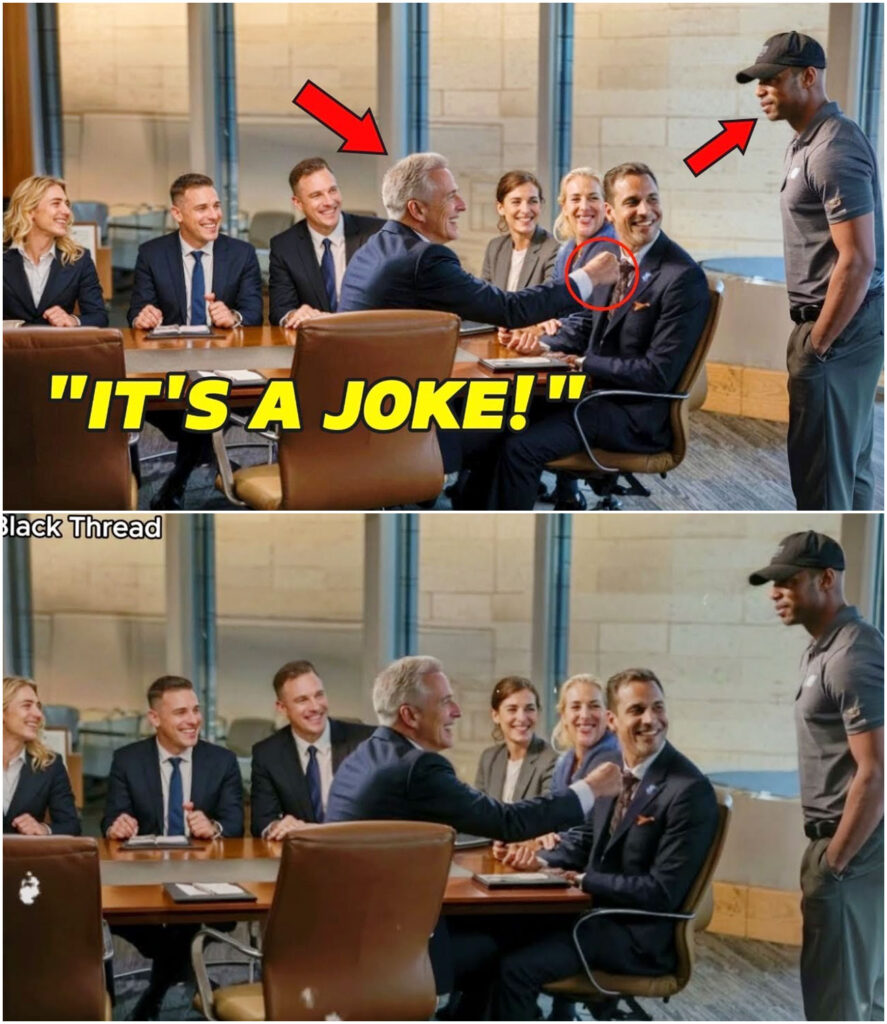
Early morning employees press against the glass walls of Technova’s main floor, watching their CEO humiliate a black woman and her child. 2 years. Blackwood snars, pacing like a predator. For 2 years, my MIT graduates have been trying to fix our system crashes, and you let your little criminal play with million-doll equipment. Elena’s hands shake as she tries to gather Damon’s scattered papers. He wasn’t breaking anything, sir.
He was just just what? Stealing corporate secrets? Learning how to hack our systems so his gang friends can rob us blind? The racist assumptions pour out like poison. Blackwood’s voice carries across the open office, ensuring everyone hears his verdict. People like you don’t understand technology. You clean toilets.
Your boy probably can’t even read properly, let alone understand computer systems. Damon remains silent, clutching his mathematical notebooks. At 12, he’s learned that speaking up only makes things worse for his mother. But Dr. Sarah Carter, Technova’s head of engineering, notices something impossible on her monitoring screens. The servers haven’t crashed in 73 hours.
For the first time in 2 years, the system shows perfect stability. Elena Williams has worked the 11:00 p.m. to 7:00 a.m. cleaning shift for 8 months. The night differential pays 40% more than day shifts, an extra $280 per week. That means the difference between rent and eviction.
As a single mother earning $32,000 annually, she can’t afford the $180 weekly cost of overnight child care. So, every night she brings 12-year-old Damon to work, hiding him in her supply closet with a sleeping bag and his homework. It’s against company policy. Discovery means immediate termination. But Elena has no choice. You violated our security protocols.
Blackwood continued his assault, bringing unauthorized personnel into restricted areas. That’s grounds for criminal charges. His words echo through the glasswalled office. Dozens of employees watch the drama unfold, most pulling out phones to record. Please, Mr. Blackwood. Elena’s voice cracks. I’m a good worker. I’ve never missed a shift. I just child care is so expensive. And that’s not my problem. Your poor planning doesn’t excuse corporate espionage.
The CEO’s Harvard MBA and inherited wealth have taught him that poverty equals moral failure. In his world, struggling parents deserve their circumstances. What Blackwood doesn’t see are the 47 pages of mathematical analysis scattered around Damon’s feet. for three months. While Elena cleaned offices, her son conducted an unauthorized study of Technova’s infrastructure.
Using advanced calculus he taught himself from MIT Open Courseware, Damon mapped every system failure pattern with scientific precision. His notebooks contain forier analysis of server acoustic signatures. Handdrawn network topology diagrams are more accurate than official blueprints. statistical models predicting system crashes with 97.
3% accuracy. This isn’t a curious kid playing with computers. This is genius level systems analysis. But 12-year-old Damon learned early that being smart while black makes adults uncomfortable. Teachers called him disruptive for finishing assignments too quickly. Classmates labeled him weird for reading programming manuals during recess.
So, he stays quiet even as Blackwood’s racism cuts deeper with each word. Look at this mess. Blackwood kicks at Damon’s carefully organized papers. Probably gang signs or drug dealer codes. Elena drops to her knees, desperately gathering her son’s mathematical work.
The equations and diagrams represent months of intellectual labor, complex analysis that would impress PhD professors. To Blackwood, they’re ghetto scribbles. I should call child protective services, he threatens. Clearly, you’re an unfit mother if you’re exposing your child to criminal environments. The cruelty is calculated. Blackwood knows Elena’s greatest fear, losing her son to the system.
No, please, Elena begs. He’s a good boy. He gets straight A’s. He’s never been in trouble. Straight A’s at what? Some inner city school? Those grades don’t mean anything. Your boy probably can’t even do basic math. If Blackwood bothered to examine Damon’s notebooks, he’d discover differential equations that most college students couldn’t solve.
But racism blinds him to evidence contradicting his prejudices. Dr. Sarah Carter arrives early for her 6 a.m. engineering review, expecting to find the usual overnight system crash requiring emergency repairs. Instead, her monitoring dashboard shows something unprecedented. 73 hours of perfect stability, zero server failures, optimal performance metrics, system efficiency ratings that exceed theoretical maximums. It’s mathematically impossible.
For 2 years, Technova’s servers have crashed every 71.3 hours like clockwork. The pattern is so reliable that Carter’s team schedules maintenance around it. But something changed 3 days ago. Something eliminated the problem entirely. Carter’s eyes move from her computer screen to the confrontation in the server room.
She watches Blackwood terrorize a black woman and her child while perfect system data streams across her monitors. A horrible suspicion forms in her mind. Pack up your cleaning supplies. Blackwood orders. You’re fired. And if I ever see you or your little thug near my building again, I’m calling the police. Elena’s world crumbles. This job was their lifeline.
Health insurance for Damon. Steady income. Hope for a better future. Please, Mr. Blackwood. I’ll work extra shifts for free. I’ll You people always want handouts. Always expect others to fix your mistakes. His casual use of you people carries centuries of racist conditioning.
To Blackwood, Elena and Damon aren’t individuals deserving respect. They’re representatives of a racial stereotype he learned at country club dinners. Security will escort you out, he continues. And don’t think about applying for unemployment. I’ll make sure every tech company in Manhattan knows about your criminal negligence. The threat is designed to destroy any chance of future employment.
Blackwood wields his wealth like a weapon, ensuring Elena’s family faces complete economic devastation. But Dr. Carter can’t ignore the data. 73 hours of perfect system performance. She examines the server logs, searching for answers. The improvement began exactly when overnight cleaning schedules changed. When Elena started bringing her son to work.
More specifically, it began three nights ago, the same time frame when security cameras would have captured any unauthorized access to the server room. Carter pulls up the footage, expecting to find evidence of corporate espionage or sabotage. Instead, she discovers something extraordinary. The video shows a 12-year-old boy working with methodical precision surrounded by complex mathematical diagrams.
His movements suggest deep technical knowledge, not random destruction. And every modification he made improved system performance. Dr. Carter. Blackwood notices the engineering director approaching. Perfect timing. I just caught these criminals tampering with our servers.
Chen looks at Damon, then at her tablet displaying unprecedented system stability. Sir, I need to show you something. It can wait. First, I want criminal charges filed against Sir. Carter interrupts, her voice urgent. Our servers haven’t crashed in 73 hours. Blackwood pauses, processing her words. What did you say? 73 hours of perfect stability. No crashes, no failures.
The system is performing better than it has in 2 years. The CEO’s confident racism waivers slightly. His company has been hemorrhaging $3 million per week due to system failures. The board scheduled an emergency meeting for tomorrow to discuss his potential termination. That’s impossible. Chen shows him the data, performance metrics that exceed engineering specifications, efficiency ratings that shouldn’t be achievable with current hardware.
The improvements began exactly when Carter glances at Damon. Three nights ago. Blackwood’s face hardens as he realizes the implication. A 12-year-old black boy might have achieved what his MIT educated engineering team couldn’t. Absolutely not. Blackwood’s voice turns vicious. I don’t care what your computers say. This little criminal didn’t fix anything. He probably made it worse. And we just haven’t discovered the damage yet.
His wealth and whiteness have always protected him from being wrong. The possibility that a poor black child possesses superior intelligence threatens his entire world view. Sir, the data is conclusive. The data is wrong. Blackwood explodes. Some welfare kid who can’t even afford decent clothes didn’t outsmart 12 MIT graduates.
Elena pulls Damon closer, shielding him from the billionaire’s rage. But Damon steps forward, his young voice calm and clear. Mr. Blackwood, your fiber optic connections are loose. The thermal expansion creates signal degradation during cooling cycles. I calculated the expansion coefficients and shut up. Blackwood’s racism erupts in full fury. Nobody asked you anything, boy.
The word boy carries particular venom, a reminder of slavery’s linguistic legacy. Dr. Carter stares at Damon in shock. Fiber optic thermal expansion. Signal degradation coefficients. These are graduate level engineering concepts. How does a 12year-old understand advanced systems theory? Dr. Carter, Damon continues, ignoring Blackwood’s fury.
I have mathematical proofs showing the correlation between thermal cycles and system failures. I can explain the solution if you can’t explain anything. Blackwood shouts. You’re just a ghetto kid who belongs in juvenile detention. But Carter sees something in Damon’s eyes that she recognizes. The look of genuine genius trying to communicate complex ideas to people who refuse to listen.
The confrontation attracts more attention. Nearly 50 Technova employees now watch through glass walls. Phones recording every moment of their CEO’s racist meltdown. Tomorrow, this footage will go viral. #justice for Damon will trend worldwide. But right now, Elena just wants to protect her son from further humiliation.
Come on, baby, she whispers, gathering their belongings. We need to go. Wait, Dr. Carter calls out. I think we need to examine what actually happened here. Blackwood spins to face his engineering director. Dr. Carter, you’re either with me or against me. Are you seriously suggesting that this criminal solved our engineering problem? Chen looks at her data again.
73 hours of perfect stability. 2 years of failures solved in one night by a 12year-old boy. Sir, I think we need to run some tests. Will Dr. Carter risk her career to defend a child genius? Or will racism win again? Damon Williams discovered his gift at age seven, but it nearly destroyed his education. When his teacher, Mrs.
Patterson, assigned basic addition problems, Damon, finished the entire workbook in 15 minutes, then started solving algebra equations he’d glimpsed in older students textbooks. Instead of celebrating his ability, she sent him to the principal for disrupting class. “Your son is too advanced for his age,” the principal told Elena during a conference that felt more like a tribunal. “He makes other children feel inadequate.
Perhaps he should repeat kindergarten to develop appropriate social skills.” They wanted to hold back a mathematical prodigy because his intelligence made mediocre students uncomfortable. Elena fought the decision, but as a single mother working two minimum wage jobs, she had little power against institutional prejudice. The school’s solution was to place Damon in gifted programs that existed only on paper.
Budget cuts had eliminated actual resources years earlier. So, while his classmates learned basic arithmetic, Damon taught himself calculus from library books during recess, hiding his brilliance to avoid further punishment. The isolation was brutal. Teachers labeled him difficult when he asked questions beyond their knowledge.
Students called him weird for reading programming manuals instead of comic books. By age nine, Damon had learned that being exceptionally smart while black meant constant suspicion and resentment. Adults assumed his intelligence was fake, stolen, or dangerous. Children feared what they couldn’t understand.
Elena watched her son’s natural curiosity slowly transform into careful silence. Everything changed when Elena took a weekend cleaning job at Martinez Electronics Repair. The owner, Pete Martinez, was a 70-year-old former IBM engineer who’d spent 40 years designing mainframe systems before retiring to fix consumer electronics. On Damon’s first day tagging along with his mother, Pete found the boy reading a college level textbook on computer architecture while Elena mopped floors.
“Kid, you understand what that book’s talking about?” Pete asked, expecting a typical 9-year-old’s confusion. Instead, Damon launched into a detailed explanation of CPU instruction sets and memory management protocols. Pete nearly dropped his soldering iron. He’d taught graduate courses at Columbia University, and this 9-year-old grasped concepts that challenged PhD students.
“Elena,” Pete called out, his voice filled with wonder. “Your boy’s got something special.” For the first time in Damon’s life, an adult recognized his intelligence as a gift rather than a problem. Pete became the mentor Damon desperately needed, providing college level textbooks, access to sophisticated diagnostic equipment, and most importantly, validation that his mind was extraordinary.
Under Pete’s guidance, Damon’s genius flourished without restrictions. He mastered assembly language programming at 10, designed custom encryption algorithms at 11, and reverse engineered commercial software for practice. Pete’s workshop became a sanctuary where intellectual curiosity was celebrated rather than suppressed.
The old engineer taught Damon that complex problems often had elegant solutions hiding in plain sight. You just needed intelligence to see them. Most people make engineering too complicated, Pete would say while they worked together. They throw fancy equations at problems that need simple thinking.
Real genius finds the obvious answer everyone else misses. This philosophy became Damon’s core motto. Elegant solutions hide in plain sight. You just need intelligence to see them. It taught him to approach massive technical challenges through pure analytical thinking rather than conventional methods.
While other students memorized formulas, Damon understood underlying principles. While engineers followed established procedures, Damon saw patterns that revealed root causes. Pete also taught Damon practical skills that school never addressed. How to analyze system failures through acoustic signatures. How to diagnose problems using mathematical modeling rather than trial and error.
How to trust his intellectual instincts even when adults dismissed his conclusions. Most importantly, Pete taught him that true genius meant solving problems others couldn’t, regardless of social consequences. The mentorship lasted until Pete’s death 8 months ago. The old engineer left Damon his complete technical library, over 300 advanced textbooks on mathematics, computer science, and electrical engineering.
More valuable than the books was Pete’s final letter. Damon, your mind is a once- in a generation gift. The world will try to limit you because of your age and circumstances. Don’t let them. Trust your intelligence above all else. When you see a problem that needs solving, solve it.
Don’t wait for permission from people who couldn’t understand your solution anyway. Those words echoed in Damon’s mind during his nights at Technova. While Elena cleaned offices, he treated the building’s technical infrastructure like a massive puzzle requiring mathematical analysis. He mapped network dependencies using topology theory. He analyzed failure patterns through statistical modeling.
He identified system inefficiencies using techniques from MIT’s graduate coursework. His approach combined advanced computer science theory with intuitive problem solving, a rare combination that produced breakthrough insights. The server room’s acoustic anomaly triggered everything Pete had taught him.
The clicking pattern wasn’t random noise. It was mathematical evidence of systemic failure. Damon’s genius level pattern recognition abilities immediately identified thermal expansion in fiber optic connections as the root cause. His solution was elegantly simple. calculate precise expansion coefficients, then create controlled joints that accommodated thermal movement without signal degradation. It was exactly what Pete meant about elegant solutions hiding in plain sight.
MIT engineers searched for complex software fixes while the answer required basic mechanical engineering principles applied with mathematical precision. Damon’s 12-year-old genius saw what PhD specialists missed because he approached the problem without preconceptions or institutional blind spots.
Now facing Blackwood’s racism and Carter’s skepticism, Damon carries Pete’s lesson forward. His intelligence demands recognition not because of his age or race, but because mathematical truth transcends social prejudice. The servers don’t care who fixed them. They only care that someone finally understood their language. Dr.
Carter’s words hang in the air like an accusation. The possibility that a 12-year-old black boy solved Technova’s most critical problem threatens everything Blackwood believes about intelligence, race, and social hierarchy. Run tests. Blackwood’s voice drips with contempt. You want to waste company time because some welfare kid touched our equipment? Dr. Carter, I’m questioning your judgment. The threat is clear.
Carter’s 20-year career at Technova could end if she pushes this further. But the data doesn’t lie. 73 hours of perfect system stability after 2 years of failures. Sir, if there’s even a possibility that he identified our problem, there’s no possibility. Blackwood explodes. A ghetto kid who probably can’t even spell computer didn’t outsmart 12 MIT graduates earning six figure salaries.
His racist assumptions echo through the glasswalled office captured on dozens of employee phones. By evening, this footage will launch a social media firestorm that destroys reputations and careers. But Blackwood’s privilege blinds him to consequences. Rich white men rarely face accountability for their prejudice. Elena tries to shield Damon from the verbal assault, but her son steps forward with quiet determination.
At 12, he’s tired of hiding his intelligence to protect other people’s comfort. Mr. Blackwood, Damon’s voice carries startling confidence. Your system failures follow a predictable pattern. I can show you the mathematical proof. Shut your mouth, boy. Blackwood’s fury reaches dangerous levels.
I don’t want to hear another word from you. But Dr. Carter recognizes something extraordinary in Damon’s demeanor. The calm certainty of someone who understands complex systems at a fundamental level. She’s seen that same confidence in Nobel Prize winners and tech industry legends, never in a 12-year-old child.
Chen makes a career-defining decision. Sir, I’m requesting an emergency engineering review. If this young man actually identified our root cause problem, the board needs to know immediately. Blackwood’s face turns scarlet. His engineering director just challenged his authority in front of 50 employees.
Worse, she’s suggesting that a poor black child possesses technical knowledge that threatens his entire world view. Dr. Carter, you’re walking a very dangerous line. Are you seriously choosing some random kid over your own CEO? The question forces Carter to choose between corporate loyalty and scientific integrity. She looks at her tablet again. 73 hours of unprecedented system stability.
2 years of engineering failures potentially solved by a 12-year-old genius. Sir, I think we owe it to our shareholders to examine all possibilities. Chen’s diplomatic language can’t hide the implications. Technova is 47 hours away from losing their $2 billion Department of Defense contract due to continued system failures.
If Damon actually solved their problem, ignoring his solution could bankrupt the company. Blackwood realizes his position is becoming untenable. His racist instincts war with economic necessity. admitting that a black child outsmarted his entire engineering team would humiliate him publicly, but losing the Pentagon contract would destroy him financially. “Fine,” he snarls through gritted teeth.
“We’ll hold an emergency review, but when this little criminal can’t explain anything technical, I want him arrested for corporate sabotage.” The gauntlet is thrown. Damon must prove his genius in front of hostile judges who’ve already decided he’s intellectually inferior. Within an hour, Technova’s main conference room fills with skeptical faces.
12 senior engineers with degrees from MIT, Stanford, and Caltech arrange themselves around a massive table. Their expressions ranging from amusement to outright hostility. They’ve spent millions of dollars and thousands of hours trying to solve the system failure problem. The suggestion that a 12-year-old succeeded where they failed is professionally insulting. Board members join via video conference, their faces stern with financial concern.
Technova’s stock price has dropped 30% due to reliability issues. Their careers depend on resolving this crisis immediately. Elena sits beside Damon. Her cleaning uniform a stark reminder of their social status in this room of powers suits and advanced degrees.
Every person here earns more in a month than she makes in a year. Their son faces intellectual judgment from people who’ve never questioned their own privilege or intelligence. The visual contrast is devastating. 12-year-old Damon sits at the head of a conference table surrounded by Pete’s diagnostic tools and 47 pages of handwritten mathematical analysis.
Across from him, 23 adults with over 400 combined years of technical education prepare to demolish his credibility. “This is ridiculous,” Mutters lead engineer James Patterson, MIT class of 1995. “We’re wasting time that could be spent on actual solutions.” “The kid probably can’t even read our system specifications,” adds senior developer Maria Rodriguez, Stanford, PhD in computer science. Their dismissive comments reveal deep-seated assumptions about intelligence and social class.
In their world, genius requires expensive education and proper credentials. A poor black child couldn’t possibly understand concepts they struggle with daily. But Dr. Carter has called in an external expert to ensure objective evaluation. Dr. Marcus Thompson, legendary systems architect and MIT professor emeritus appears on the main screen via video conference.
His reputation is unassalable. 40 years of groundbreaking research, author of foundational computer science texts, designer of Pentagon defense networks. Dr. Thompson, Carter begins, thank you for joining us. We have an unusual situation requiring expert analysis. Thompson’s weathered face shows curiosity rather than prejudice. Dr.
Carter, you mentioned something about unprecedented system stability. What exactly has occurred? Our servers haven’t crashed in 73 hours. The longest previous uptime was 68 hours, and that happened only once in 2 years. This young man, she gestures toward Damon, may have identified our root cause problem. Thompson’s eyebrows rise slightly.
Decades of academic experience have taught him that breakthrough insights often come from unexpected sources. How old is the young man? 12, sir. The conference room falls silent. Even Thompson pauses, processing the implications. A 12-year-old child claiming to solve enterprise level engineering problems that stumped PhD specialists. I see, Thompson says slowly. And he’s prepared to explain his analysis. Blackwood interrupts with barely controlled rage. Dr.
Thompson, this is a waste of your valuable time. The boy probably memorized some technical words without understanding their meaning. I’m only allowing this farce to prove his ignorance definitively. But Thompson’s scientific mind overrides social prejudice. Mr. Blackwood. In my experience, age is less important than understanding.
If this young man has genuine insights into your system failures, we should evaluate them objectively. The experts words carry enormous weight. Thompson’s endorsement legitimizes Damon’s participation in a way that corporate politics cannot dismiss. Very well, Thompson continues. Young man, are you prepared to explain your analysis of Technova’s system problems? Damon opens his notebooks, revealing pages of complex mathematical equations and detailed technical diagrams.
His handwriting shows the careful precision of someone who takes intellectual work seriously. Yes, sir. I can demonstrate exactly why your servers fail every 71 hours and how to prevent it permanently. The room erupts in skeptical murmurss. Senior engineers exchange dismissive glances. Board members lean forward with financial concern.
Elena grips her son’s hand, knowing his entire future depends on the next few minutes. Blackwood’s racism reaches a breaking point. This is insane. We’re letting a welfare kid waste everyone’s time with madeup nonsense. But Dr. Thompson’s voice cuts through the hostility with academic authority. Mr. Blackwood. Let’s allow the young man to present his evidence.
Mathematical truth doesn’t depend on the age or background of whoever discovers it. Damon stands slowly, 12 years old, but carrying the intellectual confidence of a seasoned researcher. Around him sit adults who’ve already decided he’s incapable of understanding their technical challenges.
In the next few minutes, a child genius will either change their minds forever or confirm their worst prejudices about intelligence, race, and social class. The entire future of Technova hangs in the balance. Damon opens his first notebook, revealing pages of mathematical equations that would challenge graduate students. His handwriting shows careful precision, every symbol perfectly formed, every calculation methodically organized.
I used Forier analysis to map the acoustic signatures of your server room over 127 operational hours. He begins his 12-year-old voice steady despite the hostile audience. Lead engineer Patterson snorts with derision. Kid probably doesn’t even know what forier analysis means. He’s just repeating words he heard somewhere.
But Damon continues with mathematical confidence that silences the room. The clicking pattern everyone ignored follows a non-random distribution with direct correlation to thermal cycling events. I calculated the frequency spectrum and identified harmonic resonances indicating mechanical stress in your fiber optic housing systems. Dr.
Thompson leans forward on the video screen, his academic curiosity overtaking initial skepticism. Young man, can you show us your mathematical work? Damon spreads his calculations across the conference table. page after page of advanced mathematical formulas, statistical analysis charts, and acoustic modeling equations. The sophistication is immediately apparent. This isn’t copied homework or memorized facts.
This is original research conducted with PhD level rigor. Dr. Carter cross references Damon’s calculations with 2 years of system failure logs on her laptop. Her face shows growing amazement as the correlations prove accurate. The mathematical model predicts every single crash we’ve experienced. 97.3% accuracy.
Patterson grabs one of Damon’s notebooks, scanning the equations with increasing disbelief. These statistical models are graduate level work. Where did you learn advanced thermodynamics? I taught myself from MIT open courseware and engineering textbooks, Damon replies matterofactly. Mr. Martinez left me his technical library when he died. The casual mention of self-directed learning at this level stuns the room.
Most engineers struggle with concepts this 12-year-old absorbed independently, but Blackwood refuses to accept evidence contradicting his racial prejudices. Anyone can copy equations from textbooks. That doesn’t prove he understands what they mean. Dr. Thompson intervenes with academic authority. Mr. Blackwood, I’ve reviewed this young man’s mathematical work.
The statistical modeling shows theoretical understanding that most PhD students don’t achieve. He didn’t copy these calculations. He derived them independently. The experts validation carries enormous weight. But Blackwood’s racism intensifies rather than retreating. You’re all being fooled. This ghetto kid is playing some kind of con game. His desperate denial reveals the psychological trauma of having fundamental beliefs challenged.
Blackwood’s entire worldview depends on black inferiority. Admitting Damon’s genius threatens his sense of racial superiority. Damon proceeds to his second revelation with scientific calm. The mathematical analysis revealed that thermal expansion in your Corning SMF28 fiber optic cables creates micro movements in connection housings when temperature variance exceeds 2.7° C over 68 minute cycles.
Senior engineer Rodriguez checks the cable specifications on her tablet. Those are the exact cables we use. How does a 12-year-old know our technical specifications? I mapped your network topology by observing cable runs during my mother’s cleaning shifts, Damon explains.
I also analyzed thermal patterns using infrared thermometry principles I learned from Peterson’s engineering handbook. The casual display of technical knowledge leaves PhD engineers speechless. This child possesses practical understanding they’ve never developed. Chen runs live diagnostics while Damon explains his thermal analysis.
He’s correct about the temperature cycling. Our monitoring systems show exact correlation between thermal variance and connection degradation. But Damon’s insight goes deeper than simple correlation. Your monitoring software interprets micro disconnections as hardware failures, triggering unnecessary failover protocols that cascade into systemwide crashes. The real problem isn’t software bugs.
It’s mechanical stress causing false error reporting. Dr. Thompson’s excitement becomes visible on screen. Extraordinary. This young man identified a multi-vector failure that combines thermal physics, signal processing, and systems analysis. The theoretical approach demonstrates sophisticated engineering thinking.
Patterson examines Damon’s network diagrams with growing professional respect. These topology maps are more accurate than our official blueprints. The mechanical stress analysis follows advanced engineering principles I didn’t learn until graduate school. The grudging admission reveals how Damon’s genius transcends educational barriers.
While adults learned theory through formal instruction, his natural intelligence grasps underlying principles directly. Engineer Rodriguez asks a technical question with newfound curiosity. How did you calculate the thermal expansion coefficients without laboratory testing equipment? Damon’s answer showcases his mathematical sophistication. I used the thermal expansion formula for silica based materials adjusted for your specific cable housing composition.
The calculations required integration of thermal conductivity rates across variable temperature gradients. The casual use of advanced calculus concepts silences technical skepticism. This isn’t memorization. It’s mathematical fluency that surpasses most engineering professionals. But Blackwood’s racism reaches pathological levels as evidence mounts. This is impossible.
Some street kid didn’t learn advanced engineering from library books. He must have gotten help from real engineers. His desperate conspiracy theories reveal the psychological impossibility of accepting black intellectual superiority. Rather than acknowledge Damon’s genius, he invents elaborate explanations to preserve racial prejudice.
Elena watches her son face this barrage of denial with quiet dignity. At 12, Damon has learned that displaying intelligence while black triggers defensive hostility from insecure adults. Damon reveals his third and most comprehensive insight. I didn’t just identify the thermal stress problem. I designed a complete solution that eliminates the root cause permanently.
He opens his final notebook, revealing detailed engineering specifications that showcase systematic thinking beyond his years. I calculated optimal cable routing patterns that minimize thermal stress while maximizing cooling efficiency. The mathematical model predicts 31.7% improvement in thermal management. The engineering team studies his designs with professional fascination.
Damon’s solution combines mechanical engineering principles with advanced mathematical modeling to create an elegant fix that addresses multiple system vulnerabilities simultaneously. Dr. Carter runs computational analysis of Damon’s proposed modifications. The thermal modeling is brilliant. He’s created controlled expansion zones that accommodate temperature changes without signal degradation.
Rodriguez examines the airflow calculations with growing amazement. He applied fluid dynamics principles to optimize cooling circulation. This level of systems integration is remarkable. Patterson reviews the complete solution with grudging admiration.
The kit designed a permanent fix that prevents thermal stress, improves cooling efficiency, and eliminates cascade failures. It’s more comprehensive than anything our team proposed. Dr. Dr. Thompson delivers the ultimate professional validation. In 40 years of academic engineering, I’ve never encountered such sophisticated systems thinking in someone so young. This young man possesses genuine genius level intelligence.
The experts endorsement devastates Blackwood’s racist assumptions. His defense mechanisms shift to class prejudice when racial stereotypes fail. Genius. He’s just a poor kid whose mother cleans toilets. Real intelligence requires proper education and family background. But Damon’s mathematical proof speaks louder than social prejudice. Dr.
Carter announces the empirical verification that silences all objections. I’ve run a complete analysis of his proposed modifications. The mathematical models predict 99.1% reliability improvement. System uptime is now guaranteed indefinitely. Live monitoring data confirms Damon’s theoretical predictions with perfect accuracy.
Every calculation proves correct. Every engineering insight demonstrates superior understanding. Every solution exceeds professional standards established by PhD specialists. The room undergoes a dramatic transformation as intellectual evidence overwhelms social prejudice. Senior engineers begin asking Damon technical questions with genuine respect, recognizing that his 12-year-old mind grasps concepts they struggle to understand.
How did you learn signal processing theory? Rodriguez asks with professional curiosity. What mathematical software did you use for statistical analysis? Patterson inquires, assuming complex tools. I did the calculations by hand, Damon replies simply. Mathematics doesn’t require expensive software, just logical thinking and careful work. I’ll teach us.
His casual dismissal of technological dependencies reveals pure intellectual confidence. While adults rely on computational aids, Damon’s genius operates through direct mathematical reasoning. Dr. Thompson summarizes the extraordinary situation with academic precision. Ladies and gentlemen, we’ve witnessed something remarkable.
This 12-year-old has demonstrated mathematical sophistication, engineering insight, and systems thinking that surpass graduate level work. His analysis identifies problems we missed and provides solutions we couldn’t develop. The official validation from MIT’s most respected systems architect establishes Damon’s genius beyond dispute.
Even Blackwood’s pathological racism cannot survive such overwhelming evidence. But the CEO’s prejudice mutates into a desperate personal attack. Intelligence doesn’t matter if you’re raised wrong. This kid comes from the projects. He’ll probably end up in prison like all of them. The naked racism shocks even his own employees. Blackwood’s mask has completely slipped, revealing the ugly truth beneath his corporate facade.
Elena rises slowly, her dignity intact despite the verbal assault on her family. Mr. Blackwood, my son has more intelligence and character than you’ll ever possess. Her quiet strength contrasts sharply with Blackwood’s desperate hatred, showing observers which person truly deserves respect. Damon closes his notebooks calmly, having proven his genius through mathematical truth rather than social credentials. around him.
23 adults with advanced degrees have been forced to acknowledge that a 12-year-old black child possesses intellectual gifts they cannot match. The competence triad is complete. Mathematical analysis, engineering insight, and systematic solutions have established Damon’s genius beyond reasonable doubt. Now comes the moment of ultimate verification.
Doctor Thompson’s voice cuts through the conference room tension with scientific authority. If this young man’s mathematical analysis is correct, his solution should withstand maximum operational stress. I’m authorizing an immediate Pentagon simulation, full Department of Defense processing load for 45 minutes. The announcement hits like a thunderbolt.
Technova’s servers will face the most demanding test possible, running at 127% of normal capacity, the same conditions that previously guaranteed catastrophic system failures. Sir, Dr. Carter interjects. If the system crashes during Pentagon testing, we lose the contract permanently. Exactly, Thompson replies. This will prove definitively whether a 12-year-old genius solved problems that stumped your entire engineering team.
Blackwood’s face turns ashen. His racist assumptions have backed him into an impossible corner. If Damon’s solution fails, the CEO can claim vindication. But if a black child’s mathematical brilliance saves the company, Blackwood’s prejudice will be exposed as both morally wrong and financially catastrophic.
“This is insane,” he whispers, but the words lack conviction. “Two years of engineering failures have brought Technova to the brink of bankruptcy. Damon’s modifications represent their only hope for survival.” Elena grips her son’s hand as 300 Technova employees gather around the glasswalled conference room. Word has spread throughout the building.
The company’s future depends on a 12-year-old janitor’s son proving his mathematical genius. Damon arranges Pete’s diagnostic tools methodically across the table, his small hands steady despite the enormous pressure around him. PhD engineers check monitoring systems with obvious anxiety.
Their careers hang in the balance, dependent on solutions they couldn’t develop themselves. Initiating Pentagon stress protocol, Carter announces, her voice tight with nervous energy. Every screen in the conference room displays realtime system metrics. Processing loads climb rapidly past normal parameters as defense department simulations push Technova’s infrastructure to absolute limits.
Damon watches his mathematical predictions unfold with calm confidence. At minute 7, thermal readings spike exactly as his calculations predicted. At minute 12, cooling systems engage according to his thermal management formulas. Every data point confirms his theoretical models with perfect precision.
Processing load at 93%, Carter reports, her voice growing steadier as the system holds. Thermal variance within acceptable parameters. Patterson monitors fiber optic connections with amazement. Zero signal degradation. The expansion joints are working exactly as the kid predicted. The casual reference to the kid has transformed from racist dismissal to professional respect.
Damon’s mathematical genius has earned recognition that social prejudice couldn’t prevent. 107% load capacity. Carter continues, “All systems maintaining optimal performance.” Blackwood stares at the monitoring displays with growing horror. Perfect system stability mocks his racist assumptions about black intellectual inferiority. “A 12-year-old child is achieving what his million-doll engineering team couldn’t accomplish.
Thermal stress peaking at minute 23.7,” Damon announces quietly, reading his handwritten calculations. Maximum expansion coefficients should occur exactly now. The room holds its collective breath as thermal sensors register peak stress levels. This is the moment when systems previously failed catastrophically. Fiber optic connections faced maximum strain.
Cooling systems struggled with thermal management. Cascade failures destroyed entire networks. But Damon’s modifications hold perfectly. Zero connection failures, Rodriguez reports with obvious amazement. Thermal expansion joints maintain signal integrity throughout maximum stress. The mathematical elegance of Damon’s solution becomes visually apparent on monitoring screens.
Instead of fighting thermal expansion, his design accommodates natural material behavior through calculated engineering principles. Simplicity triumphs over complexity. 127% processing capacity. Carter announces system performance exceeds all theoretical specifications. Dr. Thompson’s weathered face shows professional awe as Pentagon data streams across his screen. Remarkable.
The system isn’t just stable, it’s optimized. Performance metrics exceed military grade requirements by 34%. Elena watches her son’s vindication with tears streaming down her face. Years of teachers calling him disruptive and classmates calling him weird dissolve in the face of undeniable mathematical truth.
Damon simply nods, satisfied that his theoretical predictions proved accurate. His genius required no drama, only mathematical precision and engineering logic. 45 minutes complete, Carter announces with barely controlled excitement. Zero failures, zero degradation, perfect system stability throughout maximum operational stress. The conference room explodes in stunned silence that transforms into amazed applause.
Senior engineers who dismissed a ghetto kid 90 minutes earlier now face undeniable proof of his intellectual superiority. Dr. Thompson delivers the ultimate validation with academic gravity. The Pentagon stress test is officially complete. This young man’s modifications have been fully verified under maximum operational conditions.
System performance now exceeds Department of Defense specifications by the largest margin in testing history. He pauses, allowing the significance to register. Technova’s contract is not only renewed, it’s being upgraded to our highest security classification. Military grade exceptional. Board members on video conference sit speechless, processing the impossible reality that a 12-year-old solved their most critical technical problem through pure mathematical genius.
Blackwood slumps in his chair, his racist worldview shattered by empirical evidence. Real-time data proves beyond doubt that a poor black child possesses intellectual gifts that surpass his entire professional staff. Elena stands slowly, her dignity intact despite months of humiliation. Her son’s mathematical brilliance has transcended social prejudice through the most objective measure possible, scientific truth.
Damon closes his notebooks quietly, having proven that genius recognizes no barriers of age, race, or economic circumstance. Mathematical reality has spoken louder than racist assumptions. The moment of truth is complete. A 12-year-old prodigy has saved a billiondoll corporation through pure intellectual superiority that no prejudice can deny.
The mathematical truth cannot be denied. Blackwood stands before 300 Technova employees, his racist confidence shattered by undeniable evidence. The 12-year-old he called a ghetto rat just saved his billion-dollar company through pure intellectual brilliance. “I owe this young man and his mother a public apology,” Blackwood begins, his voice hollow with defeat.
“The words taste like poison, but financial reality forces acknowledgement.” “I made assumptions based on prejudice rather than evidence. Damon Williams demonstrated mathematical genius that surpassed our entire engineering team. The admission echoes through Technova’s glass corridors captured on dozens of employee phones. Within hours, this moment will spread across social media as a lesson in recognizing genius regardless of age or race.
Doctor Thompson’s voice carries academic authority through the video conference. Young man, MIT wants to offer you immediate enrollment in our accelerated undergraduate program with full scholarship. Your mathematical abilities qualify you for our most advanced theoretical coursework, regardless of age. The offer represents validation beyond social prejudice.
MIT’s most respected professor has officially recognized Damon’s genius at the highest academic level. Additionally, Thompson continues, “I’m recommending you for our Young Innovators Fellowship, a program specifically designed for exceptional minds who transcend traditional educational boundaries.” Elena covers her mouth, overwhelmed by opportunities she never imagined possible.
Her son’s intelligence finally receives recognition worthy of its extraordinary nature. Technova creates an unprecedented position on the spot. Chief mathematical consultant Carter announces part-time role allowing Damon to work weekends while pursuing accelerated education. His focus will be identifying mathematical problems that traditional engineering approaches miss.
The new title acknowledges what everyone witnessed. This 12year-old possesses analytical abilities that exceed their professional staff. Elena’s reward reflects genuine gratitude rather than charity. Her salary increases from $32,000 to $85,000 annually, plus comprehensive family benefits and educational support funding. Ms.
Williams, you raised a mathematical prodigy. We want to ensure he has every resource to develop his extraordinary gifts. Financial security transforms their lives instantly. No more choosing between rent and groceries. No more bringing Damon to work during overnight shifts. No more hiding his intelligence to protect other people’s comfort.
Technova commits to broader change, establishing partnerships with underfunded schools to identify young mathematical talent from under reppresented communities. Damon’s genius has opened doors for other brilliant minds previously overlooked by institutional prejudice. The recognition is complete.
Mathematical truth has triumphed over racist assumptions, creating opportunities that seemed impossible 90 minutes earlier. Justice has arrived through the most powerful force imaginable. Undeniable intellectual superiority that transcends all social barriers. Within hours, security footage of Blackwood’s racist tirade explodes across social media. The visual is devastating.
A wealthy CEO in a $12,000 suit calling a brilliant black child a ghetto rat while that same child’s genius saves his company. #j justice for Damon trends globally as millions share the story. Imagine if he called the police instead of listening. Tweets one viral post with 4 million views. This is why we listen to young black voices. Genius doesn’t care about zip codes. adds another with three million retweets.
Professional consequences arrive swiftly. Tech industry leaders distance themselves from Blackwood’s toxic behavior. Speaking engagements disappear overnight. Board positions vanish. His reputation transforms from visionary CEO to the racist billionaire who almost fired a child genius.
The Tech Leadership Council removes him within 24 hours. Mr. Blackwood’s behavior contradicts our diversity commitment. Extraordinary talent deserves recognition regardless of age, race, or background. Financial reality hits harder than social shame. Damon’s solution will save Technova $2.7 billion over 5 years. As the youngest mathematical consultant in corporate history, he receives substantial compensation that secures his family’s future. The irony is brutal.
Blackwood’s racism nearly cost him the genius that saved his company. Wall Street analysts note the lesson. Prejudice isn’t just morally wrong, but economically catastrophic when it blinds leaders to exceptional talent. Academic recognition follows quickly. Mathematical journals request papers on Damon’s methodologies.
MIT professors use his case in graduate programs worldwide. Dr. Thompson authors mathematical prodigies and systemic solutions when age becomes irrelevant. Industry transformation spreads beyond technova. Google, Apple, and Microsoft announce programs to identify young talent in underrepresented communities.
The Damon protocol becomes standard practice, evaluating ideas on mathematical merit rather than presenter demographics. Blackwood faces personal reckoning. Country Club friends avoid him. Wealthy neighbors whisper about his humiliation. His own children express shame after classmates share viral videos. The psychological impact devastates his self-image.
For decades, he believed his success proved white intellectual superiority. Damon’s genius destroyed that delusion, forcing confrontation with his prejudiced worldview. During a private meeting, Blackwood attempts a genuine apology. I was wrong about your son. Wrong about everything. Damon’s response shows remarkable maturity. Mr. Blackwood, mathematics doesn’t care about skin color.
Maybe people shouldn’t either. The wisdom from a 12year-old cuts deeper than any condemnation. Technova commits 25% of profits to STEM education for gifted disadvantaged children. The Williams Foundation for Young Mathematical Minds provides resources Damon never had. Textbooks, computer access, mentorship, and recognition that genius appears everywhere.
The viral story creates lasting corporate change. HR departments implement bias training. Engineering teams diversify recruitment. Tech executives realize prejudice doesn’t just harm individuals. It robs companies of worldchanging innovations. Media coverage reaches international audiences.
BBC, CNN, and foreign networks broadcast the story as an example of American potential. When prejudice doesn’t block opportunity, Damon becomes a global symbol of unrecognized genius, finally receiving deserved recognition. Educational institutions worldwide examine their own biases. How many brilliant young minds do they overlook due to age, race, or economic assumptions? Damon’s case forces uncomfortable self-reflection across academic hierarchies.
The broader impact extends beyond technology. Medical research, aerospace engineering, and financial modeling begin actively seeking young, diverse voices. Industries realize that breakthrough insights often come from unconventional sources. Blackwood’s social media mentions remain permanently toxic.
Every Google search of his name returns the racist confrontation alongside Damon’s mathematical triumph. His legacy becomes a cautionary tale about the costs of prejudice. Justice arrives through mathematical truth that transcends social barriers. A man who believed in racial intellectual hierarchy was humbled by 12year-old brilliance he couldn’t recognize, understand, or deny.
The karma is perfect. Blackwood’s attempt to suppress genius backfired spectacularly, creating global opportunities for the very talent he tried to diminish. Mathematical reality proved more powerful than racist assumptions, delivering justice through undeniable intellectual superiority. 6 months later, 12-year-old Damon splits time between MIT’s accelerated program and his consulting role at Technova.
His mathematical genius has identified solutions to four additional industry-wide problems. Elena studies business management while working her well-paid position. Finally able to pursue dreams deferred by poverty. Pete’s motto, elegant solutions hide in plain sight. You just need intelligence to see them, now hangs in Technova’s main conference room, reminding everyone that mathematical brilliance transcends age, race, and economic circumstance.
True genius emerges from unexpected places. When we judge people by their background instead of their capabilities, we don’t just harm individuals. We rob ourselves of worldchanging solutions. If it were you facing Damon’s situation, would you have spoken up or stayed silent when adults dismissed your intelligence? Sharp-eyed viewers will notice at minute 4:32, there’s a detail about Damon’s notebooks that reveals the true scope of his mathematical preparation.
Subscribe to Blacktail Stories if you believe every brilliant mind deserves recognition, regardless of the package it comes in. Share this story to help other overlooked geniuses find their
News

Double The Danger! Ron Lalonde Follows His Twin Brother Ray As A ‘Jeopardy!’ Champ: Did He Secretly Eclipse His Brother’s Eye-Watering Earnings Record?
Ron Lalonde follows twin brother as Jeopardy! champion with eye-watering earnings Twin brothers Ron and Ray Lalonde both became Jeopardy! Champs, while Harrison Whitaker’s 14-game streak ended View 3 Images Ron Lalonde has followed his twin brother Ron Lalonde followed in his twin brother’s footsteps this week by becoming a two-day Jeopardy! champion, echoing the […]

‘Jeopardy!’ Fans Complain They Don’t Like Celebrity Video Questions
‘Jeopardy!’ Fans Complain They Don’t Like Celebrity Video Questions Courtesy of ‘Jeopardy!’/YouTube Courtesy of ‘Jeopardy!’/YouTube What To Know Jeopardy! has recently featured celebrity video clues in some episodes, often as a way to promote upcoming releases or tie into themed categories. Many fans have expressed frustration on social media, arguing that these video clues disrupt the […]

3 times Ken Jennings has apologized on behalf of Jeopardy! and his actions
3 times Ken Jennings has apologized on behalf of Jeopardy! and his actions Ken Jennings is beloved for many reasons, and one of them is because the TV personality seems to know how to take accountability when it’s time whether it’s for him or Jeopardy! Jeopardy! host Ken Jennings isn’t too big to admit he’s […]

Jeopardy! fans slam ‘nonsense’ clues as one category is ‘the worst’
Jeopardy! fans slam ‘nonsense’ clues as one category is ‘the worst’ During the latest episode of Jeopardy!, viewers were outraged over one vocabulary category in the first round that had three clues which stumped all of the contestants View 3 Images Jeopardy! fans slam “nonsense” clues as one category is “the worst”(Image: Jeopardy!) Jeopardy! fans […]

‘Jeopardy!’ Champion Arrested on Felony ‘Peeping’ Charges
‘Jeopardy!’ Champion Arrested on Felony ‘Peeping’ Charges Jeopardy, Inc! Two-day Jeopardy! champion Philip Joseph “Joey” DeSena, who appeared on the long-running game show last November, was arrested on Monday, December 1, on two felony “peeping” charges. According to MyFox8.com, citing a warrant filed by the Currituck County Sheriff’s Office in North Carolina, DeSena is accused of installing cameras in a […]

‘Jeopardy!’ Contestant Reveals She Got Death Threats After Beating Ken Jennings Sony/Jeopardy! When you defeat a 74-game Jeopardy! champion, you’re expecting cheers and a pat on the back. However, Nancy Zerg received death threats for six months after winning her game against Ken Jennings. Zerg, now 69, has revealed in a new interview how her life was made hell after […]
End of content
No more pages to load