





















































































































































































































































































































































































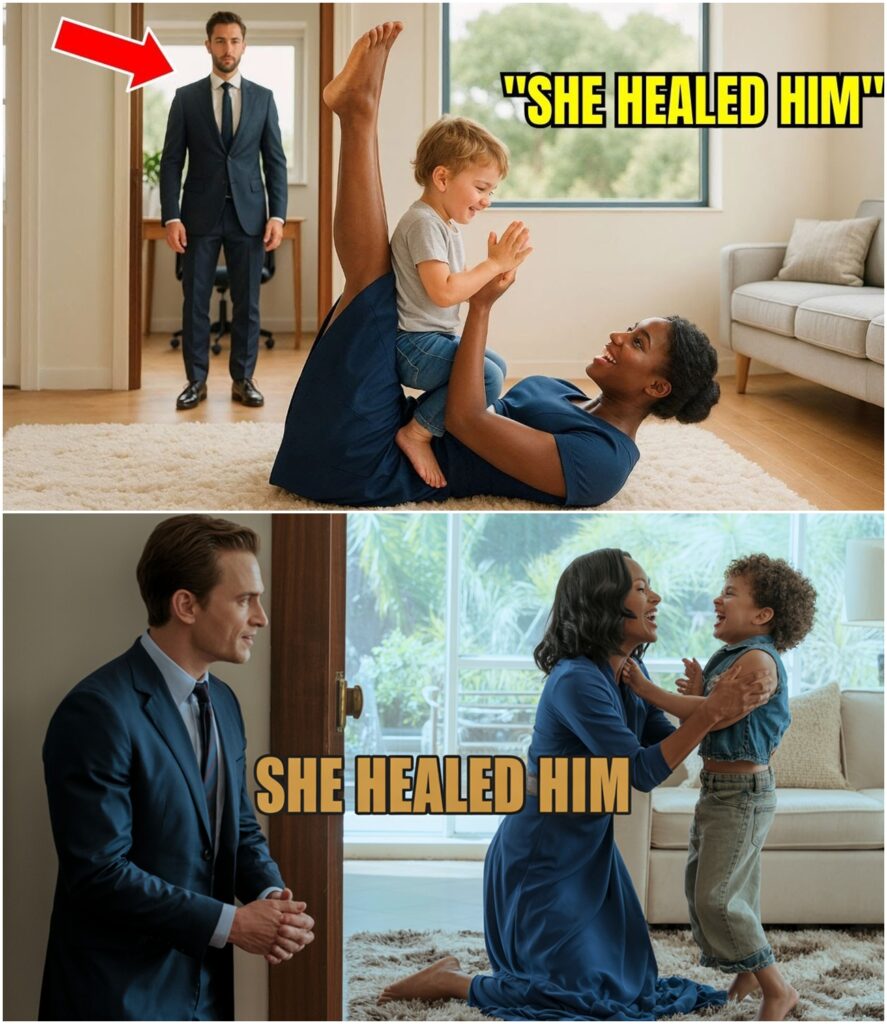
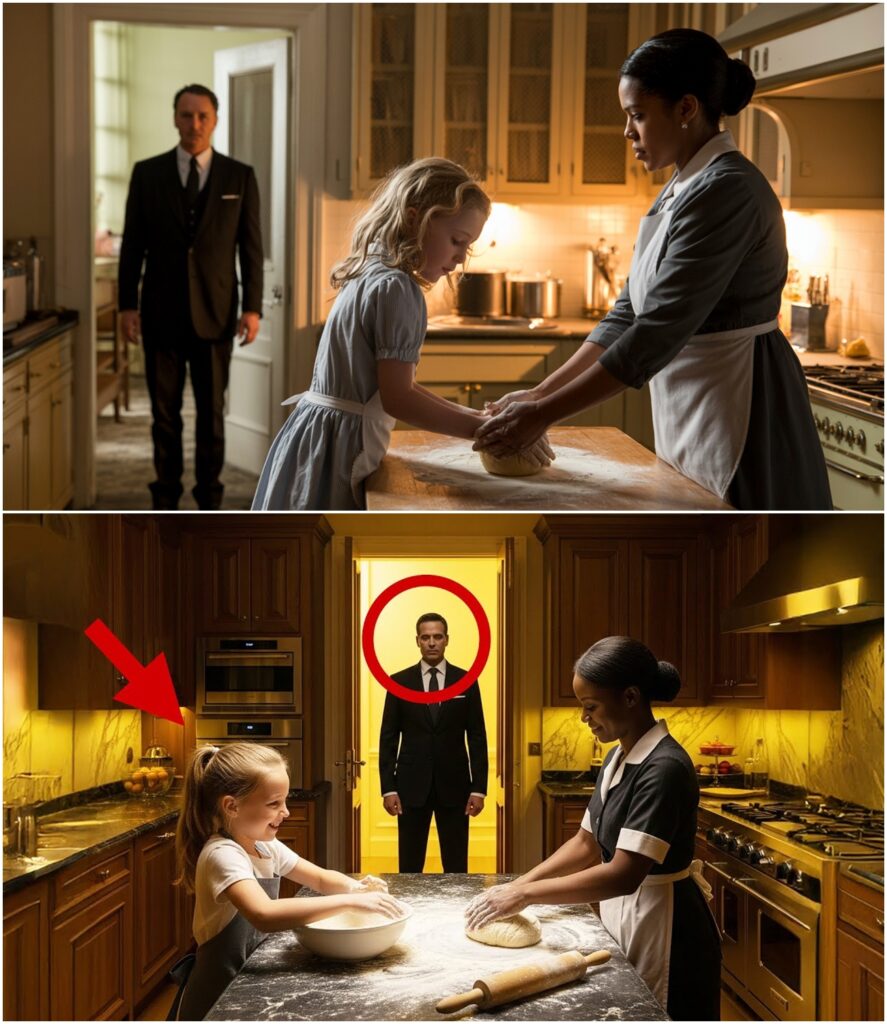
















































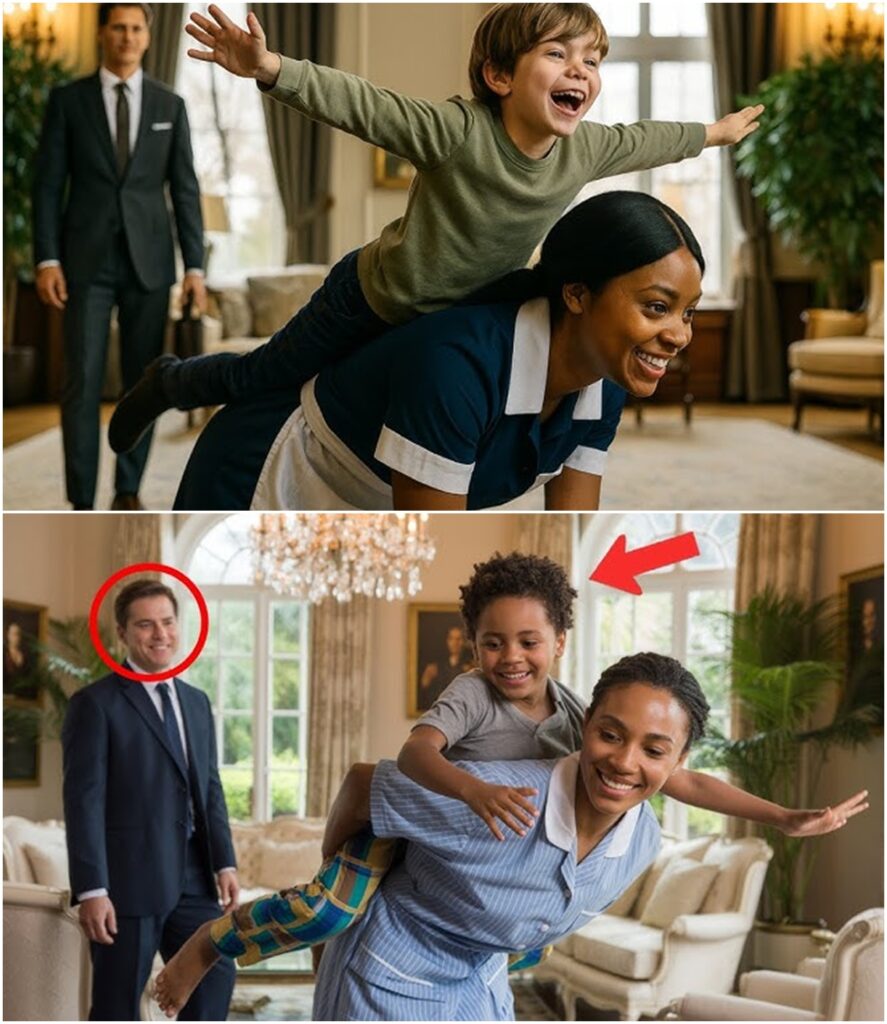
















































Black Waitress Danced with Billionaire CEO’s Burn-Scarred Son — One Song Left His Father in Tears

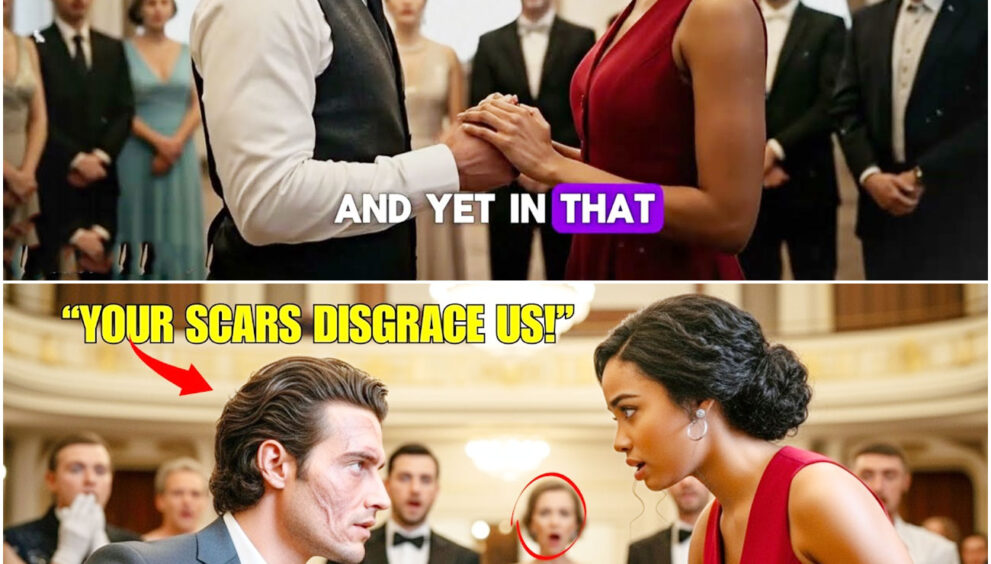
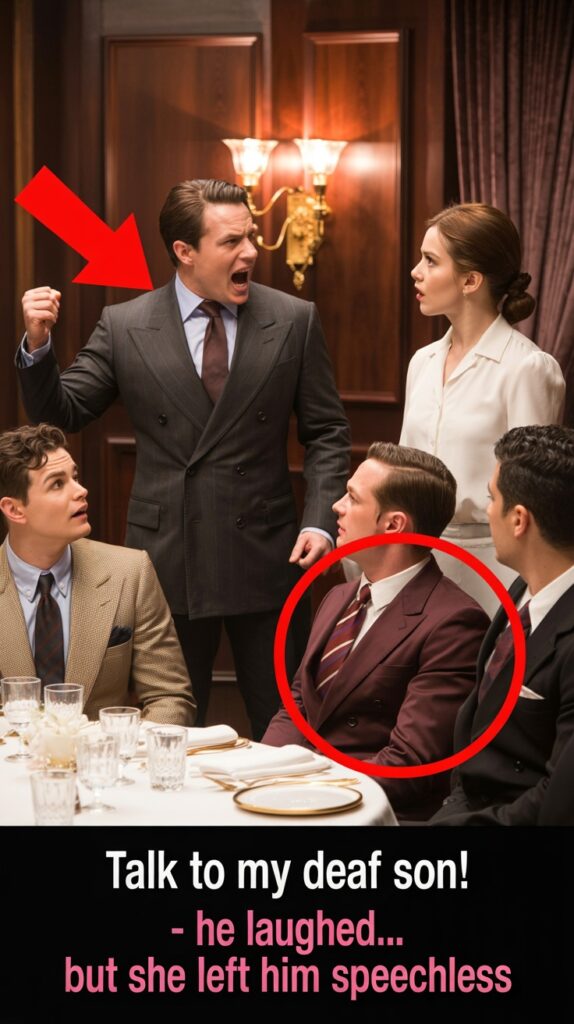
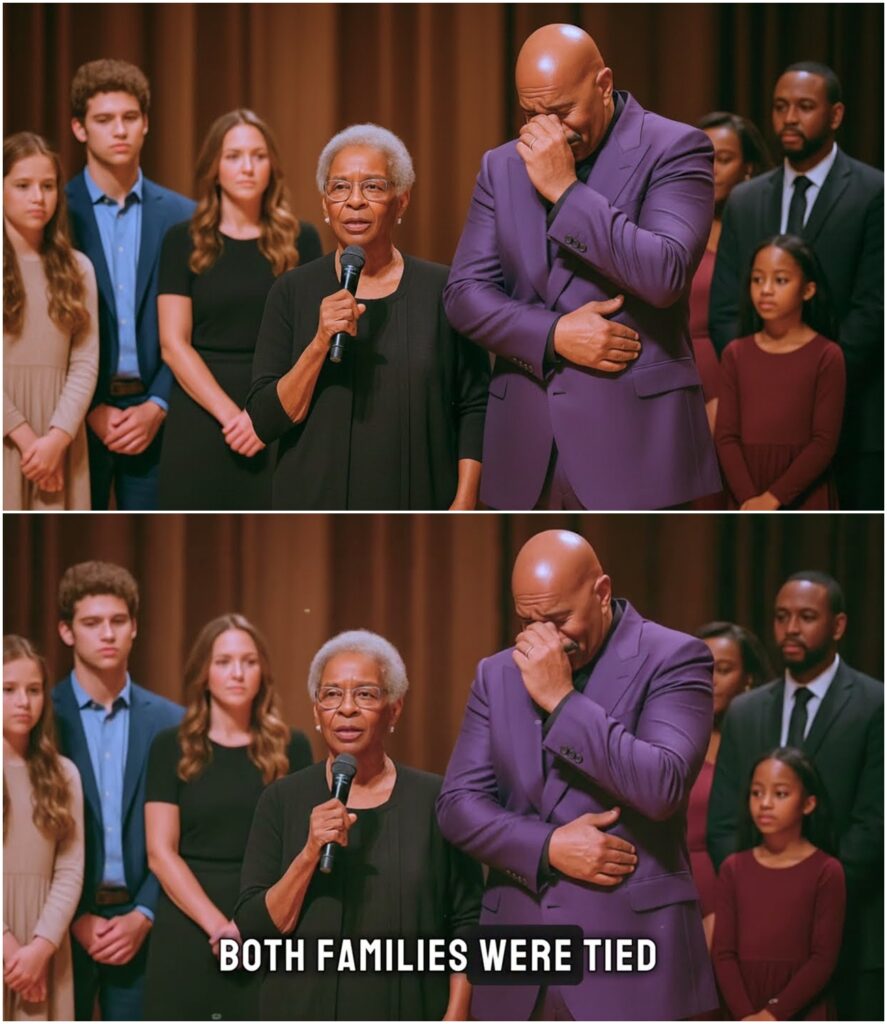
with me. You don’t need to hide. You let a black waitress dance with your deformed son at a billion-dollar gala. Have you lost your mind? That sentence sliced through the golden silence of the Melville estate ballroom like broken glass under bare feet. Every conversation died mid-sentence. Champagne flutes froze halfway to lips.
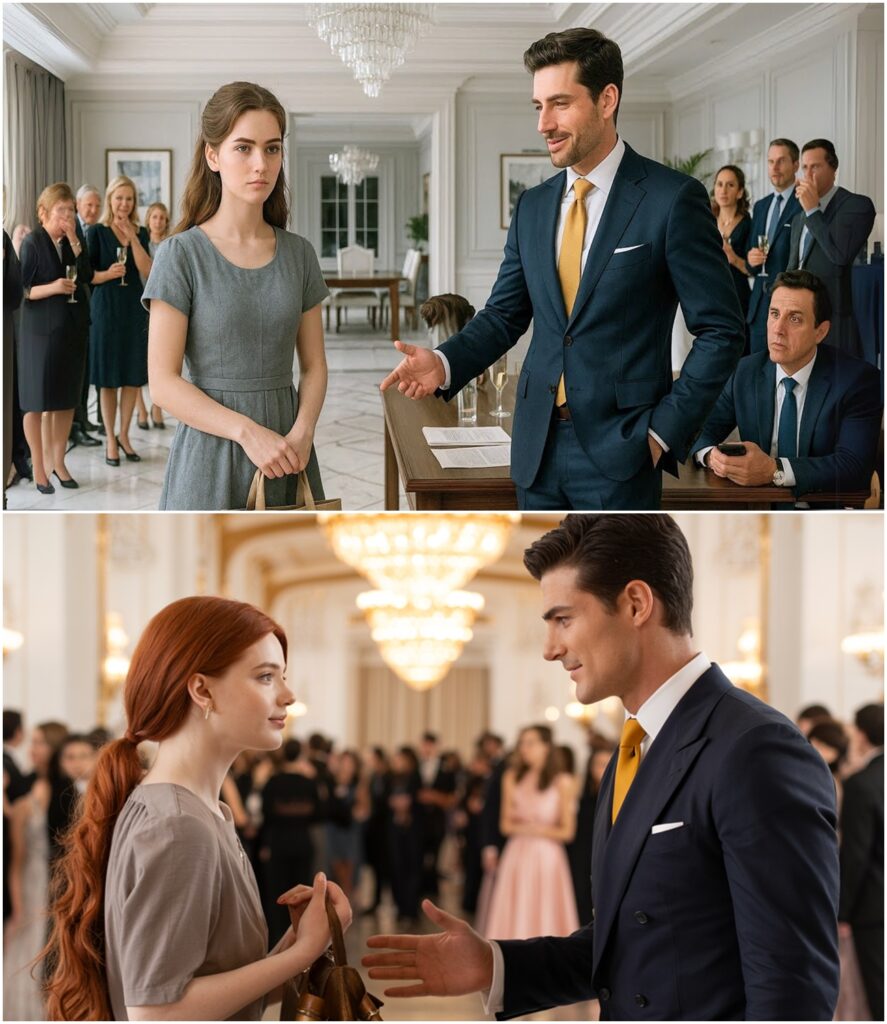
Eyes widened, mouths parted. And just like that, the night took a turn no one saw coming. In the heart of Beverly Hills, beneath crystal chandeliers the size of small cars, where designer heels clicked against imported marble and old money rubbed shoulders with newer power, Callum Melville, the billionaire’s hidden heir, extended his hand to a woman no one expected to see center stage. Not her. She wasn’t rich.
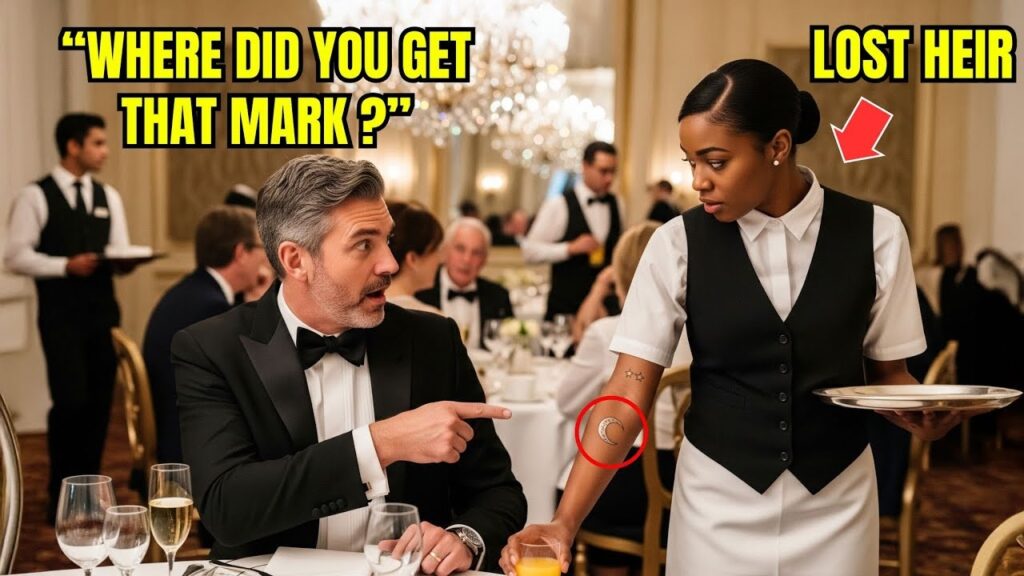
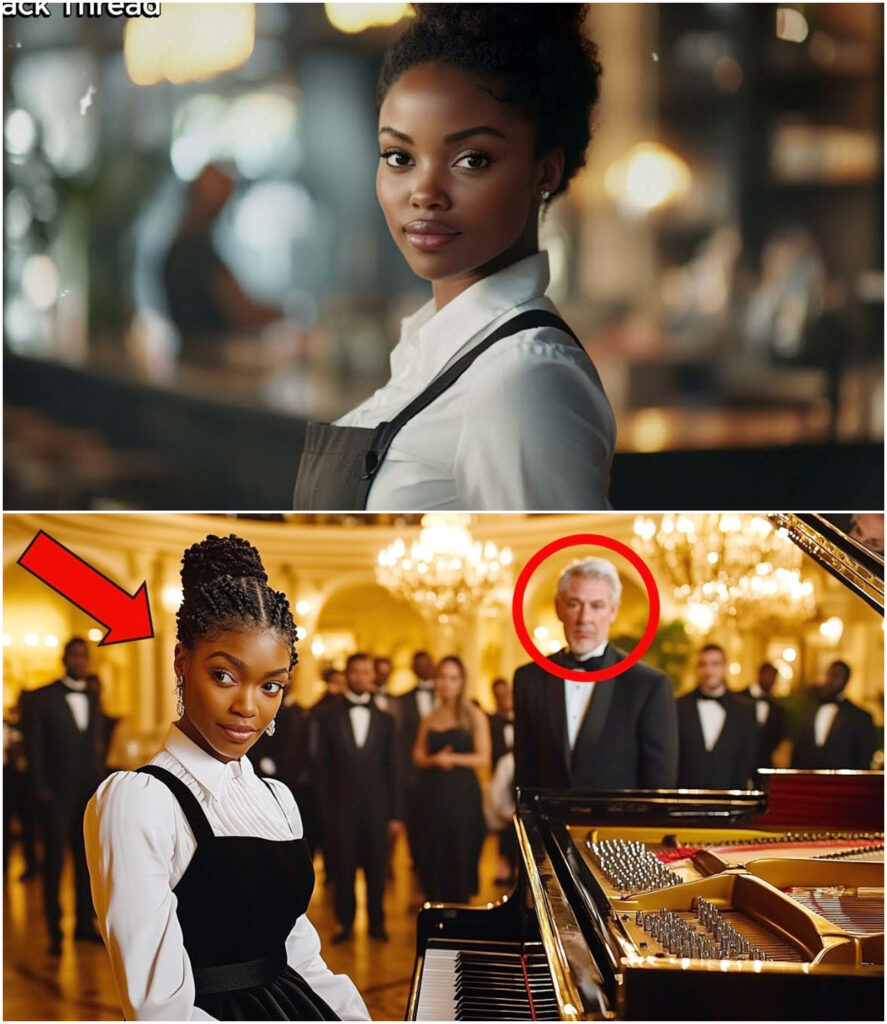
She wasn’t white. She was Sariah Brooks, a black waitress in a perfectly pressed server’s uniform, balancing wine trays with the elegance of a dancer, and carrying years of judgment in her spine. And yet, in that moment, she stood taller than every guest in the room.
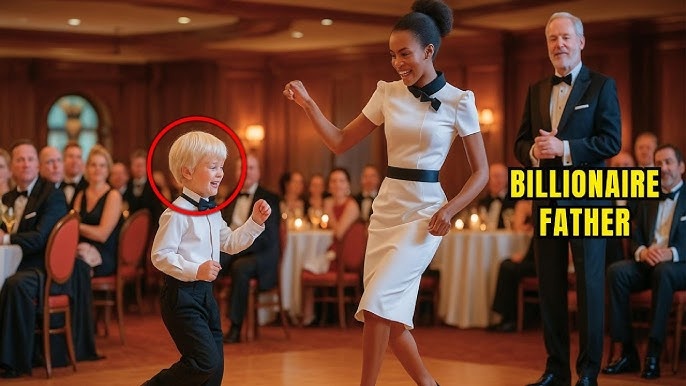
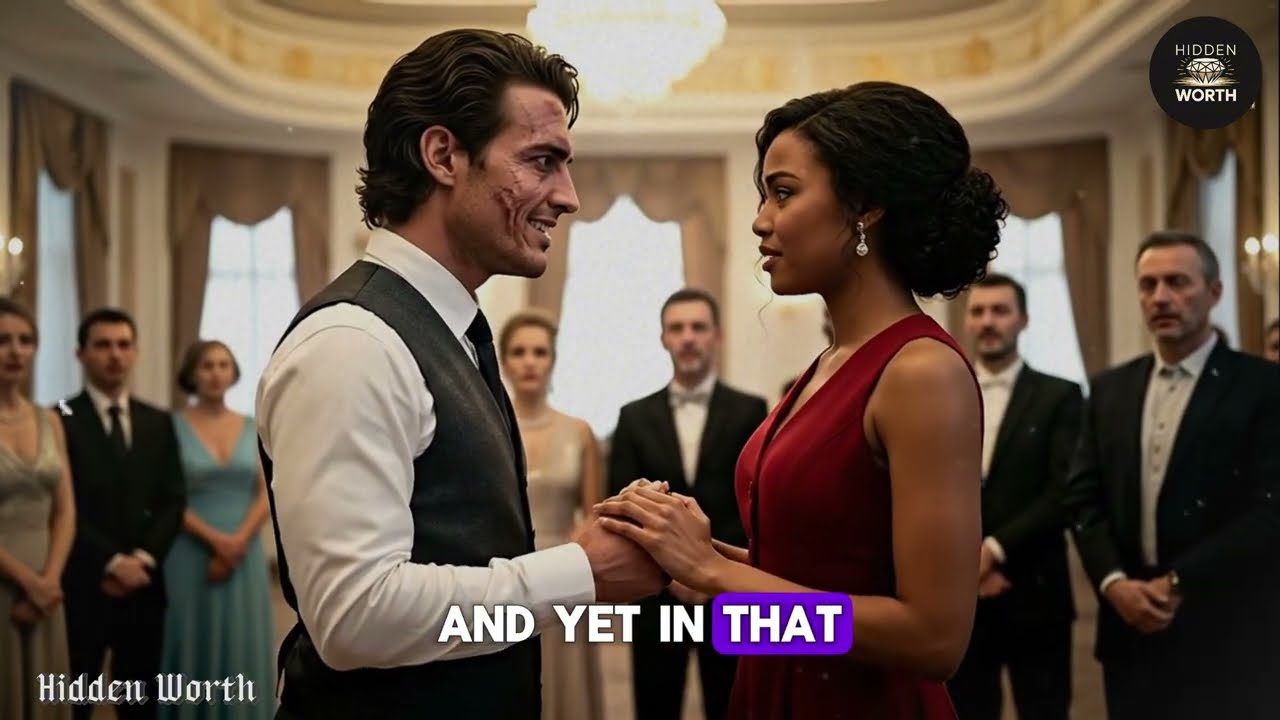
Callum’s left cheek was still a battlefield, melted skin, scarred tissue, a road map of pain etched by fire. He rarely left his father’s estate, never removed his half mask in public, and certainly never danced. But tonight, everything changed. The band had just begun playing a haunting, forbidden melody, one no one had heard in nearly a decade. When Callum took Sariah’s hand and stepped onto the ballroom floor, the gasps came in waves.
One guest actually dropped her crystal clutch. Another whispered, “It’s the scarred son and the black girl from the kitchen. Is this a protest?” But it wasn’t. It was a reckoning, and it would tear open years of lies, silence, and shame, exposing a truth even money couldn’t bury. A truth wrapped in trauma, classism, and America’s quiet, polished racism. Welcome to Hidden Worth, where we tell stories the world tries to hide.
And this one, this one isn’t just a black story. It’s the black story of survival, of silence, of standing up not for spotlight, but for self. So, don’t scroll. Don’t click away. Because what happened next in that ballroom sent shock waves through Wall Street, destroyed a billiondoll legacy, and rebuilt something far more valuable in its place. Dignity.
This is the story of a woman who refused to shrink for anyone, and a man who finally stopped hiding behind the scars his father taught him to hate. And together, they didn’t just dance, they defied an empire. Keep watching because by the end of this video, you’ll understand why one song made a billionaire cry and why the whole world stood still for a waitress with nothing to prove except her worth.
Subscribe if you believe some stories deserve to be heard, especially the ones no one wants to tell. Before the world turned its eyes to that dance, before cameras caught the moment power cracked under pressure and before whispers turned into headlines, there were just two people broken in different ways moving through the world like they didn’t belong in it.
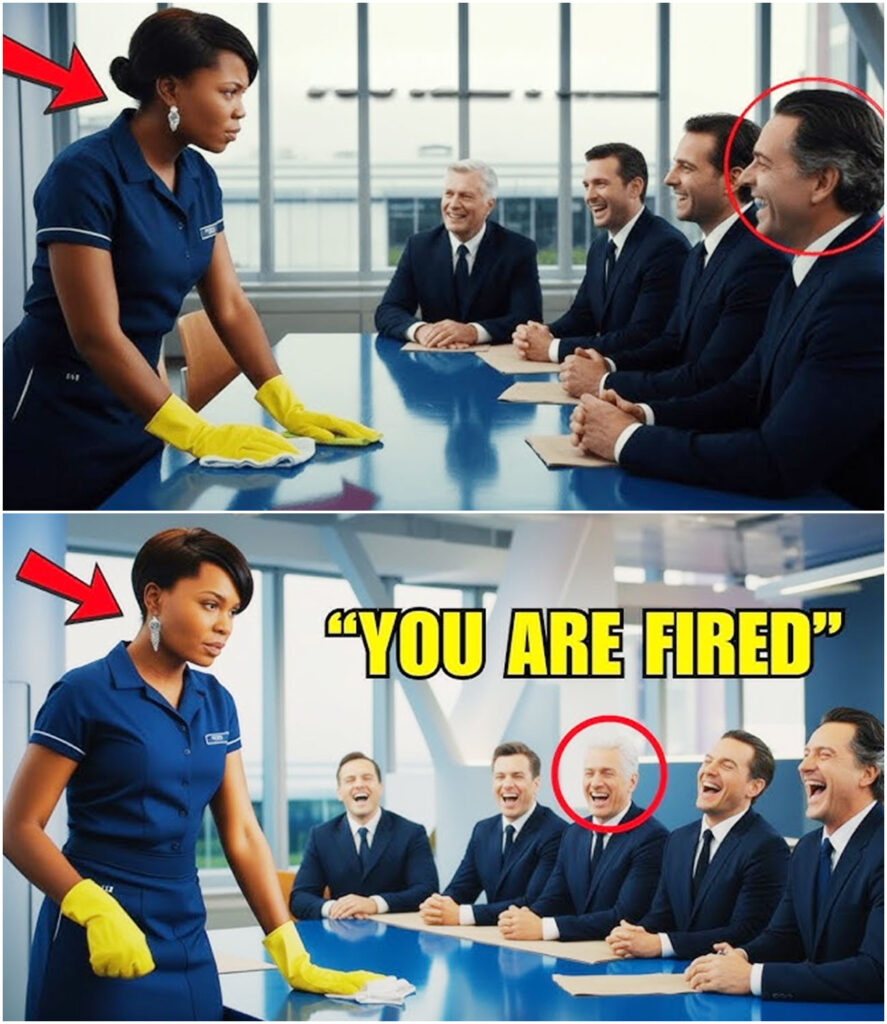
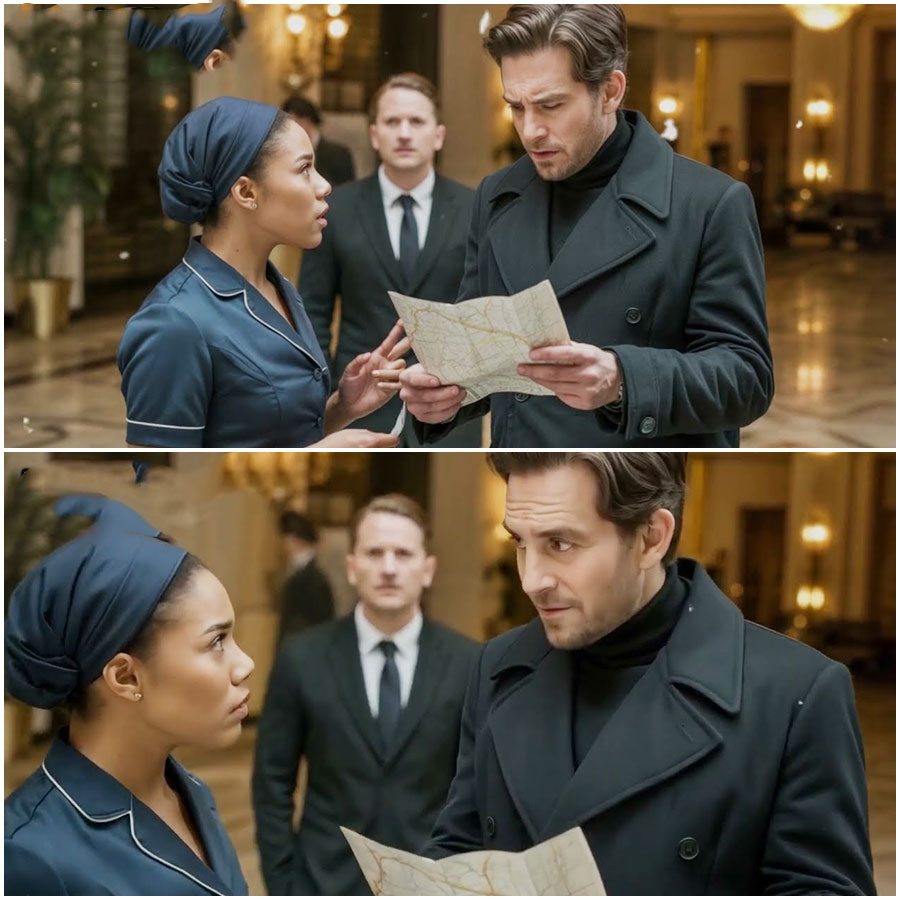
Sariah Brooks was used to being overlooked, not invisible. No, she was seen, just not valued. People noticed the color of her skin before the kindness in her voice. They saw her uniform before her potential. A 24-year-old waitress from Englewood.
She was born with eyes that sparkled like honey and sunlight and a presence that made you pause not from fear but familiarity. The kind of woman who made you feel like she already knew your story, even if you’d never said a word. But don’t mistake her softness for weakness. Sia knew exactly who she was. Every shift she worked at upscale events like the Melville Gala was a masterclass in swallowing pride.
Guests called her sweetheart with the kind of tone that turned endearment into insult. Others pretended she wasn’t there at all, handing her plates without eye contact, laughing like her presence didn’t matter. The worst part wasn’t the insults.
It was the performance of politeness, the kind that said, “We’re not racist as long as you didn’t forget your place.” But Sariah hadn’t forgotten. She remembered everything. the teacher who told her in third grade that someone like you should aim for practicality, not Princeton, the store manager who hired a less qualified white girl instead of promoting her. The ex-boyfriend who introduced her as the girl I’m seeing at parties, but never once said my girlfriend out loud. So, she didn’t dream of fairy tales.
She dreamed of freedom, of a future built not from permission, but from persistence. and she carried that dream into every room she served in, wearing it like armor beneath her apron. Then there was Callum Melville, the only son of Victor Melville, a billionaire real estate mogul whose name was carved into the skyline of Los Angeles.
The Melville family was legacy, power, pedigree, the kind of wealth that had wings old, inherited, and weaponized. But Callum was the crack in the porcelain. 10 years ago, he’d been just another golden boy. Tall, sharp jawed, charming. He played cello, rode at dawn, and attended a prep school where failure was considered impolite, not inevitable.
Then came the fire. The official story said it was an accident, a malfunction in a high-end smart oven at the family’s Aspen Chalet. The truth was murkier, but what mattered was this. The left side of Callum’s face was forever changed. melted skin, collapsed cartilage, nerve damage that stole his smile. Overnight, he became a ghost inside his own legacy.
Victor sent him away, not out of malice, but image control. First to Switzerland, then to private clinics in Maine, a rotation of therapists, surgeons, and reputation managers tried to mold the broken pieces into something brand safe, something less unsettling. Callum stopped playing cello, stopped going outside during the day, stopped letting mirrors exist in any room he slept in, and most of all, he stopped being seen except by people paid to pretend until tonight.
At 29, Callum had returned to Los Angeles with no press release, no public debut. His face was no longer hidden by masks, just shadows and silence. He didn’t speak much, but when he did, it was with the kind of weight that made you lean in without realizing, and he noticed Sariah long before the dance. She brought him champagne once, hand trembling slightly as their eyes met.
Not because she was nervous, but because she wasn’t. She looked at him, not around his scars, not passed them at him, like he was a man, not a melted portrait. That moment passed in seconds, but something stayed. So when the band played that song, the one his mother used to hum before bedtime, the one forbidden from family playlists after her death, Callum stood, moved, reached, and Sariah didn’t flinch.
Two people, one scorched by fire, the other by judgment, but both still standing. That was the moment everything changed. This wasn’t about rebellion. Not to them. It was about recognition. The kind of silent understanding that can’t be manufactured, only lived. Pain speaks its own language. And sometimes when two survivors find each other, they don’t need words to start dancing.
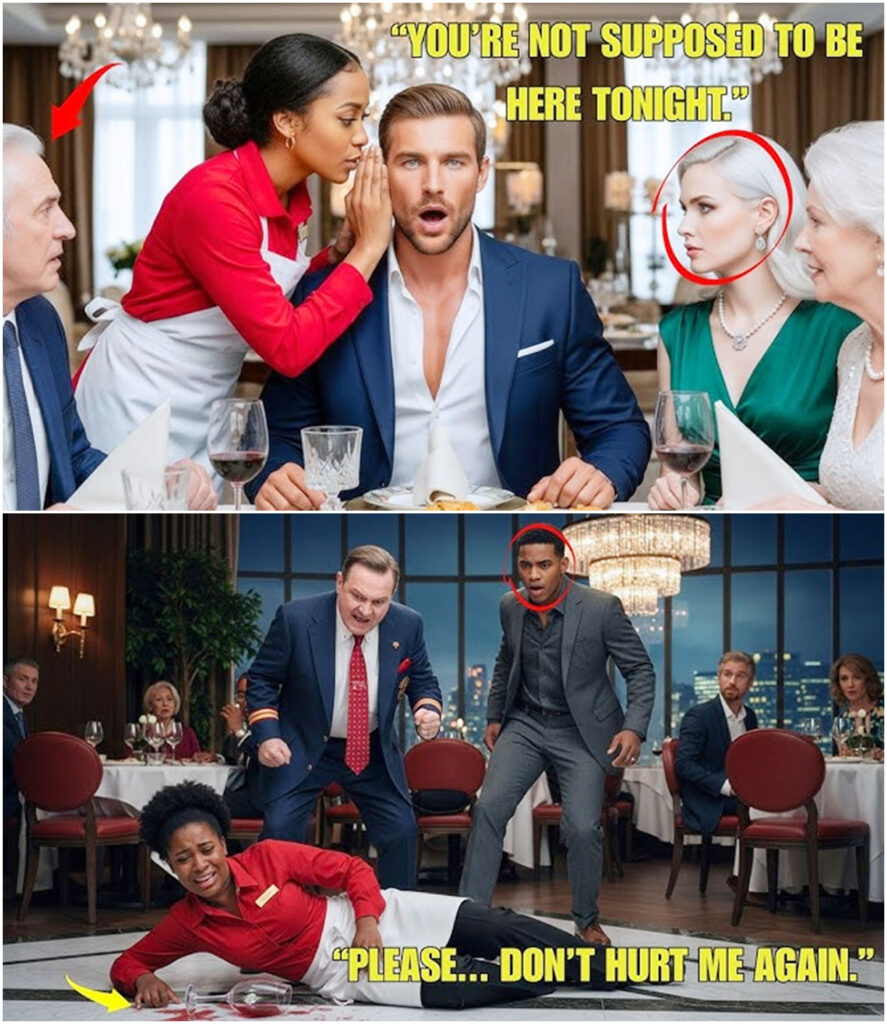
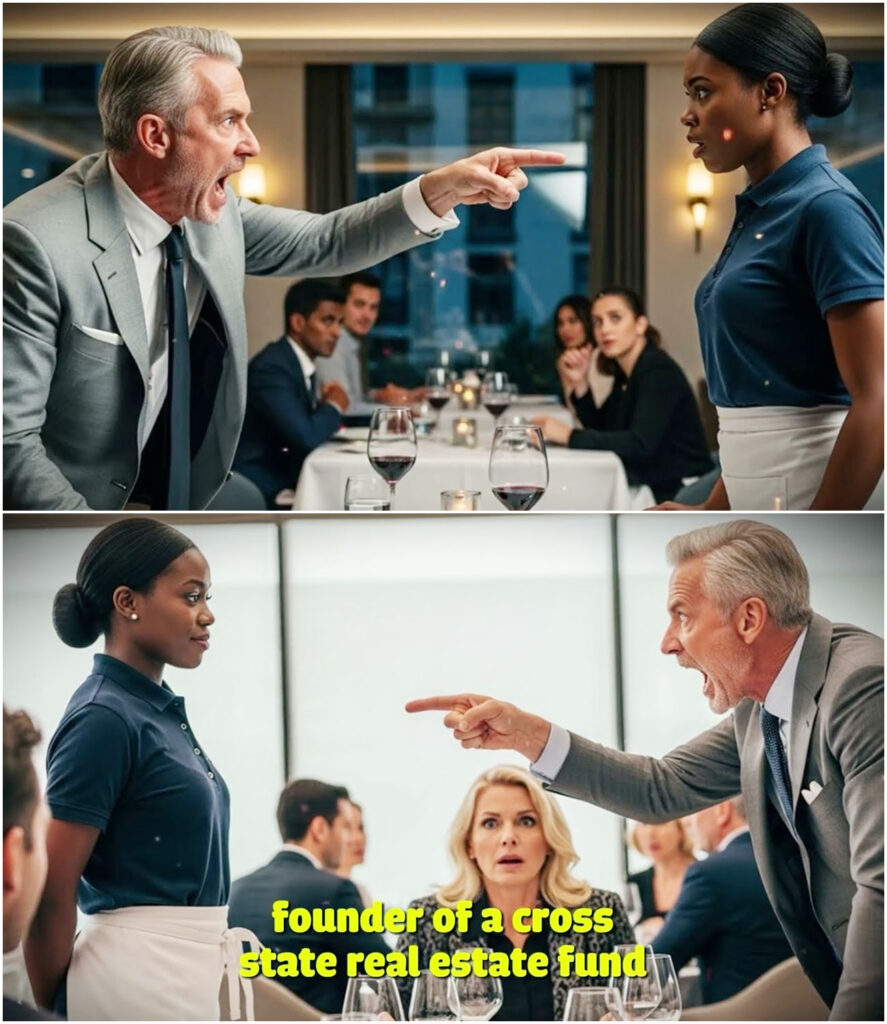
They never said it out loud. No one at the Melville Gala stormed across the ballroom waving signs or spitting slurs. No one raised their voice. No one even raised an eyebrow, not in front of the cameras, at least. But the racism, it was in the way Sariah’s tray was heavier than everyone else’s.
How she was always assigned the far corner near the restrooms out of the photo frames, but close enough to clean up spilled champagne before anyone slipped. It was in the way guests avoided touching her hand when reaching for a glass. How they tilted their bodies slightly away when she leaned in to serve. It was quiet, polite, deadly.
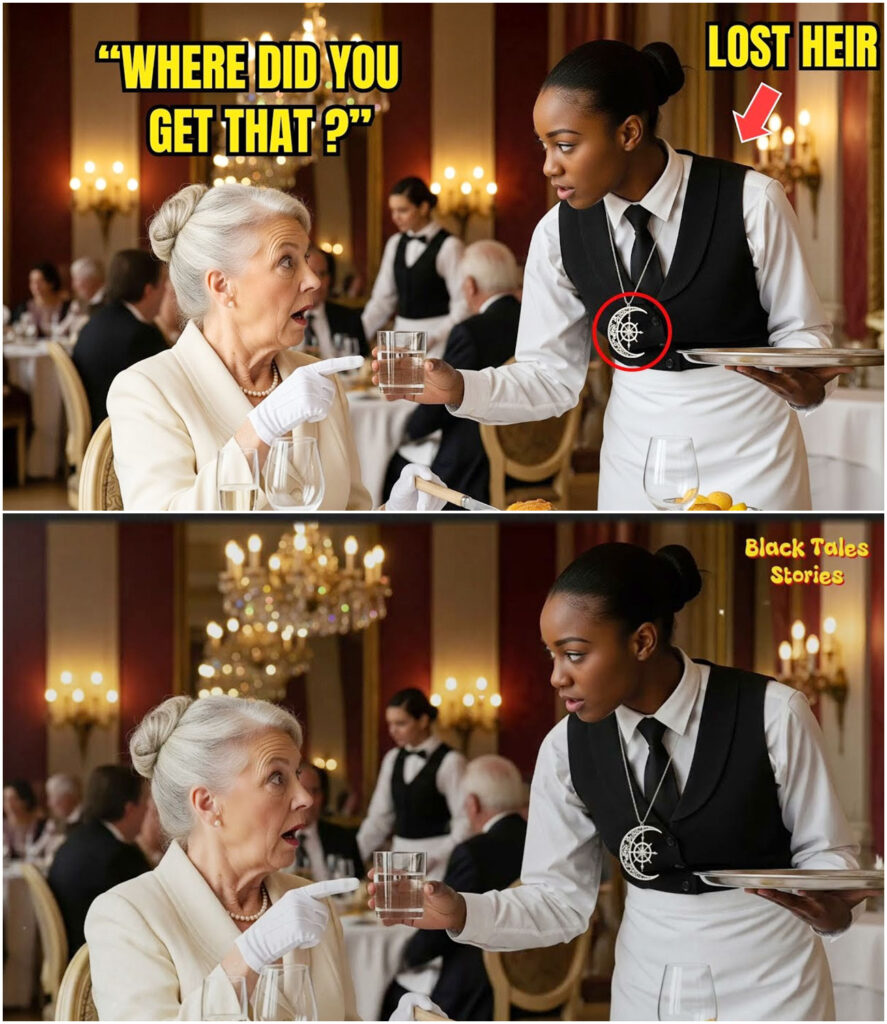
A woman in a sequin navy gown whispered to her husband as Sariah passed. She’s lovely, don’t get me wrong, but I didn’t realize the staff had become so diverse. The word hung in the air like it didn’t belong in the same room as diamond necklaces and old French wine. Another guest, a tech CEO in his 50s, glanced at her name tag and smiled. Sariah, exotic name.
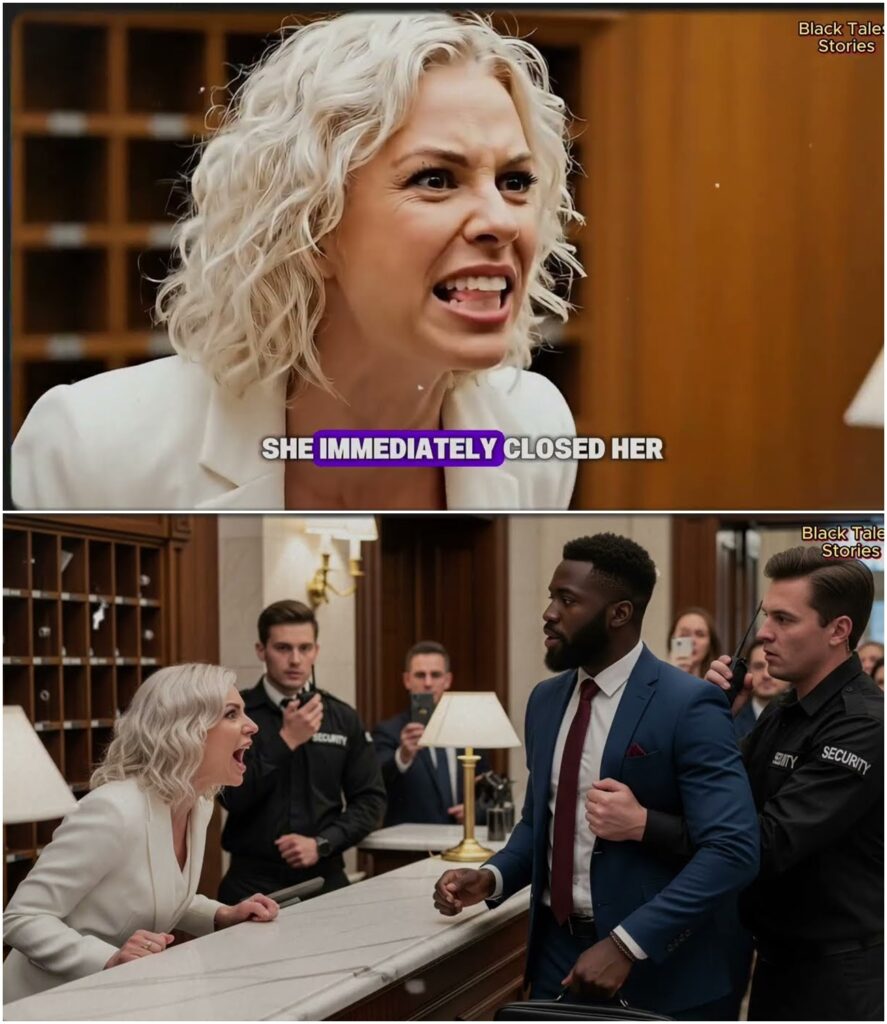
What part of Africa are you from? He said it like a compliment. She said, Los Angeles. He looked disappointed. Then there was the older white woman. Flawless hair, flawless teeth, who snapped her fingers when Sariah didn’t appear immediately with her penogrigio. No, excuse me. No, please. Just a snap. Like calling a dog. And when Sariah brought the wine, the woman didn’t say thank you.
Instead, she turned to the woman beside her and said with a laugh, “I suppose some people are raised differently.” Sia didn’t react. Not visibly. That’s the thing about silent racism. It trains you to become an actor, to smile while bleeding inside, to say, “Of course, ma’am, like your soul isn’t screaming.
” But Callum noticed from across the room, half shielded by a marble column and a lifetime of privilege. He watched. He saw how the other servers, mostly white, mostly male, weren’t treated the same. He saw how Sariah had to work twice as hard to earn half the respect. He saw the way some guests looked through her like she was part of the decor, not a person.
And it hit him harder than he expected because he knew that look. It was the same one he got when people saw his face. That quick flicker of discomfort, the polite pause in conversation, the way people smiled too hard or avoided him entirely. Like deformity was contagious. He knew what it was to be otherred. But Sariah, she lived in that space everyday, not just because of what had happened to her, but because of what she was born into.
and she carried it with a kind of grace he couldn’t fathom. She had dignity wrapped around her like a second skin and that made people uncomfortable because she didn’t shrink. She stood tall, shoulders back, voice calm. No matter how many passive aggressive slights were thrown her way.
And the truth was that kind of self-possession from a young black woman in a white room made some people feel threatened. Though they’d never admit it out loud, they’d just cut her off mid-sentence or talk about her like she wasn’t standing there or mistake her for a different black server three times in 1 hour.
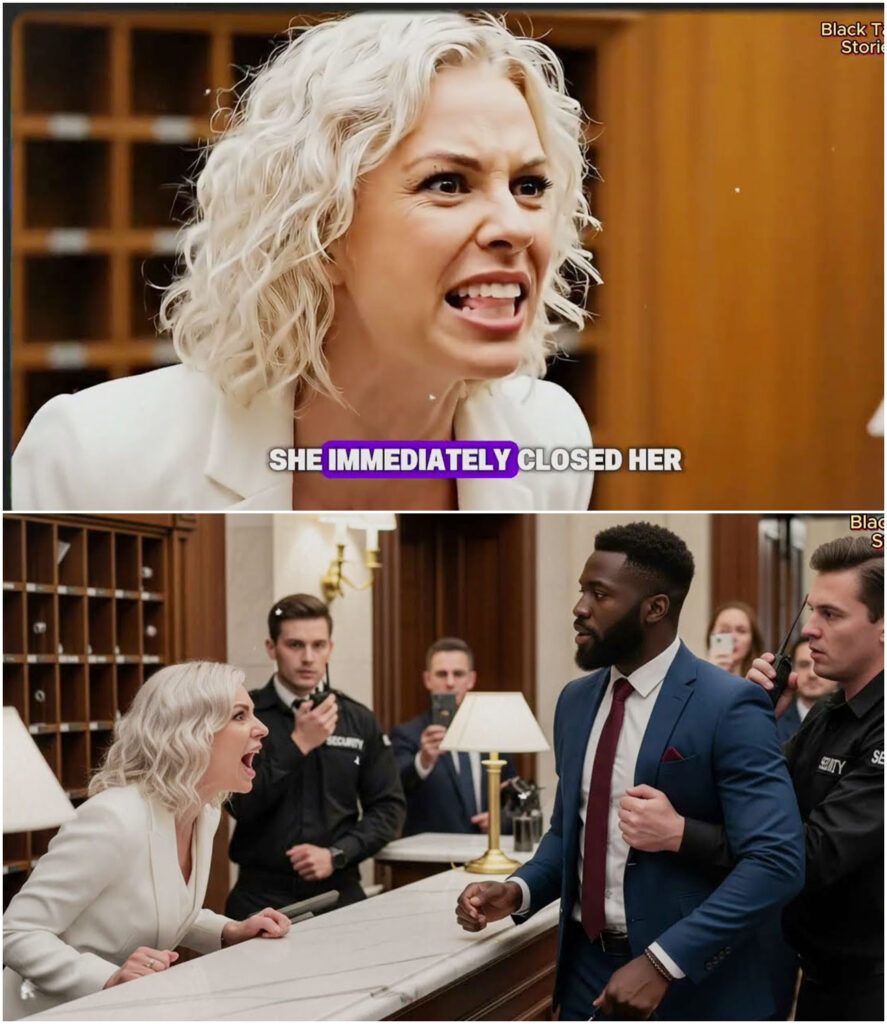
Even the security guard at the back when Sariah tried to enter the staff hallway during a break stopped her. “Are you sure you work here?” he asked. No apology, no explanation, just suspicion. And all of it added up. Not one moment, not one insult, but the accumulation death by a thousand paper cuts.
This was the America they didn’t put in brochures. The kind where your skin wasn’t just skin. It was a signal, a conversation starter, a reason to second guessess your worth. Even in silence, even in a room full of wealth, polish, and poise, Sariah was reminded subtly, consistently that she didn’t belong. But she refused to believe them because she had learned something powerful.
That quiet racism doesn’t make loud truth any less real. And her truth was this. She was worthy. Not just of respect, but of being seen, being heard, being chosen. And tonight, that truth would dance in front of the world. Before the fire, Callum Melville was the kind of son billionaires showed off at board meetings and yacht clubs.
Tall, sharp jawed, Ivy League bound, he played cello and baseball, spoke fluent French, and could charm a room full of executives before he could legally drink. To the world, he was perfect. To his father, it was a legacy. Proof that the Melville Empire, built on luxury real estate, political connections, and spotless press coverage, would continue with grace and polish. But all of that changed one night, the night of the Foster Hall Inferno.
It was supposed to be a celebration. The Melvilles were opening a new performing arts center, a gift to the city, and a tax haven in disguise. Callum had been invited to perform during the inaugural gala, a duet with a young violinist from the city’s youth orchestra. He had just stepped off stage when it happened.
A faulty spotlight later traced to a rushed installation and ignored safety checks exploded above the wings. Sparks rained down onto velvet curtains, and within seconds, the backstage area was swallowed by flame. Panic tore through the building. Screams echoed off marble walls.
Guests trampled over one another in gowns and tuxedos, clawing toward the exits. Callum could have escaped. He was already near the back doors when he realized the violinist, a girl no older than 14, was still inside. She’d tripped, her leg pinned under a fallen speaker. Her sobs nearly drowned by sirens and the roar of flames. Callum turned around. No hesitation, no thought, just instinct.
He lifted the speaker, pulled her free, and carried her through the smoke. Lungs burning, eyes tearing. But before he could clear the door, part of the ceiling collapsed. A beam white hot and screaming with embers struck the left side of his face. The girl made it out alive. Callum nearly didn’t. He spent 6 weeks in ICU, fighting off infection, learning how to breathe through a tube, how to eat without crying.
His left eye was saved barely. His cheek, jawline, and ear all melted beyond recognition. The surgeons did what they could. They grafted skin, rebuilt bone, reconstructed nerves, but nothing could restore what had been lost. When the bandages came off, he didn’t scream. He just went quiet. Something in him turned inward. The press spun it as heroism. Young Melville saves violinist from blaze.
Headlines praised his bravery, his sacrifice. But they never showed the photos. His father made sure of that. Let’s not make this about scars. Benjamin Melville told the PR team. We’ll say he’s recovering privately with dignity. What he really meant was don’t let the world see him like this. Callum became a ghost.
He stopped appearing at events, skipped his Harvard interview, stopped playing cello, started wearing a half mask when he did step outside one designed by a celebrity stylist. Sleek and discreet like trauma could be accessorized away. People whispered, some thought he was dead. Others thought he was locked in some private wing of the Melville estate, too disfigured to face the world. And in many ways, he was.
But Callum wasn’t ashamed of his face. He was ashamed of how everyone else reacted to it. The stairs, the pity, the discomfort that filled every room he entered. People who once complimented his jawline now avoided eye contact. Women who had flirted with him at charity balls suddenly looked past him like he didn’t exist. Friends fell away.
Invitations stopped coming. The world was no longer interested in the broken prince. And his father, Benjamin, treated him like a failed investment. He never said it directly, but he said it in other ways, like asking if Callum was mentally stable enough to speak to the press, or suggesting maybe they delay his return to public life until some more work could be done, as if he were a renovation project, not a person.
Callum stopped trying to prove anything after that. He retreated into books, music, and quiet corners of the estate. He walked at night when fewer eyes were out. He learned to cook simple meals just to feel normal. And every now and then he’d stare at himself in the mirror and think, “What if this is the real me now?” Not the perfect son, not the prodigy, just a man, scarred, silent, but still alive.
And if he was alive, truly alive, maybe there was still something worth doing with that life. He just didn’t know what that was yet until the night he saw Sariah Brooks move through that same ballroom he had once commanded and realized she carried her own invisible fire. The Melville family was built like a five-star hotel lobby.
Grand, spotless, impressive to visitors but not meant for real living. From the outside, they were a picture of power. Annual features in Forbes, smiling holiday spreads in luxury magazines. a legacy family who had turned old money into something even older. Image control. But behind the gated estate, the private chefs, and the chauffeur-driven cars, was a silence so deep it echoed.
Benjamin Melville, the patriarch, was a man of schedules and expectations. He rose every morning at 5:30 a.m., read the Wall Street Journal cover to cover, and treated emotion like a liability. He didn’t raise his voice. He raised eyebrows. And when he was truly disappointed, he didn’t scold. He withdrew.
That was the worst punishment of all. Being erased. Benjamin didn’t believe in apologies or therapy or vulnerability. He believed in results. Pain is a distraction. He once told Callum during a basketball game when the boy had sprained his wrist, “Push through. Winners do.” Diana Melville, his wife, was elegance incarnate, always poised, always polished, always camera ready. Her presence at Gallas was compared to royalty. But her warmth stopped just short of touching.
She loved Callum in her own way, but it was the kind of love that scheduled weekly check-ins through an assistant and sent him monogrammed luggage for his 18th birthday with a handwritten card that said, “So proud. Keep climbing.” The Melvilles didn’t hug. They posed. They didn’t argue.
They made statements and walked out of the room. And when Callum’s accident happened, they treated it like a scandal, not a trauma. As if his scars were a PR problem to be handled. As if his pain required a spin strategy. It’s better if we say you’re recovering at a private wellness retreat.
Diana had whispered, applying foundation to her cheek before a TV appearance. Benjamin agreed. No need to draw attention. Sympathy is not a currency we trade in. For months after the fire, Callum saw more lawyers than friends, more stylists than doctors. Every interaction felt like a meeting, not a conversation. The house stayed quiet, as if grief would stain the imported floors, and Callum faded.
He was there physically, but his presence felt like background music, low, constant, and ignored. They called it space, what they gave him. But it felt like exile. Worse than the pain, worse than the rehab, worse than the stairs, was the loneliness. No one in that mansion ever said the word trauma. No one ever asked if he wanted to talk about the night of the fire or how he couldn’t sleep without hearing screams or how food tasted like ash for months.
They talked about recovery as a timeline, not a journey. As if scars could be outgrown, as if grief expired. Callum became used to the hush. The way maids and staff looked away too quickly. The way his father introduced him as my son Callum, but avoided eye contact when saying it.
The way his mother told friends. He’s taking time to focus on piano again. When he hadn’t touched the keys in months behind closed doors, everything was performance. Family dinners were stiff and silent. They didn’t eat together because they enjoyed each other’s company. They did it because families are expected to appear united. Appear.
That was the key word in the Melville vocabulary. Not be appear. Appear generous. Appear refined. Appear perfect. Which is why Sariah Brooks, a black waitress with no family name, no private education, no place at their table, was seen as a threat the moment Callum looked at her with actual emotion.
when she passed him that tray of ordurves with a steady gaze that didn’t flinch at his scars and he smiled. Diana noticed so did Benjamin and the silence in that room shifted. Subtle but sharp. Because to people like the Melvilles, authenticity was the real scandal. Callum had spent years in that house learning how to say the right things and feel nothing. Learning how to keep his emotions pressed and dry cleananed like one of his tailored suits.
But something in Sarah’s presence, the way she stood tall in a room built to shrink her cracked something open. And that terrified his parents more than the fire ever did. Because if Callum stopped pretending, what else might come undone? The Melvilles had built their empire on a foundation of controlled silence and curated smiles.
But their son had tasted real pain. And real pain has a way of making fake things fall apart. It happened the way life-changing moments often do, quietly, unexpectedly, and without warning. The night had settled over the Melville estate, like a velvet curtain. Soft jazz spilled from the speakers in the Grand Garden, blending with the clinking of champagne glasses, and murmured conversations about hedge funds, summer homes, and mergers no one outside that circle would ever understand. Sariah Brooks had been working for 5 hours straight, weaving
through silk gowns and designer tuxedos, balancing a tray of orurves like it was a lifeline. She had learned to disappear in these spaces to make herself efficient but invisible. That was the job to serve not to be noticed.
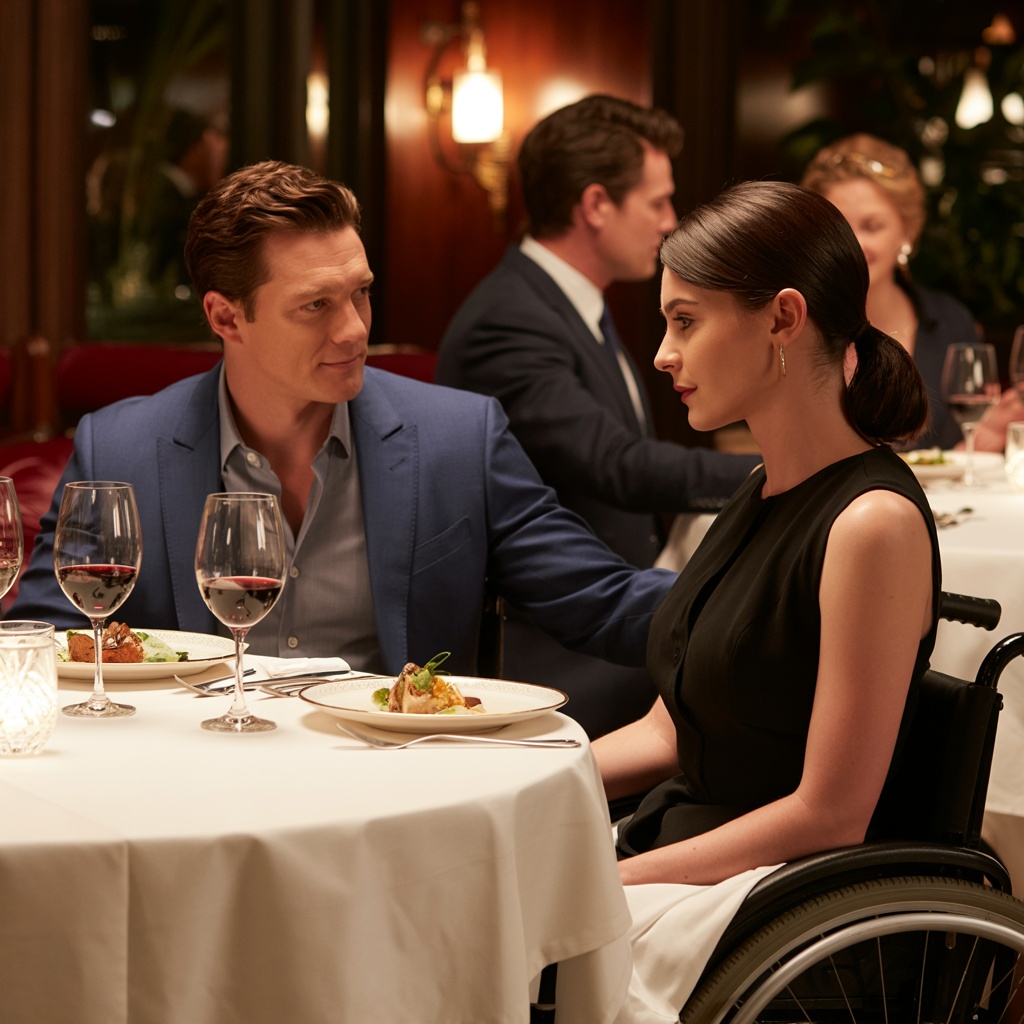
But when she reached the west end of the garden near the fountain lit from below like a movie set, she saw him. He was sitting alone on a stone bench, half in shadow. Not many guests came this far. It was just beyond the noise, behind a hedge shaped like a wave. Quiet, almost peaceful. The first thing she noticed wasn’t the scar. It was his posture.
He looked like someone pretending to be relaxed but carrying too much weight inside. One leg stretched forward, hands resting on his lap, a glass of untouched bourbon beside him on the bench. His hair was messy in a way that looked accidental, but probably wasn’t. He wore a dark blue suit, tailored to perfection, but something about him felt unfinished, unspoken. Sariah paused. Just a second.
He wasn’t on her list of VIPs to avoid or be extra careful around, so she approached, keeping her voice low and even. Horderves, she offered, the tray angled just right, her eyes politely averted. He didn’t answer right away.
Then, in a voice that was smoother than she expected, but heavy like it hadn’t been used much lately, he said, “You’re the first person tonight who didn’t flinch,” Sariah blinked, then slowly looked up directly into his face, and saw the scar. It was there, no doubt, a deep burn across the left side of his face, from his temple down to the corner of his jawline.
The skin was pale and uneven, textured like melted wax. His left eye was slightly smaller, surrounded by healed tissue that pulled a bit at the brow. But his other eye, a striking hazel, was crystal clear, intelligent, watchful. She didn’t look away. Not immediately, not uncomfortably. She just looked like it was a part of him, like it mattered, but not in the way he’d been taught to expect. “I don’t flinch easy,” she said.
His mouth twitched into something like a smile. Not full, just a beginning. What’s your name? He asked. She hesitated, not because she was scared, but because it wasn’t a question she was used to answering on the job. Guests didn’t usually ask. And if they did, it was rarely for the right reasons. Sora, she said eventually. Soriah Brooks.
He nodded once. Callum. I know. The smile widened slightly like she’d passed some kind of silent test. Can I ask you something?” he said, voice quieter now. “Do you ever feel like you’re only allowed in certain spaces as long as you don’t make anyone uncomfortable?” That hit her like a slap wrapped in silk, she didn’t respond right away, just breathed.
Then she said, “Every single shift. For a moment, they just sat in that shared silence, him still on the bench, her still holding the tray. Then he gurred. Sit.” Sariah raised an eyebrow. I’m working. No one’s looking, he said. And I’m not hungry. She glanced around.
No supervisors, no guests, just the sound of water from the fountain and soft Miles Davis playing through hidden speakers. She Saturday. Just for a moment. Callum leaned back, eyes scanning the sky where only a few stars managed to peek through the city glow. I hate this party, he said. Why? because none of these people really see each other. They just mirror whatever they think the room wants to see. Sora studied him.
Sounds like you’ve been carrying that one for a while. He nodded slowly. You? She shrugged. I’m just here for the paycheck. But even as she said it, they both knew it wasn’t entirely true. There was a vulnerability hanging between them now. Unspoken but present. Two people who had spent most of their lives hiding in plain sight.
seen but not known. And just like that, the moment shifted, not with a kiss, not with a touch, but with recognition. The kind that says, “I know what it’s like to be looked at and not seen.” And that night, for the first time in years, both Callum Melville and Sariah Brooks felt seen. Really seen.
And everything after that, the dance, the scandal, the music began with that one small, quiet human moment. After that night, nothing and everything changed. Sariah didn’t expect to see Callum again. She’d worked enough of these events to know how it usually went. A meaningful conversation, a spark of recognition followed by silence, as if the moment never happened.
But three nights later, while restocking glasses at a rooftop bar in Soho, she heard someone say her name. Sora Brooks. She turned. Callum stood in front of her in jeans, a dark green bomber jacket and a white t-shirt. Simple, clean, not a trace of the billionaire air, just a guy with a scar and a quiet kind of confidence. You remembered, she said, setting down a box of stemwear. I remembered everything. She smiled despite herself.
You following me now? No, he said, then paused. Maybe. I asked someone where you worked. I didn’t want that conversation to be a one-time thing. There was a part of her that bristled instinct built from years of being pursued for all the wrong reasons. But something in Callum’s tone wasn’t hungry or performative. It was honest.
“Why me?” she asked. “Because when I looked at you,” he said. “You didn’t look away.” That night, during her 15-minute break, they sat on a fire escape behind the bar, sipping flat ginger ale from plastic cups. Sariah told him about her brother Malcolm and how he used to write poetry on the backs of food stamps, about her mother working two jobs and still finding time to leave love notes in her lunchbox.
About growing up knowing exactly what spaces weren’t meant for her. Callum listened like no one ever had. Not out of politeness, not with that corporate smile his family had mastered, but with stillness, with care. Then he told her things he said he hadn’t spoken aloud in years about the fire, the pain, the surgeries, the way even the doctors stopped calling him handsome after a while. He told her how he hated his own reflection for a long time.
How his father offered him the best reconstructive surgeons but never once said the words, “I’m sorry.” Sariah asked him if the scar still hurt. “Not physically,” he said. “But yeah, it hurts.” And she said, “Good, because if it didn’t, you’d be numb. And people who can’t feel can’t love.” They kept meeting. Not every day, but enough.
Once in a museum courtyard where neither of them looked at the art. Once in a subway car that got stuck for 15 minutes underground where they sat in silence and just breathed together. Once in a Harlem diner at 2:00 a.m. where they shared pancakes and stories about the kind of kids they used to be. They were careful. Sariah still had walls.
And Callum respected that. He didn’t push. He just kept showing up gently, consistently, like a song that played low but stayed in your head. The media didn’t know yet. His father didn’t know. Her friends didn’t know. It wasn’t that they were hiding. Exactly. It just didn’t feel like the world was ready for something that soft, that real.
One night, he asked her, “Do you ever feel like we’re not supposed to be this close?” Sia looked at him. Her curls were tied back with a bandana, her apron dusted with flower from a side gig at a bakery. Everyday, she said, “But I also feel like we’re exactly where we’re supposed to be.” Callum nodded, “Even if no one else agrees.
” She smiled slow and steady, especially then. There was a lightness between them that hadn’t been there before. Not the absence of pain, but the presence of understanding. like two people who didn’t need each other to heal, but chose to hold space for the healing to happen. And slowly, something began to grow.
A connection that wasn’t flashy or forced, that didn’t need headlines or approval, a connection built on the things most people overlook. The quiet moments, the unspoken pain, the mutual respect of two people who had been judged more for their appearance than their worth. It was still fragile, still forming, but it was real. and real was something neither of them had known in a long time.
And just like that, the dance hadn’t happened yet, but the music between them had already begun. The ballroom at Melville Estate glowed like a cathedral of power. Tall windows draped in ivory velvet, crystal chandeliers casting diamonds of light across polished marble. Tables dressed in white linen, silver cutlery gleaming. The guests swirled in designer gowns and tailored tuxedos. Laughter dancing between glints of champagne glasses.
It was the night the city would remember and the stage where everything changed. Sariah Brooks glided among the tables, her uniform pristine, her posture straight. She moved quietly, hands steady, eyes trained to be invisible. But tonight, part of her heart pounded like drums in her chest. She had seen Callum earlier, dressed in a midnight blue suit, his face more composed than the rumors suggested.
His eyes caught hers for a moment. Recognition, concern, courage, then he turned away. The electricity between them hummed. Benjamin Melville was at the head table, flanked by Diana and a gaggle of trustees. He smiled broadly, raising a glass for applause, but the lines around his mouth looked tight, as though every moment of control was being fought for. He began his speech praising philanthropy, excellence, and legacy.
He praised service staff in passing, the supportive backbone of any grande suare. His words sounded polished, rehearsed. The irony would not be lost on anyone who had the courage to see. From the sidelines, Callum watched, his face lit by chandeliers and camera flashes. He felt the weight of every stare. A few whispers followed the curve of his face. Careful in tone but sharp with judgment. Such a shame about his face.
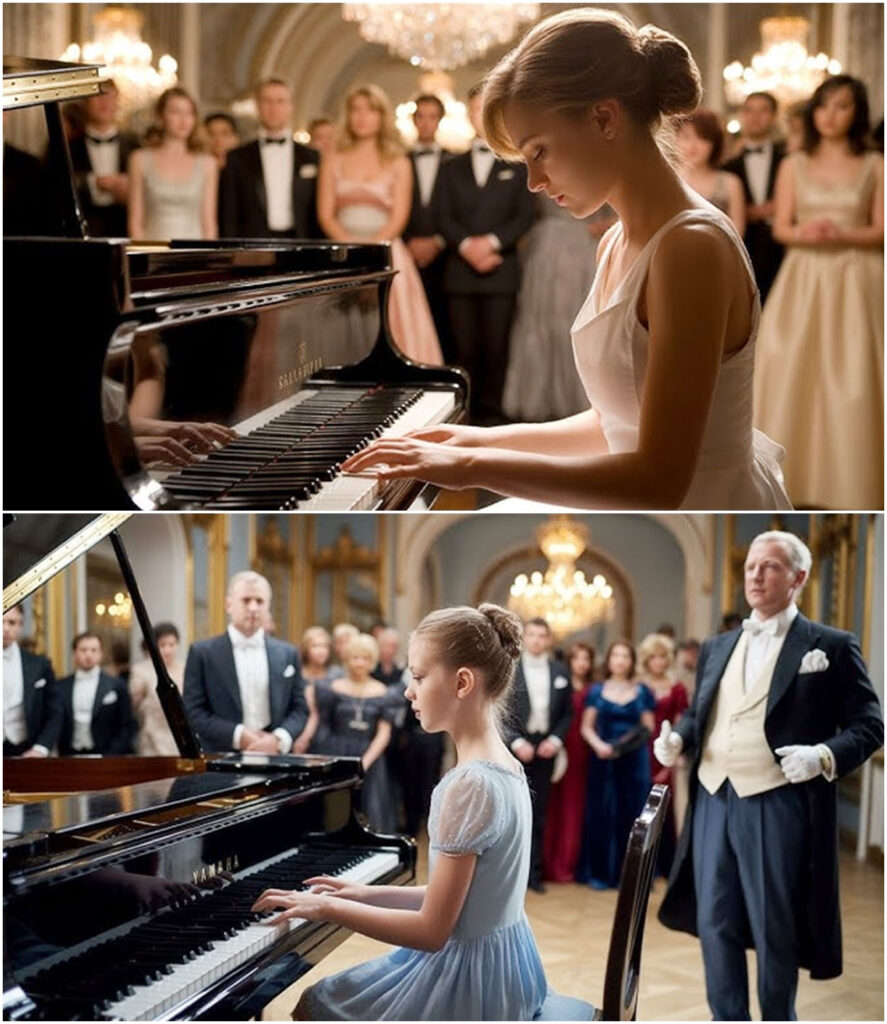
One guest muttered behind a fan. He was once handsome. Does he even deserve to inherit anything? Another hissed, but he kept still like stone. And Sariah carrying a tray of ordurves passed close enough to feel that energy ripple through the room. That’s when the music changed. A hush fell. The band leader paused. The string section tuned themselves. The pianist cleared his throat behind his mask of composure.
And then, just when the jaws of the ballroom fell open, the opening notes of rise again filtered through speakers. Delicate, haunting, unmistakable gasps. A few hands went to mouths. Phones came out. Benjamin froze, glass halfway to his lips, his eyes shifted toward his son.
Callum stood, jaw tight, one hand resting on the back of a chair. The band had never played this song at a public event before. It was intimate, personal, forbidden. Callum’s gaze locked onto Sariah. She paused. The tray in her hand felt heavier, but she didn’t move away. Their eyes met. In that instant, something old and honest stirred between them. Benjamin’s voice cracked as he tried to regain control.
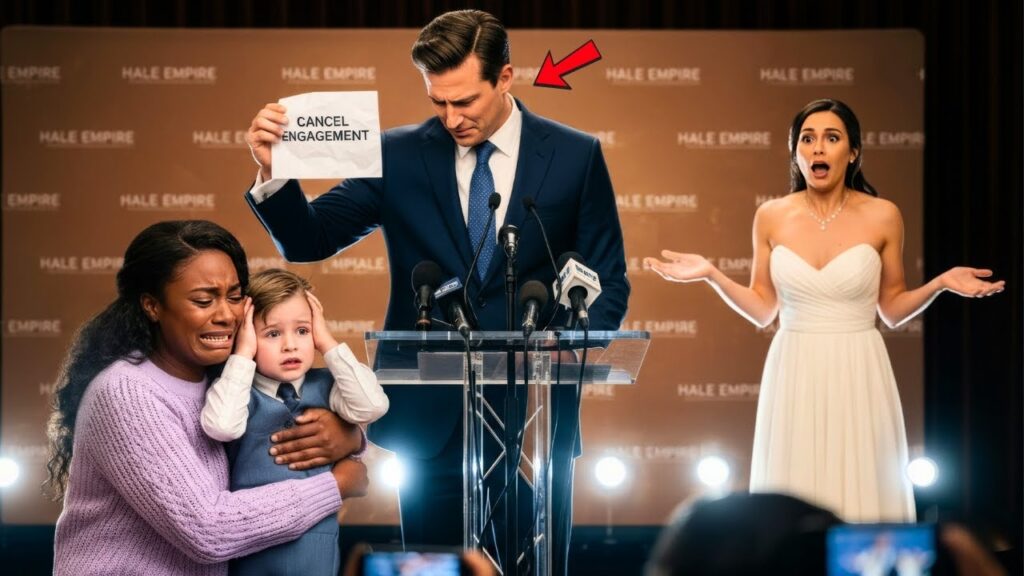
Excuse me, that was not on the playlist. He held the mic too tightly. Stop the music. I apologized to the guests, but the clatter of cameras and the crescendo of violins drowned him out. Callum stepped into the open floor. The ballroom parted like water. The guests reeled, unsure whether to intercede or stare. Sariah, hesitant, followed.
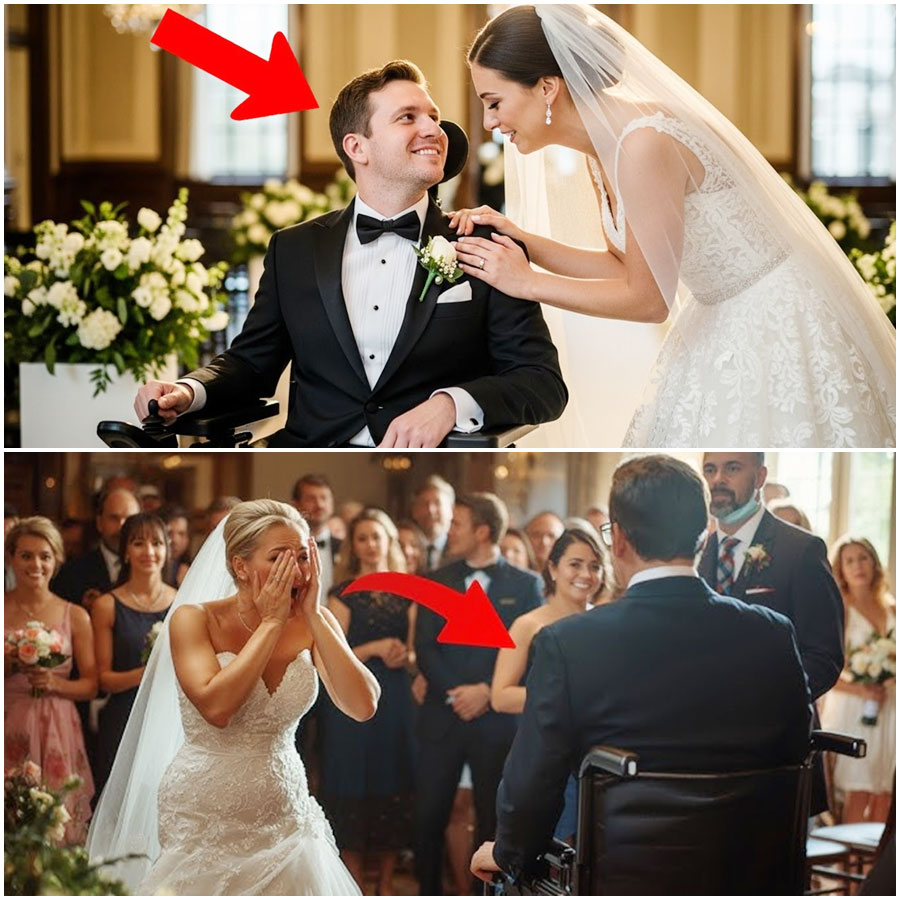
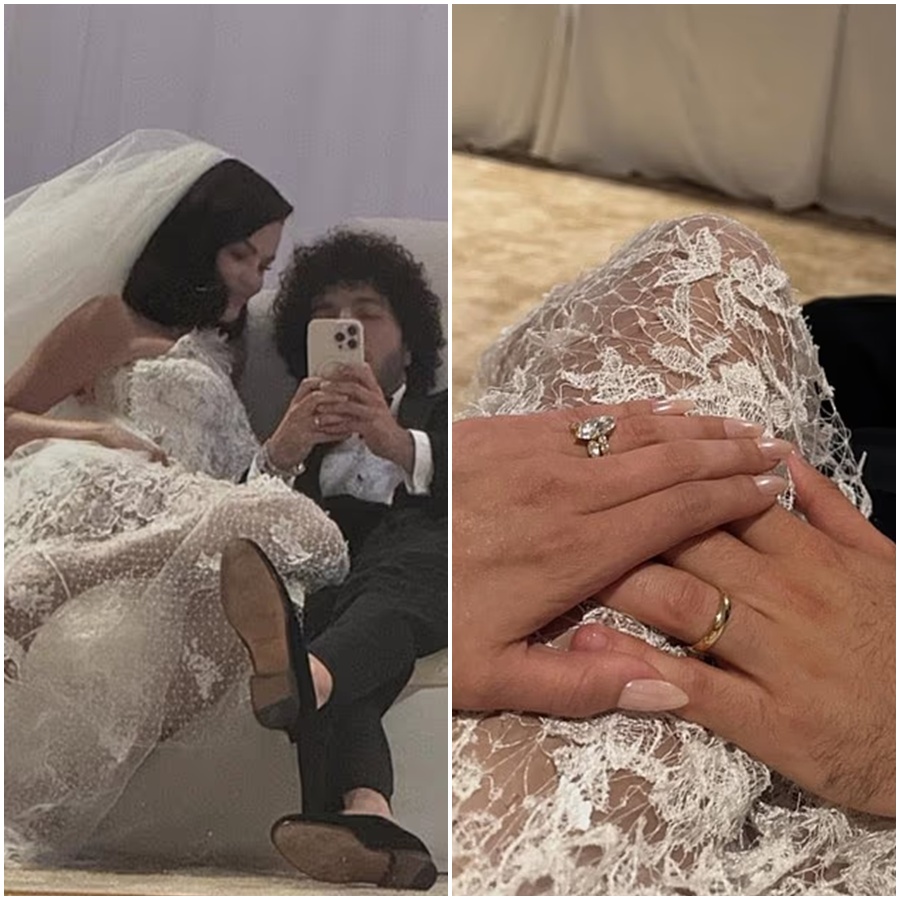
She placed her tray on a side table. Her heart thundered. Her hands trembled. But she did not run. He held out his hand. No words, just invitation. The scarred half of his face caught the chandelier’s light. She inhaled, then slowly placed her hand in his. The first notes carried them. Their bodies moved to a rhythm that felt older than pain.
Guests gasped at the breach of etiquette. A few stood frozen. Some whispered, “Is he dancing with the staff?” Others turned their phones to the moment. The cameras clicked, the lights angled, the empire trembled. Benjamin stood abruptly, face ashen. He stepped forward. “This is inappropriate,” he snapped. His voice reverberated. “You have no right.” But his argument fractured in the sea of stairs.
People around him shifted uncomfortably, torn between deference and fascination. Diana clutched her pearls. She looked composed, but her eyes betrayed her shock. Trustees stood. The orchestra played on. The crescendo lifted them Callum and Sariah into a moment neither had rehearsed, but both had awaited. They turned, spun, glided.
Her dress fluttered. His lead was firm, respectful, immediate. The scarred side of his face tilted slightly toward her. She leaned into it, trusting. The audience was secondary. Everything else faded. Benjamin tried to intervene, but his voice faltered. Dante, his PR chief, moved to block the view.
Serena, the event planner, stood frozen, tablet forgotten. The moment had broken through the facade. At the final cord, Callum guided Sariah into a bow. Her eyes glistened. The hush lasted seconds, but stretched into eternity. Then, applause clapped, a ripple turning to a wave. Some guests stood, others rose slowly, cameras flashing, tears glinting in eyes. Benjamin’s face quivered.
For the first time in his life, his empire cracked in public. His son scarred, silenced, had made his father cry. That night, in the glow of what people called scandal, was really a reckoning. Sariah and Callum retreated from the floor. She picked up her tray with careful hands, he stood beside her.
Neither glanced behind them to meet the storm, because in that dance, they’d already looked forward. The music surged again, louder, richer, defiant. Rise again coursed through the hall like a secret unleashed. The same melody that had echoed through Callum’s memory since that fiery night now soared across the ballroom, dragging ghosts behind it, exposing every hidden wound.
No one had dared play it before. But here it was. Strings trembled. The piano’s notes trembled. The brass section softened, letting every vibration matter. And in the center of it all, Callum and Sariah moved together a tableau of contrast and connection. Her dark dress spun, catching light.
His scarred side tilted toward her, but he danced onward, unafraid. The guests around them could not look away. Some shifted in their seats, uncomfortable. Others raised phones. A few looked away, unwilling to witness what felt like sacrilege. Yet others leaned forward, stunned, as though watching history. Benjamin’s lips parted. He made to rise, but he remained seated.
Something in him knew this was no longer about control. It was exposure, vulnerability, realness. The ballroom felt too small to contain the music, now too rigid for the surge. It cracked open. Callum’s lead was precise, firm, yet gentle. He guided Sariah through a series of steps. She half remembered, half built in the moment. Her breathing evened, her posture lifted.
There was no perfection here, only truth. And the scar it shown, not from shame, but from survival. Midway through the second chorus, a guest, a highranking board member, stifled a cough, leaning over to whisper something in his wife’s ear. A few heads turned, but no one touched them. No one dared cut in. The dance held them at bay.
Sariah recalled how in dance class, teachers had told her to hide. hide her edges, hide her curves, even hide her skin tone so she’d blend in. Yet here, under the orchestra’s light, she was vivid, bold, living. She pressed closer to Callum, not relying on him walking with him. A silent promise in the wings. Serena Blake, the event coordinator, watched in stunned silence. The tablet in her hand flickered with alerts.
Music change unauthorized. Protocol breach. PR risk. Her eyes grew wide, hands trembled, but she made no move. She could not interrupt what had been said in motion. Dante Cooper, PR lead, hovered near Benjamin, jaw tight, his phone dialed constantly. But no press release could undo what was happening in real time, not when the music was truth, and their son was dancing it.
The crescendo built toward that final forbidden note. The band played it full with crescendo and heartbreak. Every instrument joined in. The final chord held so long that the air felt suspended, and then it fractured the note ending, the music releasing them. Callum and Sariah stood breathless in the silence that followed. Their lips parted as though speaking, but no words came. The crowd held its breath.
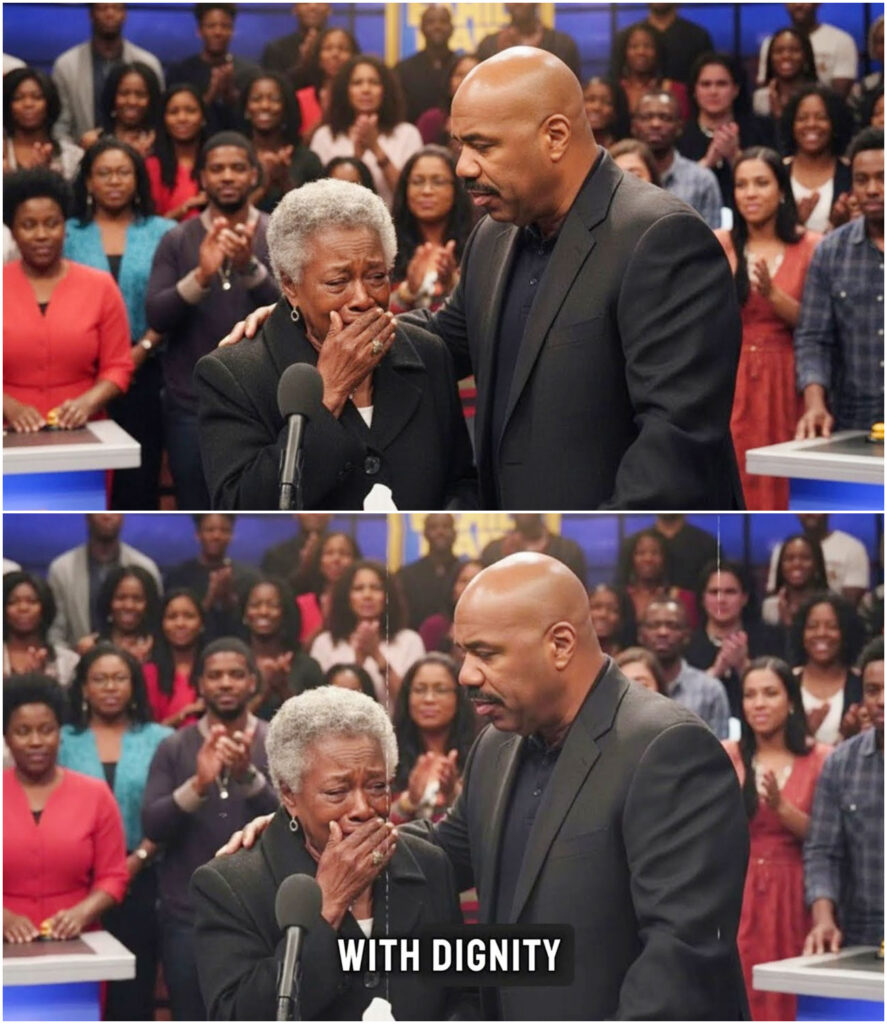
Then a single clap broke the hush. Then another, then many, hands pounded against tables, rose upward, standing ovation. In that moment, Callum’s scarred side turned to the audience. He did not hide. He did not shrink. Sariah stood by him, her head high, her dignified presence speaking louder than any approval.
Benjamin stood too stiff, conflicted, exposed. He was the only adult in that room who didn’t know exactly how to feel. Pride, shame, fear. He felt all three. The forbidden melody had awakened something that could not be buried. Not by money, not by legacy, not by silence. And at the end, the applause didn’t wash them clean.
It baptized them in light, in recognition, in truth. The applause still echoed in the grand ballroom when criticism struck back. As Callum and Sariah stepped off the floor, some guests rose with admiration. Others whispered venom. Within seconds, elegant voices turned sharp. A woman in a diamond neckpiece, her makeup perfect, hissed to the man beside her.
That’s what happens when we let entertainers mingle with staff. The man nodded, lips tight. A nude fan shielded her expression, but her eyes blazed with scandal. One of the trustees, a wrinkled old banker, muttered. He humiliated the family, dancing with a waitress.
What proof is there he deserves the legacy? He mouthed the words as though daring the floor to hear. At a VIP table, a socialite recording on her phone whispered, “Watch the headlines tomorrow. This will get twisted into a racial storyline. He’s going to be used.” Her companion shrugged. He brought it on himself. Came the quiet reply.
In the corner, a group of guests had already started a thread on their phones. Comments flashed. Staff jumping the hierarchy. Disgraceful spectacle. A headline preview popped. Waitress and the air. Scandal at Melville Gala. The PR team flurried. Dante Cooper swept across the edges of the room. Phone to ear, face pale. Serena Blake tried to collect her tablet. Close spreadsheets.
Control damage. But damage doesn’t respond to control. Not tonight. Benjamin’s voice ascended again. He moved toward the stage, but instead of reclaiming order, he stood shaking. His hands clenched. He said, “I will remind everyone here of what’s appropriate.
” His tone was firm, but for the first time in his public life, he sounded brittle. He turned to Callum. “You are my son,” he declared. “But tonight you embarrassed your name.” Callum remained still, his scarred half-facing his father. Sariah stood a step behind, quiet but unbowed.
In response, a guest from the balcony, a prominent social columnist, shouted, “Your son deserves respect, Victor, and so does she.” Her voice startled half the room. Phone swiveled, cameras angled upward. Another voice replied, “Respect is earned. Not handed out by scandal.” A murmur of agreement followed. Someone in the back, a young woman dressed in pearls, cried, “Black waitress? Really? This is what we’re calling equality now?” The tone behind that question dripped with condescension. Yet more whispers fanned out like wildfire.
Didn’t anyone check her credentials before this event? Imagine what she’s thinking dancing with him. Probably trying to get a fortune. You know what she is beneath that uniform? The language slid into coded insults. She must be using him. She must be grabbing for status. Even staff overheard. A white server muttered. She’s stepping out of line. Another shook his head in shame. Some pied her.
Some judged silently. Sariah’s breath caught, but she held her ground. She looked around at the crowd. In that moment, she understood. Their scorn was not about a dance. It was about who she dared to be, who he dared to become. Benjamin strode forward. Turn off the live stream. Delete any posted video.
This will not define our family. But a chorus answered. Phones stayed pointed. Camera lights stayed on. The crowd divided, some joining Benjamin’s demand, others resisting. A group near the bandand stood up and shouted, “Let her be heard. Let them dance.” A few applauded, others hissed. A few walked out in protest. Callum’s voice broke across the room. “Stop!” He raised a hand.
Instant hush. This is not about scandal, not about hierarchy, not about disgrace. Tonight, I danced because I am more than shame. and she is more than invisible. His words rippled across the audience. Some faces softened, others glared. The tension throbbed. Benjamin’s expression contorted. He looked at Callum no longer only as a son, but a truth he had denied.
He opened his mouth, but no words came. Sia stepped forward, voice steady. I do not seek your approval. I dance for my dignity and for every person told they should stay hidden. I am here. I am chosen. Not because I asked, but because I am worthy. There was shock at the audacity for a waitress to speak in that room.
In that tone, to that many. A gasp traveled. A few guests stood. A few wiped tears. Others shifted uncomfortably. The microphones caught it all. Phones recorded. The scandal turned into a spectacle of courage. Outside the ballroom doors, the media waited, their lenses were trained, their pens ready. By morning, stories would bloom.
Dinner with drama. Scars and secrets at Melville Gala. The world would watch. But inside, in that charged moment, everything changed. The voices of mockery roared. But two voices quiet. Firm spoke louder. And for the first time, those voices refused to be drowned out. The room stood still, held in a fragile breath. Callums hand hovered in the air.
Sariah’s chest rising and falling as though she were holding herself in place. The cameras captured every micro expression, the flick of a lip, a tears sheen, a jaw clenching. The world was watching, and the truth could no longer hide. Benjamin cleared his throat. He raised a trembling hand to demand silence. He tried to press dominance back into the air, but the balance had shifted.
The room would no longer obey without question. From the back corner of the ballroom, the doors swung open. Corbin Hayes appeared a lean figure in a charcoal suit, briefcase in hand. He carried urgency in his stride. He had once been a stage technician, a man who knew the backstage secrets of every theater in LA.
He had stayed silent for years, but tonight he would speak. With quiet authority, he advanced through the crowd. Staff parted, guests murmured, the orchestra quieted. Dante and Serena rushed forward, but Corbin ignored them. He walked straight to Benjamin and set the briefcase on the head table with a sharp snap. Everyone leaned forward.
Benjamin’s face waxed pale. Calls from board members froze mid dial on smartphones. The Melville loyalists stiffened. Corbin unlatched the briefcase. He pulled out files, original blueprints of a performing arts center, maintenance logs, budget documents, inspection reports, emails, and photos. He placed them on the table, spreading them out like a confession. The hush grew heavier.
He cleared his throat again. “Ladies and gentlemen,” he began. “What you are about to see is the truth behind the Foster Hall fire,” he gestured to the documents. “These are the internal memos showing repeated safety warnings that were ignored. These photographs show wires frayed years before the gala.
These emails, signed by Mr. Melville himself discussed costcutting measures that removed essential fire suppression systems. And here he pointed to one sheet is a receipt for parts never installed yet build to the theater budget. Gasps rose, phones pointed. Benjamin’s eyes darted over the files he had thought buried. Corbin continued, “I raised concerns.
I filed three formal complaints. Everyone was dismissed. I asked for inspections. I was told to mind production and not raise legal distractions. I watched crews override sprinkler systems, tape over exit signs, disable backup generators, all in the name of efficiency, all in the name of profit. He spoke slowly, intentionally, letting each word sink in.
Callum’s injury was not an accident. It was a predictable result of negligence. His finger hovered above Benjamin’s signature on one chain of command email. This was authorized. This was approved. The room trembled with revelation. Sariah’s hand still in calums. They exchanged a glance. Shock, vindication, sorrow. Benjamin stood frozen. His veneer of control cracked.
The trustees recoiled. The guests whispered in tight waves. A few gasped. Some swore softly. Political operatives fumbled for phones. Legal council stared in horror. Benjamin tried to speak. His voice cracked. That is not how I remember it. He paused. It was an accident, unexpected, but his tone lacked conviction. The documents refuted him. Corbin nodded. It was preventable.
It was foreseeable. And you covered it up. You buried inspections. You silenced staff. And when the inevitable happened, you tried to bury your own son beneath a half mask in silence. A guest shouted, “Is that true, Benjamin?” Others murmured for confirmation. Callum stepped forward, his voice strong. It is true. He addressed the crowd.
Tonight I dance not to humiliate, not to embarrass, but to give voice to what was silenced. My scars, my survival are not secrets to hide. They are proof of what happens when people choose profit over lives. He turned towards Sariah. And I dance with her because she saw me. She saw all of me. And tonight she stands with me.
Some guests nodded, tears in their eyes. Others lowered their heads. The applause resumed slower, more deliberate, more reverent. Diana Melville wept. She clutched her pearls, eyes cast down. For the first time, tears were not performance. Serena and Dante exchanged looks. The PR plan was evaporating in real time. Outside the ballroom doors, the press unleashed itself.
The live streams which had been recording secretly burst into public channels. The scandal flared into global headlines. Back in the room, boards were shaken. Reputations destabilized. The facade of the Melville brand trembled. Corbin closed the briefcase and stepped back. Silence lingered thick and loaded.
Callum and Sariah stood at the front, not as victims, but as survivors. Benjamin’s voice cracked again. I I never meant for this to happen. But no one believed him. He had built a house of optics. The flames revealed its darkness. Callum looked at Sariah. She met his gaze. In that moment, they both understood the truth had freed them in ways silence never could.
The moment Callum and Sariah stepped away from the dance floor. The world had already started turning. Phones snapped, live streams kicked in, social media lit up, and the secret they thought was contained exploded into global awareness. Within minutes, clips of their dance began circulating across platforms.
A short video titled Black Waitress dances with scarred air went viral. First retweeted, re-shared, reposted. Hashtags like number rise again, number hiddenworth, number scars and strength trended across platforms in the US, from Los Angeles to New York, from Chicago to Atlanta. People posted images side by side. The scarred half of his face, Sariah’s polished courage.
Comments flooded in. Beauty is resistance. Let her dance. True strength isn’t hiding. News agencies scrambled. Local stations cut into regular programming. National networks ran it as breaking news. Analysts debated scandal versus bravery.
Panelists on cable shows dissected his father’s actions, her dignity, the power structure behind the gala. Talk radio hosts read transcripts of Callum’s public statements. Opinion pieces flooded newspapers and websites. Why a dance is more than a spectacle. The cost of perfection in American legacy families. When the invisible decide to step into light, civil rights and social justice pages shared quotes from Sarah’s speech. I dance for my dignity.
For every person told they should stay hidden. They reposted the PR documents Corbin had revealed. They compared the story to systemic inequities. Who gets heard? Who gets hidden? Who gets punished for living fully? But the real viral moments weren’t just in numbers. They were in people’s reactions. A high school dance team in Detroit began using Rise Again for their performance tribute to survivors.
A nonprofit in Houston scheduled a Scars are stories fundraiser, inviting burn survivors and marginalized voices to dance openly. Ballet schools in New York and Atlanta posted messages of inclusion, offering scholarships to students who’d been told they couldn’t dance because of imperfections. Celebrities weighed in. Some sent public messages of support.
Others remained silent, a silence now interpreted as complicity. Sports figures posted short videos of themselves dancing with people of different abilities, echoing the symbol Callum and Sariah had sparked. Within 48 hours, Callum’s name was trending in finance news, philanthropic networks, even Forbes.
Donors threatened to pull funding from Melville Enterprises. Board members of philanthropic arms associated with Benjamin Melville demanded audits. Investigations into the Foster Hall fire long stalled were reopened. Journalists dug into Melville Holdings looking for patterns of cover up, costcutting, ethics violations.
Sariah’s story began to be told beyond the dance. Local human rights groups invited her to speak. University panels asked her perspective on race, dignity, and public narrative. She remained gracious but firm, her voice rising not above others but with others. At Melville Enterprises headquarters, the PR team scrambled. Dante Cooper drafted statements. Serena Blake rewrote planned announcements.
But in locked conference rooms, there was panic. The narrative had escaped control. No spin doctrine could erase what had already been seen. Benjamin Melville, once untouchable, watched his legacy unravel in real time. His investments, his reputation, his power, all teetered beneath the weight of public scrutiny and moral shock. The family name was no longer a symbol of untouchable prestige. It was now contested, questioned, vulnerable.
Through it all, Callum and Sariah were no longer dancing alone. They had become symbols, beacons, and their movement was catching fire. In the wake of the viral storm, something deeper began to shift. People recognized that stories suppressed in quiet rooms still lived in scars.
People began to believe that revealing truth, no matter how painful, could reframe dignity and that the world might be changed not by the silence of perfection, but by the courage of being seen. Healing never moves in straight lines. It curves, it backtracks, it stalls, and some days it hurts worse than the thing that started it all.
But in the weeks following the gala, that chaotic night of truth and exposure, Sariah and Callum found themselves walking a path neither of them had expected. Together, it started with silence. After the storm, Sariah took a step back from the noise. She turned off her notifications, gave one interview to a trusted journalist at a nonprofit media outlet, then disappeared from the public eye. She wasn’t running, she was recovering.
For the first time in years, she had spoken her truth in front of people who had only ever seen her as invisible. And though the weight had lifted, the wound was still tender. She moved out of the apartment she shared with her cousin, rented a small place near Central Park, and started each morning with a walk among the trees.
No phones, no cameras, just breath and quiet. Callum 2 disappeared not into silence, but into reflection. His father’s empire was imploding. His name was now a point of public debate. For the first time, people looked at his scar not as an accident, but as a consequence of greed, and he didn’t know what to do with that. But what he did know was that he needed to show up for himself and for Sariah.
He started therapy. Twice a week, no exceptions. He went to burn survivor support groups, sat quietly, and listened to people whose scars carried stories even heavier than his. He stopped hiding his face in public. He let people look, even if they stared. He let their discomfort be theirs to hold, not his.
When he reached out to Sariah again, it was simple. Can I meet you somewhere without cameras? They met at a quiet jazz bar in Harlem. The kind of place where nobody cared what your last name was. The lighting was soft, the crowd mellow. No suits, no stage, just music and murmured conversations. “You okay?” he asked her gently. “Getting there,” she replied.
her voice calm but honest. You? He smiled faintly. Same. Most days feel like I’m unlearning who I thought I was. They didn’t talk about the viral video. They didn’t talk about the fallout. Instead, they talked about books they liked. Childhood memories that made them laugh.
Fears that still woke them up at night. It was messy, human, unfiltered. And for both of them, it was healing. Over time, they met more often. Not as headlines, not as symbols, just as people. They cooked together, walked Lily, the dog Callum had rescued a year ago, watched old dance performances on YouTube, and debated which styles were most underrated.
Callum found himself at Sariah’s church one Sunday morning, not because he believed everything, but because he needed the music. The gospel choir sang with a kind of soul that cracked something open in him. Sariah held his hand the whole time. One afternoon, months later, Sariah received an envelope.
No postage, no signature, just her name, written in familiar sharp handwriting. It was from Benjamin Melville. Inside was a letter. No excuses, no defenses, just acknowledgements. I failed you. It read, “Not just as my son’s father, but as a man who benefited from systems that kept people like you down. I don’t expect forgiveness, but I am committed to accountability.
He included documentation showing his resignation from all board positions and a $20 million donation to a fund for victims of corporate negligence in Sariah’s name. He made it clear this wasn’t a buyout. It was a small step toward repair. Sariah showed the letter to Callum. “What do you think?” she asked. “I think it’s a beginning,” he said. “But only you get to decide if it means anything.” She nodded.
and she didn’t reply to the letter. Not yet. Healing, she knew, wasn’t about wrapping things in a bow. It was about honesty, consistency, and time. Weeks later, Sariah returned to the community center where she once volunteered not as a helper this time, but as the founder of a new arts initiative, a safe space for young people to dance, write, perform, and tell stories that didn’t fit into perfect boxes. She invited Callum to the opening showcase.
He sat in the back row, tears in his eyes as children of all colors and scars took the stage with courage and joy. It wasn’t the end of their journey, but it was a powerful chapter, one where healing didn’t mean forgetting, but choosing not to let the past dictate the shape of their future. Perfection is a myth.
It is a glass mask we all try to wear, afraid of showing the world our cracks, our scars, our truth. But perfection is not what makes us human. It’s what hides our humanity. What makes us real, truly real, is the courage to be seen, unfiltered, unpolished, and unapologetically ourselves. That was the lesson Callum and Sariah learned. Not in one moment, not in some climactic scene, but slowly, in choices, in pauses, in the space between a scar and a story. Months had passed since that unforgettable gala.
The night that turned whispers into roars, secrets into headlines, and shame into strength. The internet had moved on, as it always does. But for the people at the heart of the story, the ripple never stopped. Sariah didn’t go back to the same life because that version of her didn’t exist anymore. She built something better.
She stood in front of a room filled with kids, black, brown, white, some with visible scars, others carrying wounds that no one could see. She watched them take the stage, dancing, reciting poetry, performing monologues they wrote about growing up in a world that demands perfection but gives very little grace.
She told them her story not for sympathy but to offer proof that even when people tell you you’re too different, too dark, too damaged, you can still rise. You are not what they whisper behind your back. She told them you are not the names they call you or the boxes they try to fit you in. You are not the mistakes of your parents or the scars on your skin.
You are real, and that is more powerful than perfect could ever be. Callum sat in the front row, no longer hiding. The right side of his face still carried the marks of that fire, but now he didn’t turn away when cameras were near. He didn’t adjust the lighting or tilt his head to hide the damage. That face was his truth, and he wore it with quiet pride.
He had started his own foundation, one that focused on fire safety reforms, corporate accountability, and support for burn survivors. Not because he needed redemption, but because he wanted his pain to mean something. Together, they had redefined what legacy looked like. Not wealth, not headlines, but impact. Real lasting impact. The final scene wasn’t flashy.
It wasn’t filmed or streamed. It was a Sunday morning at a city park. Sariah, Callum, and a few kids from her program were setting up a free outdoor performance for anyone who wanted to feel seen. No tickets, no VIP list, just real people showing up for each other. A young girl, no older than eight, ran up to Sarah holding a handmade sign. It said, “I’m not perfect. I’m brave.
” Sariah knelt down and smiled at her. “You sure are,” she said. “You’re the bravest person here.” And that was the point all along. Perfection divides us. It tells us who’s in and who’s out, who’s worthy and who’s disposable. But being real, that brings us together. Because we’ve all been hurt.
We’ve all been told we’re not enough. But when we decide to stand anyway, scarred, scared, and still standing, that’s where the magic happens. That’s what hidden worth is all about. Not just the shiny stories, but the ones that live in the shadows. The ones too real for fairy tales, but too powerful to stay quiet. So, if this story moved you, if it reminded you of your own journey or someone you love, share it. Comment below. Let us know what part hit the hardest.
And if you’re still hiding behind perfection, this is your sign. Come out of the shadows. Be seen. Because you, you’re not perfect. You’re something better. You’re real.
News
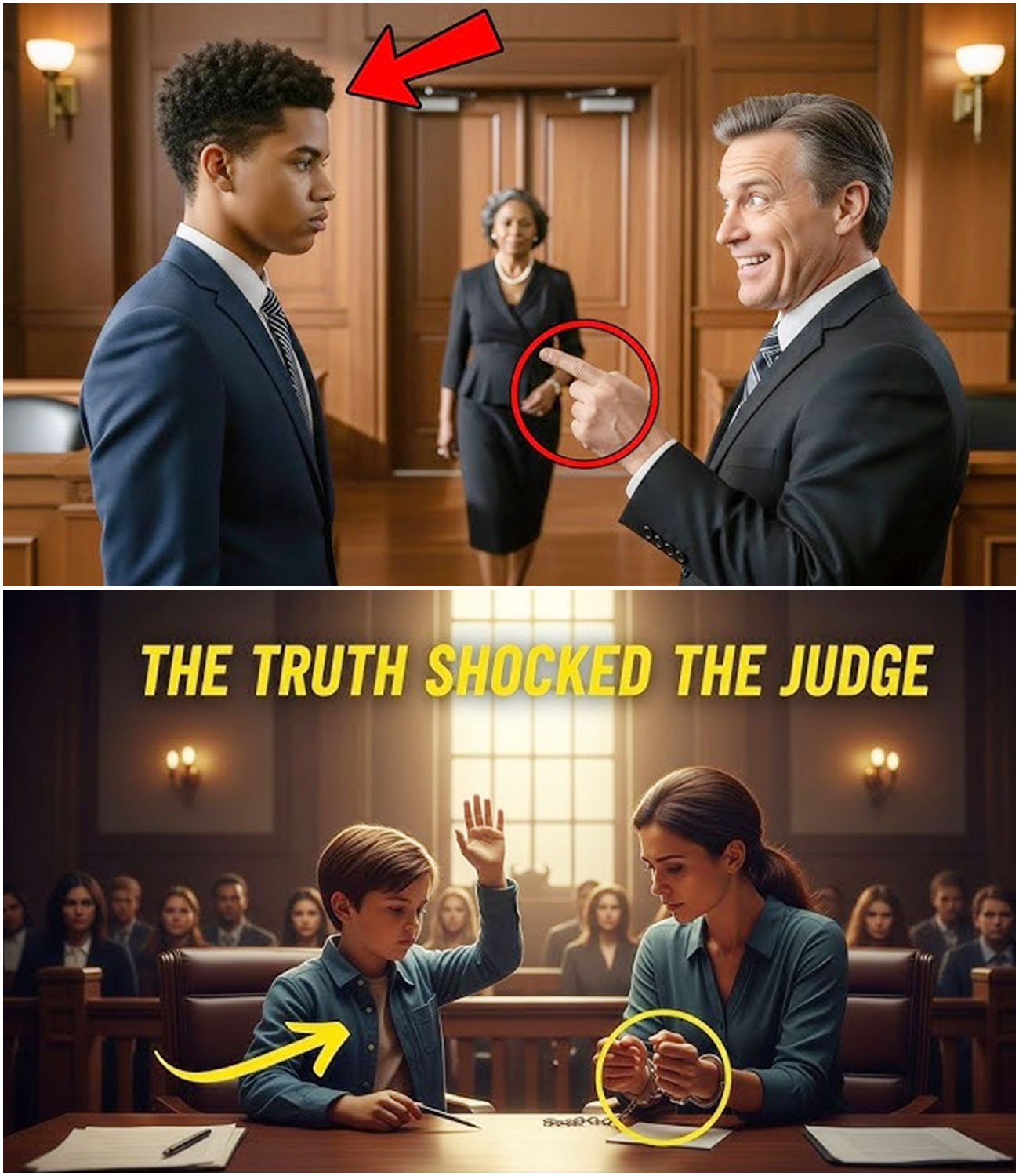
“My Mom Is Not Guilty,” Said the Small Boy — What the Judge Found Out Left Him Speechless
The courtroom was silent until a trembling voice cut through the tension. Your honor, my mom didn’t steal anything. Gasps rippled across the room. A 9-year-old black boy stood alone before the judge, clutching a folder bigger than his chest. Behind him, his pale, tearful mother watched, handcuffed and accused of a crime she didn’t […]
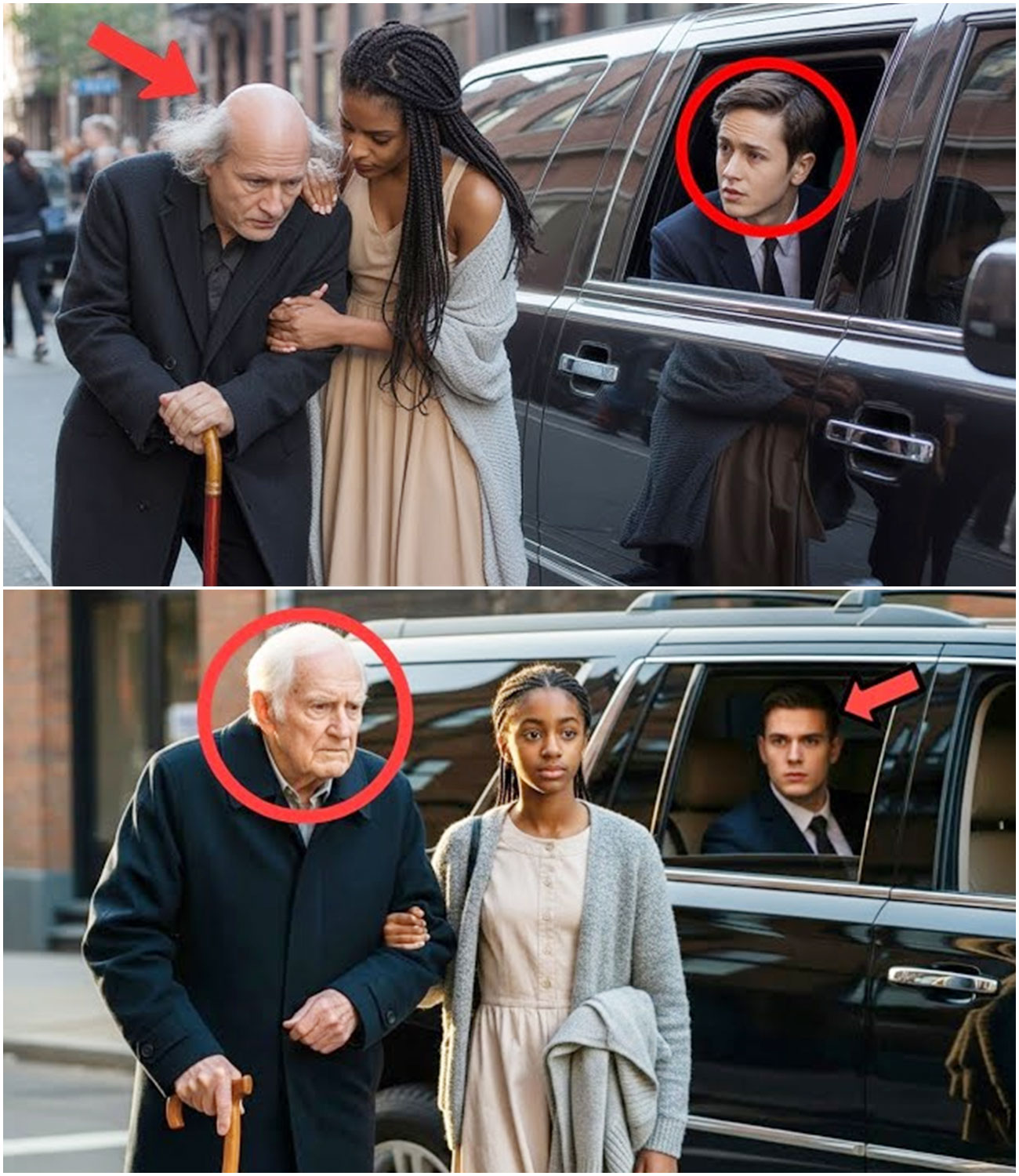
Poor Black Girl Helped an Old Man Cross the Street — Unaware He Was the Town’s Richest Farmer…
At the busiest corner of town, traffic thundered and no one cared except Amir with patched shoes and a bag stitched together. She noticed an old man frozen at the curb, his cane trembling as cars sped past. Everyone else ignored him. Some even laughed at her for stepping forward. But Meera didn’t flinch. She […]
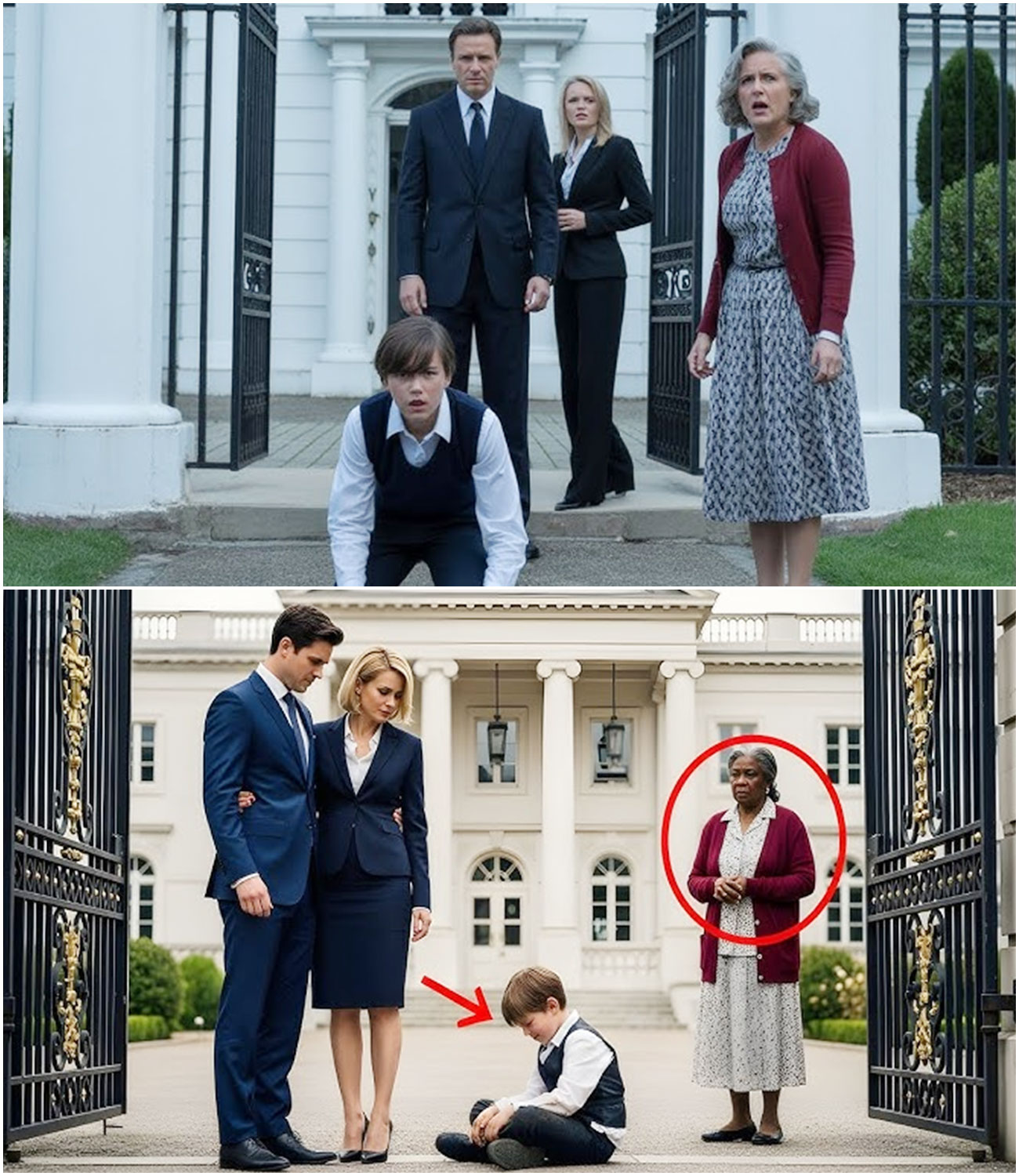
Boy Kicked Out by His Parents Returns 12 Years Later with his Nanny and Does Something Shocking.”
Thrown out for being dumb, young Daniel was left kneeling on the cold pavement while his wealthy parents shut the gates behind him. The only one who refused to walk away was Miss Ruth, the family’s old nanny, who quit her job and took him in with nothing but faith and sacrifice. Years later, Daniel […]
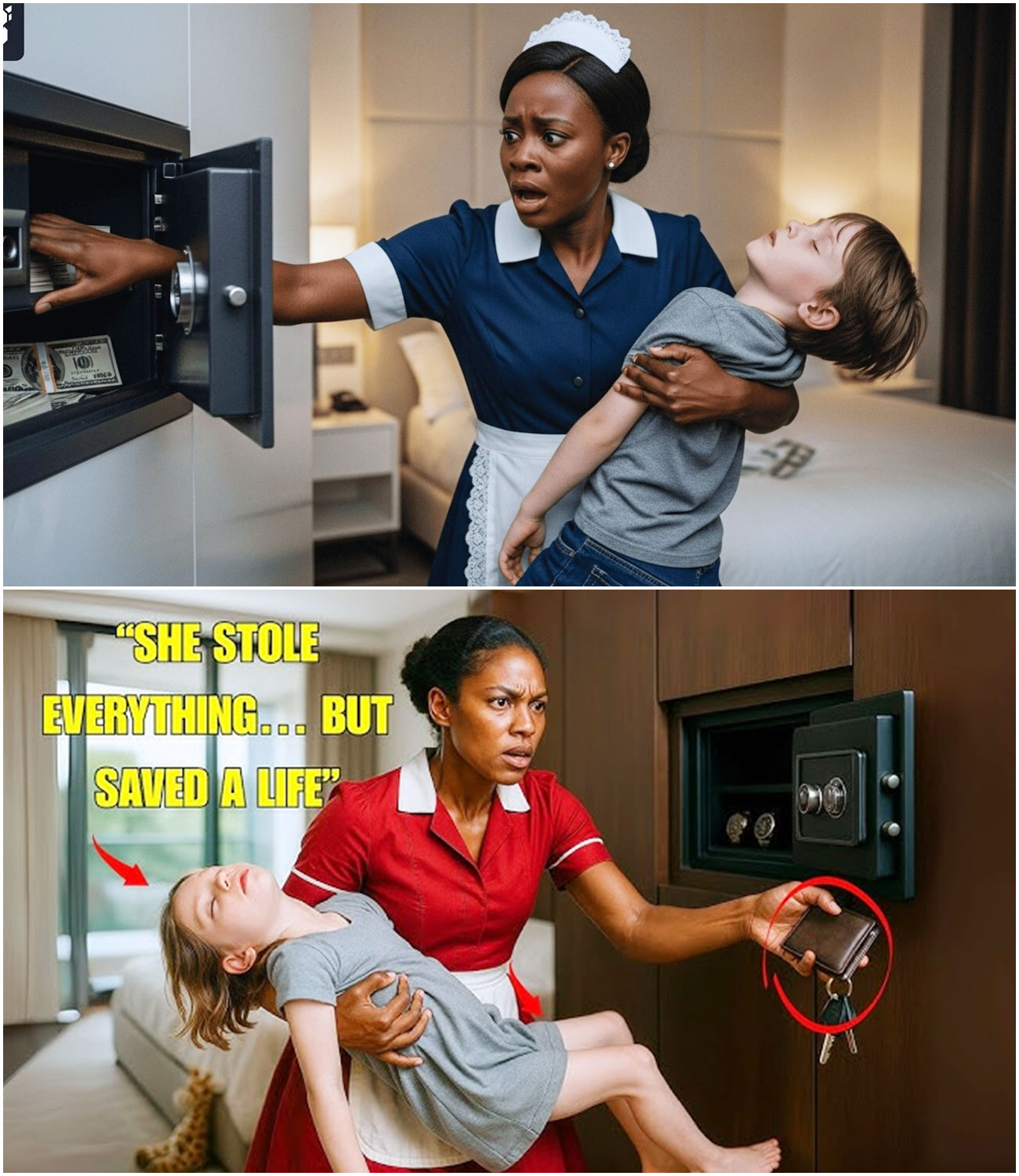
Black maid Stole the Billionaire’s Money to save his dying daughter, —what he did shocked everyone
Tasha was just a new maid, barely noticed, barely trusted. But when she found the billionaire’s daughter barely breathing, with no staff around and the mansion silent, she panicked. No calls were going through. No help was coming. So she did the unthinkable, broke into his locked office, grabbed the car keys and a bundle […]

Millionaire Comes Home and Finds His Pregnant Wife Crying—What He Discovered Shocked Him.
Millionaire comes home and finds his pregnant wife crying. David Whitman thought he had built the perfect life, but nothing prepared him for the day. He walked in early and found his young wife, Aisha, sobbing, her body covered in fresh bruises. Through her tears, she asked, “Am I ugly? Am I a monkey? Don’t […]
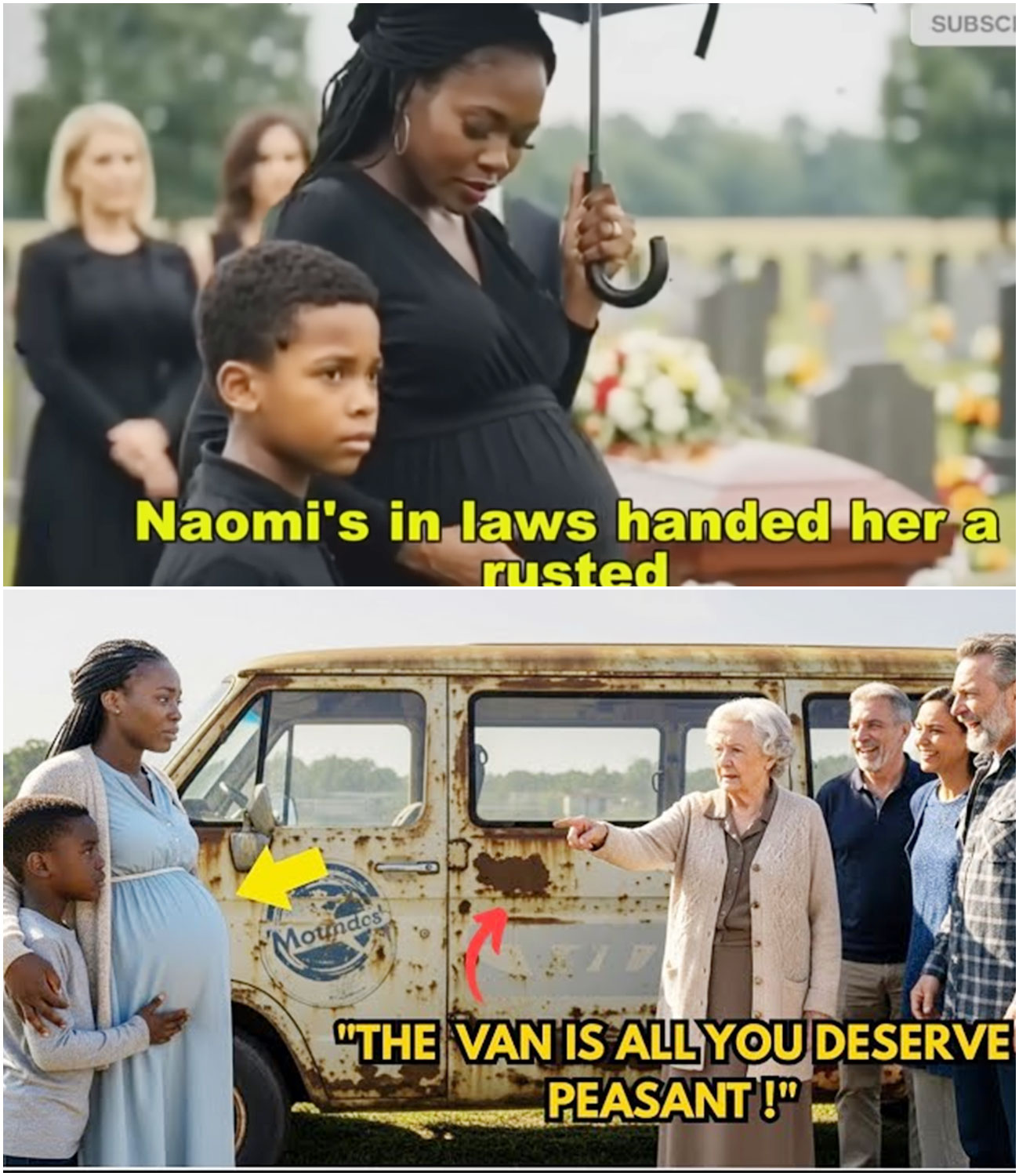
InLaws laugh as they gave her the Rusted van as her inheritance, — Unware the van was made of gold
At her husband’s funeral, Naomi’s in-laws handed her a rusted broken down van as her inheritance, laughing as they threw her out of the house and stole the businesses she’d built with him. 7 months pregnant, with her 10-year-old son beside her, she had no choice but to live in the van they claimed was […]
End of content
No more pages to load