





















































































































































































































































































































































































































































































































































“I Can Correct It”, A Homeless Beggar Hears Billionaire’s Cry And Taught Him What He Failed

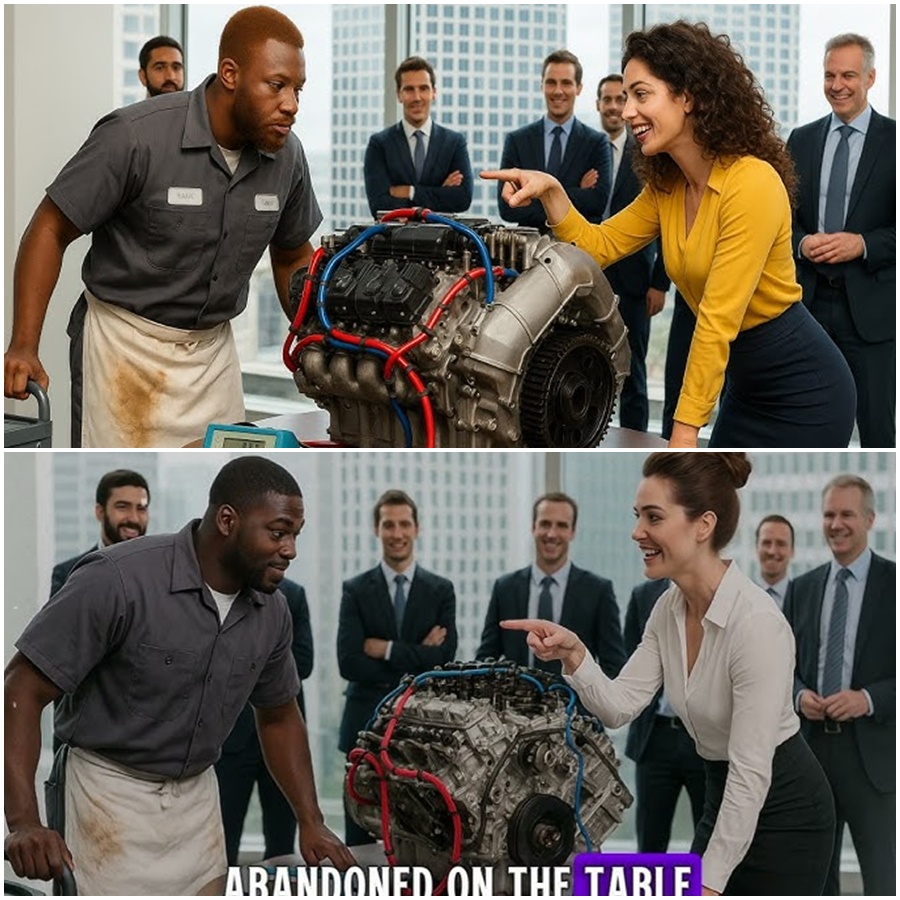
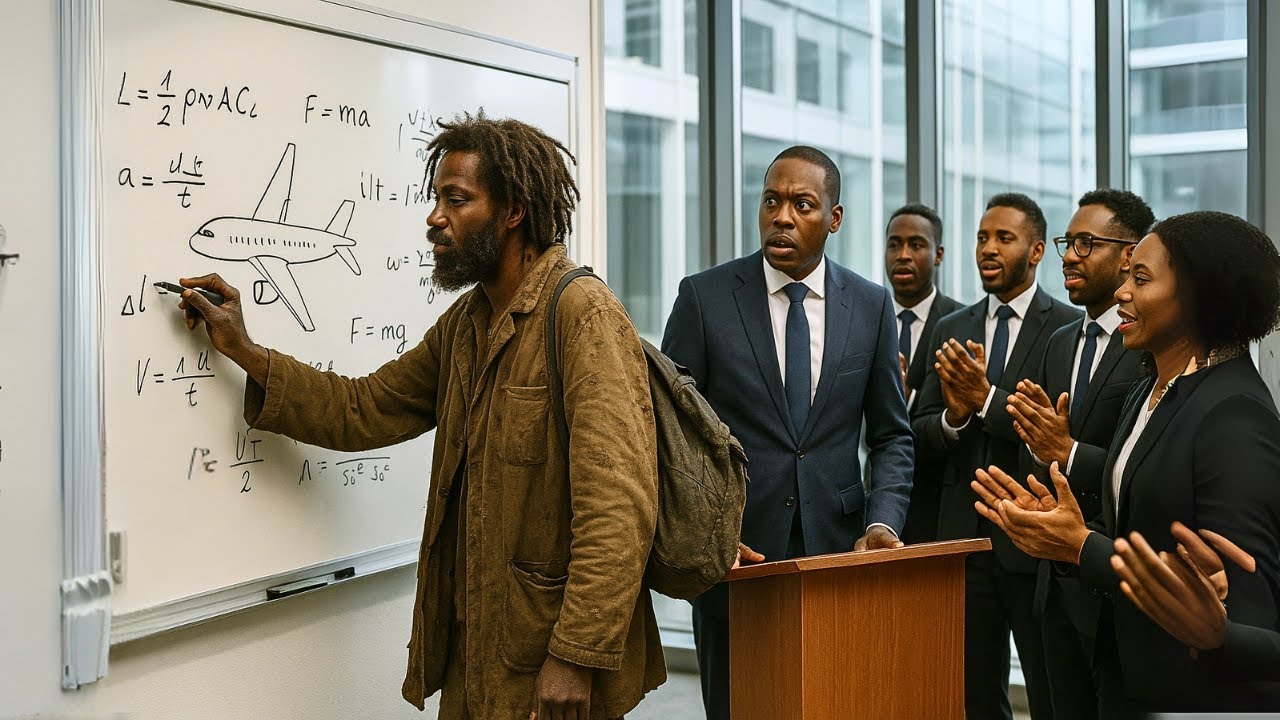
The marker squeaked, then fell silent. Inside the glasswalled boardroom at Aerospace headquarters in Lagos, a picture of a plane sat on the whiteboard under a storm of wrong answers. Lines crossing lines, arrows fighting arrows, numbers that didn’t agree.
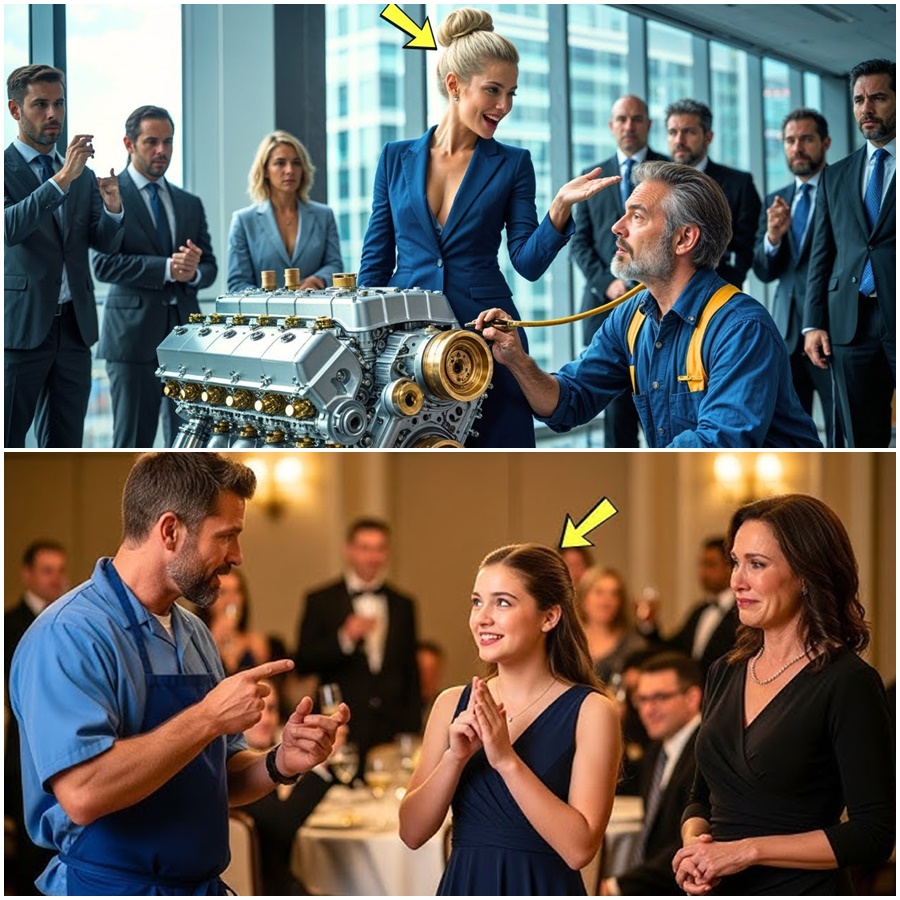
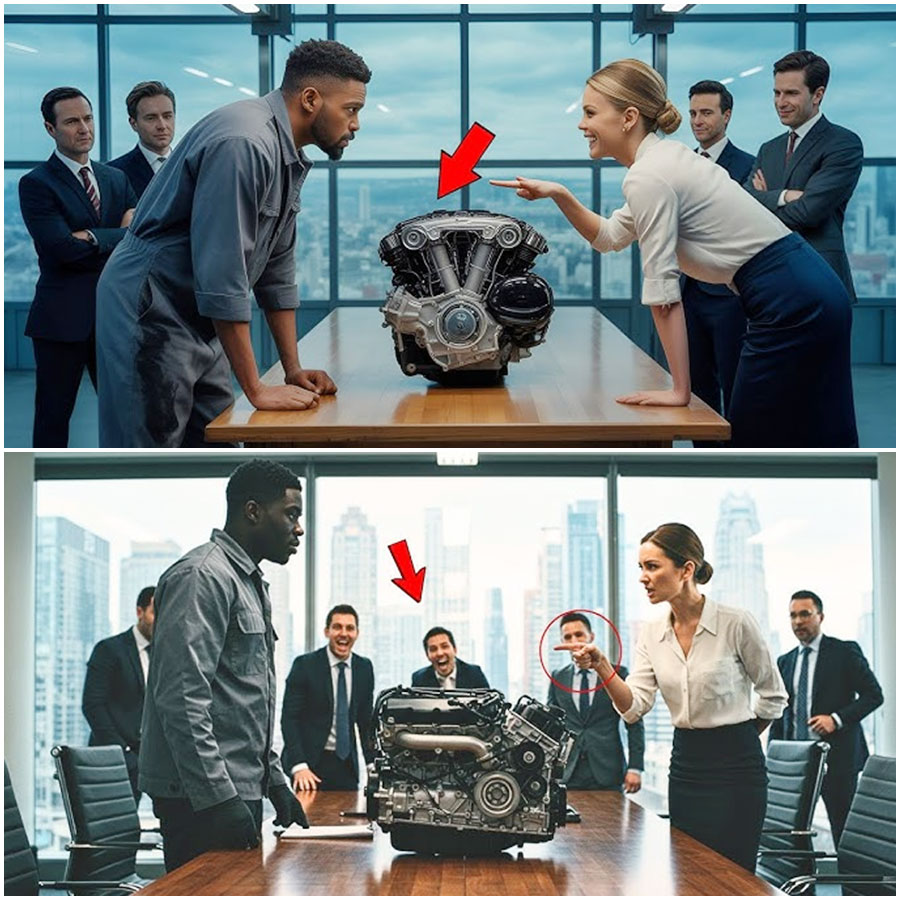
At the front, the billionaire CEO Johnson Uche gripped the table with both hands. His eyes were wet, his voice shook. We have 48 hours, he said. If we fail again, we lose the contracts. We lose everything. The room of top engineers sat frozen. No one spoke. The air felt heavy, like a bad dream you couldn’t wake up from. Then a voice came from the doorway. Low, steady, and completely out of place.
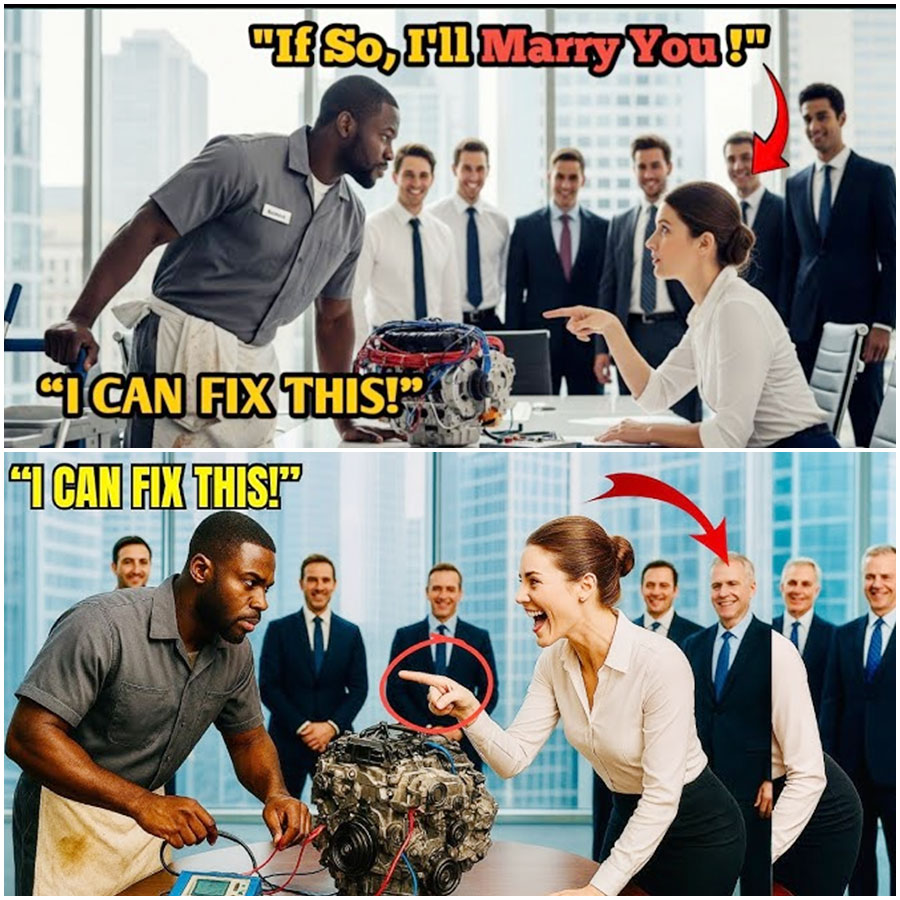
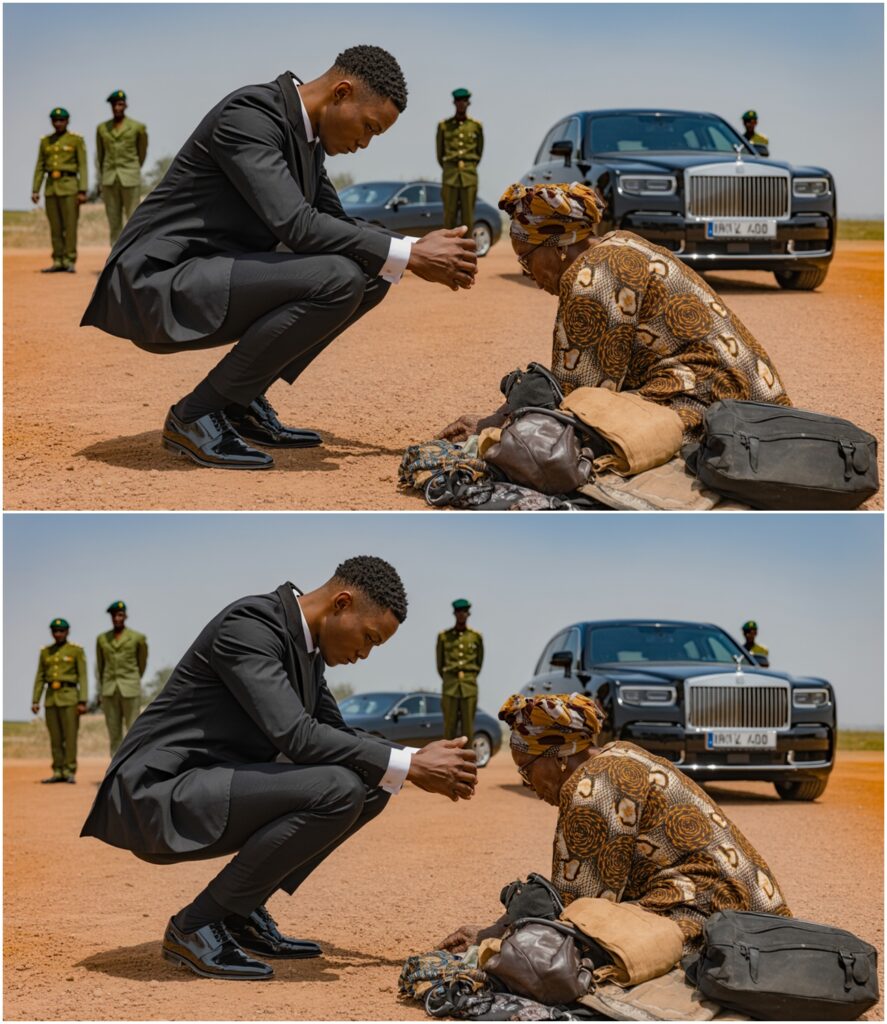
I can correct it. Every head turned. By the door stood a man in his early 40s with a tattered coat and dust on his shoes. His beard was tangled. His hair was rough. He held a tired brown bag close to his chest like treasure. The security guards were already moving. Johnson lifted his hand. “Wait!” The guards stopped. The stranger’s eyes didn’t shake.
He looked at the failed drawing of the plane like it was an old friend that had lost its way. “I can corrected,” he said again. The room held its breath. Hours earlier, before the city woke fully, Williams Andrew opened his eyes under the shadow of the echo bridge. Morning light slipped through the pillars. Danfos groaned awake.
A hawker called pure water, and the sound bounced through the empty spaces like a bell. William sat up on his piece of cardboard, dusted his coat, and hugged his brown bag. Inside it were the only three things he had kept safe through everything. A worn book on aeronautical engineering, a bundle of old certificates, and a pen with half its ink.
He pressed the book to his chest, the way a child holds a photo of home. He washed his face at the public tap, looked at his reflection in the ripples and tried to smile. The smile didn’t stay long. He walked toward Victoria Island with the early crowd. The silver letters on the side of the tall building always pulled his eyes. Aerospace.
He had learned to pass by it slowly. The way a hungry person passes a bakery, half in pain, half in hope. Today felt different. People with badges rushed inside. Cameras blinked in the lobby. The building buzzed with worry. He slipped through the open door. Not sneaky, just small. The way you walk when you don’t want to disturb the air. Near the top floor, through the glass, he saw the boardroom.
He saw the whiteboard covered in wrong paths. He saw Johnson Uche rub his eyes and whisper to his team. 48 hours. The words hit something deep in Williams. He knew that number. He knew countdowns. He knew how a good team could get lost. one step at a time and end up in a place where nothing made sense.
He felt a push inside him. It was quiet but strong. He tightened his hold on the brown bag and stepped forward. Back in the boardroom, Johnson studied the stranger. What did you say? I can correct it, the man replied. Let me try. Murmurss rolled around the table. This is madness. A young engineer said, “What can he know that we don’t?” Another whispered.
But Johnson’s eyes were tired in a way that made him brave. He slid the marker across the table. If you waste our time, he said softly. You waste my company. Don’t waste it. The room opened into surprise. The stranger walked in. He smelled like dust and sun and old paper. He didn’t explain. He didn’t clear his throat.
He just took the marker, faced the whiteboard, and stood still for three long seconds. Then he moved. He erased two angry arrows that fought each other across the wing. He drew one clean line, gentle as a river. He circled a tiny box labeled AOA and wrote beside it, sensor drift under vibration. He added three short equations, not too many, just enough to show a path.
He wrote, “Feedback loop overreacts.” And underlined it once. He drew a small smiley face near the tail, not to be funny, but to show where the plane wanted peace. What are you saying? someone asked. The stranger spoke in simple words. When the plane feels many small shakes, this little sensor, he tapped the AOA box.
Thinks the nose is too high. It panics. The autopilot pushes the nose down too fast. The pilots fight it. It becomes a tugofwar. A few seconds of wrong numbers can turn into a fall. He drew a tiny filter like a civ. We slow the panic with a filter so the sensor listens better. We teach the system to check two other helpers before it acts. This one here and this one here.
He marked air speed and vertical speed. If all three agree, act. If one is shouting alone, wait. He wrote three steps on the side. Filter the noise. Cross-check the helpers. Soft hands on the nose. Soft hands. It sounded strange and true at the same time. The room shifted from doubt to quiet attention. Chairs moved closer. Pens stopped tapping.
Even the air conditioner hum seemed to listen. Johnson stepped forward. You? What is your name? The man did not turn. Williams, he said. My name is Williams. Where did you learn this? Johnson asked. Williams touched the pocket of his coat where the edge of the old book pressed against his ribs.
From before, he said, from work, from mistakes. From watching the sky and listening when numbers got scared. One of the senior engineers stood. We tried a filter last week, she said, careful but curious. It helped on mild shakes, but during the stronger ones, the system still fought the pilots. Yes, Williams nodded.
He drew one more sketch, a small box labeled human override with a time gate. Give the pilot the stronger voice early, not after a wrestling match, and let the system learn the pilot’s calm after it sees it twice. The machine must not be proud. The line about pride made half the room smile in spite of themselves.
Another engineer leaned in, his eyes sharp. What about false calm? Suppose all three helpers lie together. They won’t, William said. Not rude, just sure. Not often. And when they might, we add a heartbeat checker. He tapped the top corner and wrote sanity check every 0.3s.
If the heartbeat looks strange, we tell the pilot first. We ask for hands. Soft hands. Silence again. But it was a different kind of silence now. The kind that comes when a locked door gives way and everyone can feel the air on the other side. Johnson looked at his team. A few nodded small like they didn’t want to scare the moment. Build a quick sim. Johnson said, “Use his steps.
We run it now.” Laptops opened. Fingers flew. The projector lit up with a digital sky. On the screen, a model plane sat at the end of a runway that looked like a gray ribbon under morning clouds. While they worked, Johnson moved closer to Williams. You said your name is Williams. Williams? What? Williams? Andrew, he said, still watching the board, still holding the marker.
Up close, Johnson could see the man’s eyes better. They were the kinds of eyes that had seen joy and fire and the long dry space in between. Where do you stay? Johnson asked quietly. Williams’s hand tightened on the marker. Under the bridge, he said, no shame in his voice. Just truth. The engineers finished building the test. On the screen, the runway shimmerred.
Numbers waited at the edges like small birds ready to fly. The senior engineer pressed her lips together. We’ll run the roughest case, she said. The one that broke our last idea. Johnson nodded. Do it. A hush fell over the room. Even the guards at the door leaned in. Three. The engineer counted. 2. 1. The simulation started.
The model plane rolled, lifted, and met the wind. The screen shook. Warnings flickered. The old system would have forced the nose into a fight here. Everyone in the room knew this beat too well. Williams did not blink. he whispered to the screen. Not as a magic spell, but the way a coach whispers to a player at the line.
Soft hands on the screen. The new filter caught the wild shakes and smoothed them. The helpers cross-checked. The heartbeat ticked. Steady, steady, steady. Johnson’s fingers dug into the back of a chair. A number at the corner started to fall. Another held. Another rose. The room leaned forward as one. The plane’s nose dipped, but only a little. The pilot’s override flashed.
The system yielded early, like a proud person learning to listen. The graph that used to spike like a scream began to curve like a calm wave. Come on, someone breathed. The final line at the bottom, the one that had spelled disaster all week, began to move toward green. It crawled. It paused. It twitched.
The final result box on the right, blinked from pending two, and the power in the building flickered. The projector cut to black. A chorus of gasps filled the room. Laptops beeped. Someone swore under their breath for two long heartbeats. Nothing existed. No sky, no numbers, no hope. Just the thin wine of the UPS fighting to stay alive. The lights blinked back.
The projector woke up with a gray sigh. The result box was still there, frozen in the instant before truth. Johnson turned to Williams, eyes wide, voice barely a whisper. Did we fix it? Williams looked at the screen, then at the whiteboard with its soft lines and simple rules. He did not smile. He did not speak. The result box flickered. The result box on the projector flickered like a stubborn flame, refusing to die.
The entire room leaned forward, every heartbeat sinking with the digital pulse on the screen. Then, success flashed in bold green letters. The room erupted. Some gasped. Some clapped their hands to their mouths. Others shot to their feet in disbelief.
The numbers that had dragged them into despair for weeks had finally turned in their favor. The red spikes that once screamed of chaos now curved smoothly, flowing like a calm river. Johnson froze. For a moment, he simply stared, unable to believe what he was seeing. Then, slowly, his lips parted, and a breath he didn’t realize he’d been holding spilled out.
“It worked,” whispered one of the engineers. It actually worked. Williams let the marker slip gently onto the whiteboard tray. His hands trembled, not with fear, but with the rush of memories. It had been years since anyone had listened to him. Years since he had felt the weight of his ideas matter.
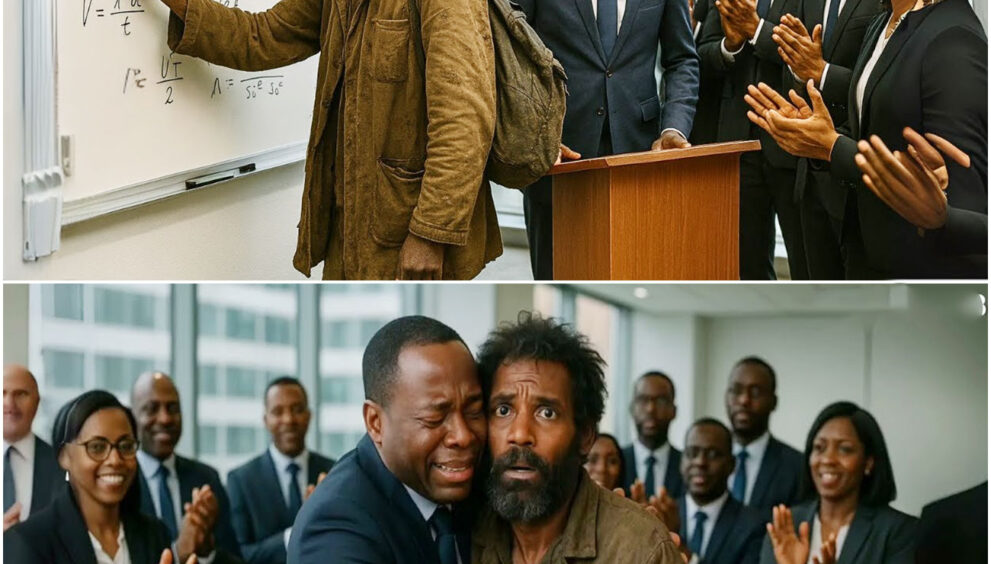
A standing ovation followed. One by one, the highly paid engineers of aerospace rose from their seats, clapping hard. The sound filled the boardroom, echoing off the glass walls. It was not for their billionaire CEO. It was not for the company. It was for the ragged man who had walked in from the street and corrected what they had failed to solve.
Johnson turned sharply, his eyes wide with tears. He didn’t care that the man standing before him smelled of dust and hardship. He didn’t care about the tattered coat or the unckempt beard. He rushed forward, grabbed Williams by the shoulders, and pulled him into a tight embrace. Thank you, Johnson whispered, voice cracking.
You just saved my company and maybe more lives than we can count. The guards by the door stood frozen, unsure if they should still remove the stranger, but they knew it now. He wasn’t a trespasser. He was the key. Minutes later, William sat in a plush leather chair in Johnson’s office. It felt strange under him.
Soft, warm, like a bed after years of sleeping on cold concrete. His brown bag sat by his side, untouched. He held it close like a lifeline. Johnson paced in front of him, still trying to process what had just happened. “You walked into my boardroom from the street,” he said, his voice caught between amazement and curiosity.
“Who are you? How did you know the one thing my best engineers could not see?” Williams hesitated. His eyes dropped to the floor. For a long time, silence stretched between them, broken only by the hum of the office air conditioning. Then, with a shaky breath, he reached into his bag.
From it, he pulled out the old dogeared book on aeronautical engineering. Its cover was faded, its pages worn at the edges. “This,” he said softly, placing it on the desk. “This is what reminds me of who I used to be.” Johnson sat down across from him, leaning in. “Tell me.” And so Williams told him, “I am Williams Andrew,” he began, his voice heavy. “Once. I was a top aeronautical engineer.
I worked with big companies in the United States for 10 years. I designed systems, solved problems, lived in the sky. I had a family, my wife, Balaji Pasca, and two boys, David and Jeremy. For a while, I thought I was blessed.” His eyes clouded and his voice cracked. But then doubt entered my home. I suspected my wife.
Against my better judgment, I ran a DNA test on my children. The results said, “They were not mine.” Johnson stiffened in his chair, listening intently. “I don’t know how she found out,” Williams continued. “But the morning after, as I left for work, the police stopped me. They searched my briefcase and found hard drugs inside.
I was arrested, charged, and jailed. 2 years. By the time I came out, I had lost my career, my reputation, my family. My wife destroyed me. After deportation, I returned here to Nigeria with nothing. He paused, swallowing hard. I’ve been living under the bridge ever since, broken, forgotten. But this bag, he patted it gently. With my book and my certificates, it has been my only reminder of who I once was.
Johnson’s throat tightened. He could barely find words. “My God,” he whispered. “You, you went from designing planes to sleeping under bridges,” Williams nodded, silent. For a moment, both men sat in the stillness, their lives worlds apart, yet bound by one truth. “Genius can be buried, but it never dies.” Finally, Johnson stood.
His decision was instant, unshaken. “We’re not leaving you like this,” he said firmly. He picked up his phone and called his driver. Take him to the best barber shop. Clean him up, then to the finest boutique. Get him everything he needs. He doesn’t step into this office again, looking like he’s been forgotten by the world. Williams tried to protest, but Johnson silenced him with a look.
No, you’ve given me back my company. Now I give you back your life. That night, when Williams looked at his reflection in the mirror of the barberh shop, he barely recognized the man staring back. His beard was trimmed, his hair neat. At the boutique, he slipped into a crisp suit. For the first time in years, he felt like himself again.
By morning, he walked back into aerospace, not as the ragged beggar from under the bridge, but as lead engineer Williams Andrew Johnson introduced him to the team, declaring, “This man saved us all. He is now your leader. Learn from him. The engineers clapped again, some with genuine admiration, some with hidden envy.
Among them stood one man whose eyes burned with quiet hatred. Obina Okcoy, the former lead engineer whose throne Williams had just taken. Obina forced a smile, but deep down he was already planning what no one expected. The applause in the boardroom echoed long after the meeting ended. William stood tall in his new suit, his shoulders squared, his head high. For the first time in years, he wasn’t invisible.
People looked at him with respect, even admiration. Some reached out to shake his hand. Others smiled warmly as though to welcome him back into the world he had lost. But not everyone shared the joy. At the back of the room, Obina Okoy stood with his arms folded tightly across his chest, his jaw clenched, his eyes narrow.
Every clap of appreciation for Williams was like a hammer pounding into his pride. He had once been the company’s star, the man Johnson trusted most, the man who commanded the engineers with confidence. Now in a matter of hours, a homeless beggar had swept in and taken his place. This man doesn’t belong here, Oina thought bitterly.
He doesn’t deserve what I built. He forced himself to clap with the rest. But inside, his heart burned with rage. In the weeks that followed, Williams proved himself again and again. He brought fresh ideas to the table, simplifying complex systems with solutions that felt obvious once he explained them. Under his guidance, aerospace solved not only the immediate crisis, but also uncovered flaws in other flight systems that had gone unnoticed for years. Aviation companies that once threatened to pull away now rushed to renew contracts, praising
Johnson for his brilliant new team. But everyone in the company knew who the real genius was, the man who had come in from the street. Carrying nothing but a dusty bag and a mind sharper than steel. Williams quickly earned the respect of most of the engineers. They admired his humility. He never spoke down to them.
Never carried himself with arrogance. Instead, he listened, guided, and taught with patience. Many younger engineers began to call him mentor. But a binner, his hatred only deepened. He watched as Williams stood beside Johnson at press conferences as newspapers carried headlines about the mysterious engineer who saved Nigeria’s skies.
He listened to colleagues whisper with excitement about Williams’s brilliance and every word was a dagger to his pride. “Everything he’s doing,” Obina muttered one night in his office, “should have been me.” While Williams was building success at work, something else was quietly blooming in his life love. He had met Juliana, a soft-spoken but intelligent accountant at the company.
Their first conversation had been brief, nothing more than a polite good morning in the hallway. But Juliana had seen something in him that others overlooked the vulnerability in his eyes. The way he smiled as though he didn’t believe he deserved happiness. It began with small gestures. She brought him a cup of tea during late nights at the office. He helped her carry heavy files.
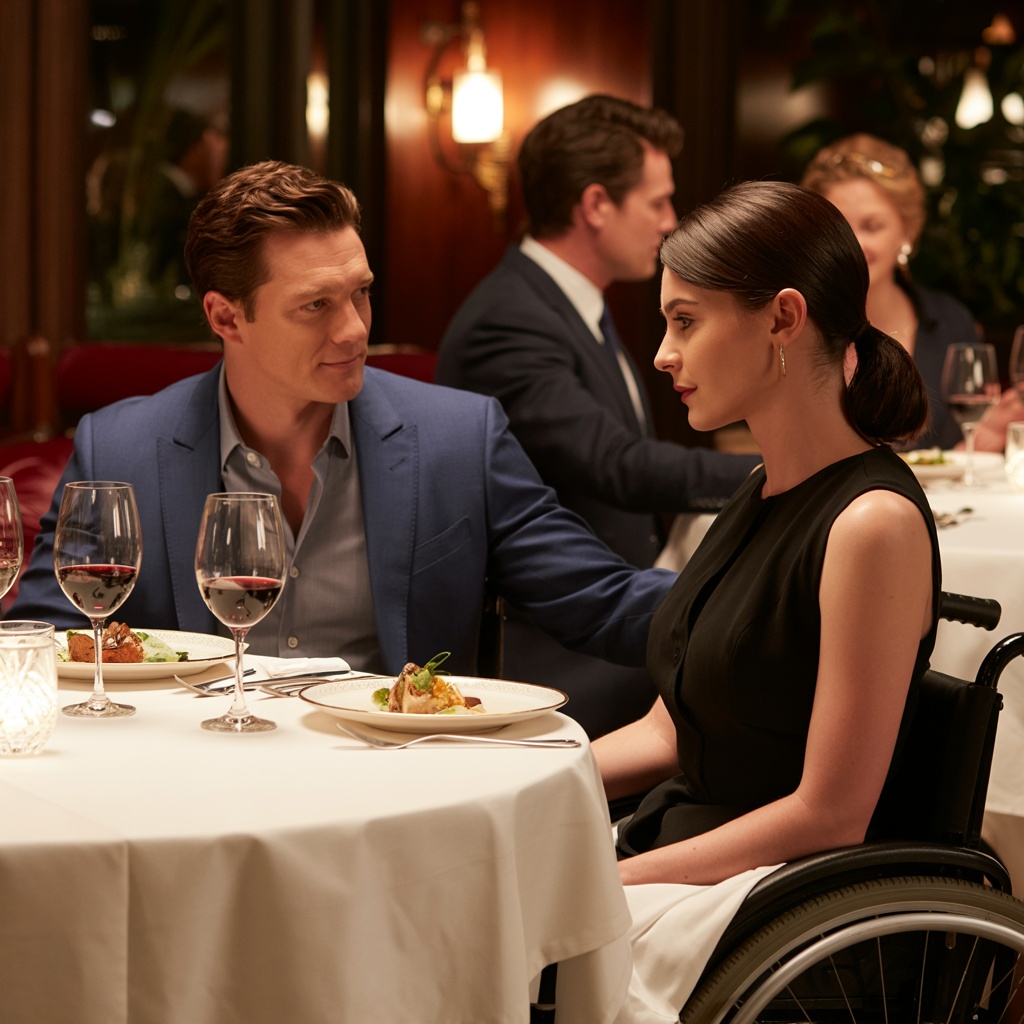
They shared quiet dinners at a small restaurant by the marina, away from the curious eyes of their colleagues. For Williams, Juliana was light after years of darkness. Her laughter pulled him out of the shadow of his past. Her faith in him reminded him that he was not just a man who had been broken.
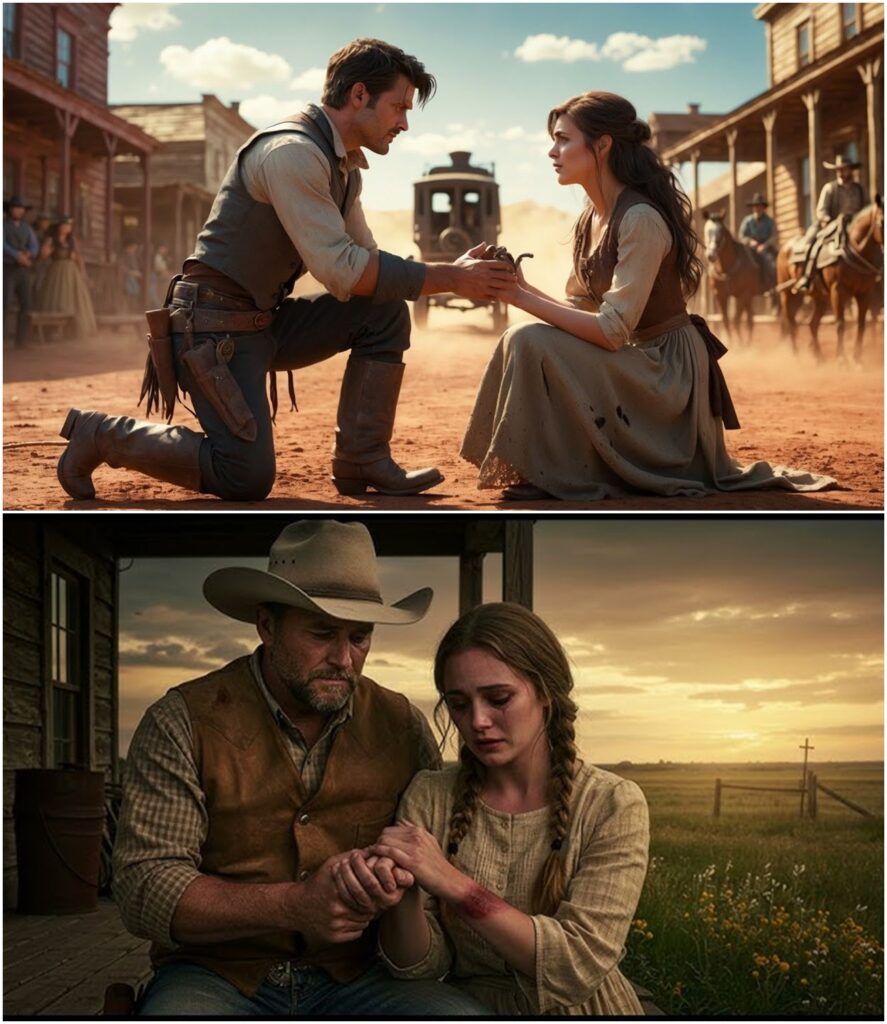
He was a man who could rebuild. 5 months later, beneath the glow of Lagos street lights, Williams knelt down with a ring in his hand and whispered, “Juliana, will you marry me?” Tears glistened in her eyes as she nodded. Yes, the wedding was set, and Williams moved into a new mansion on Banana Island, a gift from Johnson, who insisted that a man of his brilliance deserved nothing less.
For Williams, it was more than a house. It was proof that life could begin again. But while Williams dreamed of a new future, Oena plotted in the shadows. One evening, in a dimly lit bar tucked away on the mainland, he met with a group of rough men. Their leader, a scar-faced thug called Django, leaned across the table.
“So, you’re saying you want him gone?” Django asked, his voice low. “Oh’s eyes gleamed with cold fury.” “Not just gone. I want him broken. He humiliated me. Stole my position. And now he lives like a king while I sit in his shadow. I want him to feel what it’s like to lose everything.” Django smirked. “For the right price, we can make that happen.
” Oena slid a thick envelope across the table. Django peeked inside bundles of Naira stacked neatly. He whistled softly, “It will be done.” The night before Williams’s wedding, the mansion was quiet. Juliana was at her family’s house, preparing for the big day. William sat in the living room, flipping through his old engineering book, a soft smile on his face.
He thought of the journey from the cold bridge to this warm home, from despair to joy. Then a knock at the door. He frowned. It was late. Who could it be? He rose, walked to the door, and pulled it open. Three men in dark jacket stood there. Before he could ask a question, one of them raised a gun.
The shot rang out, tearing through the night. Williams gasped as fire exploded in his upper arm. He stumbled back, clutching the wound, blood soaking his sleeve. The men didn’t wait. They turned and ran before the guards outside could react. Chaos erupted.
Security shouted, alarms blared, and Williams collapsed onto the polished floor, his vision blurring as he drifted into unconsciousness. One thought echoed in his mind. “Not again. I can’t lose it all again.” The sirens of the ambulance wailed through the Laros night, racing down the third mainland bridge toward the hospital. Inside, Williams lay on a stretcher, his face pale, his arm wrapped in blood soaked bandages.
His eyelids fluttered as he fought to stay awake, the pain pulling him down into darkness. Beside him, Juliana held his uninjured hand tightly, her eyes red from tears. She whispered prayers through trembling lips. “God, please don’t take him from me. Not now. Not when we’ve just begun.” Johnson Uche followed closely behind in a black SUV, his mind racing. He replayed the scene over and over. The mansion gates open, guards shouting, Williams’ blood staining the tiles.
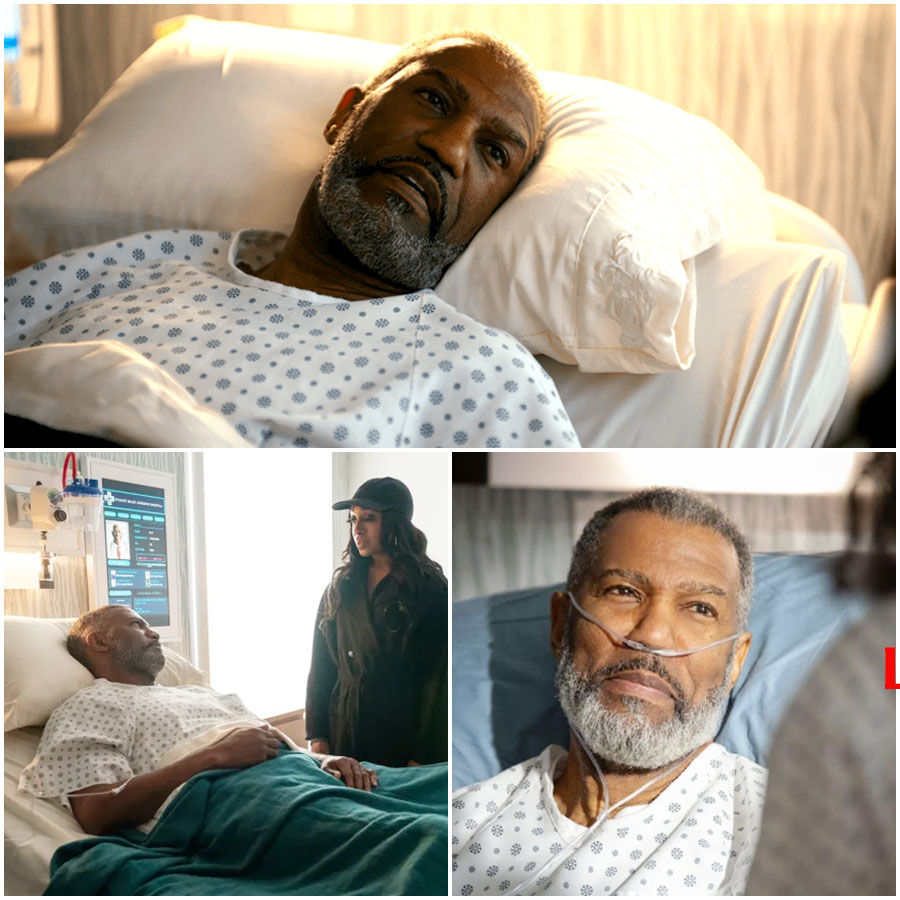
His chest achd with guilt. I should have seen this coming, he muttered to himself. I should have protected him better. At Lagos University Teaching Hospital, doctors rushed Williams into emergency surgery. For 3 days, he lay unconscious in a hospital bed. his body fighting for life.
The once vibrant man who had saved aerospace and won hearts was now silent, his breathing supported by tubes. Juliana never left his side. She refused to eat, refused to rest. Her head often rested on his chest, listening to the weak rhythm of his heart. As though her presence alone could call him back. On the third night, when hope was beginning to slip away, William stirred. His chest rose with a shaky cough and his eyes slowly opened.
Juliana gasped and clutched his hand. “Williams! Oh, thank God!” Tears spilled down her face as she pressed her forehead against his. The doctors rushed in, checking his vitals, but Juliana didn’t move. She couldn’t. Her heart felt like it had been given back to her. When Johnson arrived that morning, relief washed over him at the sight of Williams awake. My brother, he said, gripping Williams’s good hand.
You scared us all. But you’re not leaving us yet. Not when the world still needs you. Williams gave a weak smile. It’ll take more than a bullet to finish me. But behind his humor, his mind turned. Who would want me dead? The answer came a week later.
Johnson ordered a full review of the CCTV footage from the mansion. Security teams combed through the video until finally the truth glared back at them. There he was, Obina Okoy, the man who had once been aerospace’s lead engineer, the man who had stood in the back of the room watching Williams take his place. On the footage, Oina appeared outside the mansion gates hours before the attack. Speaking with the very men who later stormed the door.
When Johnson saw the footage, his hands trembled with rage. “Oner,” he hissed. “How could you?” The evidence was undeniable. Armed with confessions from the captured attackers led by the scarred thug Django, the police moved quickly. Obina was arrested at his apartment in Leki, dragged out in handcuffs as neighbors watched in shock.
In the interrogation room, Oena sneered when confronted. He stole everything from me. He spat, “Do you know who I was before that beggar walked in? I built this company with my ideas and Johnson threw me aside for a man who smells of the street. I won’t let him live my life while I rot in his shadow. But his arrogance couldn’t save him. The evidence stacked too high. The testimonies too clear. The case was sent to the Federal High Court.
And soon Obner stood trial for attempted murder and criminal conspiracy. The courtroom buzzed with tension. Reporters filled the benches, eager for every word. On one side, William sat with Juliana, his arm still bandaged, but his spirit unbroken. Johnson sat beside him, a protective figure.
On the other, Obina stood tall in a dark suit, his eyes filled with cold defiance. Witnesses testified guards, engineers, and finally Django himself, who admitted Obina had hired him. The evidence was undeniable. When the judge finally spoke, the air turned heavy. Obina Okcoy, this court finds you guilty of attempted murder and criminal conspiracy. You are hereby sentenced to 20 years imprisonment.
Gasps rippled through the courtroom. Juliana let out a breath she had been holding. Johnson nodded grimly. Justice served, but Aena was not done. As officers led him away in chains, he turned his head sharply toward Williams and Johnson. His voice carried like venom. This isn’t over, he snarled. Mark my words. I’ll come back for you. I’ll destroy both of you and everything you’ve built.
The courtroom erupted in noise, but William sat steady, his eyes fixed on his enemy. He spoke calmly, loud enough for Oba to hear. “You’ve already destroyed yourself.” The officers dragged a binner away, his threats echoing behind him like a storm receding into the distance. A month later, Williams was back on his feet. The company welcomed him with cheers, the engineers rallying around him more than ever.
Juliana stood proudly by his side, her hand in his, the wedding plans back on track. And though scars lingered both on his arm and in his heart, Williams knew one truth. He had faced betrayal and survived. But life still had more in store. Because while one enemy had been locked away, the shadows of the world never truly disappear.
And soon, another test, greater and more dangerous, was waiting just around the corner. The sun rose over Lagos, painting the lagoon in gold. The city hummed awake, hawkers calling, buses honking, markets alive with sound. For Williams, this day meant more than any sunrise he had seen in years. Today, he would finally marry Juliana. The mansion bustled with activity.
Taylor’s arrived with clothes, decorators filled the hall with flowers, and chefs prepared feasts fit for royalty. In the middle of it all, William stood in his new suit, sharp, elegant, and proud. When he caught his reflection in the mirror, he smiled faintly. Gone was the man who once slept under the echo bridge.
In his place stood a man restored, a man with purpose. Juliana appeared at the top of the staircase in her gown, glowing with joy. The moment their eyes met, the room seemed to pause. Johnson, standing nearby, wiped at his eyes discreetly. You deserve this, Williams,” he whispered. “After everything you’ve endured, you deserve happiness. The wedding was nothing short of breathtaking.
” At the Grand Church in Victoria Island, the pews overflowed with friends, engineers, business leaders, and even government officials, eager to witness the union of the man who had saved aerospace. Cameras flashed as Juliana walked down the aisle, her veil trailing like a river of light.
Williams’s heart pounded, but when she reached him, all the noise in the room melted away. “You may kiss the bride,” the pastor declared. When their lips met, applause erupted. Guests rose to their feet, clapping and cheering. Johnson stood with both hands raised as if celebrating his own victory. It was more than a wedding. It was redemption. A homeless beggar restored not just to dignity, but to love.
The reception glowed with laughter, music, and dancing. Juliana’s eyes never left Williams, and Williams never stopped smiling. For one night, at least, all shadows seemed gone, but shadows have a way of waiting. Williams and Juliana sat in their mansion’s living room, cradling their newborn baby boy. He was tiny, wrapped in soft blue cloth, his little breaths steady against Juliana’s chest, they named him Clinton.
Williams touched his son’s forehead gently. You will never know the life I lived under that bridge, he whispered. You’ll only know love. Juliana kissed his cheek. He already has everything he needs you. For a while, peace seemed complete. The company thrived. Their home filled with joy, and Williams had a family again.
But even in prison, Oena’s words lingered like a curse. This isn’t over. The reminder came sooner than expected. One evening, Johnson arrived at the mansion with troubling news. He sat with Williams in the study, his expression grim. We received word from inside the prison, Johnson said slowly.
Oena has been talking. He claims he has connections outside people who owe him favors. He says even behind bars, he can still reach you. Williams frowned, his hand tightening on the armrest. He’s locked away. What more can he do? Johnson leaned forward. He’s dangerous, Williams. And desperate men find desperate ways.
I don’t want you taking this lightly. Williams sighed, his mind flashing back to the gunshot. The pain, Juliana’s tears. He looked at Johnson with calm resolve. Let him threaten. I’ve lived through worse. What he doesn’t understand is that fear no longer rules me. Still, when he walked into Clinton’s room that night and watched his son sleeping peacefully, Williams silently vowed, “If Oena comes for us again, he will fail.” Weeks passed.
Williams settled into his role at aerospace, guiding the team with unmatched skill. Johnson often introduced him at meetings as the man who saved the skies, a title that humbled him but also carried weight. Juliana adjusted to motherhood with grace, though she often worried about the threats hanging over them.
“Promise me,” she whispered one night, “that no matter what happens, we’ll face it together.” Williams kissed her hand always. But far away, in the shadows of the prison yard, Oena stood by the fence, his eyes burning with hatred. Whispers circled among the inmates. Rumors of plans of men on the outside willing to carry out his bidding. One afternoon, as guards escorted him back to his cell, he leaned close to a fellow inmate and murmured, “Tell them, I’m not finished.
” Johnson and Williams think they’ve won, but they haven’t. I will come back for them. The inmate nodded slowly, and Oena’s lips curled into a thin, dangerous smile. Back at the mansion, William sat on the balcony with Juliana and little Clinton in his arms.
The sky above Lagos was painted with stars, the night calm and beautiful. He held his son close, his heart full. But deep inside, he knew peace was never permanent. Life had taught him that shadows always returned, even in the brightest light. Juliana leaned her head on his shoulder. “What are you thinking about?” He looked down at her, then at Clinton, and finally at the stars.
“I’m thinking about the future,” he said softly. “And how sometimes the fight isn’t really against enemies outside, but the ones within. Fear, doubt, pain. Those are the enemies I must conquer for him, for us.” Juliana squeezed his hand. And you will, because you’re William’s Andrew. You always rise.
The night air grew still, almost too still, as if the world itself was holding its breath. And though Williams didn’t say it out loud, one truth echoed in his heart. Oena’s war was not over. The shadows had only retreated, waiting. What is your view about this story? Where are you watching from? If you enjoyed this story, comment, share, and subscribe to our channel for more interesting stories.
News
“My Mom Is Not Guilty,” Said the Small Boy — What the Judge Found Out Left Him Speechless
The courtroom was silent until a trembling voice cut through the tension. Your honor, my mom didn’t steal anything. Gasps rippled across the room. A 9-year-old black boy stood alone before the judge, clutching a folder bigger than his chest. Behind him, his pale, tearful mother watched, handcuffed and accused of a crime she didn’t […]
Poor Black Girl Helped an Old Man Cross the Street — Unaware He Was the Town’s Richest Farmer…
At the busiest corner of town, traffic thundered and no one cared except Amir with patched shoes and a bag stitched together. She noticed an old man frozen at the curb, his cane trembling as cars sped past. Everyone else ignored him. Some even laughed at her for stepping forward. But Meera didn’t flinch. She […]
Boy Kicked Out by His Parents Returns 12 Years Later with his Nanny and Does Something Shocking.”
Thrown out for being dumb, young Daniel was left kneeling on the cold pavement while his wealthy parents shut the gates behind him. The only one who refused to walk away was Miss Ruth, the family’s old nanny, who quit her job and took him in with nothing but faith and sacrifice. Years later, Daniel […]
Black maid Stole the Billionaire’s Money to save his dying daughter, —what he did shocked everyone
Tasha was just a new maid, barely noticed, barely trusted. But when she found the billionaire’s daughter barely breathing, with no staff around and the mansion silent, she panicked. No calls were going through. No help was coming. So she did the unthinkable, broke into his locked office, grabbed the car keys and a bundle […]

Millionaire Comes Home and Finds His Pregnant Wife Crying—What He Discovered Shocked Him.
Millionaire comes home and finds his pregnant wife crying. David Whitman thought he had built the perfect life, but nothing prepared him for the day. He walked in early and found his young wife, Aisha, sobbing, her body covered in fresh bruises. Through her tears, she asked, “Am I ugly? Am I a monkey? Don’t […]
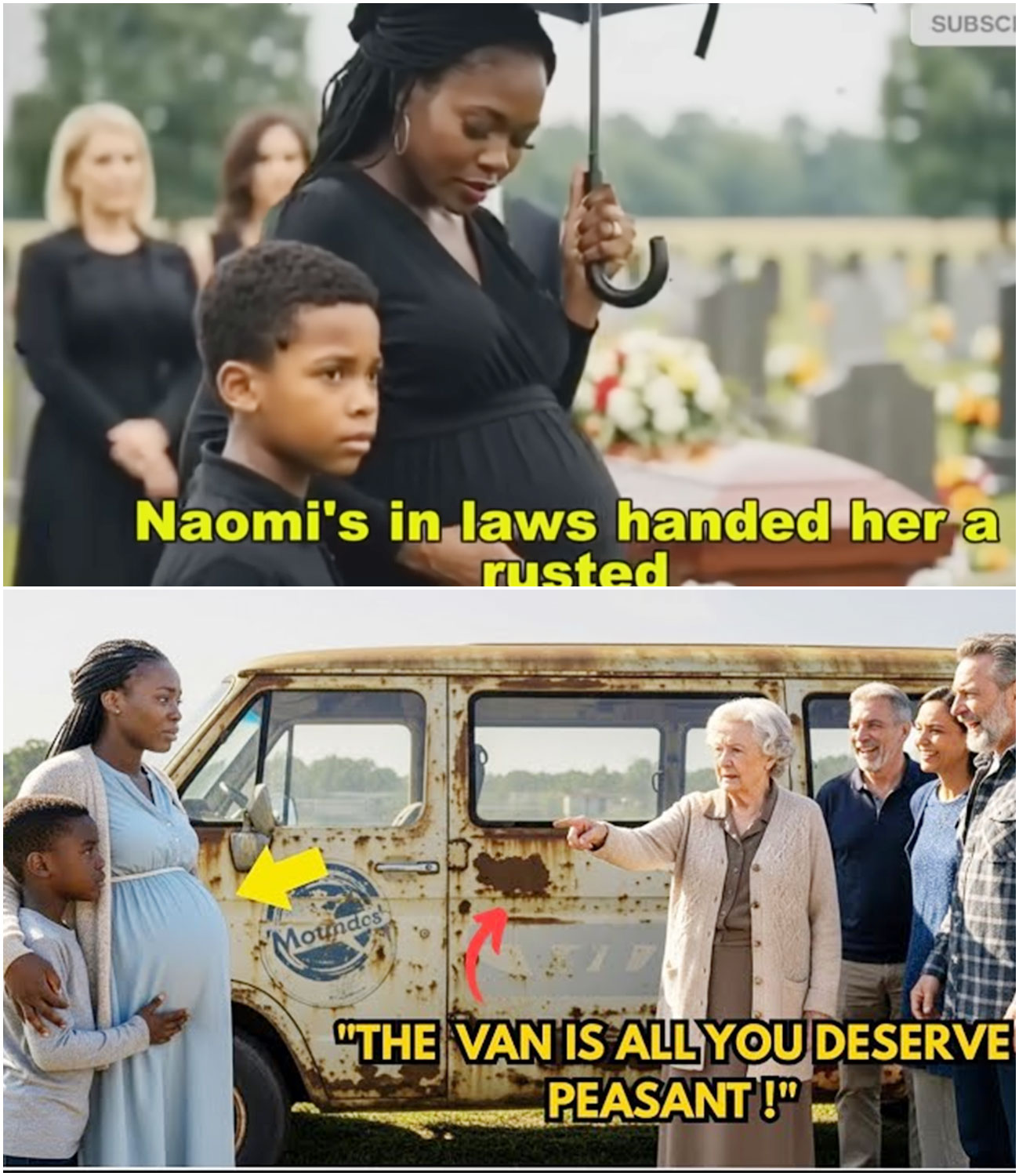
InLaws laugh as they gave her the Rusted van as her inheritance, — Unware the van was made of gold
At her husband’s funeral, Naomi’s in-laws handed her a rusted broken down van as her inheritance, laughing as they threw her out of the house and stole the businesses she’d built with him. 7 months pregnant, with her 10-year-old son beside her, she had no choice but to live in the van they claimed was […]
End of content
No more pages to load