



























































































































































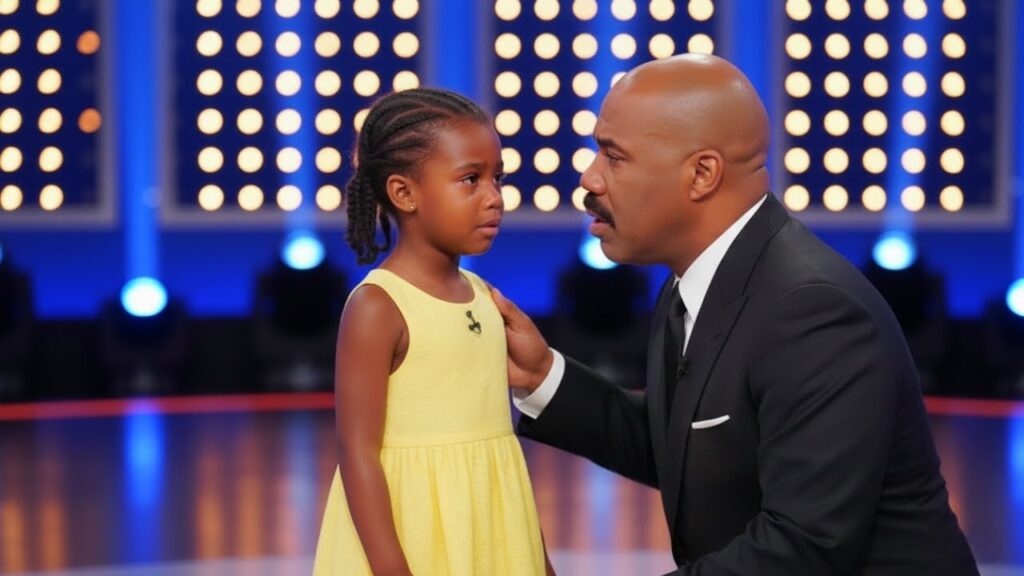







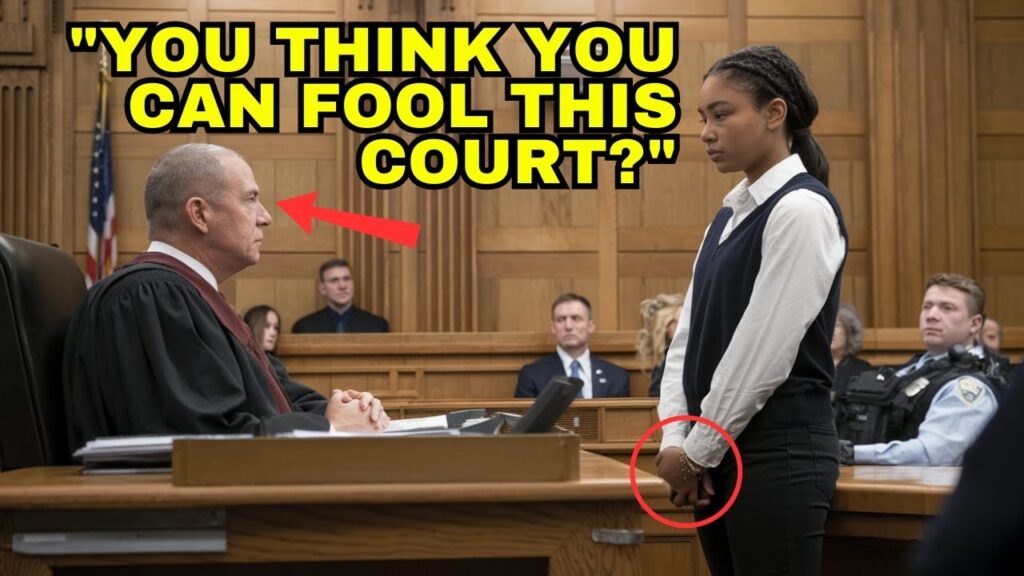

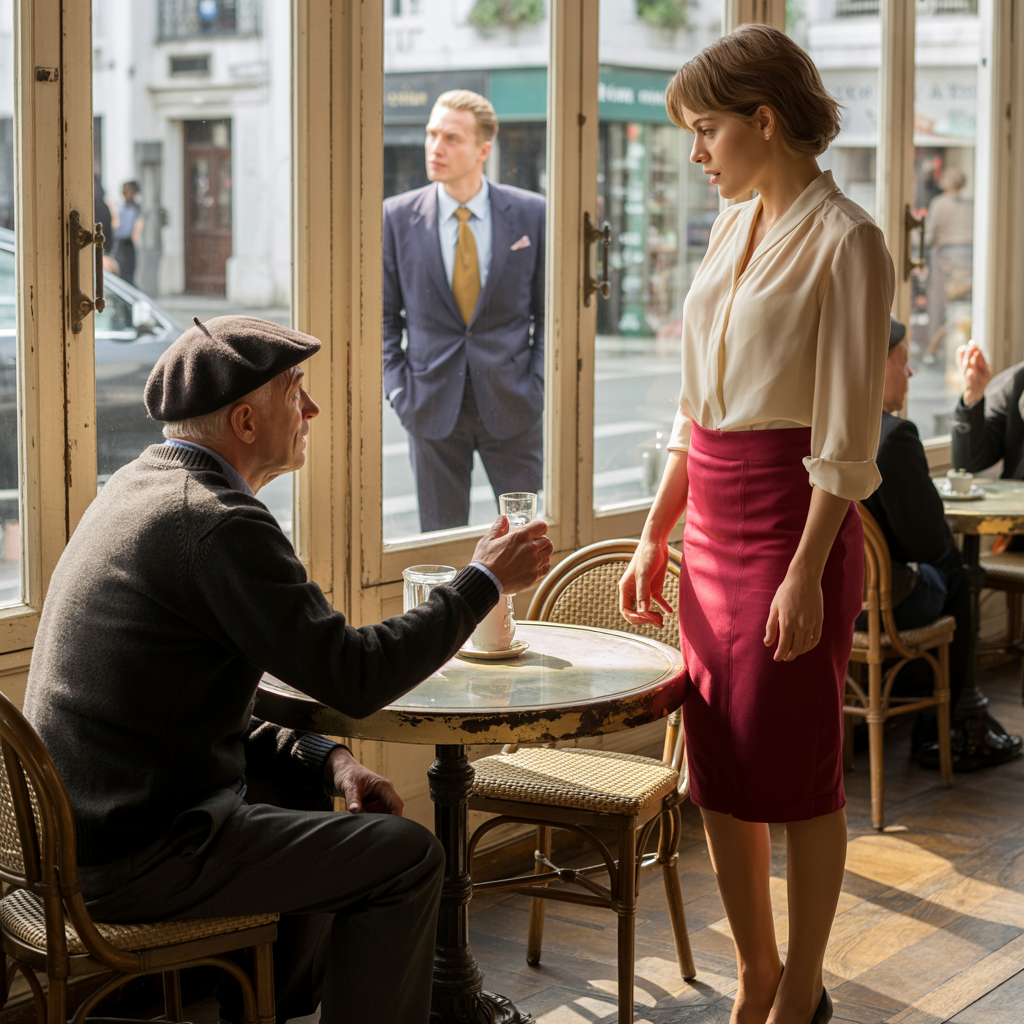
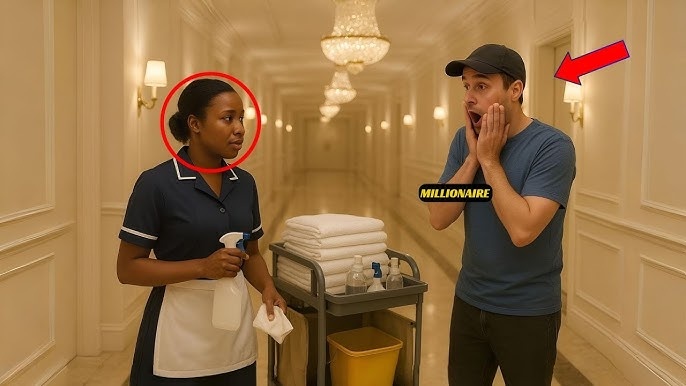

















































































































































































































































































































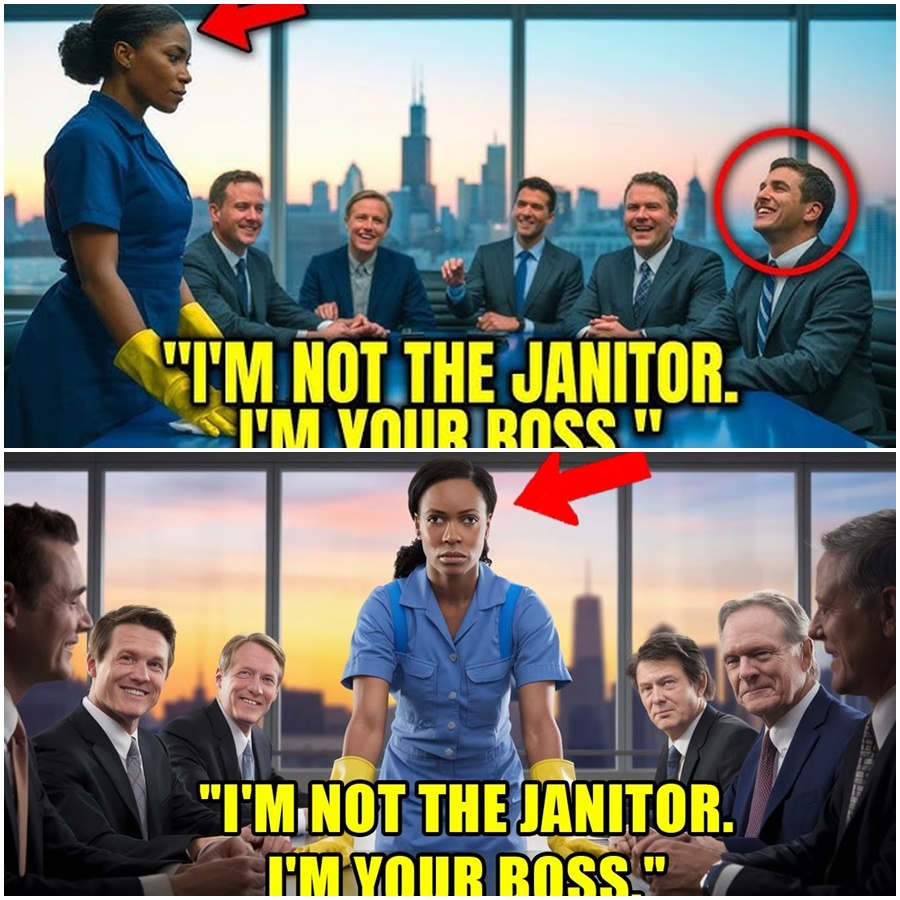
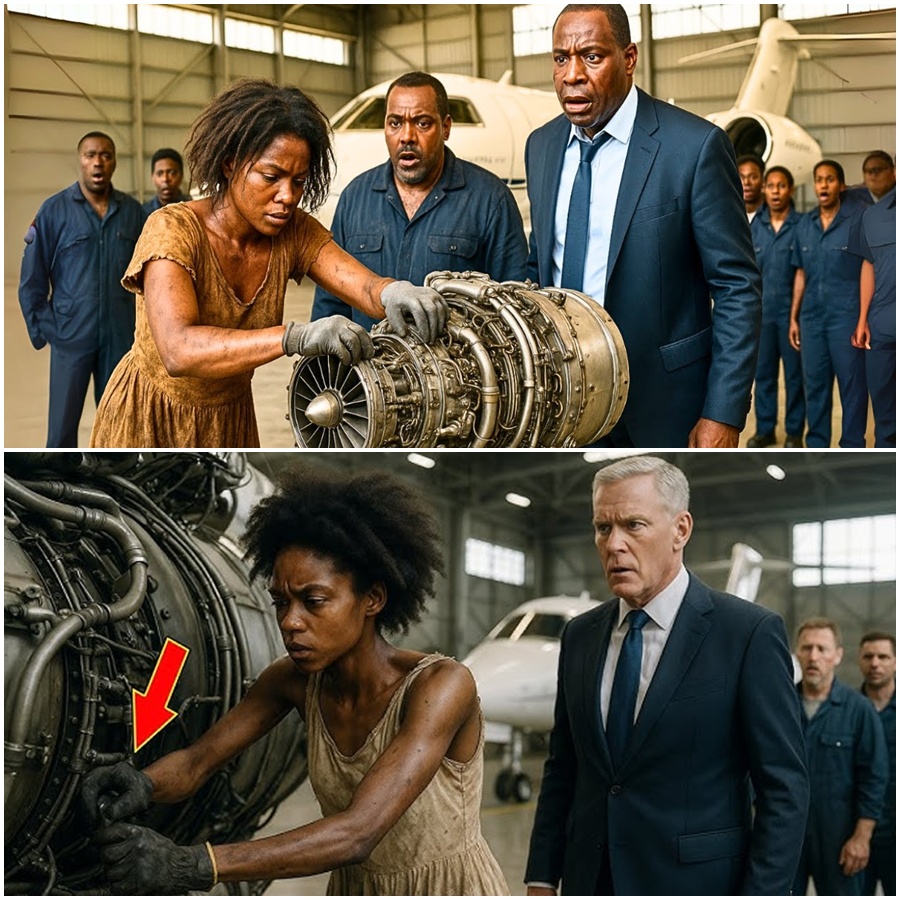





































































































































































































































































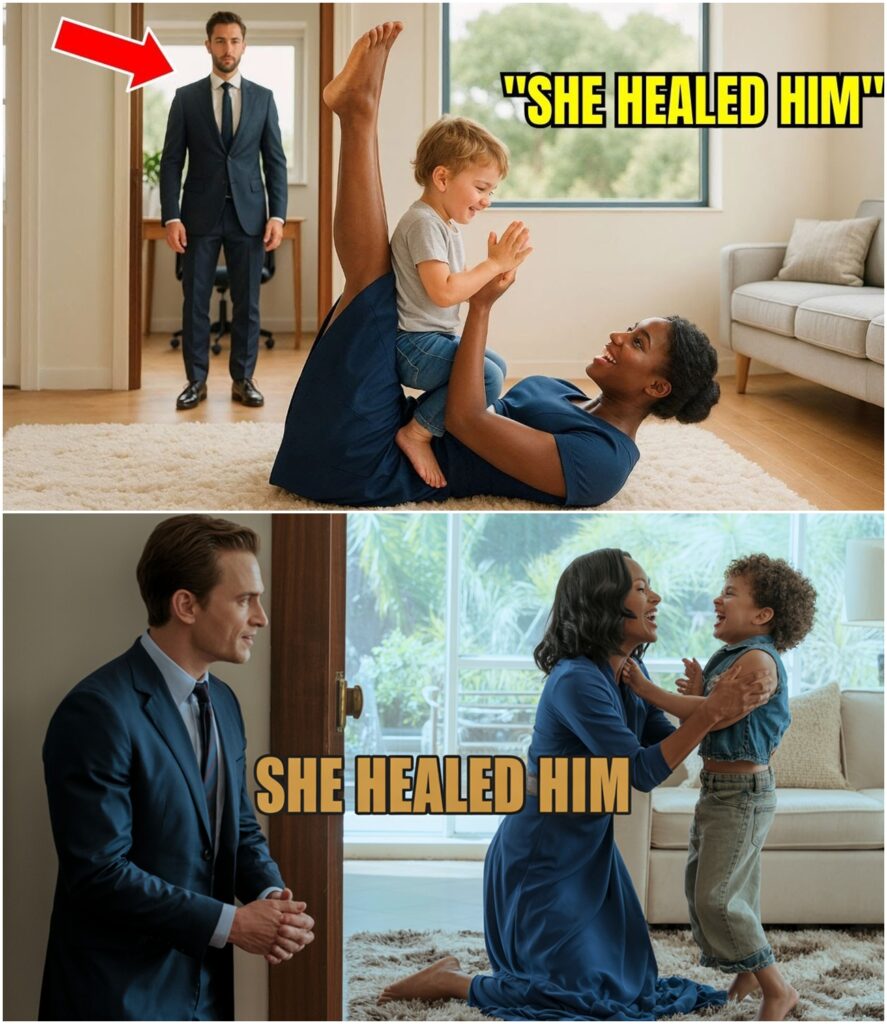

























































































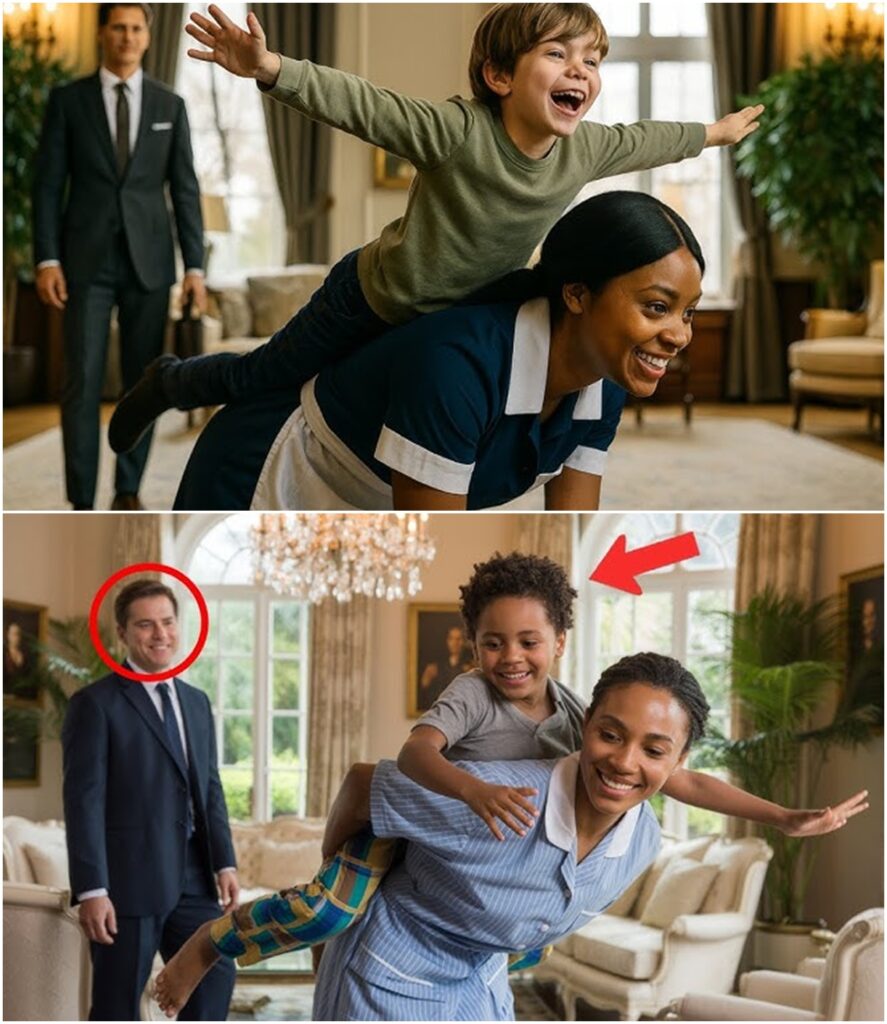




































































































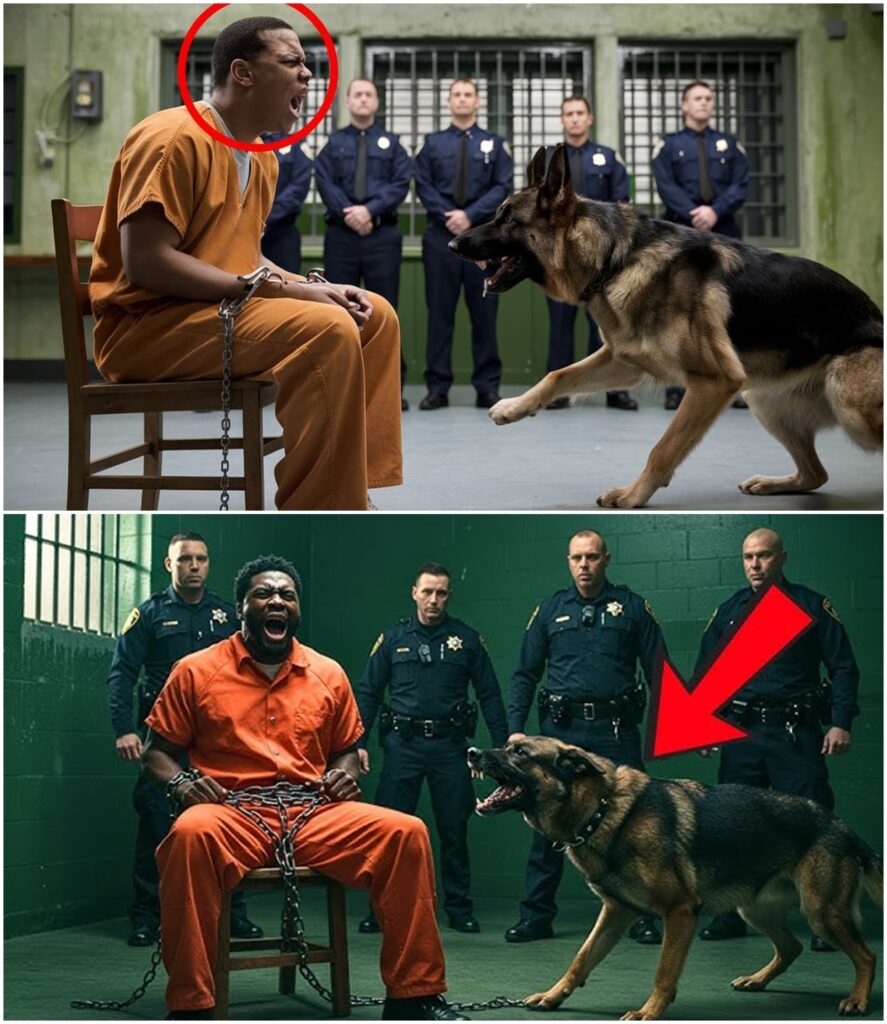
Waitress Refills His Coffee — CEO Sees Her Necklace, Freezes Mid-Sip: “That Was My Daughter’s!”

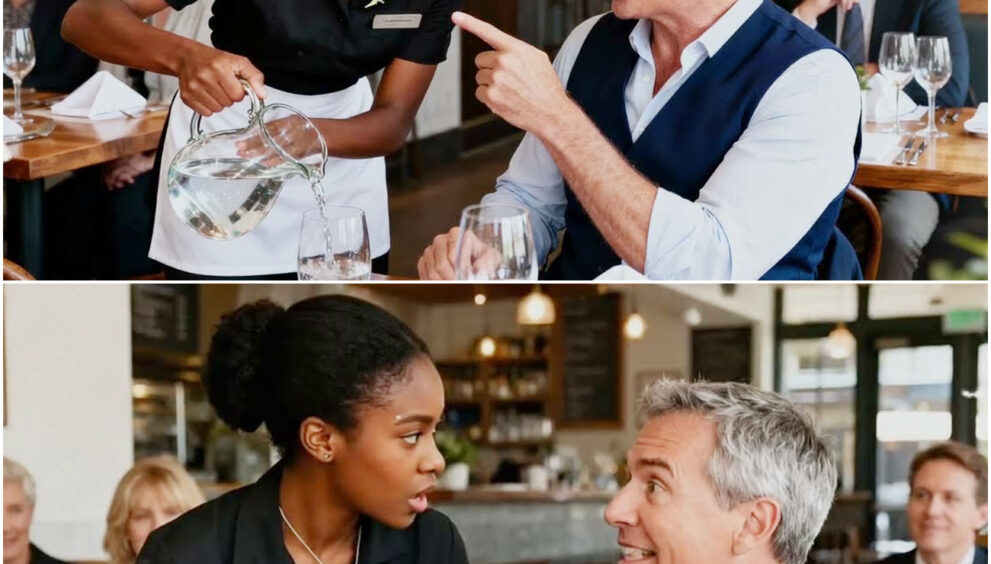
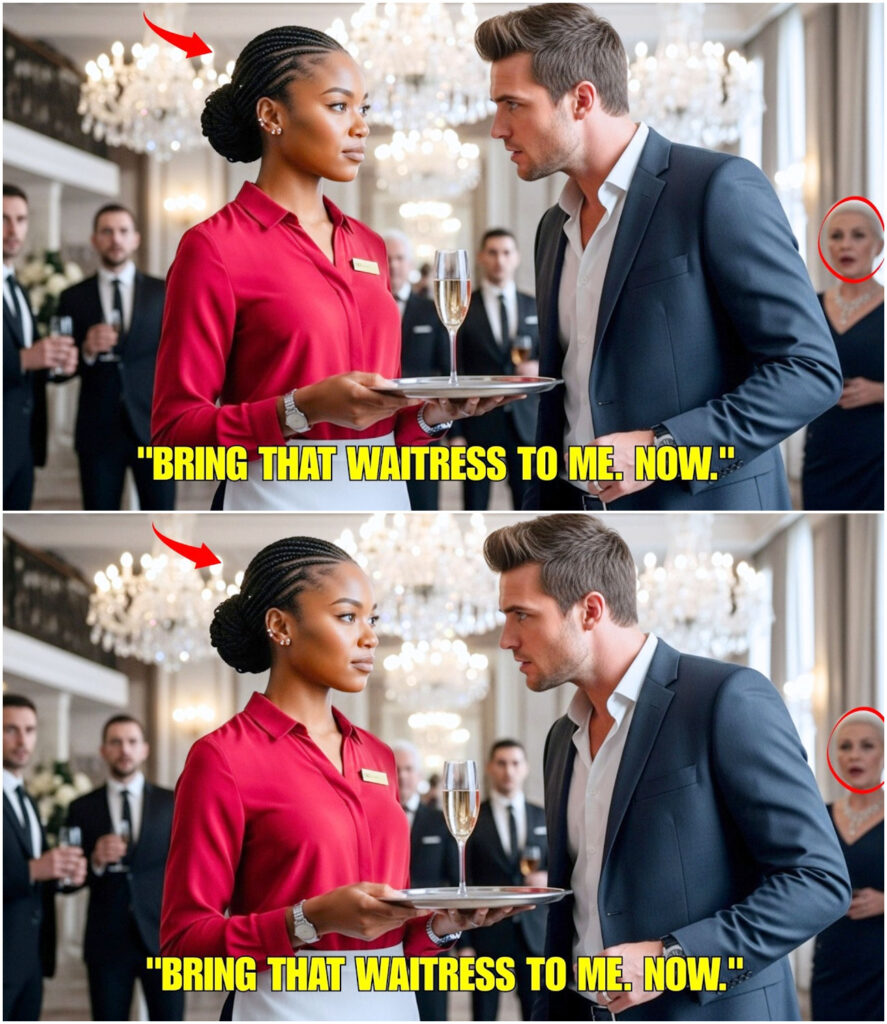
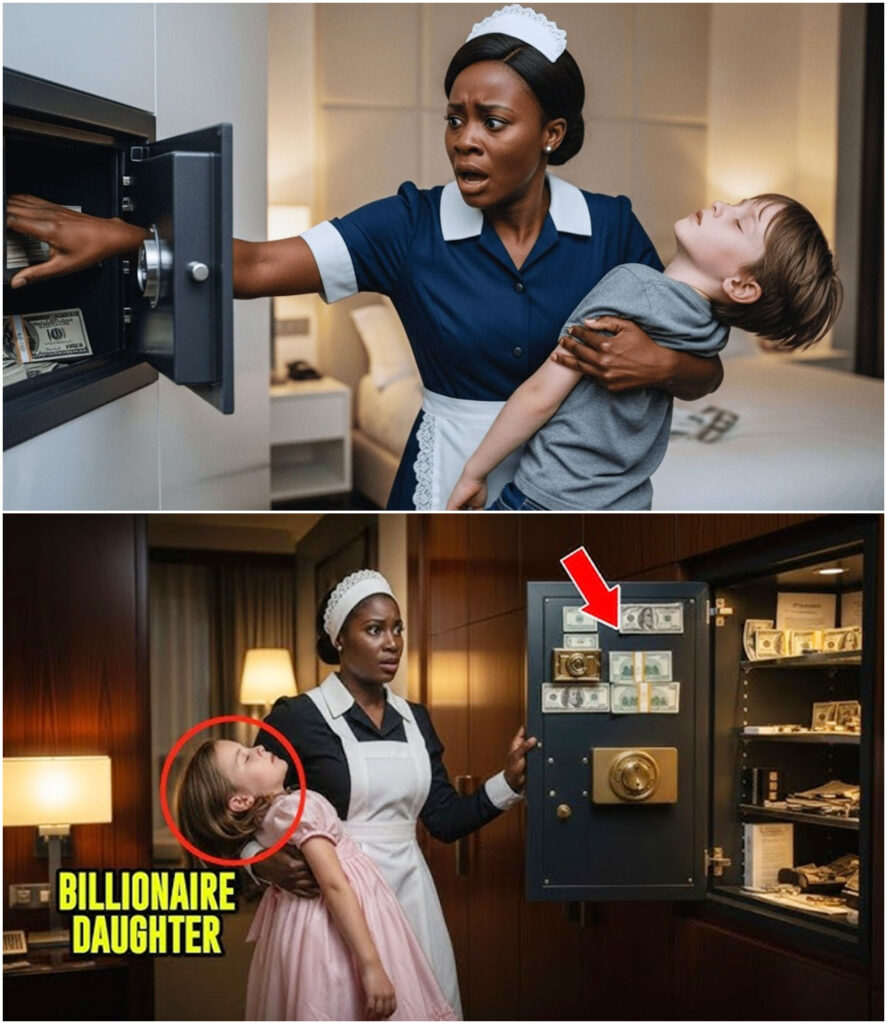
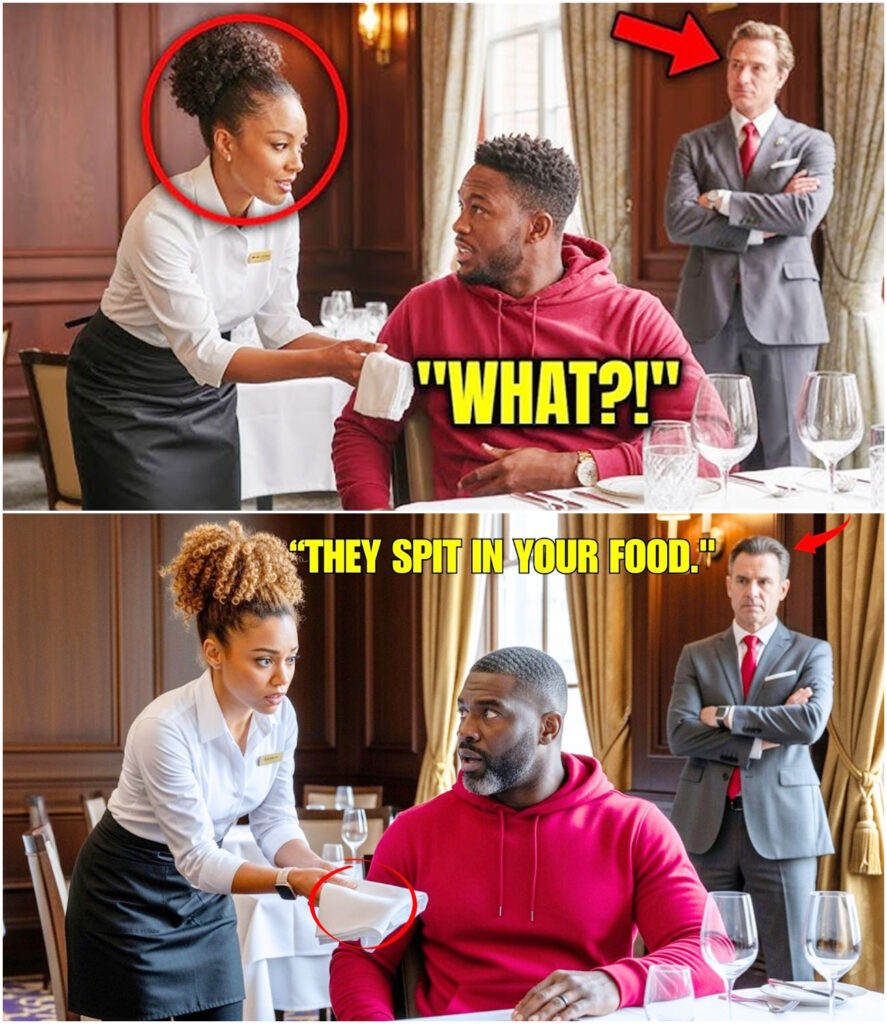
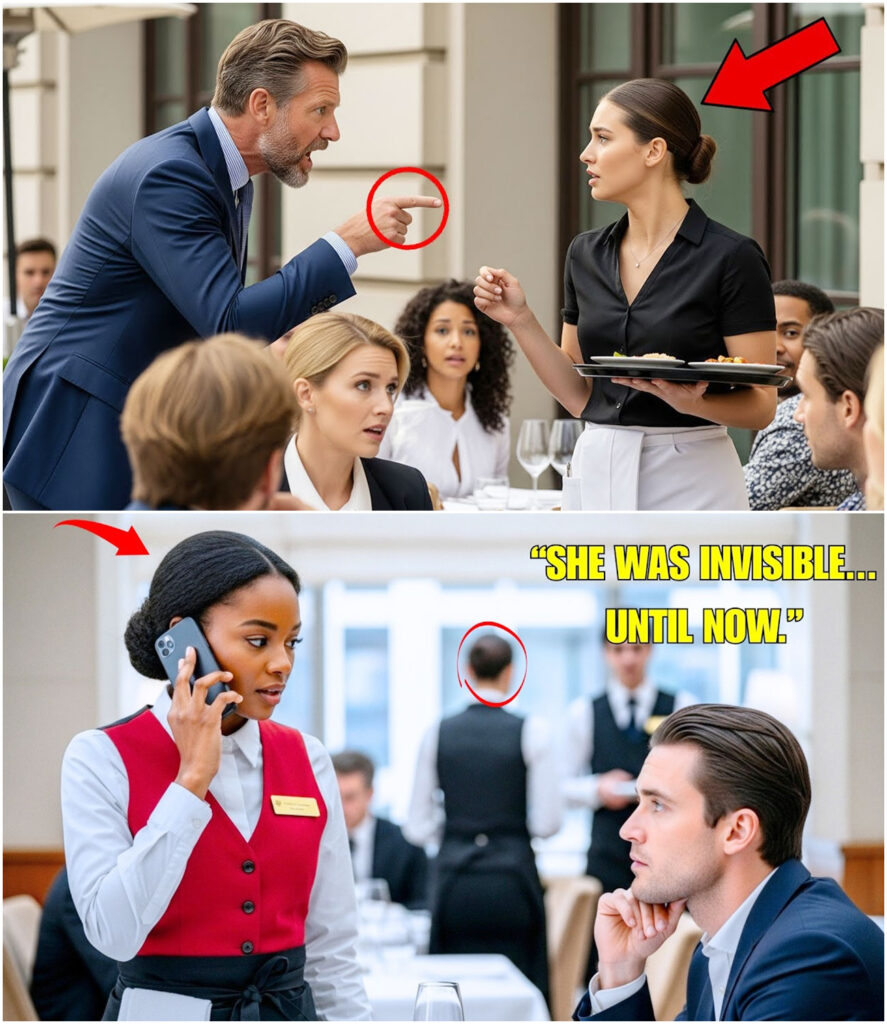
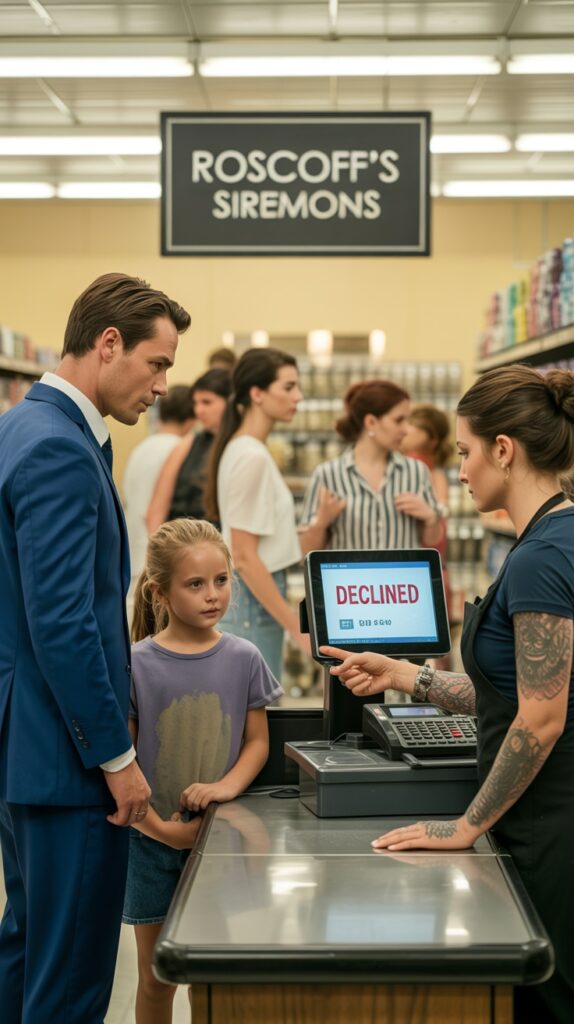
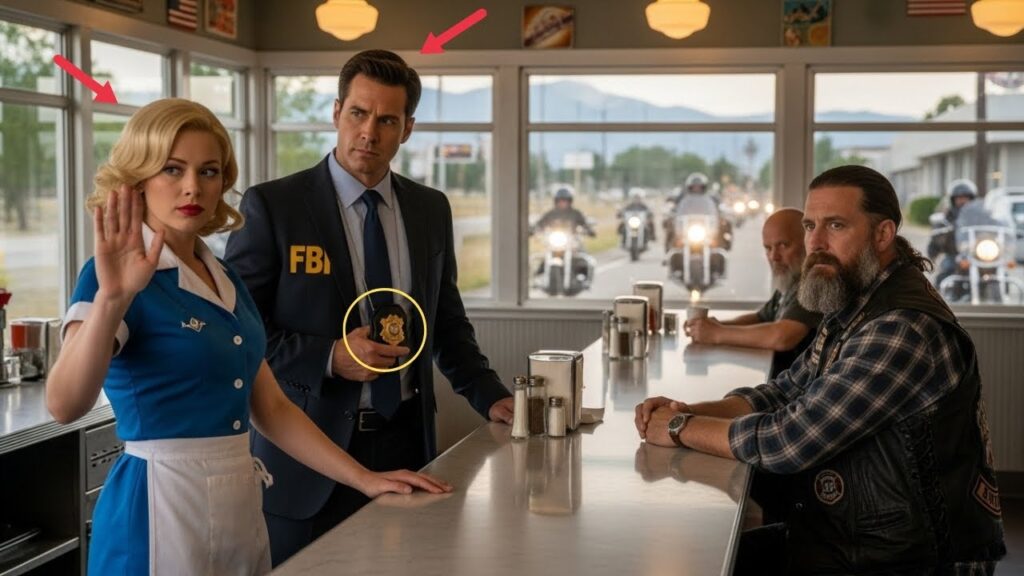
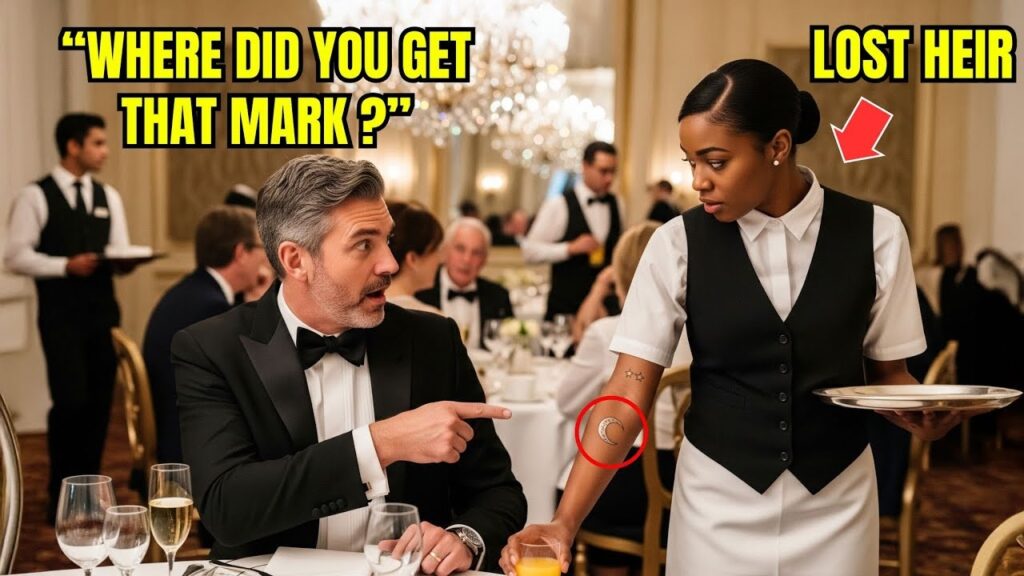
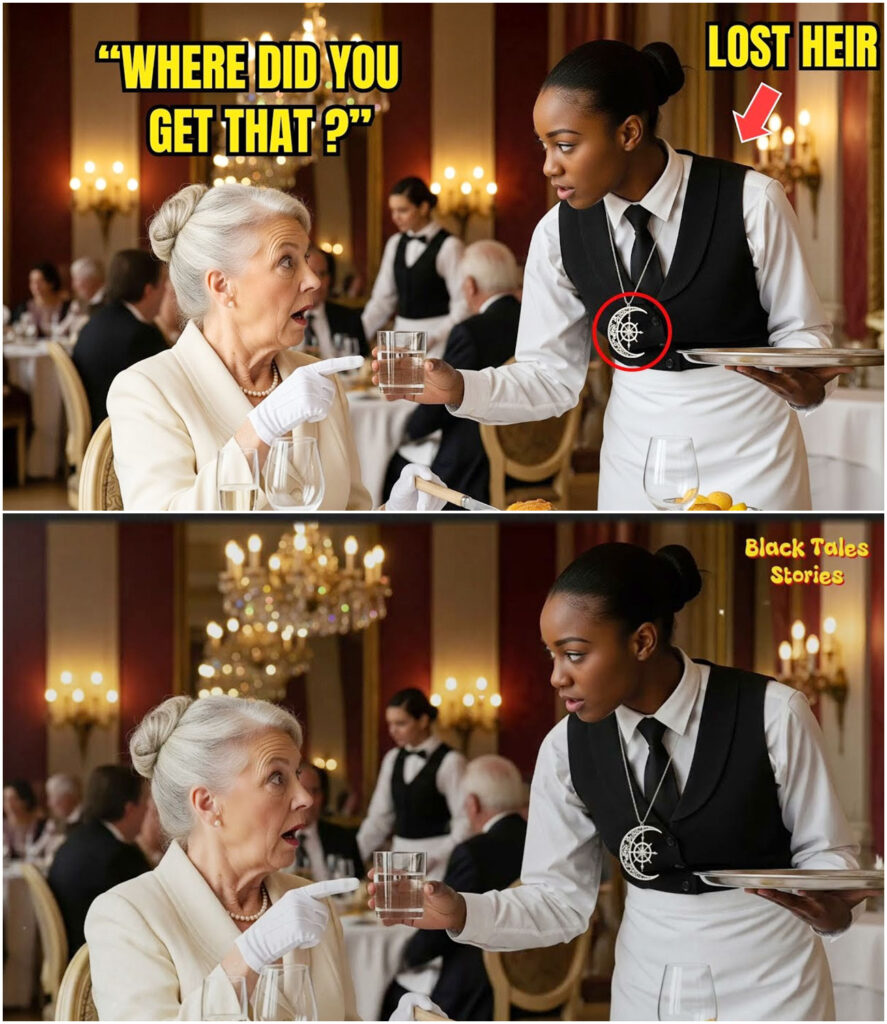
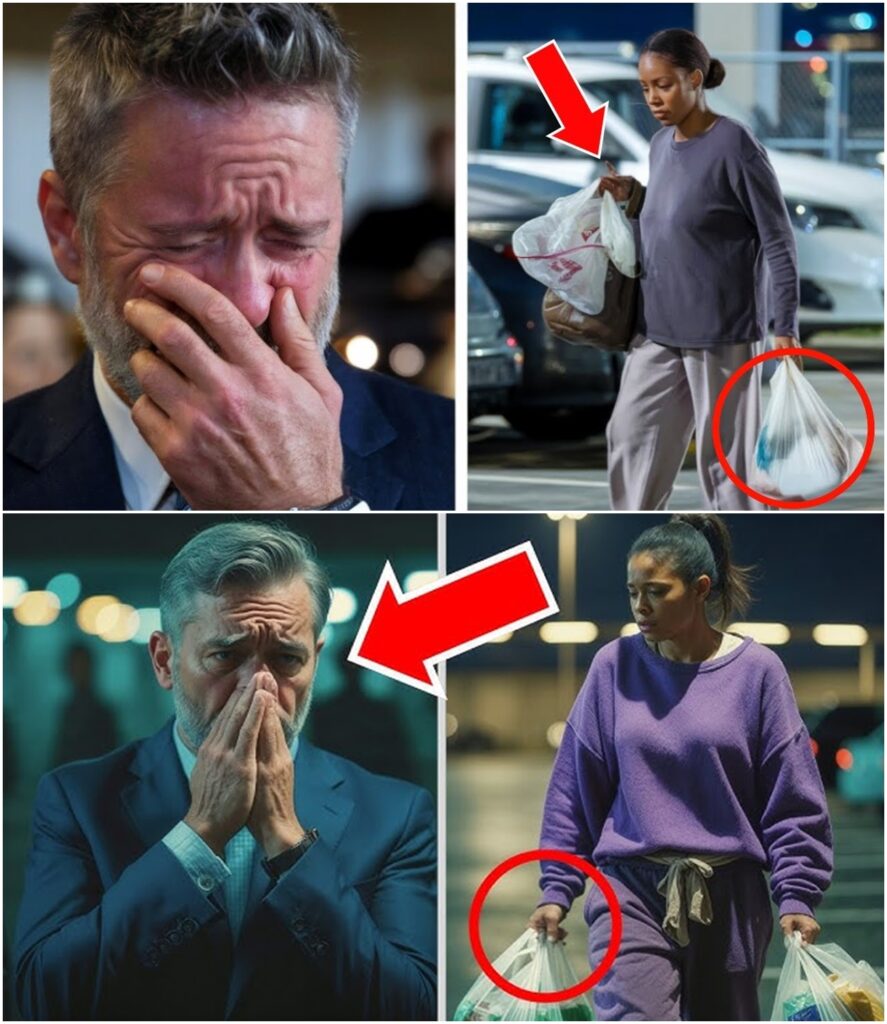
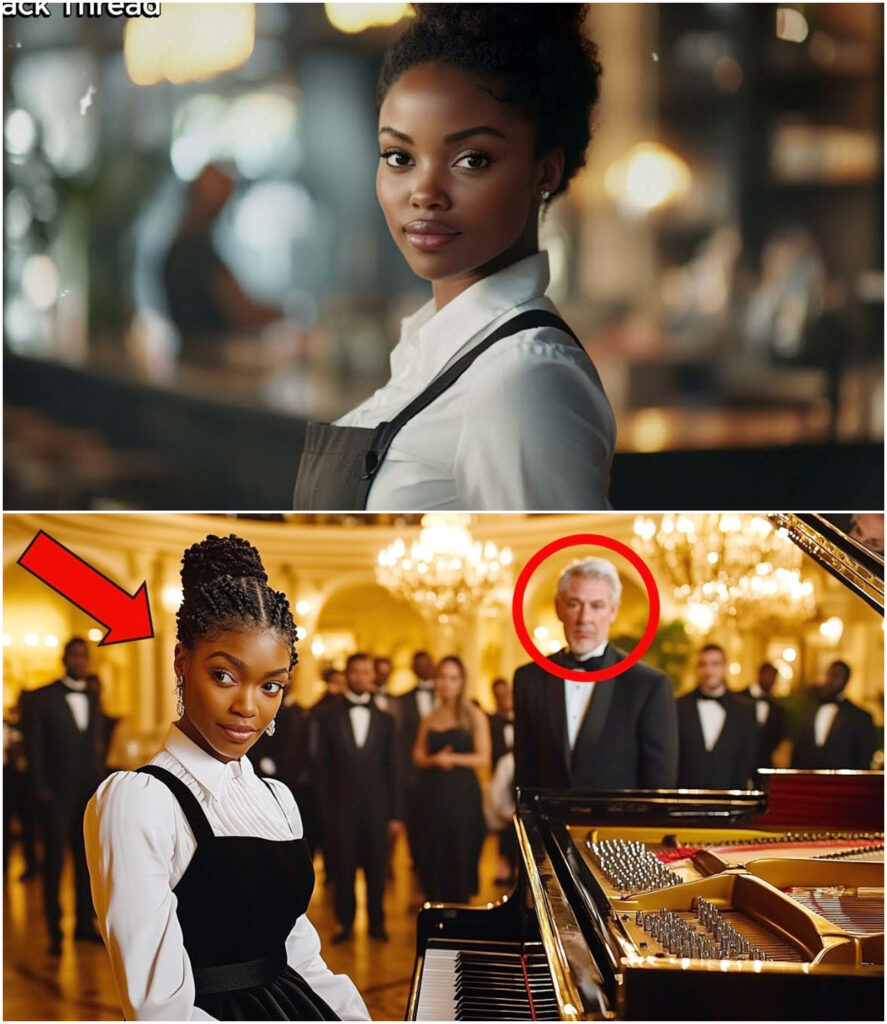
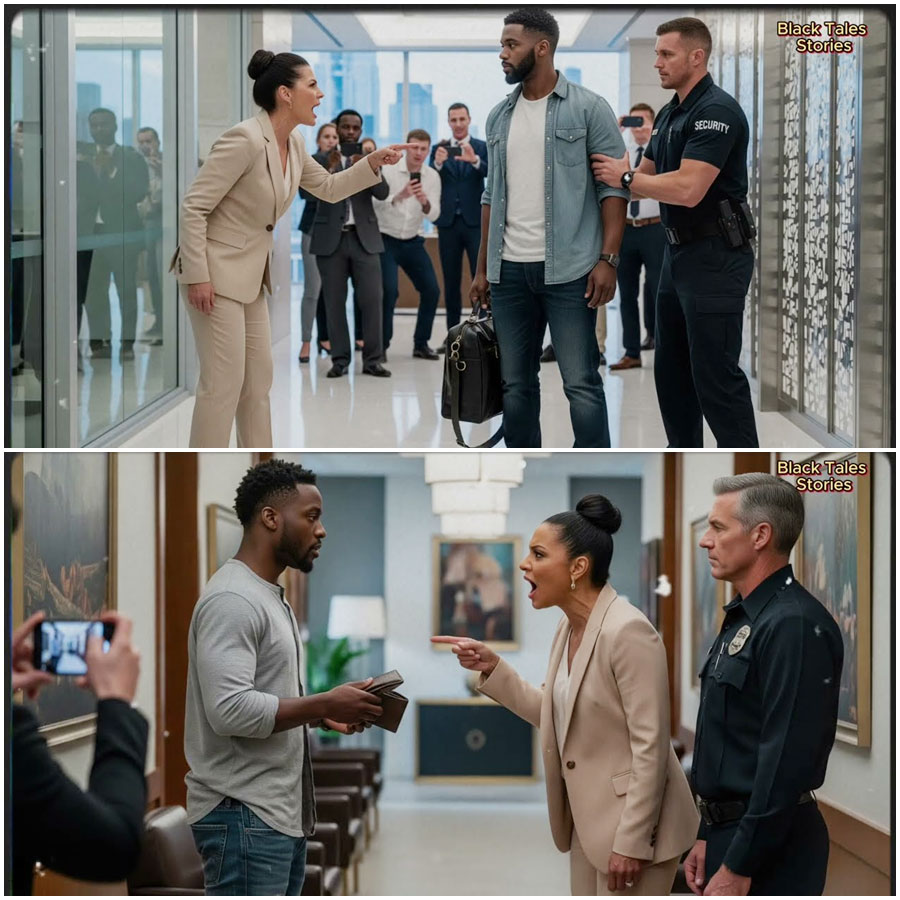
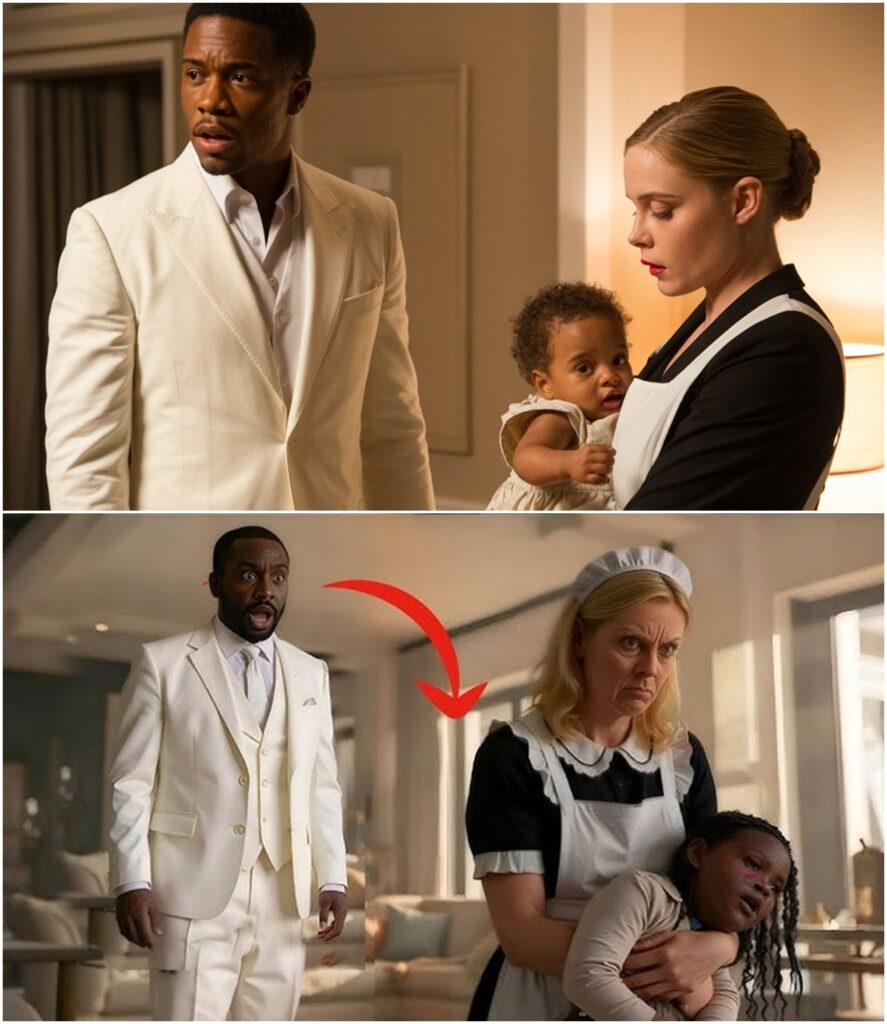
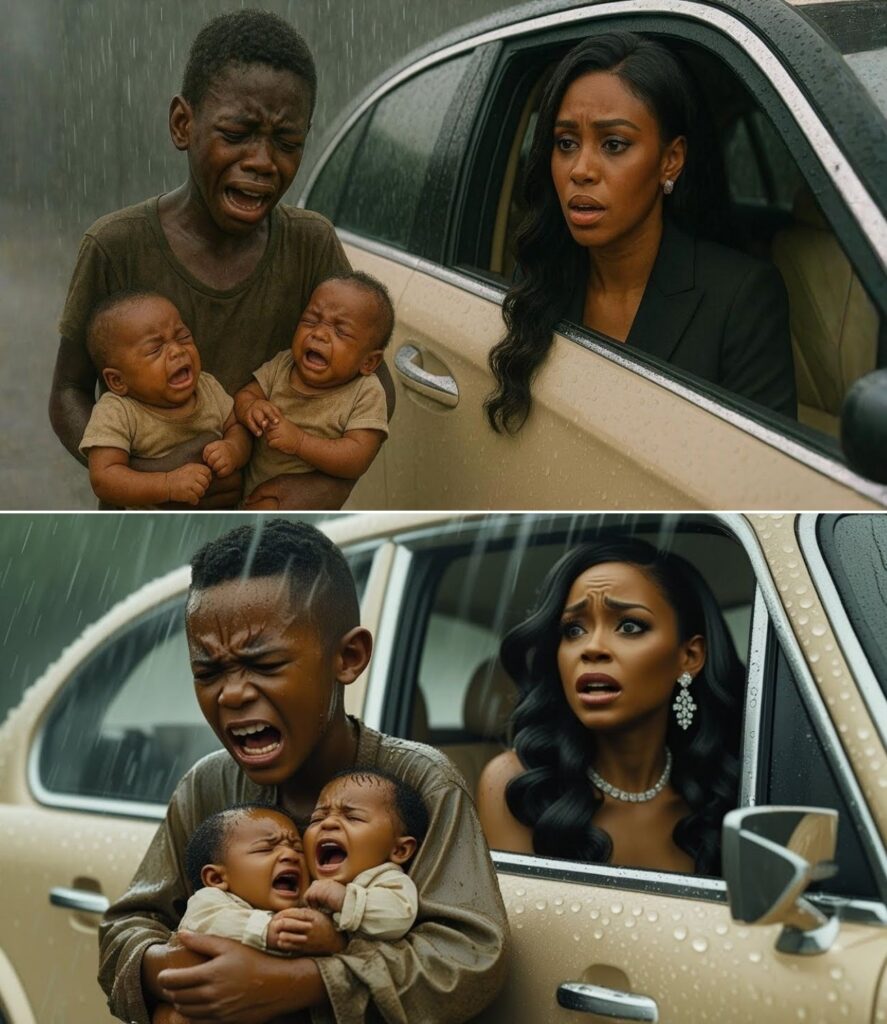
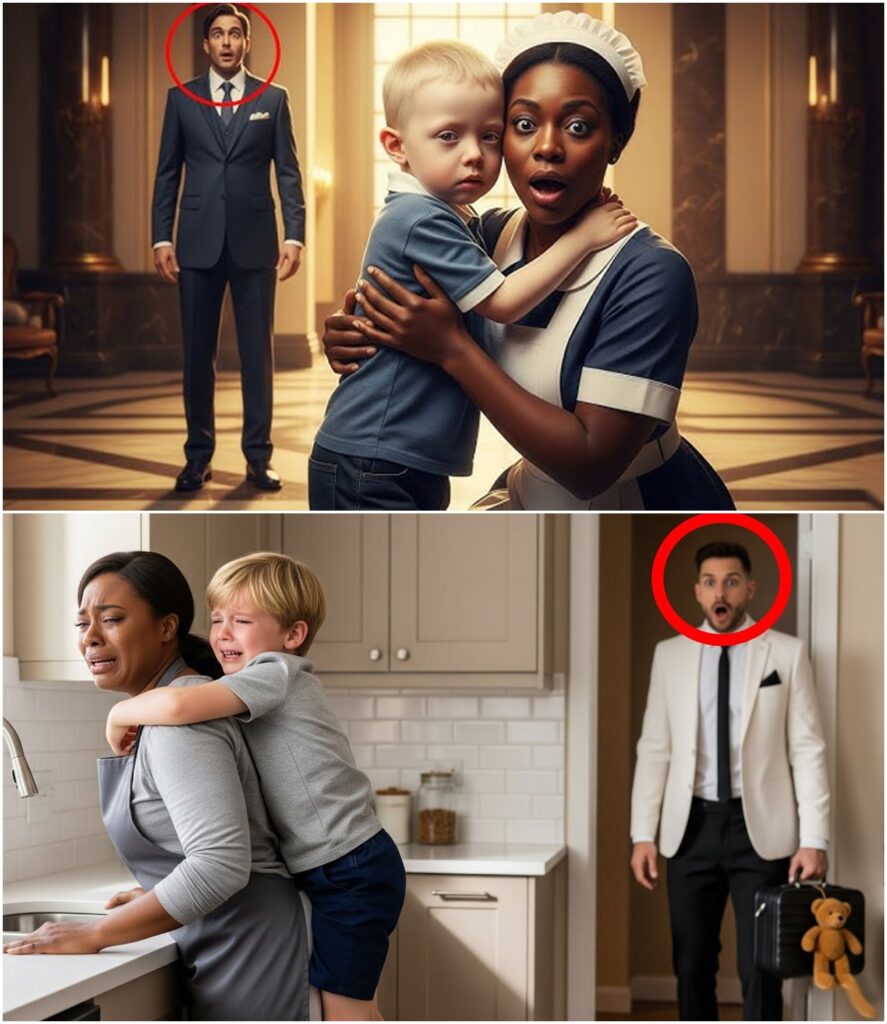
The coffee cup shatters. Glass explodes across the diner floor. Hot liquid spreads like dark blood on white tile. Amara Bennett freezes. Pot still in her hand. Her uniform collar has shifted. A silver necklace swings free. A bird in flight. Three tiny diamonds catching the morning light.
The man at table 7 is staring. Not at the mess, at her throat. His face drains of color. His mouth opens, but no sound comes. Coffee drips from his chin onto his expensive suit. Sir. Amara’s voice shakes. Are you that necklace? Julian Whitmore’s voice cracks. Where did you get it? He fumbles for his wallet with trembling hands. Shows her a photograph.
A little black girl wearing the identical necklace. That was my daughter’s. That was Elise’s. The diner goes silent. 26 Mondays, 26 cups of coffee. They’ve been 3 ft apart for 6 months, and neither of them knew. Have you ever wondered how many times fate puts the answer right in front of you, and you’re too blind to see it? Let me take you back.
6 months before that coffee cup shattered. Monday morning, 7:45 a.m. Amara Bennett wipes down table 7 for the third time. The formah is already clean, but her hands need something to do. Riverside Diner sits in Boston’s industrial district, two blocks from Newton’s wealthy estates, the kind of neighborhood where milliondoll homes give way to check cashing stores and laundromats. Amara works 70 hours a week.
Her basement apartment in Dorchester costs 1,800 a month. Mold creeps up the bathroom walls. At night, she takes online courses, graphic design, her escape plan, but exhaustion makes the screen blur. She’s 28 years old. She feels 50. The diner door opens. A white man in an expensive suit walks in. Salt and pepper hair. tired eyes that scan the room like he’s searching for something he can’t name.

Table for one? Amara asks. He nods. Sits at table seven by the window. This is their first Monday. But before we talk about him, you need to understand Amara’s secret. The necklace stays tucked beneath her uniform collar. Always. Tony, the manager told her, “No jewelry makes customers think you don’t need tips.” But Amara can’t take it off.
Won’t. It’s the only thing she has from before. Before the blank space in her memory. Before age seven. Before the morning she woke up outside St. Catherine’s Church in Roxberry, clutching this silver bird like a lifeline. September 1996. A woman named Dorothy Hayes found her at dawn. A little girl unable to speak. Bruises on her arms.
eyes vacant with shock. The police came, social services, hospitals. No one claimed her. They gave her a name pulled from thin air. Amara Bennett. 11 foster homes in 11 years. By 18, she was on her own. The necklace is all she has. A bird in mid-flight. Three small diamonds. Engraving on the back worn almost smooth. fly love always.
Late at night, she dreams, a woman’s voice singing, warm hands lifting her. You’re my little songb bird. She wakes up and the melody fades like smoke. Now back to the man at table 7, the one ordering black coffee, wheat toast, scrambled eggs. First time here? Amara asks as she pours. My driver took a wrong turn. Julian Whitmore says construction on the main road. That’s not entirely true.
Julian is the CEO of Whitmore Biomed. 4.3 billion. His face appears in Forbes, the Wall Street Journal. He could eat anywhere. But Julian asked to stop here, specifically here. Two blocks from his old estate in Newton, the house where everything fell apart 21 years ago. He sold the property in 2005. Couldn’t live there anymore.
But every Monday for 6 months now, he’s been drawn back to this neighborhood, a grief ritual he doesn’t fully understand. “Coffee, okay?” Amara asks. Julian looks up. really looks at her. Something in her face makes him pause. It’s perfect. Thank you. When she walks away, Julian pulls out his wallet. Inside is a photograph he’s carried for 21 years.
A little black girl, four years old, a bright smile, and around her neck a silver necklace, a bird in flight, three diamonds. His daughter, Elise, kidnapped June 15th, 1996. Ransom paid, never returned. The weeks blur together after that first Monday. Week 1 becomes week 2. Week two becomes 10. Julian comes every Monday.
Same time, same table, same order. Amara learns his routine, has his coffee ready before he sits down. They talk. Small conversations that start to feel less surface level. Week 10. He sees her reading a textbook. Graphic design. You’re in school. online courses trying to get out of here. That’s admirable. He means it.
Week 18. He leaves a $50 tip with a note for your tuition. Keep going. Amara’s throat tightens. She needs it too desperately to refuse. Week 23. I had a daughter once, Julian says quietly. If she were alive, I’d hope someone would help her the way I’m helping you. Amara’s hand freezes. I’m sorry. So am I.
Neither knows they’re talking about the same person. And then comes week 26, today, this morning. The moment when the collar shifts and the necklace catches light and 21 years of separation shatters like a dropped coffee cup. Amara stares at the photograph in Julian’s shaking hand. The little girl in the picture is wearing her necklace. The exact necklace. I don’t understand, Amara whispers.
I’ve had this since I was found outside a church, September 1996. The color drains from Julian’s face. Elise was taken in June 1996, 3 months ago. The diner goes silent. Every customer was watching. Tony rushes over. Mr. Whitmore, is there a problem? Julian ignores him. His eyes never leave Amara’s face. I need you to take a DNA test, please.
I’ve been searching for 21 years. Amara’s world tilts. You think I’m your I know you are. His voice breaks. I’ve been sitting 3 ft from you for 6 months and I didn’t know. The coffee pot slips from Amara’s hand, but this time she catches it just barely. How does fate work? Does it laugh at us? Does it wait for the perfect moment of cruelty? Or does it wait for the moment we’re finally ready to see what’s been there all along? The drive to Whitmore Biomedical takes 20 minutes.
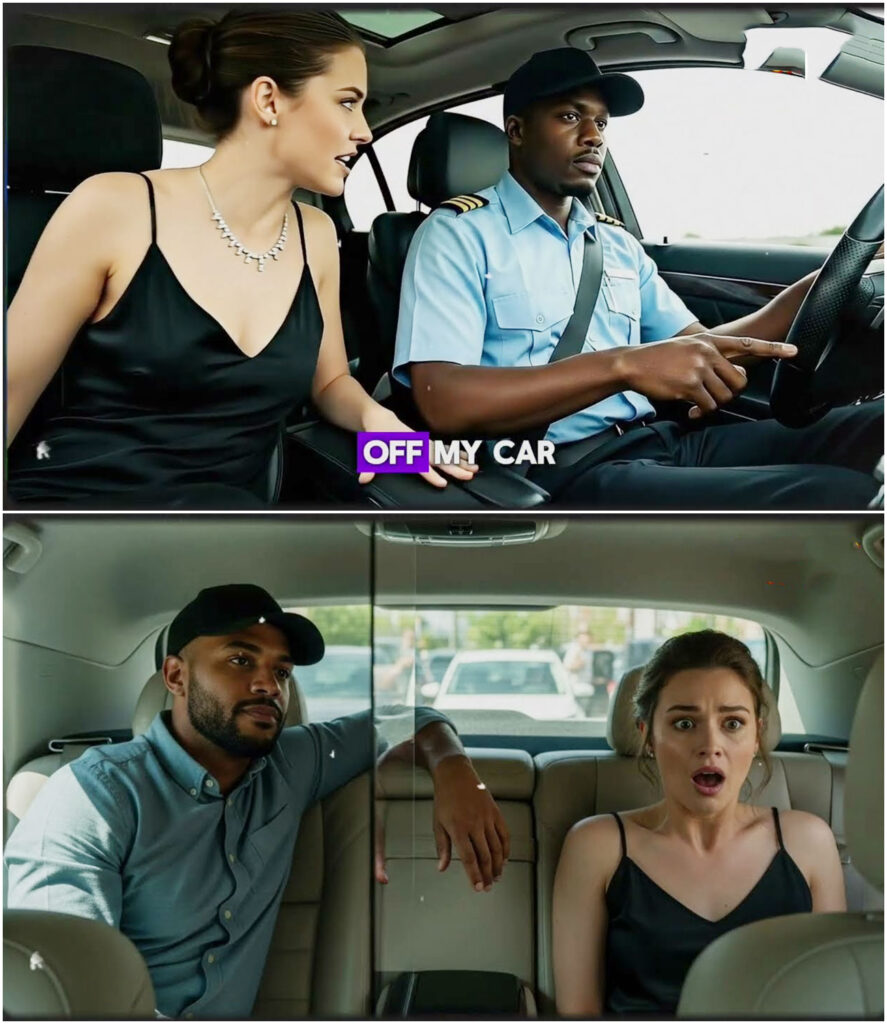
It feels like 20 hours. Julian’s driver navigates through Boston traffic while Amara sits in the back seat, still wearing her stained uniform. She can smell coffee on her clothes. Her hands won’t stop shaking. Julian sits beside her, phone pressed to his ear. Dr. Patel, I need an immediate DNA test. Paternity? Yes, today.
I don’t care what you have to cancel. He hangs up, looks at Amara. His eyes are red rimmed. I’m sorry. I know this is overwhelming. Overwhelming? Amara laughs. It sounds broken. A man I’ve served coffee to for 6 months just told me I might be his dead daughter. Not dead. Julian’s voice cracks. Never dead. Missing.
The Witmore Biomed building towers over them. Glass and steel. Amara has walked past it a hundred times. Never imagined she’d be inside. Dr. Patel meets them in a private lab. She’s efficient and kind. Mr. Whitmore. And you must be Amara. The cheek swab takes 30 seconds. Results in 48 hours. Julian pulls out his wallet, hands Amara a thick stack of bills.
$5,000. You said you had rent due. Whether the test is positive or negative, you deserve this. He writes his personal number on a business card. Call me anytime, day or night. In the elevator down, Amara finally lets herself cry. That night, her friend Kiara comes over with Chinese takeout and questions.
Kiara is a home health aid, another foster care survivor. They met at 18, both aging out of the system on the same day. So, let me get this straight. Kiara sits on Amara’s bed. Rich white guy thinks you’re his missing kid because of a necklace. It’s not just any necklace. Amara holds it up. He showed me the original commission. Photos of his daughter wearing it. It’s identical.
Exactly the same. Kiara examines it closely. One of a kind. Yes. And you were found 3 months after his daughter disappeared. Amara nods. June 1996, that’s when Elise was taken. September 1996, that’s when I was found. Girl, this is one of those real life stories you see on TV. Or it’s a scam. Amara pulls her laptop over. Maybe he’s lonely. Maybe he’s crazy.
But even as she says it, she doesn’t believe it. The look in Julian’s eyes was recognition, raw and desperate and real. She opens Google, types Whitmore kidnapping 1996. The results flood her screen. Hundreds of articles. News coverage that dominated headlines for months. Tech CEO’s daughter kidnapped. $5 million ransom paid. No leads in Whitmore case.
FBI baffled. Amara clicks on an article from the Boston Globe, June 17th, 1996. There’s a photo of Julian and a black woman at a press conference. The woman is beautiful, devastated, holding Julian’s hand like it’s the only thing keeping her standing. Catherine Whitmore, Julian’s wife, Elisa’s mother. Amara zooms in on another photo.
A little black girl with bright eyes, four years old, and around her neck the necklace. Oh my god. Kiara breathes. That’s you. But Amara’s staring at something else. The little girl’s left wrist. There’s a birth mark, crescent moon shaped. Amara looks down at her own left wrist. The same mark. Exactly the same. She clicks on another article. This one from 2001. Katherine Whitmore, wife of tech CEO, dies at 35.
Suicide suspected. Catherine had struggled with depression since her daughter’s disappearance. She’d been found in her music room, empty pill bottles beside the piano. Your mother, Kiara whispers. If you’re Elise? That was your mother. Amara closes the laptop. She can’t read anymore. can’t process this.
She was four when she was taken. Four when she was left outside that church. And her mother spent 5 years searching before the grief killed her. If this is true, her mother died thinking she was gone forever, never knowing Amara was right there. The next day, Kiara drives Amara to St. Catherine’s Church.
It’s a small building in Roxberry. brick facade, white cross above the door. Father Miguel, the current priest, is young. He’s only been here eight years, but he agrees to check the old records. They sit in his office while he pulls up files on an ancient computer. September 1996. Yes, here. He turns the screen. Handwritten notes scanned into a database. Child found outside church approximately 6 to 7 years old.
female, black, non-verbal, severe trauma, bruises on arms and legs brought in by parishioner Dorothy Hayes at 6:42 a.m. on September 18th, 1996. September 18th, 3 months and 3 days after Elise Whitmore was kidnapped. Do you know where I can find Dorothy Hayes? Amara asks. Father Miguel writes down an address. She’s at Park View Nursing Home in Matapan. Dorothy Hayes is 79 years old.
She sits in a wheelchair by the window, sunlight making her white hair glow. When Amara explains why she’s there, Dorothy’s eyes fill with tears. I remember that morning like it was yesterday. Dorothy says, “I was walking to early mass and there you were sitting on the church steps, so small, so scared. Do you remember anything else? Dorothy nods slowly.
You kept saying something over and over. Your voice was soar. What was I saying? Mama hurt. Mama hurt. Mama. Dorothy reaches for Amara’s hand. And baby, you had bruises on your arms like someone had grabbed you hard. The doctor said you had sedatives in your system. Someone had drugged you. Amara’s stomach turns.
Someone kidnapped a 4-year-old, drugged her, left her on a street corner. One more thing, Dorothy adds, “I saw a car speeding away from the church when I arrived. Black sedan. I told the police, but I don’t know if they followed up.” That night, Amara’s phone rings. Unknown number. Hello, Amara. Julian’s voice shaking. The results came back early. Dr. Patel just called. Amara’s heart stops.
And 99.97% probability of paternal match. His voice breaks completely. You’re my daughter. You’re a lease. The phone slips from Amara’s hand. 28 years of wondering who she was. 21 years of being lost. 6 months of pouring coffee for her own father. And now she knows. But knowing doesn’t feel like relief. It feels like the ground opening beneath her feet.
Because if she’s Elise Whitmore, if she’s really his daughter, then someone took her. Someone drugged her. Someone left her to disappear into a broken foster care system. Someone tried to erase her from existence. and after 21 years that someone is still out there. Julian’s estate in Newton looks like something from a magazine.
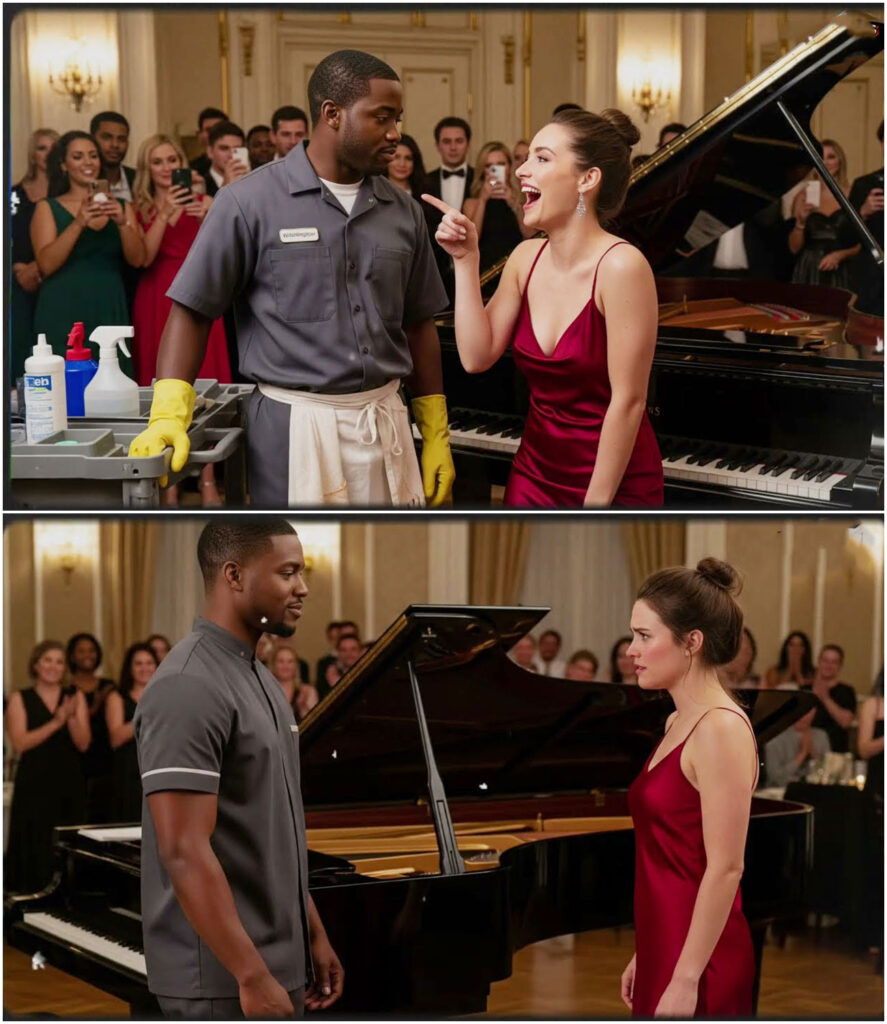
Marble floors, original artwork. A grand piano sits in the corner of the living room, untouched and gathering dust. Amara stands in the foyer, still wearing her diner uniform. She’s never felt more out of place. This was our home, Julian says quietly. Catherine and I bought it in 1990.
After she died, I sold it, but I bought it back 5 years ago. I couldn’t let it go. He leads her upstairs to a bedroom that’s been preserved like a museum. Pink walls, stuffed animals, a canopy bed, photos everywhere. Your room, Julian says, exactly as it was. Amara walks inside slowly, touches a stuffed elephant on the bed. Did I have a name for him? Mr. Trunk.
Julian’s voice cracks. You took him everywhere. Amara picks up the elephant, holds it, waits for some flash of memory, some feeling of recognition. Nothing comes. This room, these toys, this life, it all belongs to a little girl named Elise. Not to Amara Bennett, who learned to sleep with one eye open in foster homes. I don’t remember any of this,” she whispers. “That’s normal.
” A woman’s voice from the doorway. Amara turns. A black woman in her 50s stands there, professional, but warm. I’m Dr. Yolanda Cross, trauma psychologist. Julian asked me to be here. Over the next hour, Dr. Cross explains dissociative amnesia. How the brain protects itself from unbearable trauma by blocking memories.
How some might return, how some might not. You survived, Dr. Cross says gently. That’s what matters. But Amara doesn’t feel like a survivor. She feels like a ghost haunting someone else’s life. Julian’s head of security arrives that evening. Glenn Ror is ex FBI 60 years old with the sharp eyes of someone who’s seen everything.
He’s been with Julian for 10 years, helped with the search for Elise, found nothing until now. They sit in Julian’s study. Glenn spreads files across the desk. I pulled the original case files, started reviewing the ransom payment. What did you find? Julian asks. Problems. Glenn opens a folder. $5 million was wired to an offshore account in the Cayman Islands. The account was closed in 1997, but I traced where the money went.
He pulls out bank statements, highlights certain transactions. 500,000 went to an account belonging to someone named Sylvia Crane, your wife’s sister. Julian goes very still. Sylvia, there’s more. Glenn pulls out another document. 250,000 was deposited in a safety deposit box registered to Lieutenant Frank Baron, Boston PD. He was the local detective on your case.
Baron took a bribe. Julian’s voice is ICE. That’s what it looks like. He died in 2019, so we can’t question him. But yeah, he was paid off. Amara watches this unfold, her mind racing. Where did the rest of the money go? Glenn looks at her, then at Julian. His expression is grim. That’s the part you’re not going to like.
He pulls out more documents. Financial records, shell companies, transactions that wind through multiple accounts. Significant portions ended up connected to two people, Marcus Whitmore, Victoria Whitmore. The room goes silent. My brother and sister, Julian says slowly.
You’re saying my brother and sister took the ransom money? I’m saying the evidence points that way. Marcus bought 8 million in real estate in 1998. Victoria bought a $3 million yacht in 1999. Both were essentially broke in 1996. Julian stands paces. His face has gone pale. No. Marcus and Victoria wouldn’t. They’re family. Family that hated your wife, Glenn says quietly.
I pulled old records, statements from the original investigation. Multiple witnesses said Marcus and Victoria openly opposed your marriage to Catherine. Used racial slurs behind your back. Amara’s stomach turns. She looks at Julian. They didn’t want you married to a black woman. They were. Julian stops, sits back down. They were difficult about it. Yes. My father was progressive.
Left me controlling interest in the company specifically because I stood up to the family’s old attitudes. Marcus and Victoria only got 20% each. They were bitter. Bitter enough to kidnap your daughter? Glenn asks. I don’t. Julian puts his head in his hands. I don’t know. Glenn pulls out one more document. There’s something else.
I found records of payments to a security consultant named Theodore Vance. 50,000 in June 1996, right before the kidnapping. Another 50,000 in September 1996, right when Amara was found. The payments came from a shell company Marcus controlled. Vance, Julian repeats. Theodore Vance, I know that name.
He’s still active, still doing private security work, the kind of work that doesn’t ask questions. Glenn looks at Amara. If Marcus and Victoria orchestrated this, they would have needed someone to do the actual kidnapping. Someone professional. Amara feels sick. They paid someone to take me, to drug me, to leave me on a street corner.
We don’t know that for certain yet, Glenn says. But the evidence is strong, and there’s one more thing. He pulls out a recording device. I did some digging on Marcus. He’s still on the board of Whitmore Biomed. I planted a bug in his office last week. Just a hunch. Listen to this. He presses play. Marcus’ voice fills the room talking to someone on the phone.
I heard Julian found some girl claiming to be Elise. DNA test and everything. A pause then. It’s been 21 years. No one can prove anything. But if she starts digging, if she gets the media involved, auditors might look at the 1996 financials. We need to shut this down. Another pause. I don’t care how. Just make it go away.
Her and Julian if necessary. The recording stops. The room is silent. He just ordered a hit. Amara whispers. On us. Julian’s face has gone white with rage. When was this recorded? Yesterday, Glenn says, right after the DNA results came back. He’s my brother, Julian’s voice shakes. My own brother. Your brother who kidnapped your daughter because she was black. Your brother who drove your wife to suicide.
Your brother who’s now trying to kill you both. Glenn’s voice is hard. We need to go to the FBI today. But before anyone can respond, there’s a sound. Glass breaking downstairs. Then footsteps heavy. Multiple people. Glenn pulls a gun from his jacket. Stay here. But it’s too late. The study door slams open. Three men in masks rush in. Professional armed. One grabs Amara.
She screams, fights back. Julian lunges at him. Glenn fires his gun. The sound is deafening in the enclosed space. One attacker goes down, but the other two keep coming. Amara feels something sharp press against her neck. A needle. She tries to pull away, but hands hold her tight. No. Julian’s voice sounds far away.
Don’t hurt her. The world starts to blur. Her legs go weak. The last thing she sees before darkness takes her is Julian fighting, Glenn on the ground, blood spreading across the marble floor, and one of the attackers speaking into a phone. Package secure, bringing her in. Then nothing. Amara wakes to darkness and the smell of mildew.
Her head throbbs, her wrists burn. She tries to move and realizes she’s tied to a chair. Panic floods through her. She pulls against the restraints. The rope cuts into her skin. She forces herself to breathe, to think. The room is small. Concrete walls. A single bare bulb hanging from the ceiling currently off. A basement or a warehouse. She can hear water dripping somewhere. Traffic sounds muffled in the distance.
How long has she been here? Hours? Days? Her throat is dry. Her uniform is torn at the shoulder. There’s dried blood on her sleeve. Not hers, she thinks. Glenn’s, maybe. Or Julian’s. The thought of Julian makes her chest tighten. Is he alive? Is Glenn? Footsteps above her. Voices. She stays very still. Listens. Boss says we hold her until he figures out what to do. A man’s voice.
Young, nervous. What’s there to figure out? Another man, older, rougher. We got our orders. She disappears. Just like last time. Last time. Amara’s blood runs cold. They mean when she was four. When someone drugged her and left her outside a church. Yeah, but that was different. The younger voice says she was a kid.
No one cared about a black kid from Roxberry, but now she’s all over the news. Billionaire’s daughter found after 21 years. We can’t just dump her and walk away. So, we make it look like an accident. Drug overdose, suicide, girl from foster care, working minimum wage, finds out she’s rich, can’t handle the pressure.
Story writes itself. Amara’s stomach turns. These men are talking about killing her like it’s a business transaction. Casual, easy. The door at the top of the stairs opens. Light floods in. A third voice. This one familiar. Is she awake yet? Amara’s entire body goes rigid. She knows that voice. She’s heard it before. Marcus Whitmore descends the stairs.
Julian’s brother. Gray hair, expensive suit, the same cold eyes she saw in photos online. He walks over to her chair, studies her face like she’s an interesting insect. So, you’re Elise, my niece, back from the dead. Amara says nothing. Her mind races. Stay calm. Stay smart. These are the real life stories where people survive by thinking, not fighting.
Not much of a talker, are you? Marcus pulls up a chair, sits across from her. That’s good. Makes this easier. Where’s Julian? Amara forces the words out. My brother is fine for now. He’s at Mass General with his head of security. Glenn took a bullet. Nothing fatal, unfortunately. Marcus’ smile doesn’t reach his eyes.
You put up quite a fight. Why are you doing this? Why? Marcus laughs. You really don’t understand, do you? Look at you. You’re everything wrong with my family. My brother married a black woman, contaminated our bloodline, had a child who was, he waves his hand dismissively, a mistake. The hatred in his voice is so casual it takes Amara’s breath away.
This is what racism looks like. She realizes not always screaming slurs. Sometimes it’s just a cold calculation. Someone deciding you don’t deserve to exist. So you took me, Amara says quietly. You kidnapped me. You took your brother’s money. And then you left a 4-year-old child on a street corner. I did what was necessary. Marcus stands, paces. Julian was weak.
He let sentiment cloud his judgment. Our father gave him control of the company because he was the oldest, not because he deserved it. And then he married that woman, Catherine. He spits the name like poison. That woman was my mother. That woman was destroying our family’s legacy, and you were the proof of it. A mixed race child. My father actually celebrated when you were born.
Said you represented the future of the Witmore family. Marcus stops, turns to face her. I knew I had to act. So you hired someone? Amara’s voice is steady now, anger replacing fear. Theodore Vance. Marcus raises an eyebrow. You’ve been doing your homework. Yes, Vance is very good at what he does. Made the kidnapping look convincing. Julian never suspected the family.
And the ransom funded my real estate ventures quite nicely. Victoria’s yacht, too. We had debts. Julian had everything. It seemed fair. He says it like he’s discussing stock portfolios, not ruining lives. What about Catherine? Amara asks. Upper B. What about my mother? Something flickers in Marcus’ eyes. Not quite guilt, but close. Catherine was collateral damage.
She started asking too many questions in 2000. Looking at financial records. She was always too smart for her own good. You killed her. I made sure she had the means to solve her own problems. Marcus sits back down, leans forward. Dr. Fineman was very helpful, prescribed more than enough sedatives.
When Catherine’s depression got bad enough, nature took its course. “You murdered her.” Amara’s voice shakes with rage. “You drove my mother to suicide. I eliminated a threat.” Marcus stands. Just like I’m about to eliminate you again, except this time there won’t be any coming back. He walks toward the stairs, stops, turns. For what it’s worth, this isn’t personal. You seem like a nice girl.
Wrong genetics, but nice. It’s just business. The door closes. The lock clicks. Amara is alone in the dark again. But something’s different now. She knows the truth. Marcus confessed everything. And if these touching stories teach you anything, it’s that truth has power.
She starts working on the ropes slowly, methodically. The knots are tight, but not professional. These men aren’t experts. They’re hired muscle. Upstairs, she hears Marcus’s voice again. Muffled on the phone. I don’t care about the media attention. Get rid of her tonight. Make it clean. Dump the body somewhere it won’t be found for weeks. Amara pulls harder. The rope cuts deeper into her wrists.
Blood makes the bindings slick. Good. That helps. She thinks about Julian. About 6 months of Monday mornings, about coffee and small talk and $50 tips, about a father who never stopped searching. She thinks about Catherine, a mother who knew the truth but couldn’t prove it. Who died believing her daughter was gone forever. She will not die in this basement. She will not let Marcus win.
The rope on her right wrist finally loosens. She pulls, twists. Her hand slips free. Blood drips onto the concrete floor. She quickly unties her left wrist, then her ankles, stands. Her legs are shaky. How long has she been sitting? She looks around the basement. There’s a small window near the ceiling, too high to reach.
The door at the top of the stairs is the only way out. She hears footsteps coming down. No time. She grabs the chair she was tied to. Heavy wooden. It’ll have to do. The door opens. Light floods in. One of the guards descends. The younger one. He’s carrying a syringe. Time to go to sleep, princess, he says. Then he sees the empty chair.
Amara swings. The chair connects with his head. Wood cracks. He goes down hard. The syringe flies from his hand, shatters against the wall. She doesn’t wait. She runs up the stairs, bursts through the door into a warehouse. Empty, abandoned. Perfect place to hide someone. The older guard is across the room, back turned, talking on his phone.
He spins around when he hears her. Hey. She runs for the exit. He chases. She’s faster. Fear makes her fast. She hits the door, throws it open, stumbles into daylight, a street, industrial area. She recognizes it. South Boston. She’s maybe 3 mi from downtown. Behind her, the guard yells, “She’s loose. Get the car.
” Amara runs. Her feet pound pavement. Her lungs burn. She has no phone, no money, nothing. But she has something Marcus didn’t count on. She’s a survivor. She survived 11 foster homes, survived abuse, survived poverty, survived 21 years of being invisible. She’s not going to stop surviving now.
She turns a corner and nearly collides with someone. A woman, middle-aged, concerned eyes. Please, Amara gasps. Please, I need help. Call 911. Tell them Amara Witmore has been kidnapped. Tell them Marcus Whitmore is trying to kill me. The woman stares. Recognition dawns. Oh my god, you’re the girl from the news. The one who Please. Amara grabs her arm. Please help me.
The woman nods, pulls out her phone, dials. Behind them, a black car screeches around the corner. Theodore Vance is behind the wheel and beside him in the passenger seat is someone Amara recognizes from photos online. Victoria Witmore, Marcus’s sister, looking at Amara with pure hatred. The woman’s 911 call saves Amara’s life.
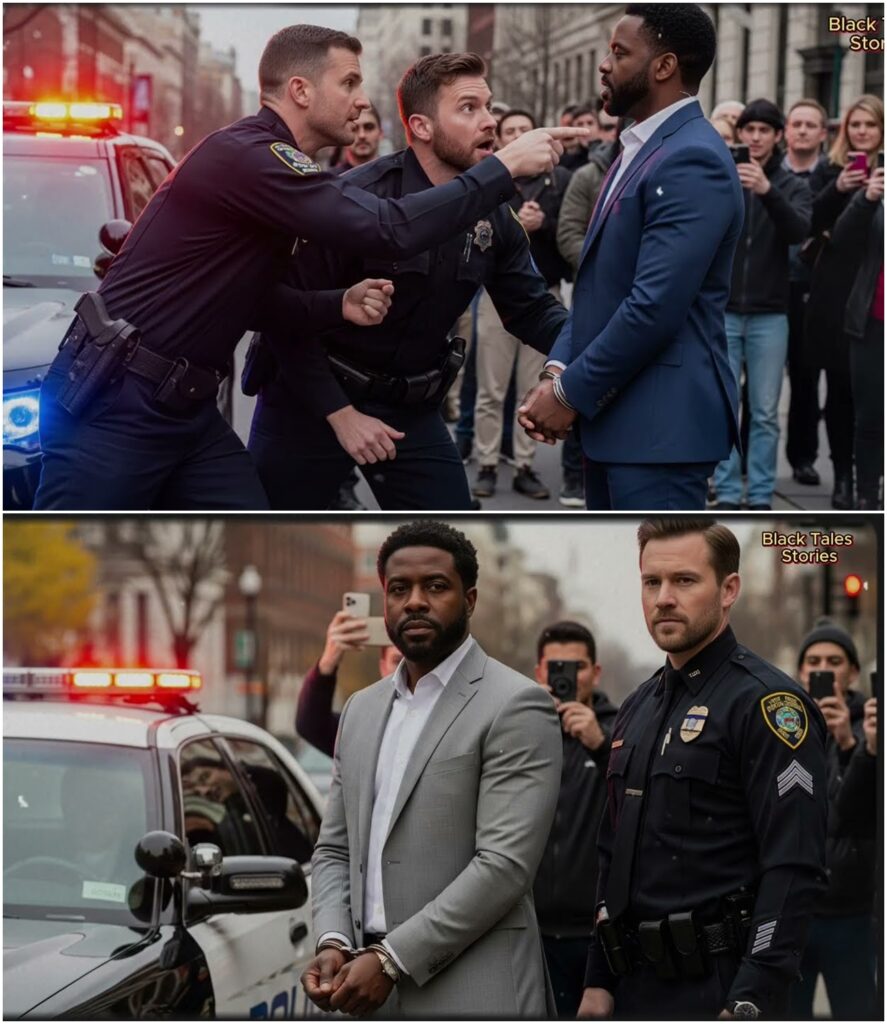
But it’s what happens next that changes everything. Within minutes, three Boston PD cruisers converge on the scene. The black car with Vance and Victoria screeches to a halt. Vance tries to reverse. Too late. Police surround them. Guns drawn. Out of the vehicle. Hands where we can see them. Victoria Whitmore steps out. Hands raised.
Wearing a designer pants suit and pure rage on her face. Do you know who I am? This is a mistake. That girl is delusional. She’s Save it for the station. The officer cuffs her. Victoria Whitmore, you’re under arrest for kidnapping and attempted murder. Vance doesn’t say a word, just stares at Amara as they cuff him, too. His eyes promise this isn’t over.
But it is because the woman who called 911 didn’t just call the police. She called her daughter who works at Channel 7 News, who arrives with a camera crew within 10 minutes. And suddenly, Amara’s escape is live television.
The whole city watching as a bloodied woman in a diner uniform is wrapped in a blanket as Marcus Whitmore’s sister and his hired gun are arrested on camera. Miss Whitmore. A reporter shoves a microphone in Amara’s face. Can you tell us what happened? Amara looks directly into the camera. Her voice is steady despite everything. Marcus Whitmore kidnapped me 21 years ago. left me outside a church when I was four.
Today he tried to kill me. He confessed everything. The reporter’s eyes go wide. Do you have proof? Amara reaches into her bra, pulls out something small and black. A recording device. She’d found it in the basement. One of the guards must have dropped it. She’d hit record before Marcus came down those stairs. I have his confession. Every word.
The news van becomes ground zero. Within an hour, FBI agents arrive. Julian arrives, arm in a sling, face pale, but alive. Glenn is with him, bandaged but mobile. Julian sees Amara and nearly collapses. Thank God. Thank God you’re alive. They hold each other while cameras capture every second. A father and daughter reunion 21 years in the making.
6 months of Monday mornings leading to this. That evening, the FBI raids Marcus Whitmore’s home and office. They find more than anyone expected. Marcus kept records, documents, photos, a storage unit filled with evidence. Insurance, agent Sarah Carter explains to Julian and Amara at the FBI field office.
He documented everything in case he needed leverage later. Emails between him and Victoria planning the kidnapping. Financial records showing where the ransom money went. Even a recording of him telling Dr. Fineman to overprescribe Catherine’s medication. He kept evidence of murdering my wife. Julian’s voice is hollow. Narcissists often do. They think they’re untouchable.
Agent Carter pulls up a photo on her computer. We also found this. It’s a surveillance photo. September 18th, 1996. A black sedan near St. Catherine’s Church and in the driver’s seat, clear as day. Theodore Vance. A traffic camera caught it. Carter says it was in the original case file. Lieutenant Baron buried it.
We know because we found a receipt. Marcus paid Baron 250,000 to lose evidence and stall the FBI investigation. Amara stares at the photo. That’s the car Dorothy Hayes saw. The one speeding away. The one that left a drugged four-year-old on church steps. What happens now? She asks. Now? Carter smiles grimly. Now we build a case that buries them.
The press conference happens 3 days later. Naomi Foster, the attorney Julian hired, orchestrates everything. She’s a black woman in her 50s, known for taking down corrupt corporations and powerful families. The room is packed. Every major news outlet, cameras everywhere.
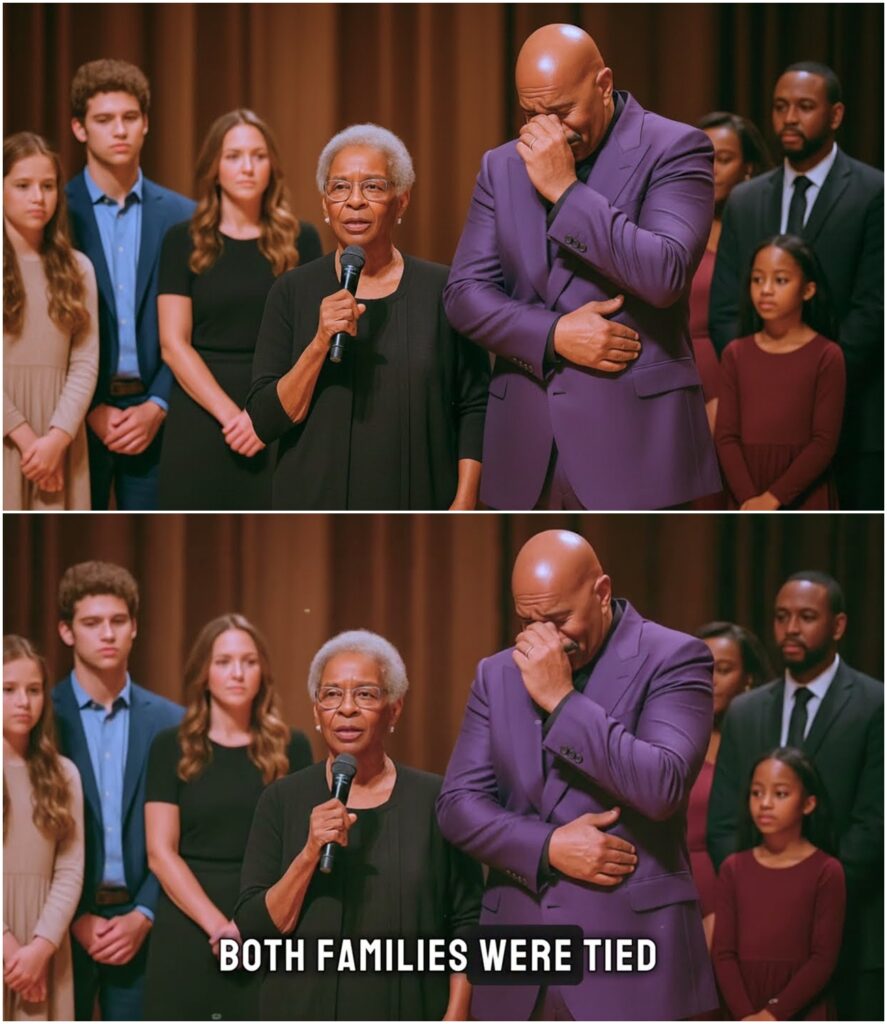
The whole country has been following these black stories, these touching stories of a daughter lost and found. Now they want answers. Julian speaks first. 21 years ago, my daughter Elise was taken from our home. I paid the ransom. I followed every instruction. She was never returned. My wife Catherine spent 5 years searching before grief killed her. His voice breaks, but he continues.
I never stopped looking. I hired investigators, psychics, followed leads across three continents, and for 6 months, I sat 3 ft from my daughter every Monday morning. I drank coffee, she poured. I talked to her. I tipped her for tuition because I couldn’t help my own child, so I helped someone else’s.
He pauses, looks at Amara. I didn’t know because my own brother made sure I wouldn’t. Marcus Whitmore orchestrated my daughter’s kidnapping. He used the $5 million ransom to fund his business ventures. He abandoned Elise in Roxberry because he knew racial bias would prevent anyone from connecting a black child to our white family. The room erupts. Reporters shouting questions, cameras flashing.
Naomi raises her hand for silence. We have extensive evidence, she says. financial records, Marcus’ confession, recorded and authenticated, surveillance footage, witness testimony, and most damning of all, documents Marcus himself kept as insurance. She plays the recording.
Marcus’ voice fills the room, cold, casual, admitting to kidnapping his niece, to driving Catherine to suicide, to order Amara’s murder. I eliminated a threat just like I’m about to eliminate you again. The silence after is deafening. Then Amara steps to the microphone. She’s wearing a simple black dress Julian bought her.
The necklace is visible at her throat. Her wrists are bandaged from the ropes. My name is Amara Elis Whitmore Bennett, she says. Her voice doesn’t shake. I spent 21 years not knowing who I was. 11 foster homes, some loving, most not. I worked minimum wage jobs, lived in a basement with mold, went hungry, was invisible. She touches the necklace.
This was all I had. I kept it hidden because I learned that anything valuable gets stolen. But one Monday morning, I leaned forward to refill coffee. My collar shifted and my father saw it. She looks directly into the cameras. Marcus and Victoria Whitmore decided I didn’t deserve to exist because my mother was black. They took me from my parents. They drugged me.
They left me on a street corner like trash. They drove my mother to death. And when I was found, they tried to kill me again. Her voice rises. But I’m still here. I survived. And today, I’m telling my story so every person watching knows. They tried to erase me. They failed because I matter. I always mattered. The room explodes. Applause. Some reporters are crying.
The image of Amara scarred wrists visible. Necklace catching light becomes iconic. Within an hour, #justice for Amara trends worldwide. Within 2 hours, it’s the number one story on every news network. By evening, it has 50 million views across social media platforms. People share their own real life stories.
Foster care survivors, adopes, people searching for a family, black children who grew up invisible. The conversation explodes. Someone digs up old diner security footage. Week 22. The moment Julian stared at Amara for 30 seconds. The moment he almost recognized her. His phone ringing. The spell breaking. The moment he almost knew. It goes viral. 60 million views.
People sobb watching it. The cruelty of fate. The nearness of recognition. How close they came 25 times to finding each other. A Monday morning vigil is organized at Riverside Diner. Thousands show up at 7:45 a.m. Order coffee. Leave generous tips. Hold signs. Black children matter. 26 Mondays. Julian and Amara. Love wins. Julian and Amara attend.
Against FBI advice. They sit at table 7. Amara pours her father’s coffee one more time. The crowd cheers. Cameras capture everything. A woman approaches crying. I was in foster care, 17 homes. No one ever looked for me. Thank you. Thank you for fighting. Amara hugs her. I see you. You matter. The image makes Time magazine’s cover. The table that changed everything.
That afternoon, the district attorney announced charges. Marcus Whitmore, first-degree kidnapping, conspiracy to commit murder. Murder in the second degree. Catherine, attempted murder, extortion, wire fraud, 47 counts total. Victoria Whitmore, conspiracy to kidnap, accessory to murder, attempted murder, 23 counts. Dr.
Harold Fineman, conspiracy, reckless endangerment, murder in the second degree. Theodore Vance, kidnapping, assault, attempted murder. Bale denied for all. And in his cell, Marcus Whitmore finally understands. He didn’t just lose. He destroyed himself. Every document he kept, every recording, every piece of insurance he thought made him untouchable, it all became evidence.
The trial date is set, 3 months away. But Marcus already knows how this ends because the jury won’t just see evidence. They’ll see Amara standing tall, wearing the necklace he tried to bury, telling the story he tried to erase. And they’ll see Julian, a father who never stopped searching, who sat 3 ft from his daughter for 26 weeks, who lost everything but gained it back through pure stubborn love.
How do you fight that? How do you win against a story like that? You don’t. 6 months later, Suffach County Superior Court. The trial begins on a Monday morning, 7:45 a.m. The irony isn’t lost on anyone. Judge Patricia Morrison presides. A black woman in her 60s with sharp eyes and zero tolerance for nonsense. The courtroom is packed. Media from around the world. Marcus Whitmore sits at the defense table in an expensive suit.
He looks calm, controlled, but his hands shake slightly when Amara enters. She’s wearing a simple navy dress. The necklace is visible. She sits beside Julian in the front row. Assistant District Attorney Sarah Carter begins. Ladies and gentlemen of the jury, this case is about greed, racism, and a man who decided his 4-year-old niece was disposable. She clicks a remote.
Little Elise Whitmore appears on screen, smiling, wearing the necklace. This is Elise Whitmore, four years old. On June 15th, 1996, she was taken from her home. Her father paid $5 million. She was never returned. Another click. Amara at 28, tired, diner uniform. This is Amara Bennett working minimum wage, no family, no memory, no living in poverty while her father searched the world. Chen pauses. They are the same person.
And the man who stole 21 years from this family sits right there. She points at Marcus. The defense’s opening is predictable. Circumstantial evidence. Family vendetta. A desperate brother. But then the prosecution presents evidence, financial records showing the ransom money trail, voice analysis matching Marcus to the ransom call, Theodore Vance’s testimony, Victoria’s confession, and Marcus’ own recordings, his own words. I did what was necessary.
Catherine was collateral damage. I eliminated a threat just like I’m about to eliminate you again. The jury looks physically ill. On day four, Amara takes the stand. Ms. Whitmore Bennett, tell the jury about your Monday mornings before you knew Julian was your father. Amara’s voice is steady.
He came to Riverside Diner every Monday at 7:45 for 6 months. Table 7. Black coffee, wheat toast, scrambled eggs. Did you talk? Yes. He was kind. He asked about my life. He left me a $50 tip once with a note for your tuition. Keep going. Did he know who you were? No.
We were 3 ft apart for 26 weeks, father and daughter, and neither of us knew. Chen shows security footage. Week 22. Julian staring at Amara for 30 seconds. What do you think was happening here? I think some part of him recognized me. Some part that knew before his mind did. Several jurors are crying. The defense cross-examines aggressively. Isn’t it true you were facing eviction? Yes.
And suddenly, a billionaire appears. Lucky break. Amara looks him in the eye. DNA doesn’t lie. Voice analysis doesn’t lie. Marcus’ own recordings don’t lie. I didn’t ask for this. I just wanted to survive. The attorney has no response. Julian testifies next. Something drew me to that diner. To her. When I saw the necklace, the world stopped. I knew immediately.
The defense tries to argue he’s delusional. Carter plays Marcus’s confession again. Is Marcus Whitmore delusional? She asks. Or is he guilty? He’s guilty. Julian’s voice is ice. He took my daughter. He killed my wife. He tried to kill us both. Victoria Whitmore testifies on day seven. Thin, broken, crying. Marcus planned everything.
She says he hated Catherine from the moment Julian married her. Used racial slurs behind their backs. When Elise was born, he said Julian had polluted the bloodline. Did you help him kidnap Elise? Yes. Victoria sobs. I needed money. Marcus said we’d take the ransom. No one would connect a black kid in Roxbury to a white family in Newton. He was right. What about Catherine? Marcus said she was asking too many questions. He told Dr. Fineman to overprescribe.
When Catherine’s depression got bad, she had the means. Victoria’s voice drops. Marcus celebrated when she died. Said it was one problem solved. Mole. The courtroom is horrified. The defense rests without calling Marcus to testify. A mistake. The jury sees cowardice. Deliberations take 2 days.
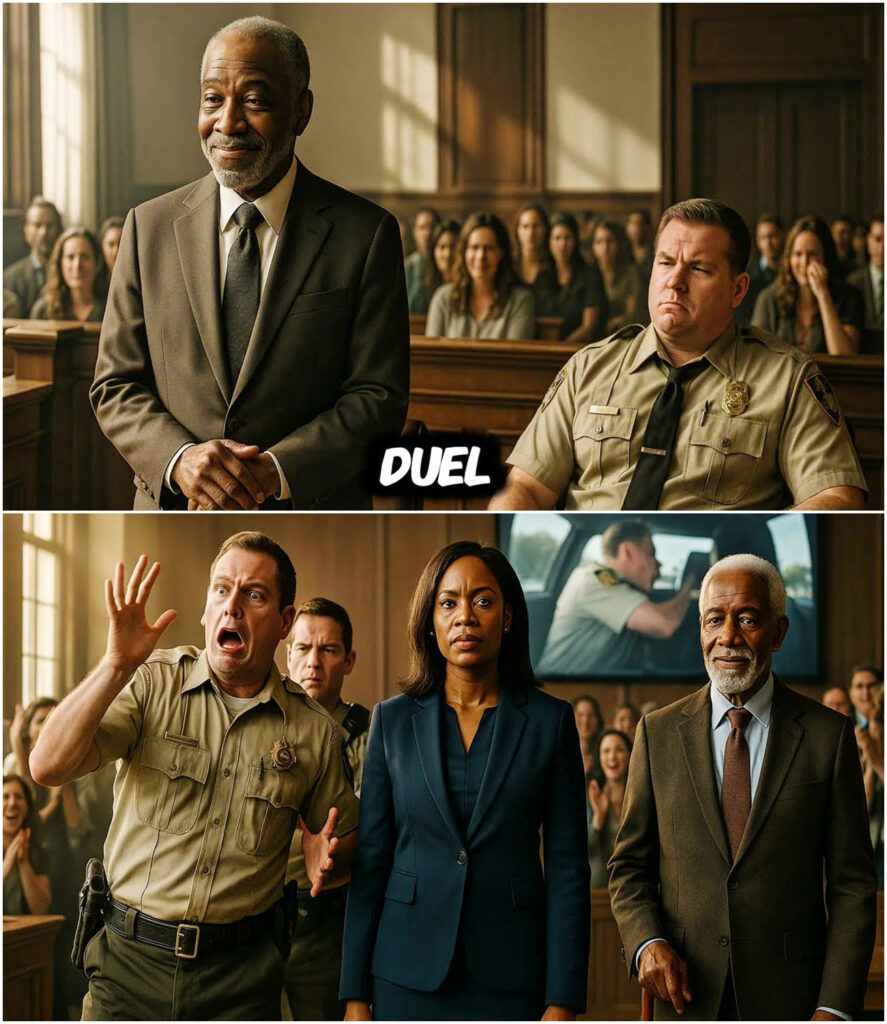
On Wednesday afternoon, the jury returns. In the matter of Commonwealth versus Marcus Whitmore, count one, kidnapping in the first degree. How do you find? Guilty. Guilty on all 47 counts. The courtroom erupts. People cheer. Cry. Marcus’ face drains of color. His mask shatters. He screams at the jury.
Do you know who I am? Do you know what family I come from? Judge Morrison’s gavel cracks like thunder. I know exactly who you are, Mr. Whitmore. You’re a man who kidnapped his niece, murdered his sister-in-law, and tried to kill your own brother. Baleiff, remove him. Two weeks later, sentencing. Judge Morrison’s voice is measured but hard.
Marcus Whitmore, you looked at a 4-year-old child and decided she was disposable because of her race. You stole 21 years from a family. You drove a woman to death. You showed no remorse. She looks at him directly. Life without possibility of parole plus 50 years consecutive. Marcus will die in prison. Victoria 30 years. Dr. Fineman 25 years. Theodore Vance 20 years. Before final sentencing, Judge Morrison allows Amara to speak. Amara stands.
Faces Marcus. Her voice doesn’t shake. You tried to erase me. You failed. You thought racism would hide your crime forever. You were wrong. I survived 11 foster homes. Abuse, poverty, invisibility. She touches the necklace. And one Monday morning, this caught the light. And 21 years of your lies shattered.
She looks at the courtroom at the cameras. I’m standing here. My father is standing here. We’re together. We won. You lost. The courtroom erupts in applause. Judge Morrison lets it continue. Outside, Amara and Julian face the media. What’s next? Julian puts his arm around his daughter.
Now we heal, and we make sure this never happens to another family. But healing, as they’re about to learn, is its own kind of journey. 3 years later, Monday morning, 7:45 a.m. Riverside Diner looks the same. Same worn booths, same smell of coffee, but table 7 has a bronze plaque now. Where fate served a second chance. Julian and Amara, week 26.
Amara walks through the door, not in a uniform this time. Jeans and a sweater. Her hair is longer. Her eyes are lighter. The weight of not knowing finally lifted. Julian is already at table 7. He sees her and smiles. Morning, Dad. Morning, sweetheart. She pours his coffee. Same routine. Different meanings. The necklace catches light. She wears it openly now. Always.
Around them. Five young people work the morning shift. All former foster youth, all employed by the Monday morning foundation. Julian and Amara established it two years ago, $200 million. Its mission, reunite missing children with families, reform foster care systems, fight racial bias in child welfare.
In 3 years, they’ve reunited 47 children with families, placed over 200 foster youth in jobs, distributed 8 million in scholarships. These are the real life stories that matter, the touching stories that change systems. Amara travels the country now, speaks at conferences, visits foster children. I was invisible for 21 years, she tells them. But I was never nothing.
Neither are you. She’s writing a book. The table between us, a daughter’s journey home. These black stories deserve to be told with care. Julian retired from Whitmore Biomed. New leadership, ethical practices. Marcus and Victoria’s shares were seized. The money went to victims funds and foster care programs.
The Witmore name means something different now. Not old money and racism, but redemption. Second chances. Therapy continues. Some memories have returned. Catherine at the piano. Warm hands. My little song bird. Other memories stay buried. Maybe they’ll surface. Maybe not. Amara has made peace with both. She visited Catherine’s grave, brought flowers. I wish you’d known I was alive.
The grief of that, a mother dying while her daughter lived 2 mi away, never fully leaves, but it softens. Julian started dating again. A woman named Patricia, kind, patient. She doesn’t replace Catherine, just adds something new. Amara is in a relationship, too. David, a social worker. He understands trauma. Loves her without trying to fix her.
Life isn’t perfect. There are hard days. Days when those lost years crush her. Days when Julian calculates she’d be 31 now. What would she be like? But mostly there are good days. Monday mornings, coffee, the simple miracle of being seen. As they finish breakfast, a young girl approaches, maybe 8 years old, black, shy with a white couple. I Are you Amara Witmore? I am. I saw you on TV.
You were lost and then you got found. The girl pauses. I’m adopted. My parents found me, too. Amara’s throat tightens. What’s your name? Sophie. Sophie, being lost doesn’t mean you’re not worth finding. You were always worth finding. Always. The girl hugs her. The parents mouth thank you with tears in their eyes.
This is why they tell the story. Why do they do interviews? Why does Amara speak publicly? Why did they build the foundation? Because there are thousands of Sophies, thousands of children wondering if they matter, thousands of families torn apart. And maybe hearing one story of survival helps someone else survive. Outside, Julian and Amara walk to his car. The morning sun is bright and warm.
26 weeks, Julian says. We were 3 ft apart, and some part of me knew. fate, Amara says. Or love, Julie encounters. Maybe they’re the same thing. They drive away. Table 7 waits for next Monday, 7:45 a.m., as it always will. Some rituals are sacred.
Some connections transcend time, and some love between father and daughter survives even when evil tries to destroy it. If you’re listening to this story, remember, you matter. Even when the world tries to make you invisible, even when the system fails you, someone sees you, someone is searching. And one day, maybe on a Monday morning, a necklace will catch the light. Everything will change.
Share this story if it moved you. Leave a comment about your own journey. Subscribe Blacktail Stories to hear more life stories like this one. Stories of survival, stories of hope, because we all deserve to be seen. We all deserve our Monday morning. Keep going. Keep surviving. Your moment is
News

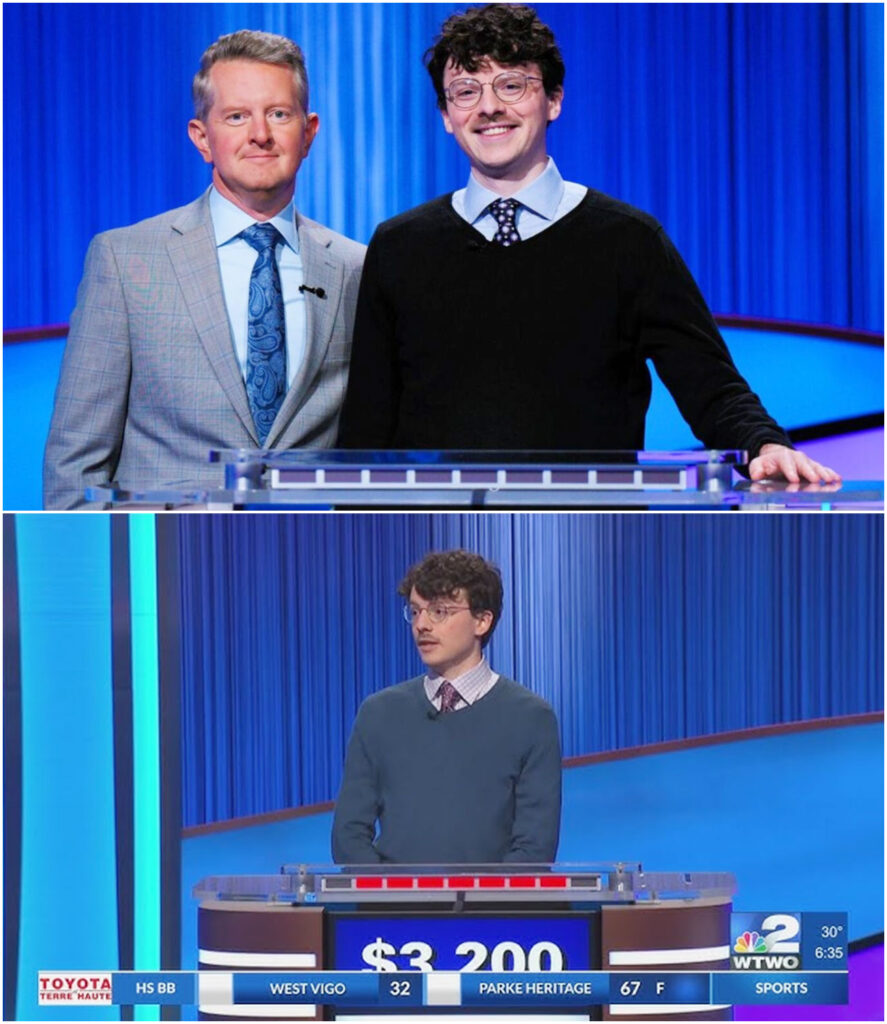
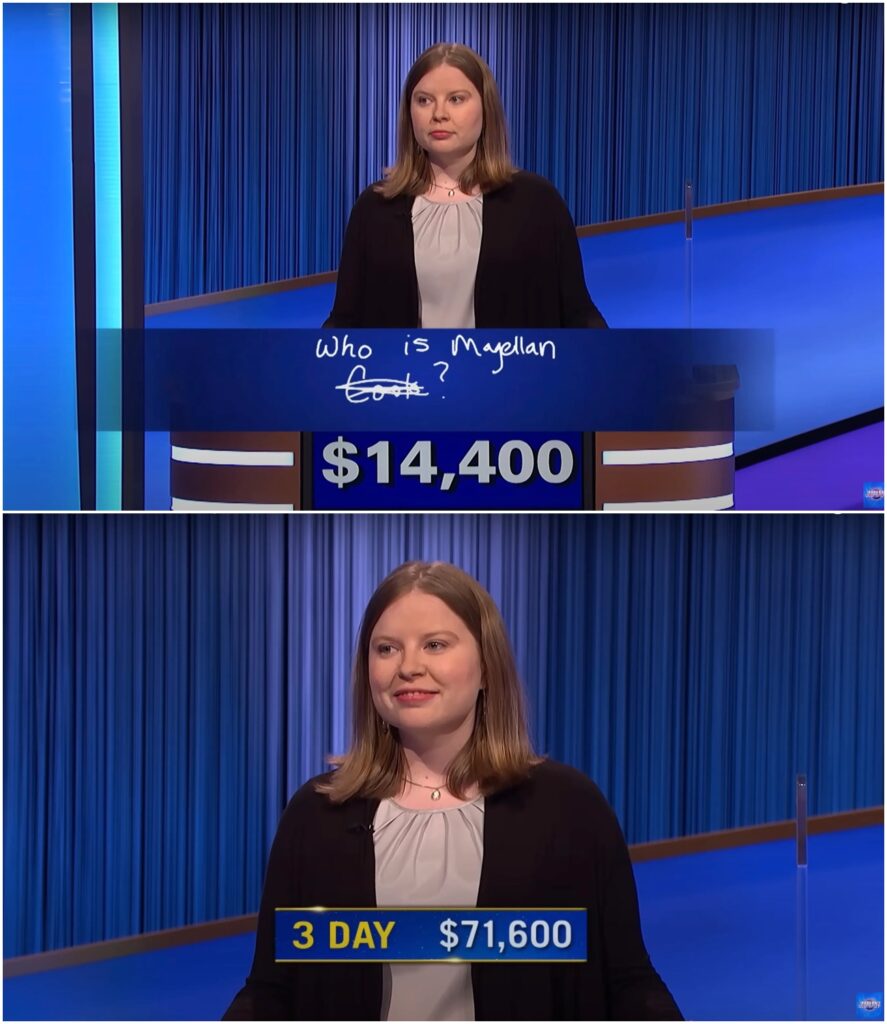
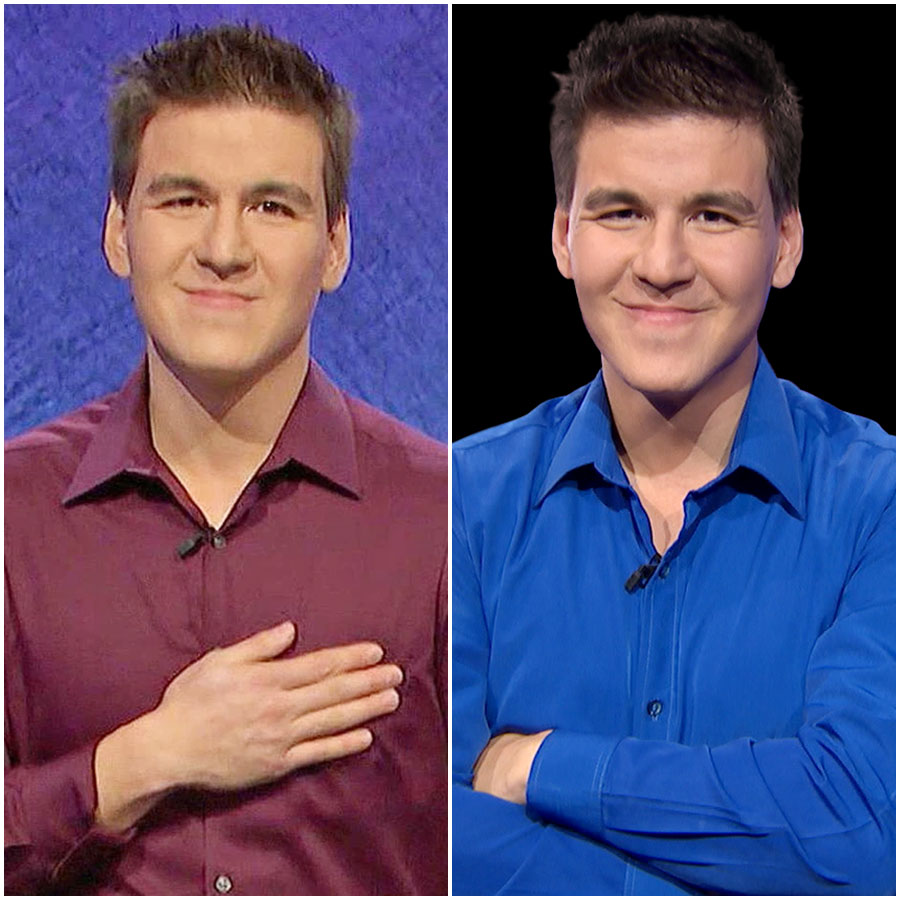
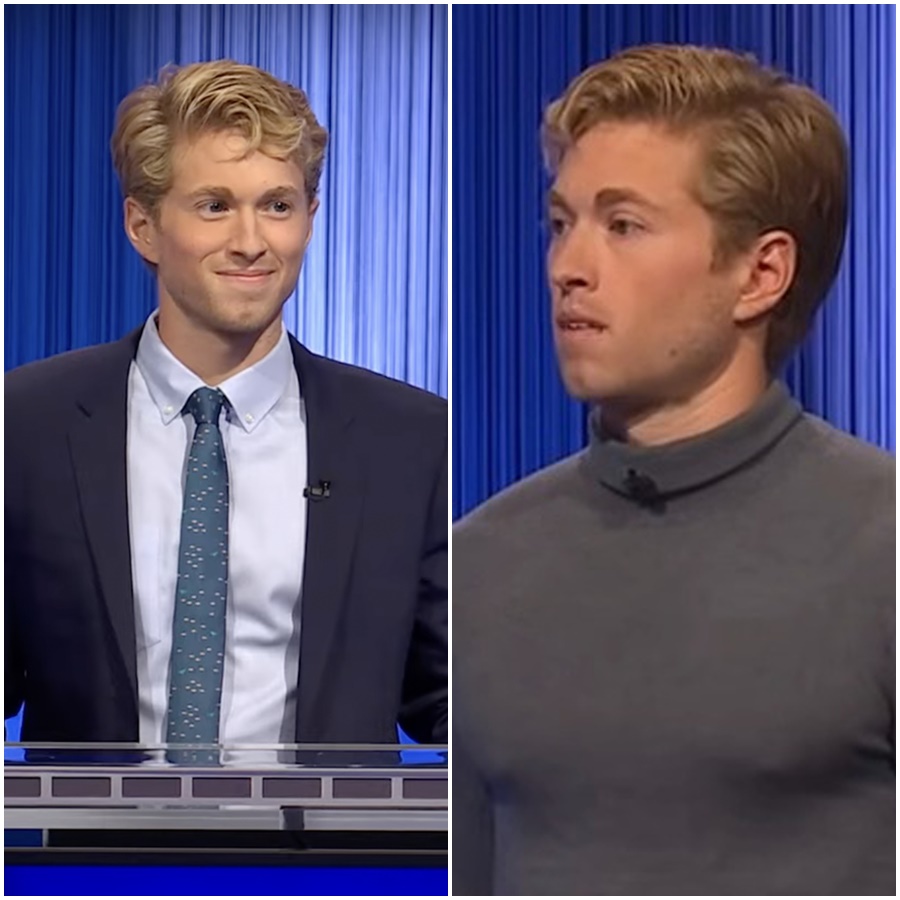
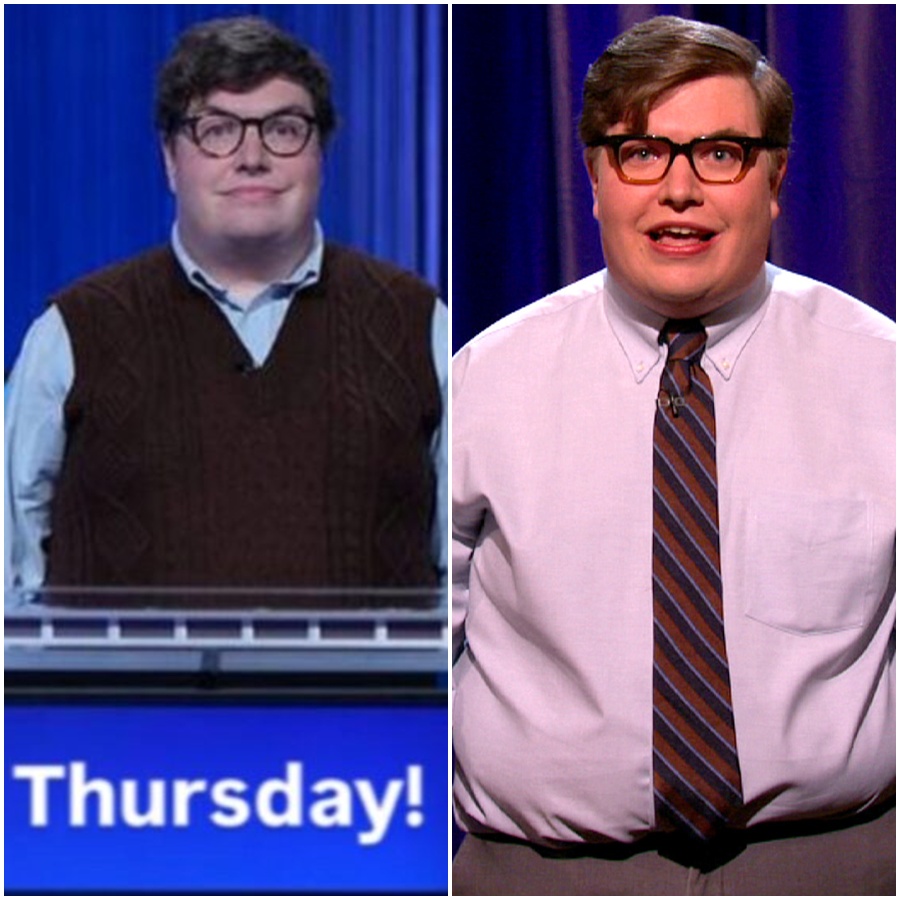
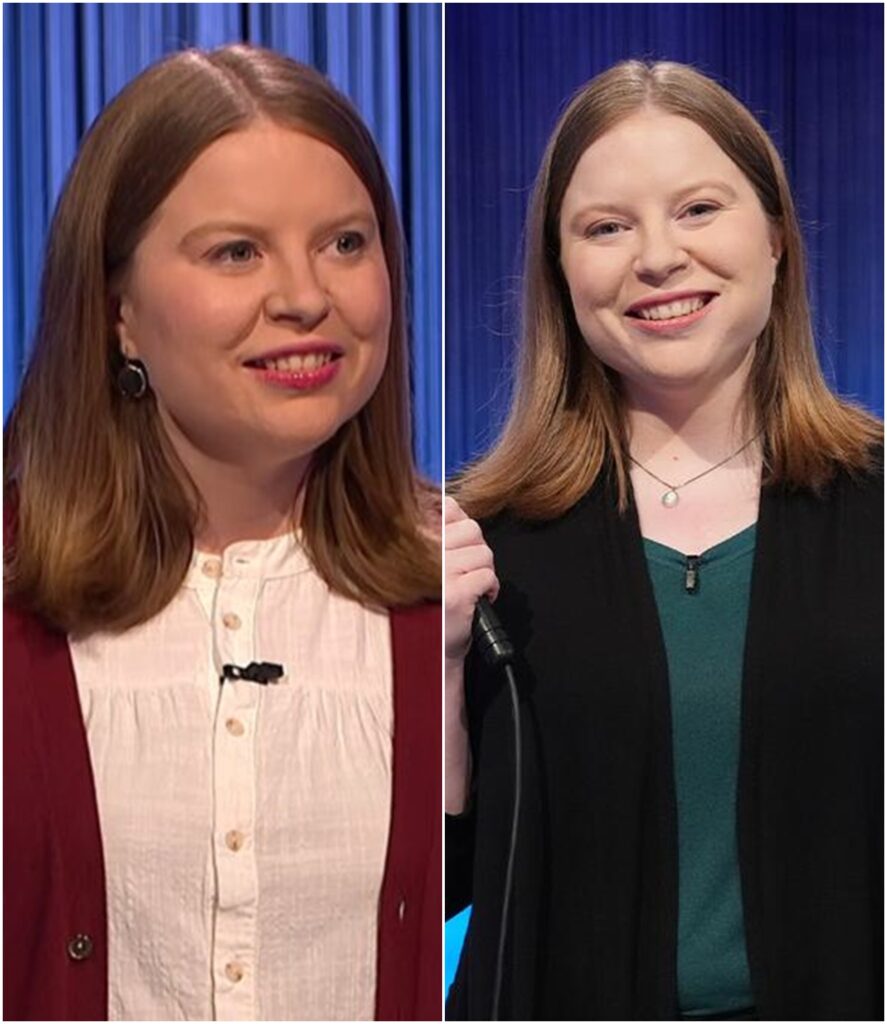
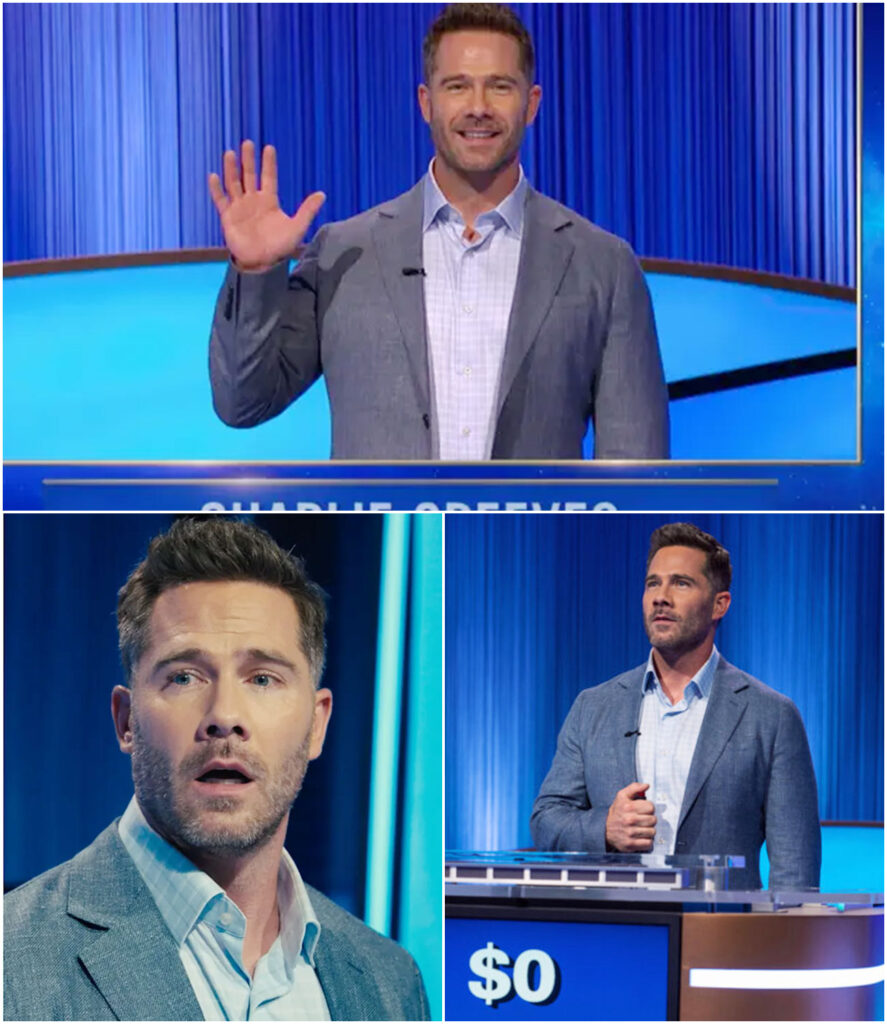
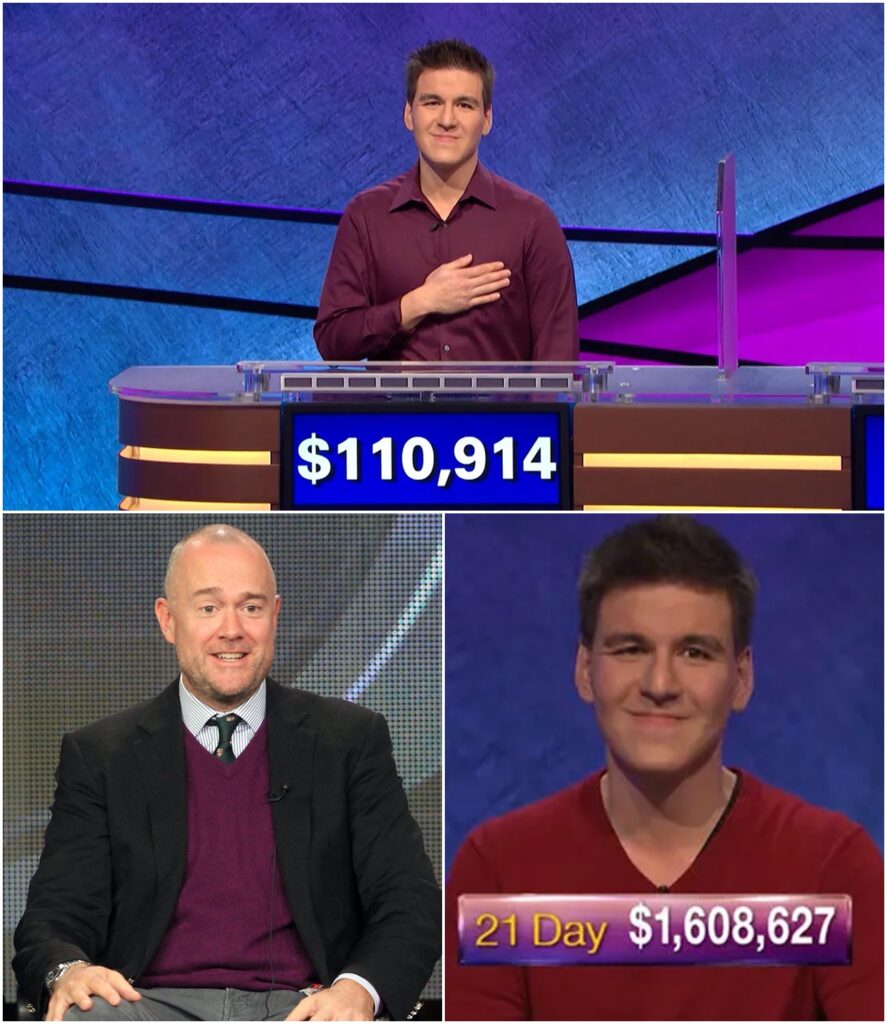
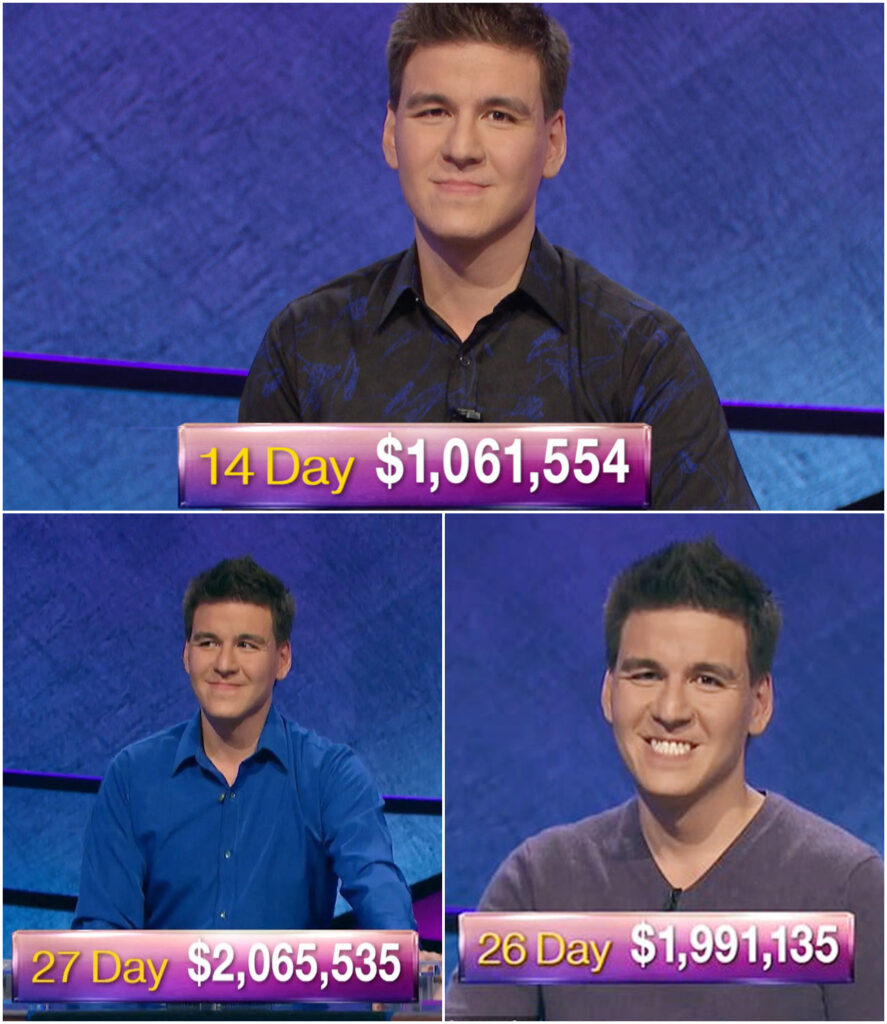
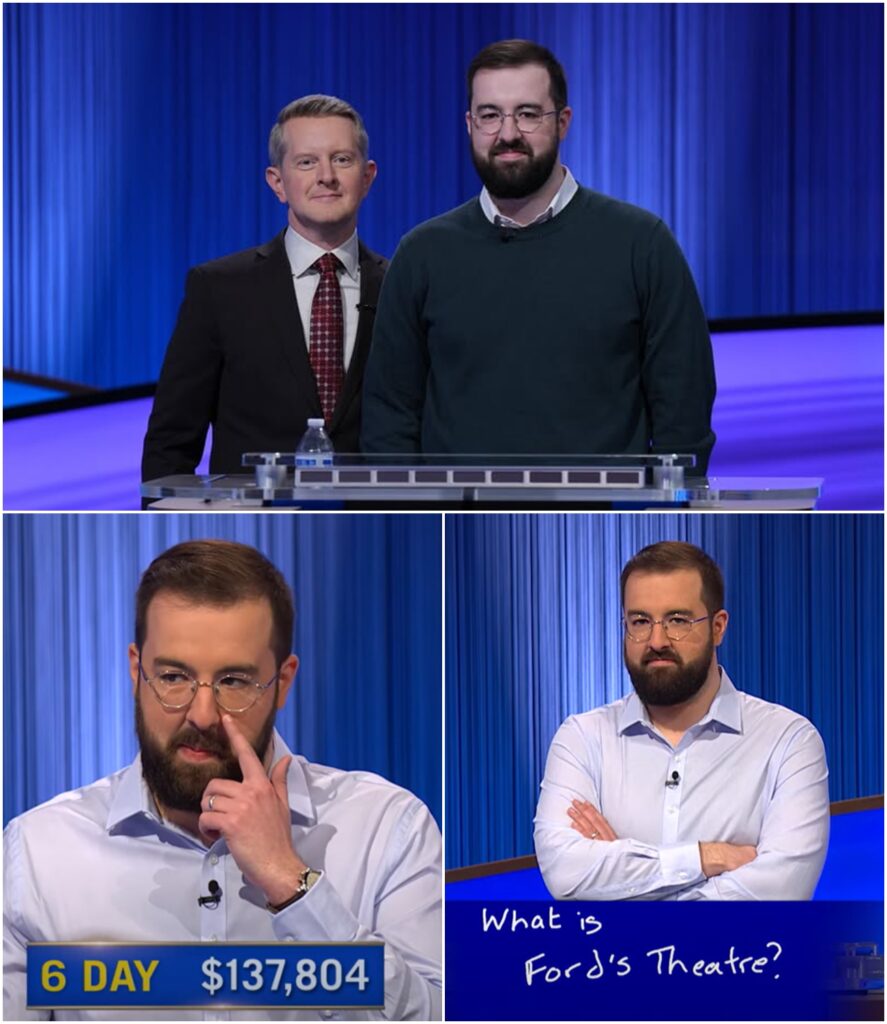
Double The Danger! Ron Lalonde Follows His Twin Brother Ray As A ‘Jeopardy!’ Champ: Did He Secretly Eclipse His Brother’s Eye-Watering Earnings Record?
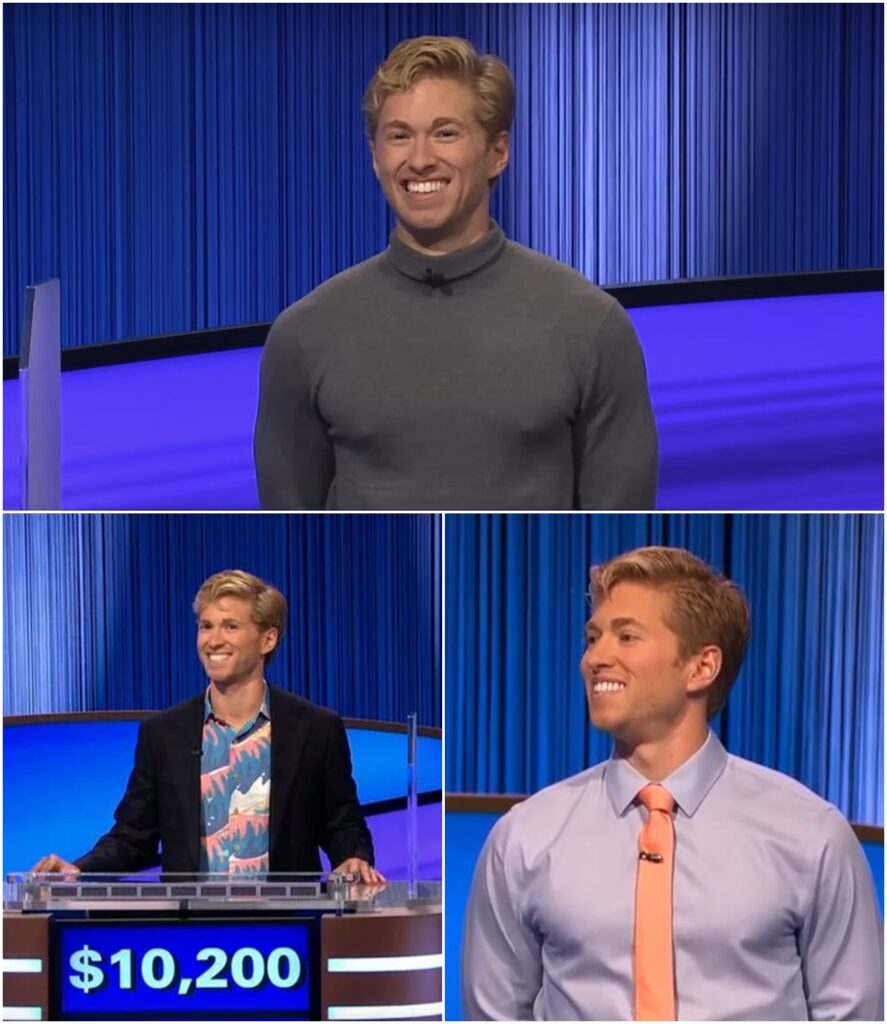
Ron Lalonde follows twin brother as Jeopardy! champion with eye-watering earnings Twin brothers Ron and Ray Lalonde both became Jeopardy! Champs, while Harrison Whitaker’s 14-game streak ended View 3 Images Ron Lalonde has followed his twin brother Ron Lalonde followed in his twin brother’s footsteps this week by becoming a two-day Jeopardy! champion, echoing the […]

‘Jeopardy!’ Fans Complain They Don’t Like Celebrity Video Questions
‘Jeopardy!’ Fans Complain They Don’t Like Celebrity Video Questions Courtesy of ‘Jeopardy!’/YouTube Courtesy of ‘Jeopardy!’/YouTube What To Know Jeopardy! has recently featured celebrity video clues in some episodes, often as a way to promote upcoming releases or tie into themed categories. Many fans have expressed frustration on social media, arguing that these video clues disrupt the […]

3 times Ken Jennings has apologized on behalf of Jeopardy! and his actions
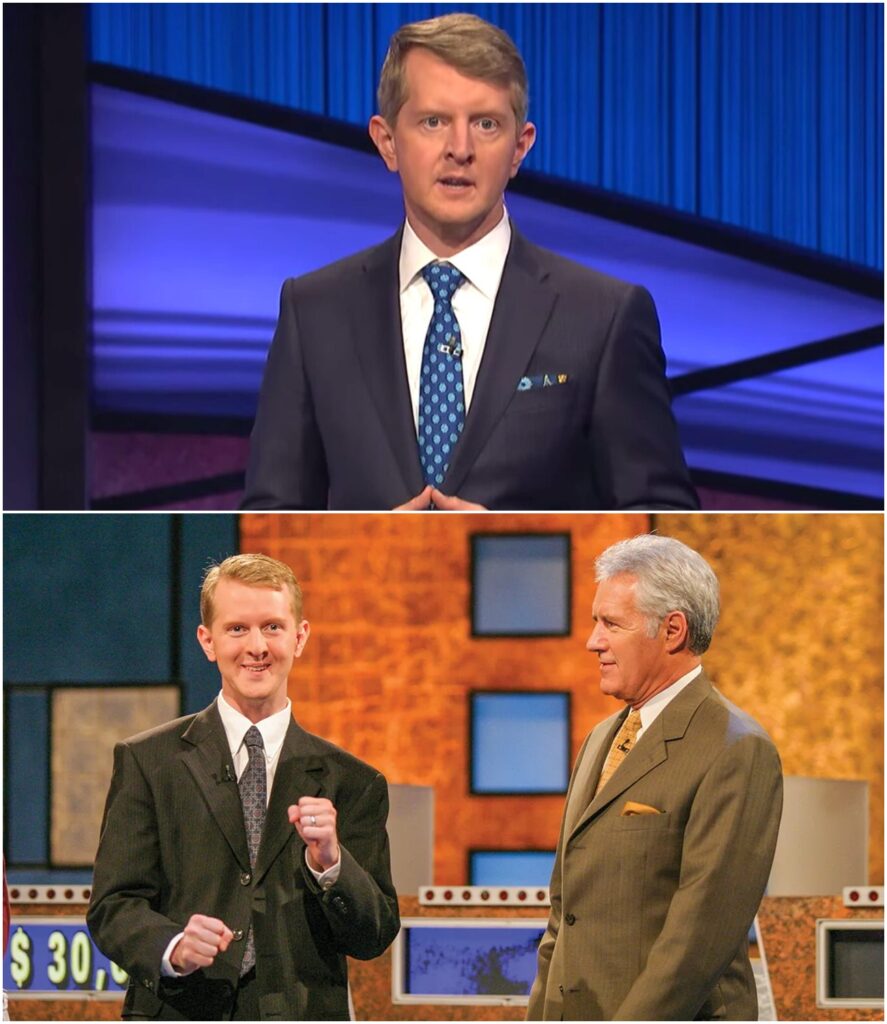
3 times Ken Jennings has apologized on behalf of Jeopardy! and his actions Ken Jennings is beloved for many reasons, and one of them is because the TV personality seems to know how to take accountability when it’s time whether it’s for him or Jeopardy! Jeopardy! host Ken Jennings isn’t too big to admit he’s […]

Jeopardy! fans slam ‘nonsense’ clues as one category is ‘the worst’
Jeopardy! fans slam ‘nonsense’ clues as one category is ‘the worst’ During the latest episode of Jeopardy!, viewers were outraged over one vocabulary category in the first round that had three clues which stumped all of the contestants View 3 Images Jeopardy! fans slam “nonsense” clues as one category is “the worst”(Image: Jeopardy!) Jeopardy! fans […]

‘Jeopardy!’ Champion Arrested on Felony ‘Peeping’ Charges
‘Jeopardy!’ Champion Arrested on Felony ‘Peeping’ Charges Jeopardy, Inc! Two-day Jeopardy! champion Philip Joseph “Joey” DeSena, who appeared on the long-running game show last November, was arrested on Monday, December 1, on two felony “peeping” charges. According to MyFox8.com, citing a warrant filed by the Currituck County Sheriff’s Office in North Carolina, DeSena is accused of installing cameras in a […]

‘Jeopardy!’ Contestant Reveals She Got Death Threats After Beating Ken Jennings Sony/Jeopardy! When you defeat a 74-game Jeopardy! champion, you’re expecting cheers and a pat on the back. However, Nancy Zerg received death threats for six months after winning her game against Ken Jennings. Zerg, now 69, has revealed in a new interview how her life was made hell after […]
End of content
No more pages to load